
The Hidden Danger of Moving an Electrical Outlet
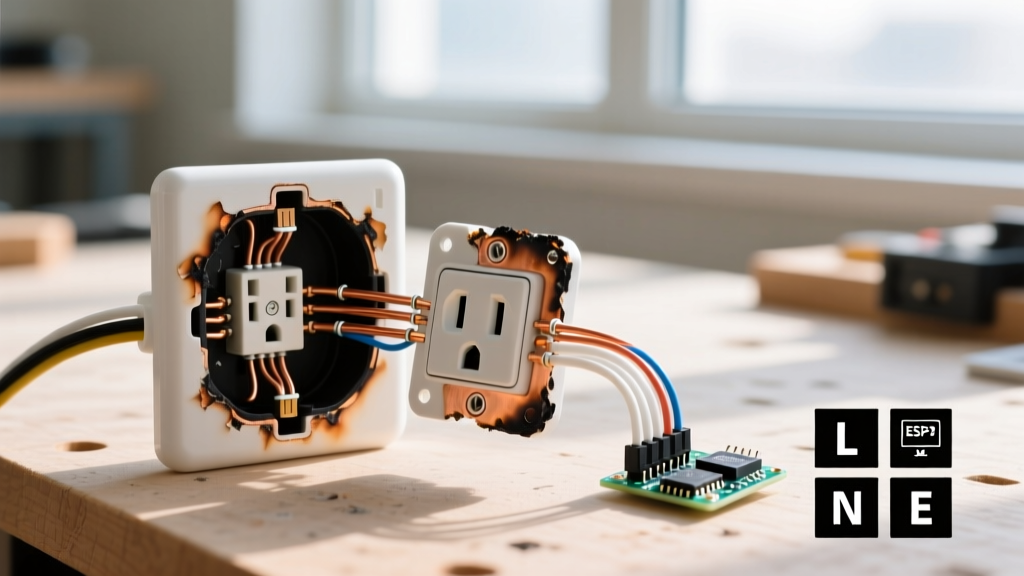
When remodeling a kitchen, mounting a flat-screen TV, or reconfiguring living room furniture, moving an electrical outlet is a common necessity. However, this task is frequently misunderstood by DIYers who assume they can simply splice wires, push them into the wall cavity, and drywall over the old location. This approach is not only a severe fire hazard but a direct violation of the National Electrical Code (NEC). In this wiring diagram reference guide, we break down the exact schematics, code mandates, and step-by-step procedures for relocating a receptacle safely and legally in 2026.
Relocating a receptacle requires extending the existing circuit to a new 'old-work' box while properly terminating the old box. The primary challenge is maintaining circuit integrity, matching wire gauges, and ensuring that all splice points remain accessible to future electricians. According to the U.S. Consumer Product Safety Commission, improper splicing and buried junction boxes are leading causes of residential electrical fires, making strict adherence to wiring diagrams essential.
NEC Article 314.29: The Accessibility Mandate
NEC Article 314.29 (Boxes, Conduit Bodies, or Handhole Enclosures to Be Accessible): Boxes, conduit bodies, and handhole enclosures shall be installed so that the wiring contained in them can be rendered accessible without removing any part of the building or structure.
This code section is the foundational rule for moving an electrical outlet. You cannot use the old wall box as a hidden junction box. If you must leave the old box in the wall to extend the wires, you must install a blank cover plate over it. If the old box is in a location where a cover plate is aesthetically unacceptable (e.g., behind a TV mount or kitchen backsplash), you must either remove the box entirely and pull the wires back to an accessible upstream junction box, or use a specialized recessed junction box with a flush-mount blank plate that can be painted over, provided local AHJ (Authority Having Jurisdiction) allows it.
Wiring Diagram Reference: The Pigtail Extension Method
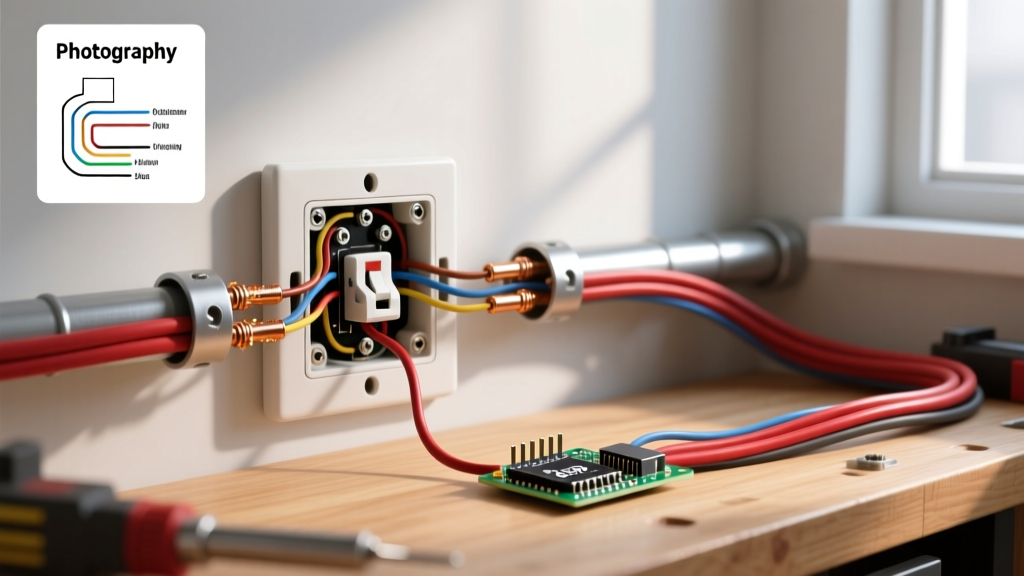
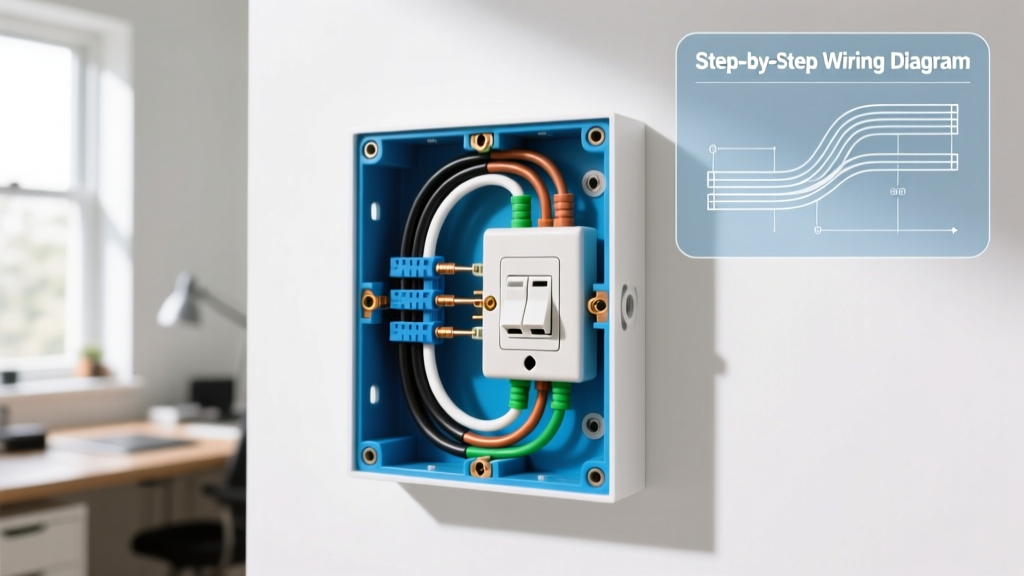
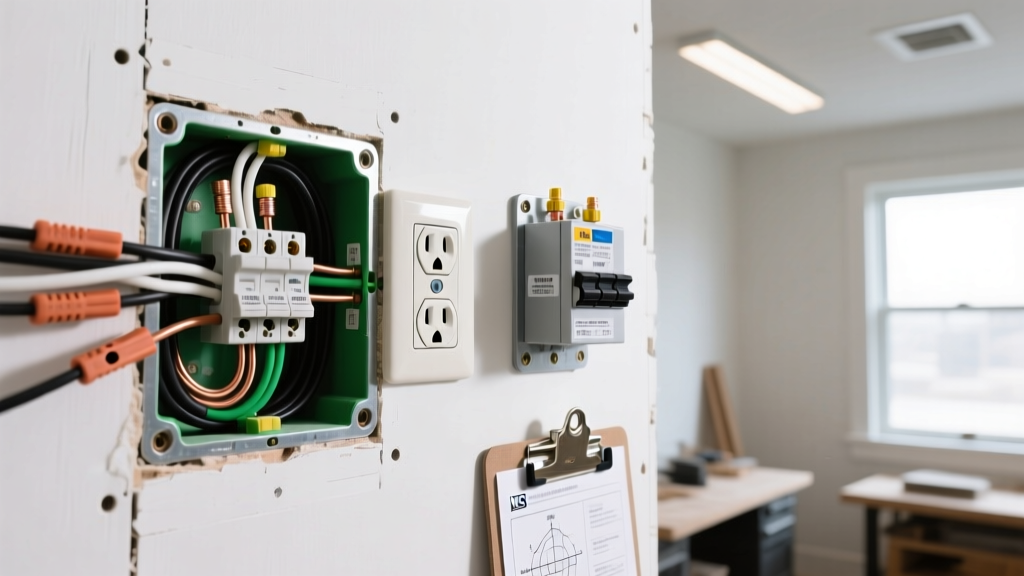
The most common and code-compliant method for moving an outlet is the Pigtail Extension. This involves converting the existing outlet box into a junction box and running a new length of Romex (NM-B) cable to the new location.
Circuit Schematic Breakdown
- Upstream Power Source: Enters the original box (Box A).
- Downstream Load (Optional): If the original outlet fed other outlets downstream, those wires must also be spliced in Box A.
- Extension Cable: A new 12/2 or 14/2 NM-B cable runs from Box A to the new Box B.
- Splicing Logic: All black (hot) wires are spliced together with a pigtail to the new extension black. All white (neutral) wires are spliced together with a pigtail to the new extension white. All bare copper (ground) wires are bonded together and pigtailed to the metal box (if applicable) and the new extension ground.
Step-by-Step Execution Flow
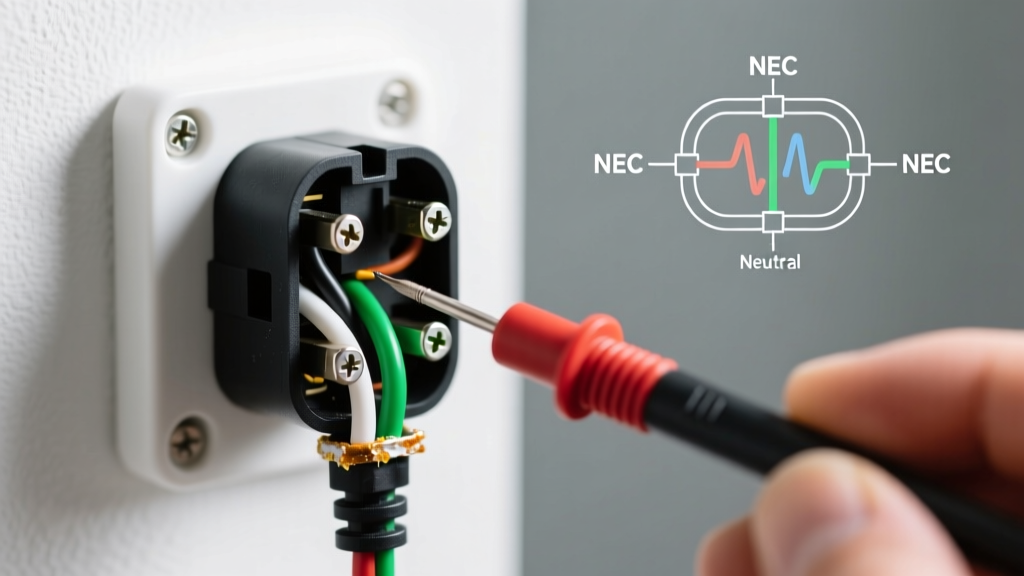
- Power Verification: Turn off the breaker and verify zero voltage using a non-contact voltage tester (e.g., Klein NCVT-3) and a multimeter at the receptacle terminals.
- Box Preparation: Remove the old receptacle. Install a new 'old-work' electrical box (e.g., Carlon B114R-UPC) at the new location, cutting the drywall with a rotary tool or jab saw.
- Wire Routing: Use a fish tape (Klein 56334) to route the new NM-B cable through the wall cavity. Maintain a minimum 1.25-inch setback from the face of the studs to avoid future drywall screw punctures.
- Stripping and Splicing: Strip 3/4 inch of insulation from the conductors. Use IDEAL 34 Tan or 33 Orange wire connectors to splice the existing circuit wires to the new extension cable. Do not use 'push-in' wire connectors for high-load junction splices; twist-on or lever-nuts (WAGO 221) are required for permanent buried splices.
- Termination: At the new box, connect the black wire to the brass terminal, the white wire to the silver terminal, and the bare copper to the green ground screw.
- Torque Calibration: Modern 2026 electrical standards heavily emphasize terminal torque. Use a torque screwdriver (Klein Tools 70205) set to 14 in-lbs to secure the terminal screws on a standard Leviton T5252-E receptacle, preventing thermal expansion loosening over time.
Materials and Cost Matrix (2026 Pricing)
Understanding the exact materials required ensures you do not compromise safety for cost. Below is a breakdown of professional-grade components needed for a standard 15A or 20A circuit extension.
| Component | Recommended Model | 2026 Est. Cost | Purpose & Code Requirement |
|---|---|---|---|
| Receptacle | Leviton T5252-E (TR) | $4.50 | Tamper-Resistant; required in all dwelling units (NEC 406.12). |
| Wire (12 AWG) | Southwire Romex SIMpull | $0.85/ft | Required for 20A circuits. Never mix 14 AWG on a 20A breaker. |
| Junction Box | Carlon B618R-UPC | $6.80 | Recessed blank-cover box for hiding old splices legally. |
| Wire Connectors | WAGO 221 Lever-Nuts | $0.65/ea | UL-listed, vibration-resistant splicing for junction boxes. |
| Torque Screwdriver | Klein Tools 70205 | $115.00 | Ensures exact terminal pressure; prevents arc faults. |
Edge Cases: Multi-Wire Branch Circuits (MWBC)
A critical edge case when moving an electrical outlet is encountering a Multi-Wire Branch Circuit. An MWBC shares a single neutral wire between two hot wires (usually a black and a red) on opposite phases. If you are extending an MWBC, you must be acutely aware of NEC 210.4.
Warning: If you disconnect the shared neutral while the circuit is energized, you will create a series circuit that sends 240V through your 120V appliances, instantly destroying electronics and posing a lethal shock hazard. Furthermore, when extending an MWBC to a new outlet, you must ensure that the new cable includes the red wire if you are extending the entire circuit, or you must cap the unused hot wire safely in the junction box. The breakers for an MWBC must be secured with a handle tie or double-pole breaker to ensure simultaneous disconnect, a rule strictly enforced in modern electrical inspections.
Common Failure Modes and Troubleshooting
Even with a correct wiring diagram, physical installation errors can lead to catastrophic failures. Review these common failure modes before closing up your drywall:
- Overcrowded Junction Boxes (NEC 314.16): Adding an extension cable increases the 'box fill' calculation. A standard single-gang box (18 cubic inches) can typically hold only four 14/2 cables or three 12/2 cables. If your old box is now acting as a junction for upstream, downstream, and the new extension, you must upgrade to a deeper 22 cu. in. box or a 4-inch square junction box with a mud ring.
- Gauge Mismatch: Extending a 20A kitchen appliance circuit using 14 AWG wire is a severe code violation. The breaker will not trip if the 14 AWG wire overheats and catches fire inside the wall. Always match the extension wire gauge to the breaker size (12 AWG for 20A, 14 AWG for 15A).
- AFCI/GFCI Inheritance: Under the latest NEC updates, almost all living spaces require Arc-Fault Circuit Interrupter (AFCI) protection, while kitchens, bathrooms, and garages require Ground-Fault (GFCI) protection. When you move an outlet, the new location inherits these requirements. If the upstream breaker is not an AFCI/GFCI, you must either upgrade the breaker or install a GFCI receptacle at the first outlet in the new branch.
- Backstabbing Connections: Pushing stripped wires into the back-stab holes of a receptacle is a leading cause of intermittent power loss and melting. The spring-loaded contacts inside back-stab holes weaken over time due to thermal cycling. Always use the side terminal screws or a pigtail wire nut connection.
Final Inspection and Drywall Repair
Once the wiring is complete and torqued to specification, leave the wall open and restore power to test the new outlet using a receptacle tester (e.g., Gardner Bender GRT-13). Verify correct polarity, proper grounding, and GFCI trip functionality if applicable. Only after successful testing should you proceed with drywall patching, taping, and mudding. For a comprehensive overview of residential wiring safety standards, always consult the latest NFPA NEC guidelines and your local municipal building department, as local amendments may supersede national codes regarding junction box accessibility and remodel permits.