
Why Your Electrical Outlet Sparks When Plugging In
You plug in your laptop charger or vacuum, and suddenly—zap. A visible flash and a sharp crack emit from the wall. If your electrical outlet sparks when plugging in, your immediate reaction should be a mix of curiosity and extreme caution. While a microscopic blue flash is a normal byproduct of physics, a large, orange spark accompanied by a burning smell is a severe fire hazard.
According to the National Fire Protection Association (NFPA), electrical distribution and lighting equipment are consistently among the leading causes of home structure fires. Arcing at the receptacle face is a primary culprit. This safety guide breaks down the exact failure modes, National Electrical Code (NEC) compliance standards, and the precise hardware upgrades required to eliminate dangerous arcing in your home.
The Physics: Inrush Current vs. Dangerous Arc Faults
Not all sparks are created equal. To diagnose the issue, you must understand the difference between capacitive inrush current and resistive arcing.
Normal: Capacitive Inrush Current
When you plug in a device with a Switch-Mode Power Supply (SMPS)—such as a laptop charger, LED driver, or microwave—the internal capacitors are completely empty. For the first few milliseconds, they act as a short circuit, drawing 20 to 50 times their steady-state current. As the plug's prong bridges the final millimeter to the receptacle's contact wiper, the voltage jumps the gap, ionizing the air and creating a tiny, fast, blue spark. This is normal physics and generally harmless if the receptacle is in good condition.
Dangerous: Resistive Arcing and Wiper Fatigue
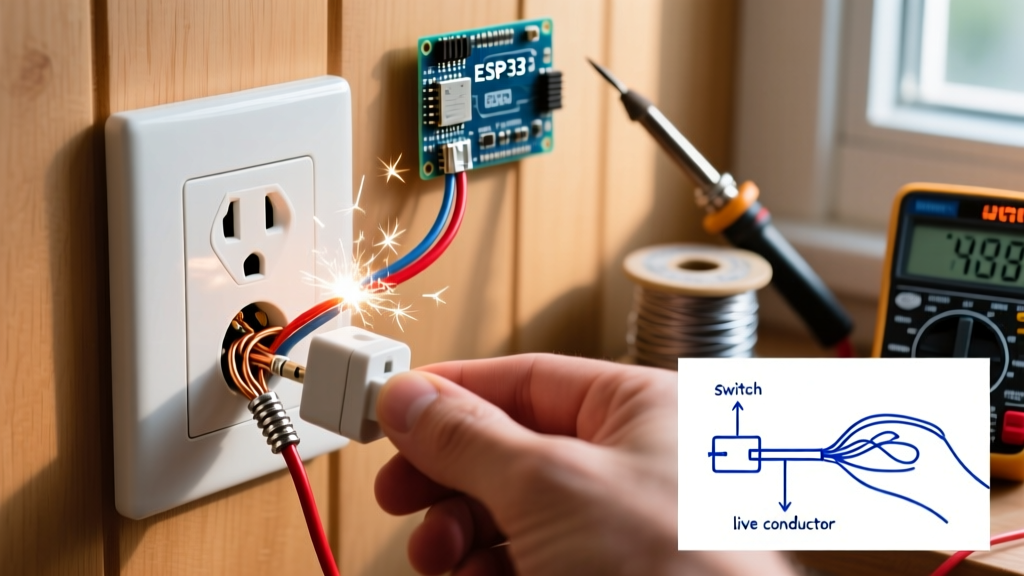
If the spark is orange, yellow, or white, lasts longer than a fraction of a second, or is accompanied by a popping sound and ozone smell, you are witnessing a dangerous arc fault. This occurs when electrical current is forced to jump across a high-resistance gap due to loose connections, corrosion, or degraded internal metal components. The U.S. Consumer Product Safety Commission (CPSC) warns that sustained arcing generates extreme heat (up to 10,000°F), which easily ignites surrounding drywall paper and insulation.
4 Code-Violation Failure Modes Causing Dangerous Sparks
If you are experiencing dangerous arcing, your receptacle likely suffers from one of the following NEC code violations or mechanical failures:
1. Backstab Wiring Failures
Many builder-grade receptacles feature push-in "backstab" terminals. These rely on a tiny internal spring clip to grip the 14 AWG wire. Over time, thermal expansion and contraction from electrical loads cause the spring to relax. The wire loosens, creating a high-resistance gap that sparks behind the wall face. The NEC heavily discourages this for 20-amp circuits, and most master electricians refuse to use backstabs entirely.
2. Loss of Contact Wiper Tension
Inside the receptacle, brass or copper alloy "wipers" grip the plug prongs. In cheap, builder-grade receptacles (often costing under $1.00), these wipers are thin and lose their spring tension after a few years of use. When the plug is loose and wiggles easily, the microscopic gaps between the prong and the wiper cause continuous micro-arcing every time a load is applied.
3. Loose Terminal Screws (NEC 110.14 Violation)
Side-wiring requires wrapping the wire clockwise around the terminal screw. If the screw is not tightened to the manufacturer's specified torque, the connection will arc. Since the 2017 NEC cycle, NEC 110.14(D) strictly requires the use of a calibrated torque screwdriver for all terminations. Hand-tightening is no longer code-compliant and is a leading cause of outlet fires.
4. Moisture and Corrosion (NEC 406.9)
In kitchens, bathrooms, and garages, ambient moisture can corrode the brass contacts. Copper oxide and brass corrosion are poor conductors. When current flows through these corroded layers, resistance spikes, generating intense heat and visible sparking at the plug face.
Diagnostic Matrix: Normal Spark vs. Fire Hazard
Use this diagnostic table to determine if your sparking outlet requires immediate replacement.
| Characteristic | Normal (Inrush Spark) | Dangerous (Arc Fault) |
|---|---|---|
| Spark Color | Blue or clear white | Orange, yellow, or bright green |
| Duration | Microseconds (instantaneous) | Visible flash, lingering or stuttering |
| Sound | Silent or faint "tick" | Loud "pop", crackle, or buzz |
| Smell | None | Ozone, melting plastic, or fishy odor |
| Plug Fit | Snug, requires force to remove | Loose, falls out easily, wiggles |
| Action Required | None (Normal physics) | Stop use immediately; replace receptacle |
Step-by-Step Code-Compliant Remediation & Upgrades
If your outlet exhibits dangerous arcing, follow this OSHA-aligned safety protocol to replace it. Do not simply swap it for another builder-grade unit; upgrade to commercial or heavy-duty specifications.
⚠️ CRITICAL SAFETY WARNING: Never work on a live circuit. Always shut off the breaker and verify the absence of voltage using a non-contact voltage tester and a True-RMS multimeter (e.g., Fluke 117) before touching any wires.
Step 1: Remove Backstabs and Pigtail Wires
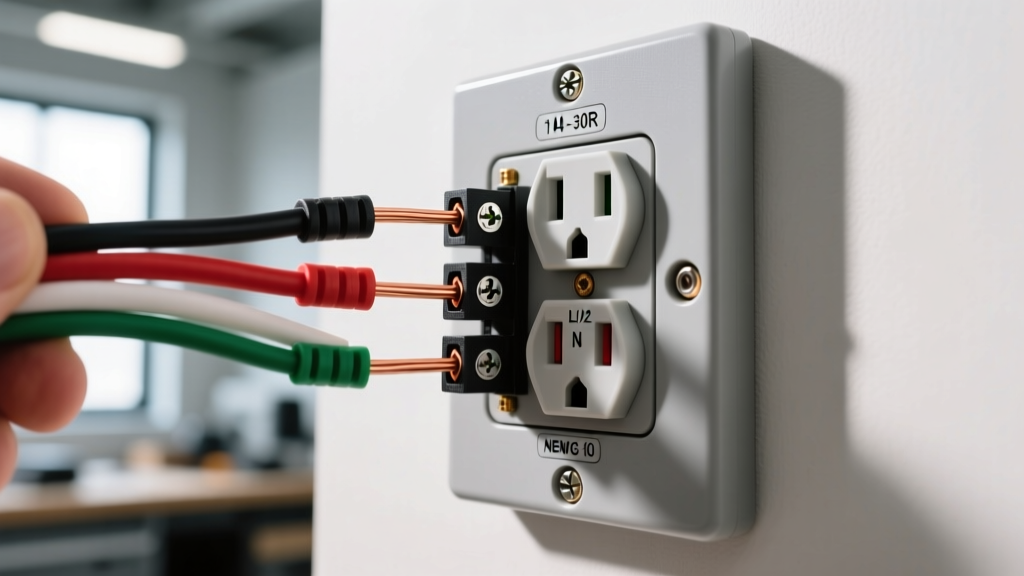
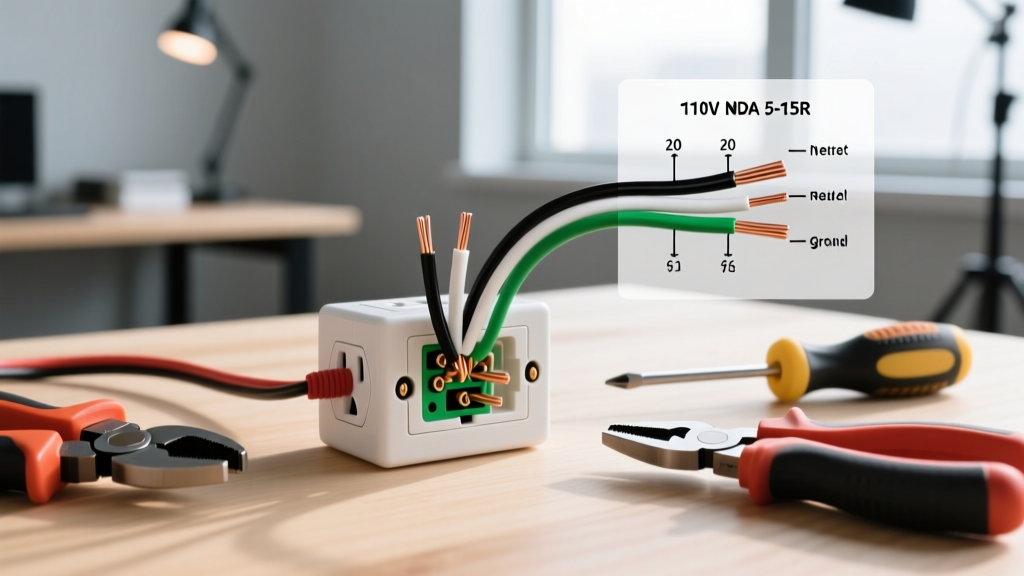
If the existing outlet uses backstab wiring, cut the wires back to fresh, unoxidized copper. Strip 3/4 inch of insulation. Use a wire nut or WAGO 221 lever connector to pigtail the circuit wires to a single 12 AWG or 14 AWG jumper that will connect to the new receptacle's side-terminal screws.
Step 2: Select the Correct Receptacle Grade
Invest in high-tension wipers. The price difference is negligible compared to the fire risk.
- Builder Grade (Avoid): Leviton 15A 5320-W (~$0.80). Thin wipers, high failure rate.
- Commercial/Spec Grade (Recommended): Leviton 20A Tamper-Resistant 5362-W (~$3.50). Features thick brass wipers and nylon faceplates that resist impact and heat.
- Hospital/Heavy Duty (Best for High-Draw): Hubbell 20A 5262 (~$12.50). Built with massive internal bus bars and ultra-gripping wipers. Ideal for kitchen and shop vacuums.
Step 3: Torque to NEC Specifications
Wrap the bare copper wire clockwise around the brass (hot) and silver (neutral) terminal screws. Tighten the screws using a calibrated torque screwdriver, such as the Klein Tools 69111 (~$25). Most 15A and 20A receptacles require exactly 14 in-lbs of torque. This satisfies NEC 110.14(D) and guarantees the wire will not loosen under thermal cycling.
Edge Case: Aluminum Branch Wiring
If your home was built between 1965 and 1973, you may have solid aluminum branch wiring. Aluminum oxidizes rapidly and expands differently than copper, making it highly prone to arcing at the receptacle terminals. Do not connect aluminum wire directly to a standard brass/copper receptacle. You must use CO/ALR rated receptacles or, preferably, pigtail the aluminum wire to copper using AlumiConn lug connectors before terminating to a standard commercial-grade receptacle.
Frequently Asked Questions (FAQ)
Why does my Tamper-Resistant (TR) outlet spark more often?
TR receptacles feature internal plastic safety shutters. If the shutters are stiff or the plug prongs are slightly asymmetrical, you have to push harder. This mechanical resistance often causes the plug to pause just millimeters from the live contacts while you apply more force, extending the arc duration. Upgrading to a higher-grade TR receptacle with smoother shutter mechanics resolves this.
Will an AFCI breaker protect me from outlet sparks?
Yes, partially. An Arc-Fault Circuit Interrupter (AFCI) breaker monitors the circuit for the high-frequency "noise" signature of an arc fault and will trip the circuit if dangerous arcing occurs. However, AFCIs are a secondary safety net. They do not prevent the initial heat generation or melting of the receptacle face. Proper mechanical connections and spec-grade hardware remain your primary defense.
Is it safe to plug in a vacuum cleaner if the outlet sparks?
No. Vacuum cleaners feature universal motors that draw massive inductive startup currents. If an outlet already suffers from wiper fatigue or loose terminal screws, the inductive kickback from a vacuum motor will aggressively accelerate the arcing, potentially melting the plug face and causing a fire within seconds. Replace the receptacle immediately before using high-draw inductive loads.