
The Hidden Danger Behind Your Flush-Mounted TV
Modern televisions are engineering marvels of thinness. With 2026 models like the LG G5 OLED and Samsung S95F boasting near-zero bezels and ultra-slim profiles, wall-mounting them flush against the drywall is the standard. However, this creates a severe mechanical and electrical conflict: the standard NEMA 5-15P power plug protrudes roughly 1.75 inches from the wall, while most low-profile TV mounts offer less than 1 inch of clearance.
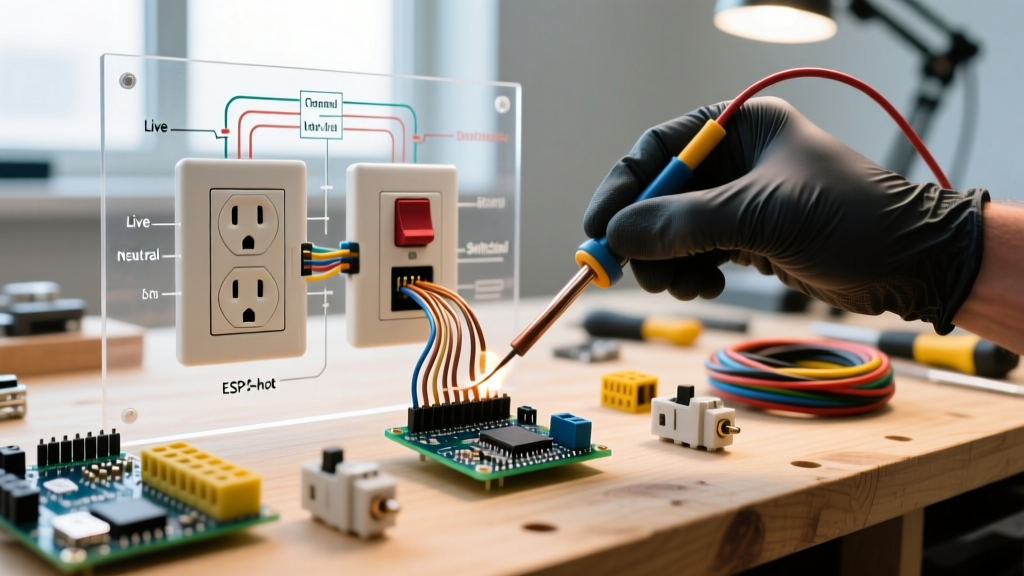
Forcing a TV over a standard receptacle causes plug crush. The prongs bend, the internal wire connections fatigue, and the resulting high-resistance connection generates excess heat—a leading cause of localized electrical arcing. If you are searching for the best electrical outlet for TV wall mount applications, you must look beyond standard duplex receptacles and explore recessed media boxes and code-compliant in-wall power relocation kits.
Why Standard Outlets Fail Behind Wall-Mounted TVs
Before selecting your materials, it is crucial to understand the failure modes of standard outlets in media center applications:
- Dielectric Breakdown: When a plug is bent at a 90-degree angle to fit behind a TV, the internal hot and neutral wires are pushed against the outer insulation jacket. Over time, the jacket cracks, leading to short circuits.
- Grounding Loss: The ground prong is often the longest. When crushed, it can disconnect internally while the TV continues to operate, leaving your expensive electronics unprotected against surges.
- Drywall Damage: Forcing a heavy TV mount over a protruding plug transfers kinetic stress to the drywall anchors, eventually compromising the structural integrity of the mount.
Top 3 Material Solutions for Recessed TV Power (2026 Guide)
As a tool and material guide, we evaluate hardware based on depth clearance, NEC compliance, and ease of installation. Here are the top three solutions for achieving a flush mount safely.
1. The Deep Recessed Media Box: Carlon SC100RV
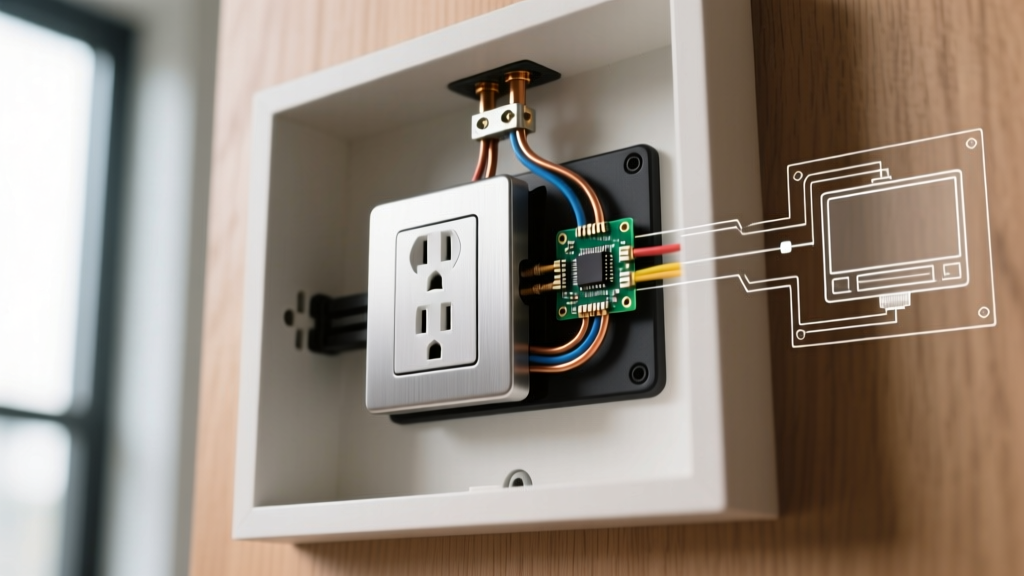
The Carlon SC100RV is a 1-gang recessed media box that provides up to 2.5 inches of depth. Unlike standard electrical boxes that sit flush with the drywall, the SC100RV features a sloped, angled back that allows the power cord to bend naturally into the wall cavity.
- Best For: Direct replacements where an existing outlet is already located perfectly behind the TV center.
- Clearance: 2.5 inches (accommodates even bulky right-angle adapters).
- Estimated Cost: $12 - $16 per unit.
2. The Recessed Duplex Receptacle: Leviton 5266-R
If you do not want to replace the entire electrical box, the Leviton 5266-R is a specialized recessed duplex receptacle. The face of the outlet is set back approximately 1.25 inches from the standard mounting strap. When paired with a deep mud ring, it provides just enough clearance for most standard flat-plug power cords.
- Best For: Situations where you need to maintain two usable outlets (e.g., TV and a soundbar) without installing a new box.
- Clearance: 1.25 inches.
- Estimated Cost: $14 - $18.
3. The Code-Compliant Relocation Kit: Datacomm 45-0003-01
Often, the existing outlet is near the baseboard, nowhere near the center of the mounted TV. The Datacomm 45-0003-01 In-Wall Power Kit allows you to fish NM-B (Romex) cable behind the wall from the lower outlet to a new recessed outlet behind the TV, keeping everything strictly up to code.
- Best For: Relocating power vertically behind the drywall without hiring an electrician to run new circuits from the breaker panel.
- Clearance: 1.5 inches (recessed faceplate design).
- Estimated Cost: $45 - $55 (includes dual pass-through plates and recessed boxes).
Comparison Matrix: Recessed Hardware Showdown
| Product Model | Type | Max Recess Depth | Requires New Box? | Best Use Case |
|---|---|---|---|---|
| Carlon SC100RV | Recessed Media Box | 2.50" | Yes | Deep plugs, right-angle adapters |
| Leviton 5266-R | Recessed Receptacle | 1.25" | No | Standard flat plugs, dual-device needs |
| Datacomm 45-0003-01 | In-Wall Power Kit | 1.50" | Yes (Included) | Vertical power relocation from baseboard |
| Legrand 3801 | Recessed Single | 1.10" | No | Tight spaces, single TV plug only |
Crucial NEC Codes & Safety Warnings
WARNING: Never run a television's standard flexible power cord inside a wall cavity. This is a direct violation of the National Electrical Code (NEC) and poses a severe fire hazard.
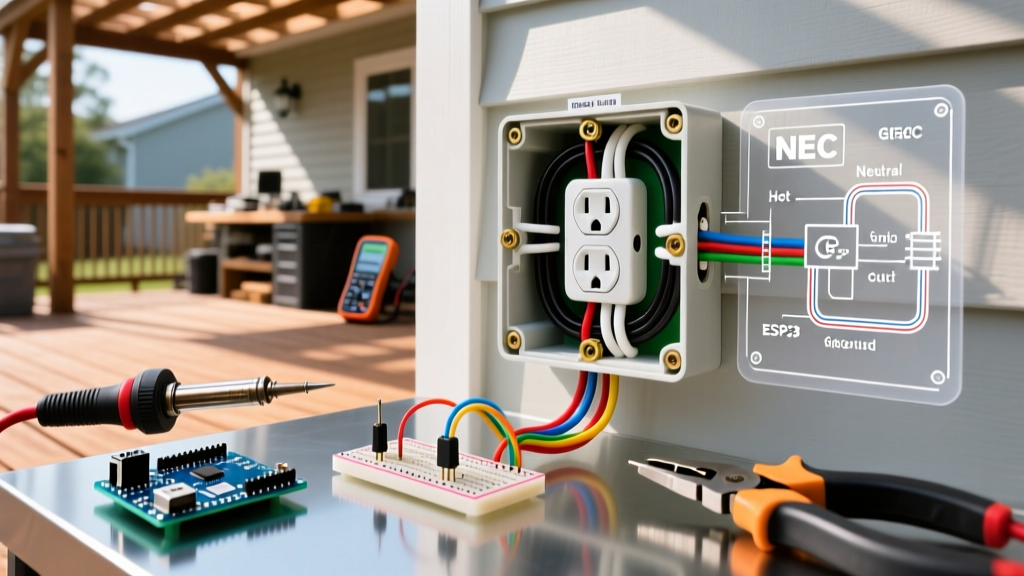
When determining the best electrical outlet for TV wall mount setups, you must adhere to NFPA 70 (The NEC). Specifically, NEC Article 400.8(1) explicitly forbids the use of flexible cords as a substitute for the fixed wiring of a structure. Standard TV power cords are not rated for the heat dissipation or physical protection required inside a wall cavity.
Furthermore, under NEC Article 210.12, all 120V, 15A and 20A outlets supplying living rooms, bedrooms, and similar areas must be protected by an Arc-Fault Circuit Interrupter (AFCI). If you are installing a new recessed outlet or relocating one using an in-wall kit, ensure the upstream breaker is an AFCI type. According to the Consumer Product Safety Commission (CPSC), AFCI protection is critical for preventing electrical fires caused by arcing faults in damaged cords and connections.
Step-by-Step Installation Blueprint: In-Wall Power Kit
If you are using a relocation kit like the Datacomm 45-0003-01, follow this precise installation flow to ensure a flush, safe finish.
- Locate Studs & Fireblocks: Use a magnetic stud finder to map the wall cavity. Beware of horizontal fireblocks common in multi-story homes, which will prevent vertical cable fishing.
- Cut the Drywall Openings: Use the included template to cut the upper (behind TV) and lower (near baseboard) holes with a drywall saw. Ensure the upper hole is perfectly centered on your TV mount bracket.
- Fish the NM-B Cable: Feed a fish tape down from the upper hole. Attach 14/2 or 12/2 NM-B (Romex) cable to the tape and pull it up. Leave 8 inches of slack at both boxes.
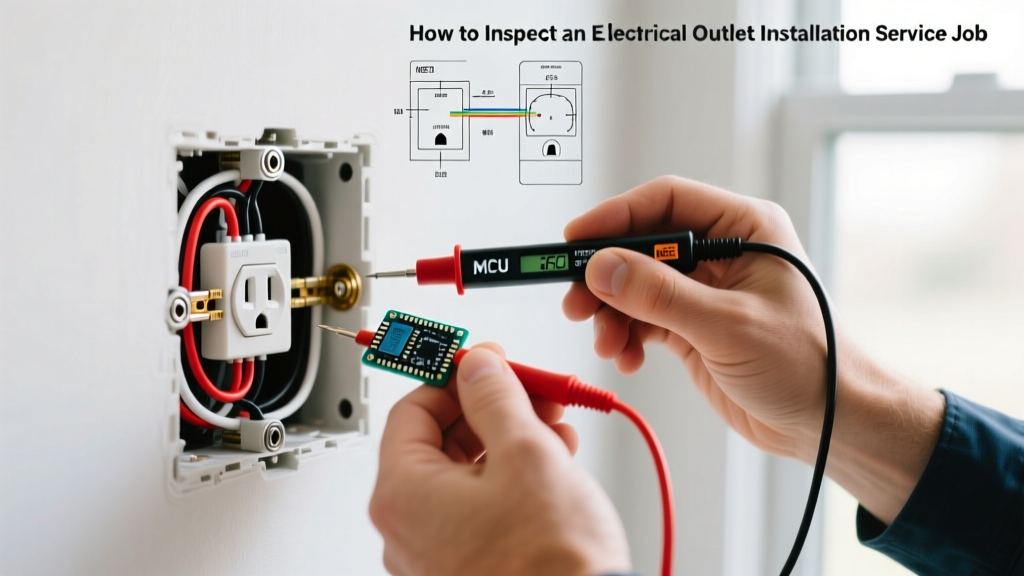
- Strip and Terminate: Strip 3/4 inch of insulation from the copper conductors. Connect the black (hot) to brass screws, white (neutral) to silver screws, and bare copper to the green ground screw.
- Torque to Spec: Use an insulated torque screwdriver set to 14 in-lbs (or the manufacturer's specific rating) to secure terminal screws. Under-torqued screws cause loose connections and arcing.
- Mount the Receptacles: Push the excess wire neatly into the back of the recessed box and secure the faceplate to the drywall using the integrated mounting wings.
Expert Troubleshooting & Edge Cases
Dealing with Metal Studs
If your home or apartment uses metal studs, you cannot simply push Romex through the stud knockouts without protection. You must install plastic NM-B cable bushings (grommets) in every metal knockout the cable passes through to prevent the sharp metal edges from slicing the cable insulation over time.
Insulation Compression
In exterior walls, fiberglass or rockwool insulation will naturally try to expand into your new recessed box. This is not just annoying; compressed insulation around electrical boxes can trap heat. Use a specialized insulation dam or carefully pack the insulation back behind the drywall paper before securing the recessed box.
Soundbar Interference
If you plan to mount a soundbar directly below the TV, ensure your recessed outlet is placed at least 4 inches above the soundbar's top edge. Otherwise, the soundbar's mounting bracket may collide with the recessed faceplate's protruding lip.
Frequently Asked Questions
Can I just use a flat-plug adapter on my TV cord?
While right-angle or flat-plug adapters (like the Sleek Socket) exist, they often add bulk at the connection point and do not solve the issue of running non-rated flexible cords inside the wall if you are trying to hide the cable. A recessed outlet is always the safer, more permanent solution.
Do I need a surge protector behind the TV?
Standard recessed outlets do not offer surge protection. If you require surge suppression behind the TV, look for specialized recessed media boxes with integrated, UL-listed surge suppression modules, ensuring the module itself sits within the recessed cavity.
What if my TV mount has a built-in power channel?
Some premium mounts (like those from Sanus or Echogear) feature hollow arms designed to route cables. Even with these, the wall junction must utilize a recessed outlet or in-wall kit to maintain the flush profile against the drywall.