
The Hidden Fire Hazard: Why Ants Invade Electrical Boxes
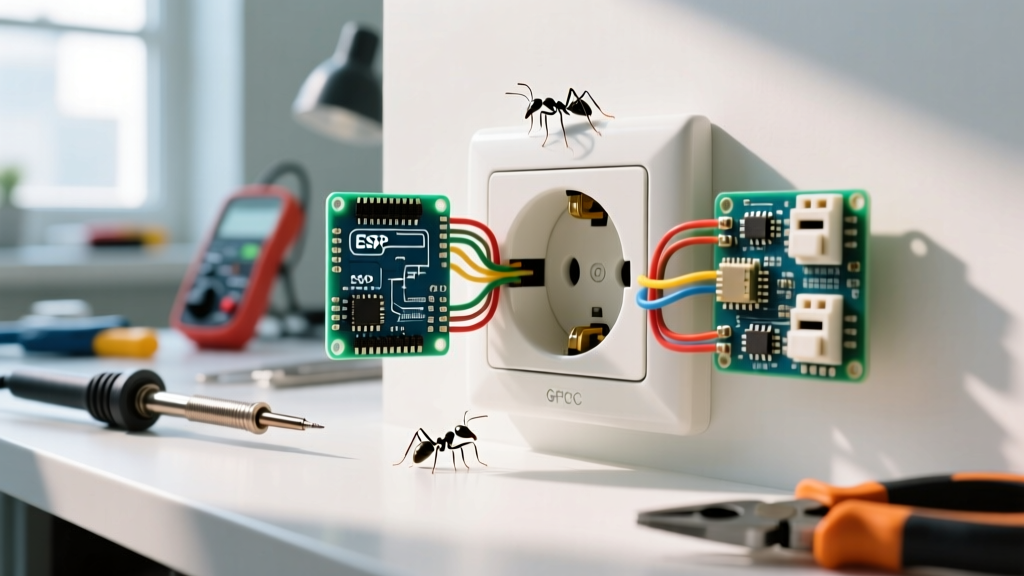
Finding ants in an electrical outlet is a surprisingly common yet highly dangerous phenomenon that bridges the gap between pest control and electrical engineering. While most homeowners view an ant trail as a mere nuisance, entomologists and electrical inspectors recognize it as a severe arc-flash and fire hazard. Ants—particularly the Red Imported Fire Ant (Solenopsis invicta) and Carpenter Ant (Camponotus)—are inexplicably drawn to the ambient heat and electromagnetic fields (EMF) generated by loaded 120V and 240V residential circuits.
When these insects infiltrate junction boxes, receptacles, and HVAC contactors, they compromise the dielectric integrity of the system. According to the National Fire Protection Association (NFPA), electrical failures or malfunctions are a leading cause of home structure fires, and biological intrusions like pest nests are a documented, albeit niche, catalyst for these catastrophic short circuits.
The Pheromone Death Spiral
To understand the risk, you must understand the biology of the swarm. When a single worker ant bridges the gap between a hot brass screw terminal and a grounded metal box, it is instantly electrocuted. However, its death triggers the release of a potent alarm pheromone (specifically 4-methyl-3-heptanone in fire ants). This chemical distress signal summons hundreds of nest-mates to the exact location.
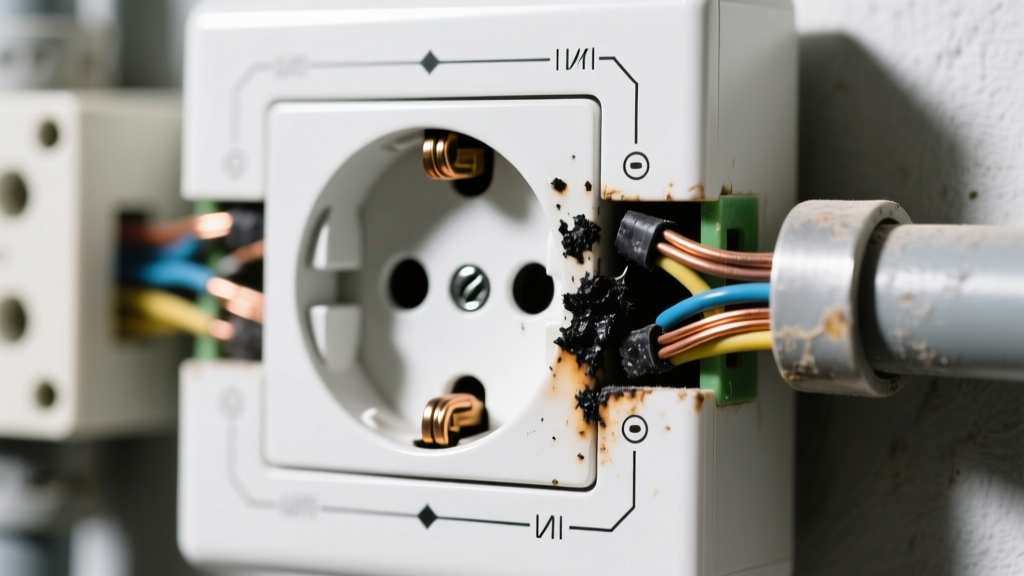
The result is a 'death spiral.' Hundreds of ants pile onto the receptacle, dying and accumulating. The carbonized bodies, combined with the acidic bodily fluids (formic acid), create a highly conductive carbon track. This biological bridge eventually causes a phase-to-neutral or phase-to-ground fault, leading to sustained arcing, melted THHN wire insulation, and potentially, an electrical fire.
Ant Species Risk Matrix for Receptacles
Not all ants pose the same level of threat to your wiring. Below is a diagnostic matrix to help you identify the intruder and assess the immediate risk to your electrical infrastructure.
| Ant Species | Primary Attraction Trigger | Risk Level | Typical Damage Profile |
|---|---|---|---|
| Red Imported Fire Ant | EMF & Ambient Heat | Critical | Carbon tracking, phase-to-ground arcing, melted bus bars. |
| Carpenter Ant | Moisture & Wood Proximity | High | Chewed Romex NM-B jackets, compromised structural firestops. |
| Argentine Ant | Moisture & Condensation | Moderate | Corrosion of copper lugs, nuisance tripping of GFCI devices. |
| Odorous House Ant | Heat (Winter months) | Low-Moderate | Nesting debris blocking heat dissipation in smart switches. |
NEC Code Compliance: Sealing and Pest Exclusion
The National Electrical Code (NEC) does not explicitly mention 'ants,' but it strictly mandates the sealing of electrical boxes to prevent environmental and biological intrusions. If your outlets are failing due to pests, your installation is likely out of compliance with several NEC articles.
- NEC Article 110.12 (Mechanical Execution of Work): Requires electrical work to be done in a 'neat and workmanlike manner.' Allowing open knockouts in junction boxes where pests can enter violates this baseline standard.
- NEC Article 314.8 (Sealing of Outlet Boxes): Mandates that unused openings in outlet boxes must be effectively closed. If ants are entering through the back of the box from the wall cavity, the box is not properly sealed.
- NEC Article 300.21 (Firestopping and Sealing Penetrations): Where wiring penetrates fire-rated walls or exterior envelopes, the annular space must be firestopped. This firestop also serves as the primary biological barrier against ants entering from the exterior or adjacent units.
- NEC Article 406.9 (Receptacles in Damp or Wet Locations): Exterior outlets must utilize weatherproof covers and sealed gaskets. Moisture attracts ants; therefore, a compromised exterior gasket is both a water and pest violation.
Step-by-Step Remediation & Exclusion Protocol
Clearing an infested outlet requires a methodical approach that prioritizes human safety and equipment integrity. Do not attempt to spray liquid pesticides into a live receptacle.
CRITICAL SAFETY WARNING: Never use liquid aerosol insecticides (e.g., Raid, Ortho) inside or around an energized electrical outlet. The liquid carriers in these products are often highly flammable and conductive. Spraying a live 120V receptacle can trigger an immediate arc flash, severe burns, or lethal electrocution. Always consult the EPA guidelines on safe pest control near electrical equipment.
Step 1: De-Energize and Verify (Lockout/Tagout)
Navigate to your main service panel and turn off the breaker controlling the infested circuit. Use a non-contact voltage tester, followed by a True-RMS digital multimeter (such as the Fluke 117) set to AC Voltage. Test from the hot slot to the neutral slot, and hot to ground, to verify absolute zero voltage before removing the faceplate.
Step 2: Physical Extraction (No Compressed Air)
Remove the receptacle from the box using a Phillips or flathead screwdriver. Use a HEPA-filtered shop vacuum with a narrow crevice tool to suck out the ants, eggs, and debris. Do not use compressed air. Blowing air into the box will only push the colony deeper into the wall cavity, guaranteeing they will find another way into the electrical system.
Step 3: Inspect for Dielectric Degradation
Examine the THHN wire insulation and the Romex jacket for pitting, discoloration, or melting. Carpenter ants possess powerful mandibles capable of stripping soft PVC insulation, while fire ant acids can corrode bare copper grounding wires. If the copper is pitted or the insulation is brittle, the wire must be cut back to clean material and spliced using Wago 221 lever-nuts or NEC-compliant wire nuts.
Step 4: Seal and Exclude
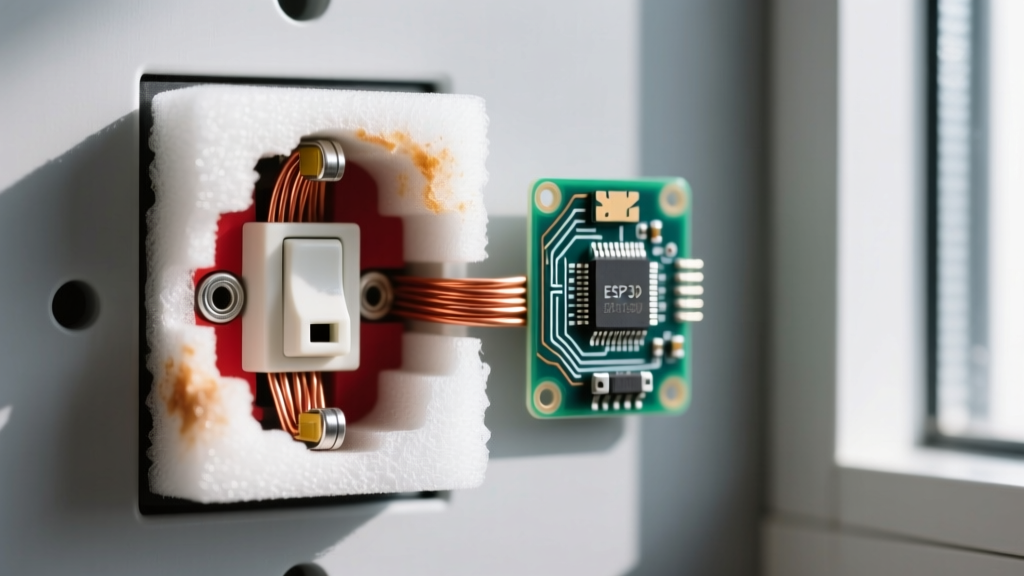
To prevent re-entry, you must seal the conduit knockouts and the gap between the drywall and the electrical box. Use an intumescent firestop sealant like 3M Fire Barrier Sealant CP 25WB+ or a non-hardening electrical duct seal putty like Gardner Bender OS-250. Avoid using polyurethane expanding foams (e.g., Great Stuff), as they are not rated for high-heat electrical environments, can trap heat inside the box, and are easily chewed through by determined pests.
Arc Fault & Ground Fault Protection Dynamics
Will your modern breakers protect you from an ant-induced short circuit? The answer depends on the type of protection installed.
AFCI (Arc-Fault Circuit Interrupters): According to Underwriters Laboratories (UL), AFCI breakers are designed to detect the unique electrical signatures of parallel and series arcing. If the ant pile creates a carbon track that initiates a sustained arc, an AFCI breaker should trip, cutting power before a fire starts. However, if the ant bridge creates a solid, low-impedance short circuit (a 'bolted fault'), the standard thermal-magnetic breaker will trip on overcurrent instead.
GFCI (Ground-Fault Circuit Interrupters): A GFCI receptacle monitors the current balance between hot and neutral. If the ant trail is damp (due to exterior humidity or condensation) and creates a leakage path to the grounded metal box or equipment grounding conductor, the GFCI will trip at a 5mA threshold. This is why exterior outlets often 'nuisance trip' during heavy ant seasons.
Frequently Asked Questions
Can ants actually cause a house fire from inside an outlet?
Yes. The accumulation of carbonized ant bodies and their acidic secretions creates a conductive bridge. This bridge can sustain an electrical arc that generates temperatures exceeding 10,000°F, easily igniting surrounding drywall paper, wood framing, or degraded wire insulation.
Why are they only in my exterior outlets?
Exterior outlets are exposed to moisture and temperature fluctuations. Ants seek out the micro-climate created by the slight heat of a plugged-in device (like landscape lighting transformers) combined with the moisture trapped inside a poorly sealed weatherproof cover.
Is it safe to put ant bait stations behind the faceplate?
No. Placing chemical bait stations or diatomaceous earth inside the electrical box violates NEC 110.12. Chemical powders can interfere with the mechanical contact of the receptacle slots, cause overheating, or create unintended conductive paths. Always apply bait treatments outside the electrical box along the baseboards and exterior foundation.
How much does professional remediation cost?
If the wiring is undamaged, a licensed electrician will typically charge between $150 and $250 to de-energize, clean, and properly firestop/seal a single outlet box. If the wires are severely corroded and require pulling new cable through the walls, costs can easily exceed $600 per circuit.