
Navigating 220 Electrical Outlet Types and NEC Compliance
When homeowners, workshop enthusiasts, and DIYers search for 220 electrical outlet types, they are typically preparing to wire a heavy-duty appliance, a commercial-grade air compressor, or a Level 2 Electric Vehicle Supply Equipment (EVSE) charger. However, high-voltage residential wiring is not a one-size-fits-all scenario. The National Electrical Code (NEC) enforces strict, highly specific rules regarding receptacle configurations, grounding methods, and overcurrent protection.
As we move through the 2026 adoption cycles of the NEC (building on the sweeping changes from the 2020 and 2023 editions), understanding the exact NEMA (National Electrical Manufacturers Association) configurations and their corresponding code mandates is critical for passing inspection and preventing electrical fires.
The 220V vs. 240V Terminology Clarification
Before diving into specific receptacles, we must address a common industry misnomer. In North American residential split-phase systems, the nominal voltage delivered to your main panel is 240V, not 220V. The terms '220V', '230V', and '240V' are often used interchangeably in colloquial DIY circles due to historical utility voltage variations and transformer tap settings. However, the National Fire Protection Association (NFPA) and the NEC officially classify these circuits and receptacles as 250V-rated devices handling a nominal 240V load. For the sake of search intent and practical application, this guide will address the colloquial '220V' outlets while applying strict 240V/250V NEC standards.
The Core 220 Electrical Outlet Types (NEMA Configurations)
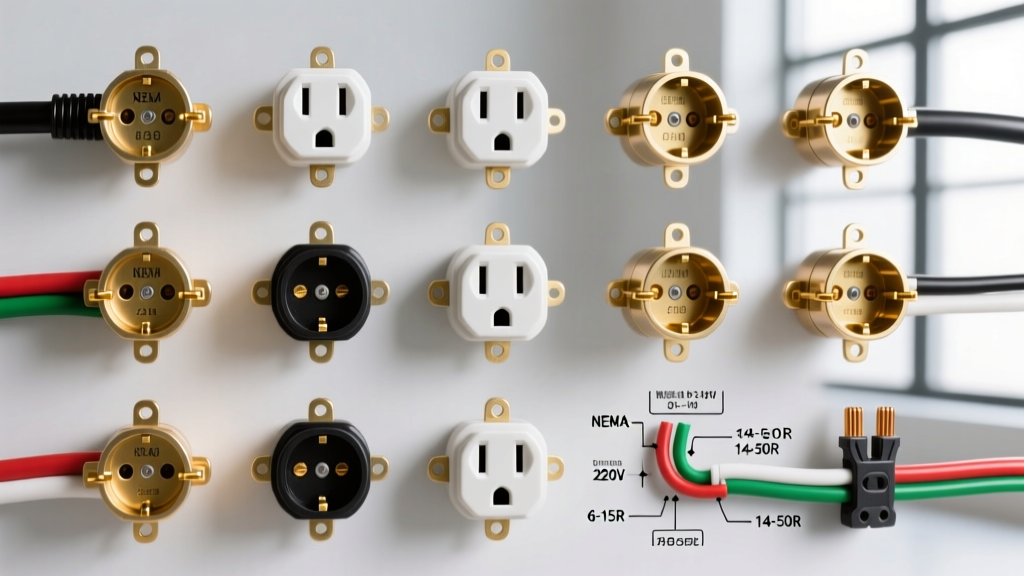
NEMA standardizes plug and receptacle blade configurations to prevent you from plugging a 30-amp dryer into a 50-amp range circuit. Here are the most common 240V configurations you will encounter in residential and light-commercial settings.
1. NEMA 14-50R (50A, 125/250V, 4-Wire)
The NEMA 14-50 is the undisputed heavyweight of residential 240V outlets. It features four slots: two hot legs (X and Y), a neutral (W), and an equipment grounding conductor (G).
- Primary Uses: Electric ranges, large RV hookups, and Level 2 EV chargers (like the Tesla Mobile Connector or ChargePoint Home Flex).
- Code Note: Because it includes a dedicated ground and neutral, it is fully compliant with modern NEC 250.140 requirements for new installations.
2. NEMA 14-30R (30A, 125/250V, 4-Wire)
Visually similar to the 14-50 but rated for lower amperage, the 14-30 features an L-shaped neutral blade to prevent cross-compatibility with 50A devices.
- Primary Uses: Modern electric clothes dryers.
- Wire Requirement: Typically wired with 10/3 NM-B (Romex) or 10 AWG THHN in conduit.
3. NEMA 6-50R (50A, 250V, 3-Wire, No Neutral)
The NEMA 6-50 provides two hot legs and a ground, but no neutral. This is because the connected equipment requires pure 240V and does not need a 120V tap for control boards or timers.
- Primary Uses: MIG/TIG welders (e.g., Lincoln Electric or Miller 210-series), heavy-duty air compressors, and commercial equipment.
- Code Note: You cannot use a 6-50 for an appliance that requires a neutral. Attempting to bootleg a neutral from the ground is a severe NEC violation and a lethal shock hazard.
4. Legacy NEMA 10-30R and 10-50R (Ungrounded 3-Wire)
If you are renovating an older home, you may find NEMA 10-series outlets. These feature two hots and a neutral, but no dedicated equipment ground. Historically, the appliance chassis was bonded to the neutral wire.
⚠️ CRITICAL CODE WARNING: Under NEC Article 250.140, installing a new NEMA 10-series receptacle is strictly prohibited. If a neutral wire were to break or develop high resistance on a 10-series circuit, the entire metal chassis of your dryer or range would become energized at 120V/240V. New installations must always use the 4-wire 14-series equivalents.
Crucial NEC Code Requirements for 240V Receptacles
Simply matching the plug to the appliance is only half the battle. The NEC dictates strict installation parameters for these high-current circuits.
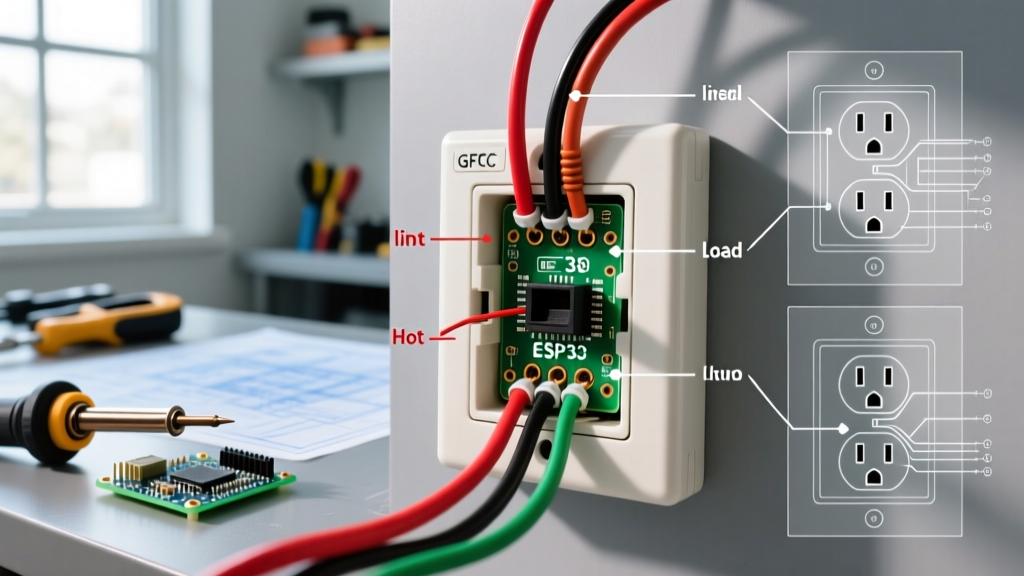
GFCI Protection Mandates (NEC 210.8)
One of the most impactful changes in recent NEC cycles (carrying strongly into 2026 local adoptions) is the expansion of Ground Fault Circuit Interrupter (GFCI) protection. According to NEC 210.8(A), GFCI protection is now required for all 125V through 250V receptacles installed in garages, basements, crawlspaces, and outdoor locations.
Practical Impact: If you are installing a NEMA 14-50 in your garage for an EV charger, the circuit must be GFCI protected. Because 50A GFCI receptacles are exceptionally rare and expensive, this usually requires installing a standard 14-50R receptacle paired with a 50A GFCI Circuit Breaker (such as the Square D HOM250GFIC or Eaton BR250GF) in the main panel.
Calibrated Torque Requirements (NEC 110.14(D))
High-amperage 220V outlets generate significant heat at the termination points if wires are loose. NEC 110.14(D) mandates that all electrical connections must be tightened using a calibrated torque tool (like a torque screwdriver or torque wrench) to the manufacturer's specified inch-pound settings. Hand-tightening a 50A receptacle terminal with a standard screwdriver is now a direct code violation and a primary cause of receptacle melt-downs.
Continuous Load Derating for EV Charging (NEC 210.20)
The U.S. Department of Energy notes that Level 2 EV charging is considered a 'continuous load' (operating for 3 hours or more). NEC 210.20(A) requires the circuit breaker to be rated at 125% of the continuous load. Therefore, a 40-Amp EV charger requires a 50-Amp breaker and a NEMA 14-50 outlet. You cannot place a 40A continuous load on a 40A breaker.
Wire Sizing and Breaker Matrix for 220V Outlets
Selecting the correct wire gauge is dependent on the terminal temperature ratings (usually 75°C for residential breakers and receptacles) and the insulation type. Below is the definitive matrix for copper wiring in standard residential applications.
| NEMA Outlet | Max Amperage | Min. Copper Wire (NM-B / Romex) | Min. Copper Wire (THHN in Conduit) | Breaker Size | Typical Appliance |
|---|---|---|---|---|---|
| 14-30R | 30A | 10/3 AWG | 10 AWG | 30A | Electric Dryer |
| 14-50R | 50A | 6/3 AWG | 6 AWG | 50A | Range / EV Charger |
| 6-50R | 50A | 6/2 AWG w/ Ground | 6 AWG | 50A | Welder / Compressor |
| 14-60R | 60A | 4/3 AWG | 4 AWG | 60A | Large EVSE / Subpanel |
Note: If using Aluminum wire (e.g., SER cable), you must upsize by two gauges (e.g., 4 AWG Aluminum for a 50A circuit) and use terminals rated for AL/CU, applying an anti-oxidant compound like Noalox.
Step-by-Step: Upgrading a Legacy 3-Prong Dryer Outlet
If you bought a new home with an old NEMA 10-30 dryer outlet, here is the code-compliant method to upgrade it to a 14-30R:
- Kill the Power: Turn off the 30A double-pole breaker and verify zero voltage with a non-contact tester and a multimeter.
- Remove the Old Receptacle: Extract the 10-30R. You will see two hots and a neutral (often a bare wire or white tape on a bare wire in older Romex).
- Pull New Wire (If Necessary): If your existing cable lacks a dedicated ground, you must either pull a new 10/3 NM-B cable from the panel OR run a separate 10 AWG Equipment Grounding Conductor (EGC) back to the panel's ground bar, per NEC 250.130(C).
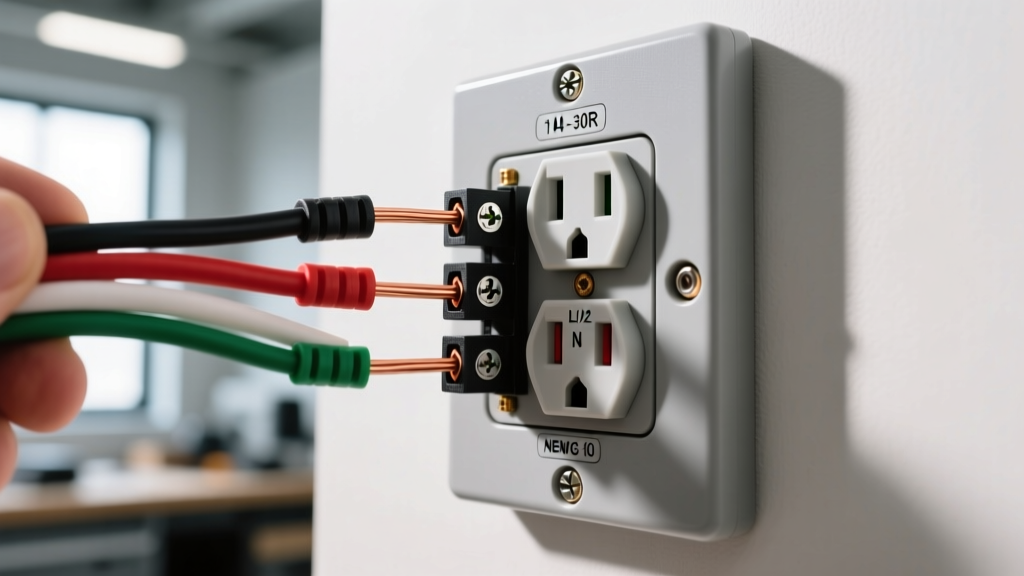
- Terminate the 14-30R: Connect the two hots to the brass X/Y terminals, the white neutral to the silver W terminal, and the bare/green ground to the green G terminal.
- Torque to Spec: Use a torque screwdriver to tighten the terminals to the manufacturer's spec (typically 14-18 in-lbs for standard 30A receptacles).
- Update the Appliance Cord: You must also swap the dryer's 3-prong power cord for a 4-prong cord and remove the internal bonding jumper inside the dryer's terminal block to separate the neutral from the chassis ground.
Final Thoughts on Safety and Inspection
Working with 220 electrical outlet types leaves zero margin for error. A loose neutral on a 120V circuit might cause a flickering light; a loose neutral on a 240V multi-wire branch circuit or appliance receptacle can send 240V surging through 120V control boards, instantly destroying appliance electronics and creating a severe fire hazard. Always consult the latest NEC guidelines, utilize industry-standard code resources, and when in doubt, hire a licensed electrical contractor to pull the permit and perform the final terminations.