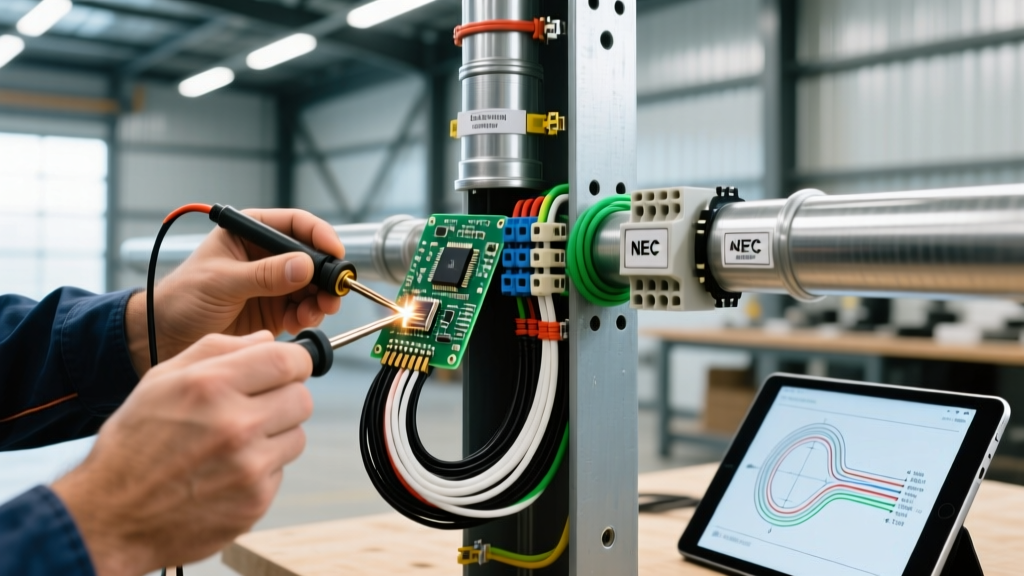

The Unique Dangers of Steel Building Electrification
Constructing a barndominium, commercial workshop, or agricultural facility using a pre-engineered steel building kit is highly cost-effective, but it introduces severe electrical hazards that do not exist in traditional wood-framed construction. In a wood-framed house, the structural studs are insulators. In a steel building, the entire structural frame is a massive, continuous electrical conductor. If a single hot wire chafes against an ungrounded steel purlin, the entire building envelope can become energized at 120V or 240V, posing a lethal shock hazard to anyone who touches the metal siding while standing on the earth.
As we navigate the latest adoption cycles of the NFPA 70 (National Electrical Code), understanding the strict requirements for grounding, bonding, and physical protection in steel structures is non-negotiable. This guide details the exact safety best practices, material specifications, and failure modes you must address when executing electrical wiring in a steel building.
Grounding vs. Bonding: The Critical Distinction
The most common and dangerous mistake DIYers and inexperienced electricians make in steel buildings is confusing grounding with bonding. Both are required, but they serve entirely different safety functions.
Grounding (Connecting to Earth)
Grounding connects your electrical system to the earth to dissipate lightning strikes and stabilize line-to-ground voltages. For a steel building, the metal frame itself can serve as a Grounding Electrode if it meets the requirements of NEC 250.52(A)(2) (at least 10 feet of structural steel in direct contact with the earth via concrete footings or ground rods). However, you must still install a supplemental grounding electrode system (GES), typically two 8-foot copper-clad ground rods spaced 6 feet apart, bonded to the main service panel.
Bonding (Creating a Low-Impedance Fault Path)
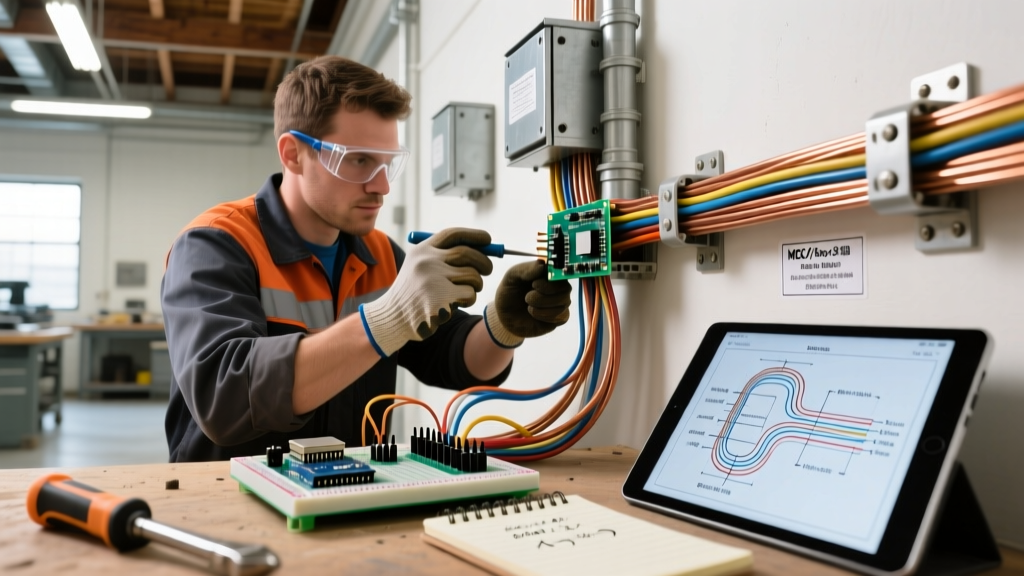
Bonding is the process of connecting all non-current-carrying metal parts together so that if a fault occurs, enough current flows to instantly trip the breaker. NEC 250.4(A)(5) mandates an effective ground-fault current path. You cannot rely on the self-tapping screws or bolted connections of the steel frame to provide this path; paint, powder coating, and rust act as insulators. You must install dedicated copper bonding jumpers across structural connections and bond all metal conduit, panels, and enclosures to the main grounding busbar.
Code Alert: Per NEC 250.136, the steel building frame cannot be used as the Equipment Grounding Conductor (EGC) for branch circuits. You must pull a dedicated copper EGC wire inside your conduit or use the metal conduit itself as the EGC, provided all fittings are tightened to manufacturer torque specifications.
Conduit Selection for Steel Structures
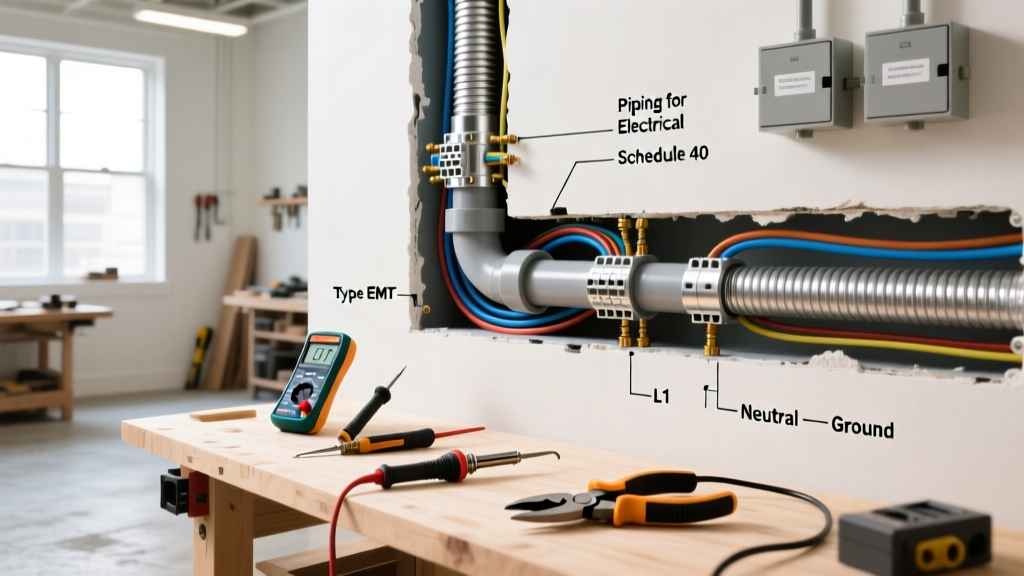
Running Romex (NM-B cable) exposed along steel studs is strictly prohibited by NEC 334.15 due to the sharp edges of the metal framing and the high risk of physical damage. You must use a raceway system. Below is a comparison of the three most common conduit types used in steel building wiring.
| Conduit Type | Material | Avg. Cost (per 10ft, 3/4") | Best Application in Steel Buildings | Limitations & NEC Rules |
|---|---|---|---|---|
| EMT (Electrical Metallic Tubing) | Galvanized Steel | $12.00 - $16.00 | Interior walls, ceilings, and protected runs. | Not permitted where subject to severe physical damage (NEC 358.12). Requires bonding bushings at panel terminations. |
| RMC (Rigid Metal Conduit) | Heavy-Wall Steel | $45.00 - $65.00 | Exterior walls, low-level runs, and areas near heavy machinery or forklifts. | Heavy and difficult to thread. Requires anti-corrosion treatment if embedded in concrete. |
| Schedule 80 PVC | Rigid Polyvinyl Chloride | $22.00 - $28.00 | Exterior runs, high-moisture areas, and corrosive environments (e.g., agricultural buildings). | Requires an internal copper EGC wire. Subject to thermal expansion (NEC 352.44). |
Mitigating Physical Damage and Sharp Edges
Steel studs and conduit knockouts feature razor-sharp edges that can easily slice through wire insulation over time, especially in buildings subject to wind-load vibration or heavy machinery operation.
Mandatory Use of Anti-Short Bushings
Whenever you terminate EMT or Flexible Metal Conduit (FMC) into a metal junction box or panelboard, you must install an anti-short bushing (commonly known as a "redhead" due to its red plastic color). This is explicitly required by NEC 300.15 and 358.28 to protect wires from abrasion against the sharp metal edge of the conduit end.
Stranded vs. Solid Wire
While 12 AWG and 10 AWG solid copper wire is standard in residential wood framing, stranded copper wire is highly recommended for steel buildings. Steel structures flex and vibrate under wind loads and seismic activity. Stranded wire is significantly more resistant to metal fatigue and work-hardening breakage caused by continuous micro-vibrations against steel studs.
Thermal Expansion Dynamics: The Hidden Conduit Killer
Steel buildings experience extreme temperature swings, particularly in unconditioned workshops or agricultural spaces. If you are using PVC conduit on the exterior or interior of a steel building, you must account for thermal expansion, which is governed by NEC 352.44.
The Expansion Math
PVC expands at a rate of approximately 3.38 inches per 100 feet for every 100°F temperature change. Steel, by contrast, expands only about 0.75 inches under the same conditions. If you rigidly mount a 100-foot run of PVC conduit to a steel wall in a region where temperatures swing from 20°F in winter to 120°F in summer (a 100°F delta), the PVC will attempt to grow by over 3 inches. Because the steel frame barely moves, the PVC will buckle, tear out of its straps, or crush the boxes at either end.
The Solution: Expansion Fittings
You must install PVC expansion fittings, such as the O-Z/Gedney EJC-100 series (retailing between $45 and $70 per fitting), every 14 to 18 feet depending on your local temperature delta. These fittings feature a sliding piston joint that allows the conduit to expand and contract independently of the steel structure. Always strap the conduit tightly on one side of the expansion fitting and use loose, wide straps on the sliding side to allow movement.
Moisture, Condensation, and Galvanic Corrosion
Steel buildings are notorious for "sweating"—condensation forming on the interior metal panels when warm, moist air meets the cold steel surface. This constant dripping creates a high-moisture environment that accelerates corrosion.
- Dielectric Grease: When connecting copper grounding wires to the galvanized steel frame using a lug (e.g., Ilsco GBL-4), apply a liberal amount of anti-oxidant joint compound like Noalox or dielectric grease. This prevents galvanic corrosion between the dissimilar metals (copper and zinc/steel), which can otherwise increase resistance and compromise the fault-current path over a 5-year period.
- Drip Loops: Any conduit entering the building from the exterior must feature a drip loop to prevent rainwater from tracking down the conduit and into your main service disconnect.
- Sealing Fittings: Use conduit sealing fittings (EYS series) at the boundary where conduit passes from the cold exterior to the warm interior to prevent warm, moist air from traveling inside the conduit and condensing inside your main breaker panel.
Real-World Failure Modes to Avoid
Based on forensic electrical investigations and industry data highlighted by safety authorities like OSHA Standard 1926.404, here are the most common fatal errors made during steel building wiring:
- Using the Frame as a Neutral: A catastrophic code violation where an installer uses the steel building frame as the neutral return path for a 240V/120V split-phase circuit. This energizes the building and causes severe electrolysis on underground water pipes.
- Welder Ground Clamping: Allowing a welder to clamp their welding ground lead to the building's steel frame without ensuring the frame is properly bonded to the electrical service ground. The high-frequency return current can fry sensitive electronics, arc through conduit couplings, and melt EGC wires inside adjacent junction boxes.
- Omitting Grounding Bushings: Failing to install a grounding bushing with a bonding jumper on the service entrance conduit. Without this, a fault on the service lateral may not trip the main breaker because the locknut and hub connection does not provide a reliable low-impedance path.
Frequently Asked Questions (FAQ)
Can I run direct burial wire under the concrete slab of a steel building?
Yes, but you must transition to rigid metal conduit (RMC) or Schedule 80 PVC before the wire emerges through the concrete slab. NEC 300.5 requires physical protection for underground conductors emerging from grade, and the steel base track of the building can easily crush emerging cables if the slab shifts.
Do I need to bond the metal roof panels to the grounding system?
Generally, no. NEC 250.4(A)(4) requires bonding of metal parts that are likely to become energized. Standard metal roof and wall siding panels, which are separated from the electrical system by wood or fiberglass insulation and are not in contact with electrical enclosures, do not require explicit bonding. However, the primary structural steel frame supporting them absolutely must be bonded.
Is it safe to mount the main breaker panel directly to a steel column?
Yes, provided you use a dedicated bonding bushing and jumper wire to connect the panel's ground busbar to the steel column, and you ensure the column itself is part of the continuous grounding electrode system. Always use a torque screwdriver to tighten all panel lugs to the manufacturer's exact specifications to prevent thermal loosening over time.
Final Safety Directives
Electrical wiring in a steel building demands a higher tier of vigilance than standard residential wiring. The conductive nature of the environment means that every single junction box, conduit strap, and panel enclosure is a potential shock hazard if the bonding system is compromised. For further reading on advanced grounding topologies and safe installation practices, consult the extensive technical library provided by the Copper Development Association. Always pull local permits, hire a licensed master electrician to review your single-line diagram, and ensure your grounding electrode system is tested with a fall-of-potential ground tester before energizing the main service.