
Navigating the 2026 European Electrical Wiring Landscape
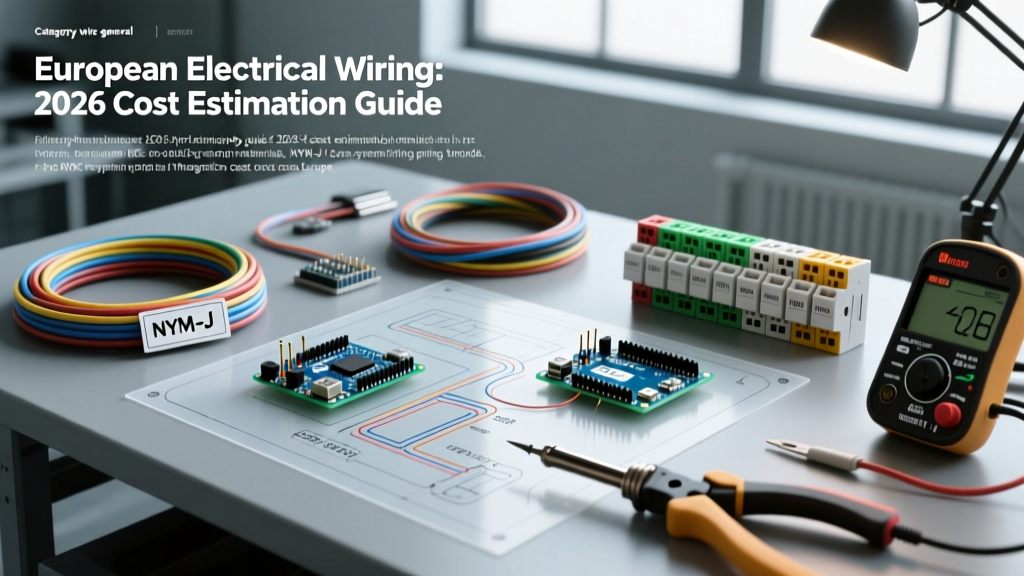
Estimating the cost of european electrical wiring requires a deep understanding of the IEC 60364 framework, regional harmonizations like CENELEC EN 50525, and local labor markets. Unlike North American systems that operate on 120V/240V split-phase at 60Hz, European infrastructure relies on 230V single-phase and 400V three-phase power at 50Hz. This fundamental difference dictates the use of specific metric cable cross-sections, DIN-rail protection devices, and stringent earthing topologies.
In 2026, material costs for European electrical wiring are heavily influenced by global copper market fluctuations and the European Union's aggressive legislative push toward halogen-free, low-smoke-zero-halogen (LSZH) cabling in public and multi-family dwellings. Whether you are a contractor bidding on a commercial retrofit in Berlin, an expat building a custom home in the south of France, or a procurement manager sourcing IEC-compliant materials, this guide provides precise, actionable cost estimations and technical edge cases you need to budget accurately.
Core Cable Materials & 2026 Pricing Matrix
The backbone of any European installation is the cabling. Standard PVC-insulated cables are being phased out of commercial and multi-tenant residential projects in favor of LSZH alternatives to meet modern fire safety directives. Below is the 2026 cost matrix for the most common metric wire types used across the continent.
| Cable Designation | Cross-Section | Insulation Type | Avg. Cost per 100m (2026) | Primary Application |
|---|---|---|---|---|
| NYM-J | 3 x 1.5 mm² | PVC | €45 - €60 | Lighting circuits (10A/16A) |
| NYM-J | 5 x 2.5 mm² | PVC | €110 - €140 | Standard socket outlets (16A/20A) |
| NYM-J | 5 x 4.0 mm² | PVC | €190 - €230 | 3-phase HVAC, induction hobs |
| H07Z-K (LSZH) | 1 x 2.5 mm² | Halogen-Free | €35 - €45 | Panel wiring, public buildings |
| H07V-K | 1 x 1.5 mm² | PVC (Flexible) | €18 - €25 | Control panels, internal wiring |
| YCYM (KNX Bus) | 2 x 2 x 0.8 mm | PVC (Shielded) | €75 - €95 | Smart home data/communication |
The Copper Surcharge Factor
When sourcing European electrical wiring materials, distributors typically quote a base price plus a Kupferzuschlag (copper surcharge). In early 2026, with copper trading near historic highs due to EV battery and renewable grid demands, expect a surcharge of €120 to €160 per 100kg of copper weight. Always verify if the supplier's catalog price includes the current month's surcharge, as omitting this can blow your material budget by 15-20%.
Distribution Boards and Protection Devices
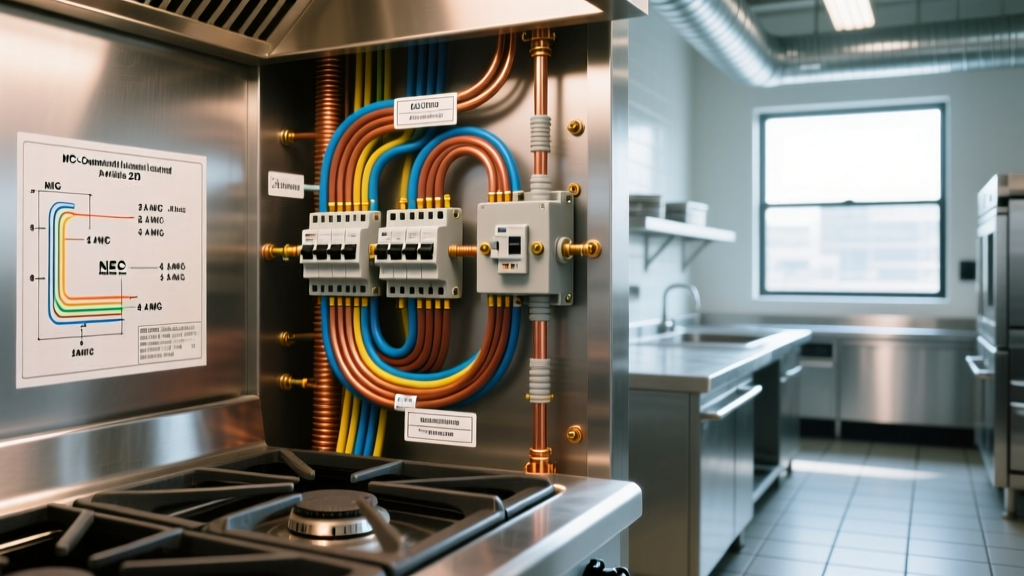
European consumer units (distribution boards) utilize standardized 35mm DIN rails. The market is dominated by tier-one manufacturers like Schneider Electric (Acti9 series), ABB (System Pro M), and Hager. The cost of protection has risen due to the integration of advanced microprocessors in RCBOs (Residual Current Breaker with Overcurrent).
MCB and RCD Cost Breakdown
- Standard MCB (Curve B or C, 16A): €12 - €18 per pole. Curve B is mandated for residential use in Germany (per VDE 0100) to prevent nuisance tripping, while Curve C is more common in the UK and Southern Europe.
- Type A RCD (40A, 30mA): €35 - €55. Suitable for standard residential circuits but increasingly inadequate for modern appliances.
- Type F RCD: €60 - €85. Required for circuits feeding modern washing machines and variable-speed drives.
- Type B RCD/RCBO: €110 - €180. Critical for 2026: Type B is now practically mandatory for 3-phase EV chargers and solar inverters, as these devices can generate high-frequency DC leakage currents that blind standard Type A or AC RCDs.
Expert Insight: According to the IET Wiring Regulations (BS 7671), which heavily aligns with European IEC standards, the omission of Type B RCDs on EV charging circuits is a leading cause of failed compliance inspections in 2026. Budget an extra €120 per EV charging point specifically for a Type B RCBO.
Smart Building Integration: The KNX Premium
While wireless protocols like Zigbee and Matter dominate the DIY smart home space, high-end European residential and commercial builds rely on KNX, the globally recognized open standard for home and building control. KNX utilizes a dedicated green bus cable (YCYM 2x2x0.8) that runs parallel to your 230V mains wiring.
Implementing KNX fundamentally alters your wiring cost structure. You are no longer running 230V directly to a wall switch. Instead, you run the KNX bus cable to a low-voltage switch, and route all 230V lighting loads back to a central distribution panel containing KNX switching actuators.
KNX Cost Implications:
- Cabling: YCYM bus cable costs roughly €85 per 100m. A standard 200m² home requires 400m-600m of bus cable (€340 - €510).
- Actuators & Power Supplies: A single 8-channel KNX switching actuator (e.g., ABB or MDT) costs between €250 and €350. A 200m² home typically requires 3 to 4 actuators (€1,000 - €1,400).
- Panel Space: KNX requires significantly more DIN-rail space. You will need to upgrade from a standard 48-module consumer unit to a 72-module or 108-module enclosure, adding €150 - €300 to enclosure costs.
For comprehensive system architecture, contractors should consult the KNX Association's technical guidelines to ensure proper line repeaters and choke installations are budgeted for large topologies.
Regional Labor Rates & Certification Costs
Labor is the most volatile variable in European electrical wiring estimations. The continent is divided into distinct economic zones, and the requirement for licensed, certified electricians (such as the Elektrofachkraft in DACH countries) strictly limits supply, driving up hourly rates.
| Region | Avg. Hourly Rate (2026) | Typical Full Rewire Cost (150m² Home) | Regulatory Body / Standard |
|---|---|---|---|
| DACH (Germany, Austria, CH) | €70 - €110 / hr | €18,000 - €28,000 | VDE 0100 / NIN |
| Nordics (Sweden, Norway) | €80 - €120 / hr | €20,000 - €32,000 | NEK / SS 43640000 |
| UK & Ireland | £50 - £80 / hr (€60-€95) | €14,000 - €22,000 | BS 7671 / IS 10101 |
| Southern Europe (Spain, Italy) | €35 - €55 / hr | €8,000 - €14,000 | REBT / CEI 64-8 |
| Eastern Europe (Poland, Romania) | €20 - €35 / hr | €5,000 - €9,000 | PN-HD 60364 / I7-2011 |
Testing and Commissioning Fees
In Europe, you cannot simply close the panel and turn on the power. IEC 60364 mandates rigorous initial verification. This includes measuring earth fault loop impedance (Zs), prospective fault current (Ipf), and conducting RCD ramp tests. Professional testing equipment, such as the Fluke 1664 FC or Chauvin Arnoux C.A 6116, costs upwards of €2,500. Consequently, certified testing and commissioning documentation (the Prüfprotokoll or Electrical Installation Certificate) will add a fixed fee of €400 to €900 to your project total, depending on the circuit count.
Earthing Systems: Edge Cases and Retrofit Costs
One of the most common budget overruns in European electrical wiring occurs when contractors misidentify the local earthing system. The two dominant systems are TN-C-S (Protective Multiple Earthing, common in the UK, Germany, and urban areas) and TT (Terra-Terra, common in rural France, Italy, and Spain).
The TT System Trap
In a TT system, the earth is provided by a local earth rod driven into the ground, rather than being supplied by the utility's neutral wire. Because the earth loop impedance (Ze) of a physical earth rod can be highly variable and often too high to guarantee rapid disconnection of an MCB during a fault, TT systems legally require 30mA RCD protection on every single circuit (or a main 300mA time-delayed RCD followed by 30mA RCBOs).
Cost Impact: If you are estimating a rewiring project in rural France and assume a TN-C-S topology, you might budget for standard MCBs and a single main RCD. Discovering a TT system on-site means you must upgrade every circuit to an RCBO, instantly adding €800 to €1,500 to your protection device budget. Always perform a Ze (external earth loop impedance) test during the initial site survey.
Sustainability and the CENELEC Mandates
Looking ahead through 2026, the European Committee for Electrotechnical Standardization (CENELEC) continues to tighten regulations regarding the environmental impact and fire toxicity of wiring materials. The Construction Products Regulation (CPR) classifies cables based on their fire performance. For escape routes, hospitals, and high-occupancy residential buildings, specifying Class Cca or B2ca LSZH cables is no longer optional—it is a legal requirement.
While LSZH cables like H07Z-K and H07Z1-K cost approximately 25-40% more than their PVC equivalents (NYM-J or H07V-K), failing to specify them in applicable commercial bids will result in failed inspections and costly tear-outs. Always cross-reference the local building's fire safety classification with the cable's Euroclass rating before finalizing your Bill of Materials (BOM).
Final Estimation Checklist for Contractors
To ensure your European electrical wiring estimates are bulletproof, verify the following before submitting your bid:
- [ ] Topology Verified: Confirmed TN-C-S vs. TT earthing to determine MCB vs. RCBO requirements.
- [ ] EV & Solar Loads: Budgeted Type B RCDs for all 3-phase inverter and EV charger circuits.
- [ ] Copper Surcharge: Locked in supplier quotes for the current month's copper index.
- [ ] Euroclass Compliance: Specified LSZH (H07Z) cables for all public corridors and escape routes.
- [ ] Testing Budget: Allocated minimum €500 for IEC 60364 initial verification and certification.
By accounting for the specific technical demands of the IEC 60364 standard and the regional nuances of European labor and materials, you can eliminate margin-killing surprises and deliver safe, compliant, and profitable electrical installations.