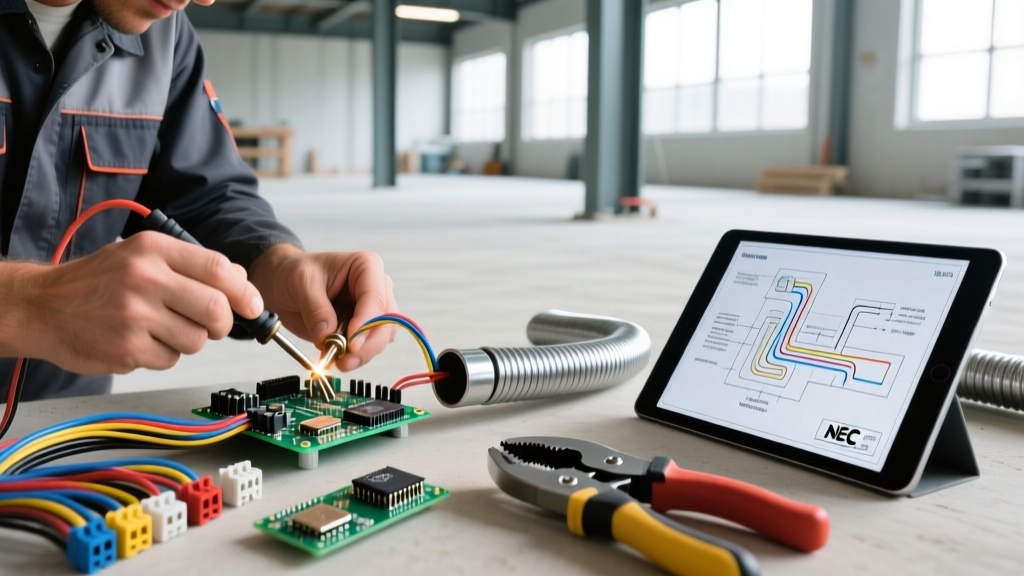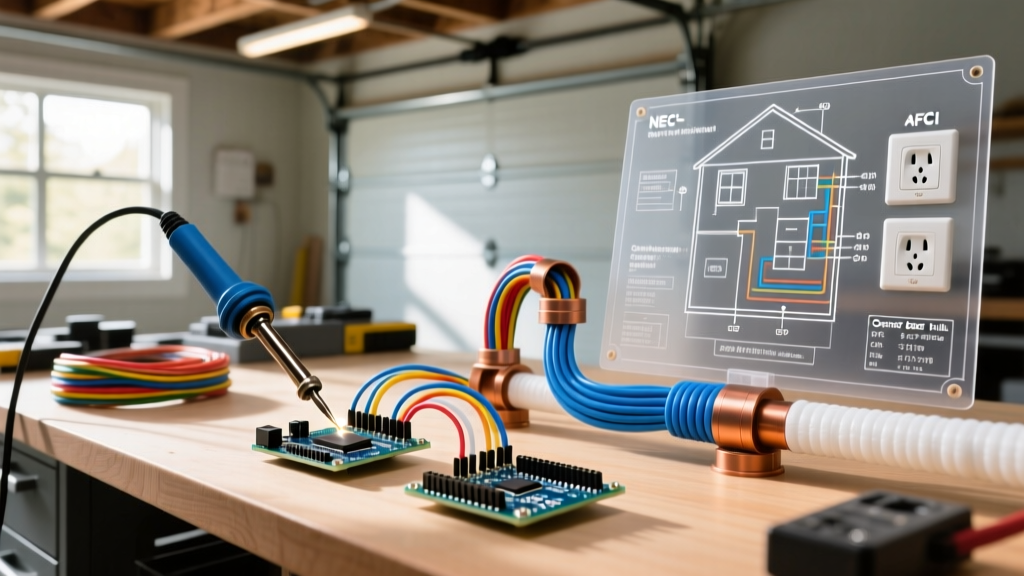

The Core Framework: Navigating NEC Standards for 2026 Projects
When planning any home electrical upgrade, the National Electrical Code (NEC), or NFPA 70, serves as the absolute baseline for safety and compliance. While local municipalities may have specific amendments, the NEC provides the universal framework that inspectors use to evaluate residential electrical wiring. As of 2026, most jurisdictions are enforcing the 2023 NEC cycle, with early adopters transitioning into the newly published 2026 updates. Understanding these codes is not just about passing inspection; it is about preventing electrical fires, mitigating shock hazards, and ensuring your home's infrastructure can handle modern power demands.
According to the National Fire Protection Association (NFPA), electrical failures or malfunctions are consistently among the leading causes of home structure fires. This guide breaks down the most critical, heavily enforced, and frequently misunderstood NEC articles governing residential wiring today.
Ampacity and Conductor Sizing (NEC 310.16)
Ampacity defines the maximum current a conductor can carry continuously under the conditions of use without exceeding its temperature rating. For standard residential wiring using Non-Metallic Sheathed Cable (NM-B, commonly known as Romex), the conductors are typically rated for 90°C, but their ampacity must be derated based on the 60°C column of NEC Table 310.16 due to the temperature limitations of standard termination lugs.
Undersizing wire is a catastrophic failure mode that leads to insulation melting and arc faults. Conversely, oversizing wire on standard circuits can cause termination issues if the breaker lugs are not rated for larger gauges. Below is the standard sizing matrix for copper conductors in residential branch circuits:
| Circuit Rating | Min. Copper Wire Size (NM-B) | Max Breaker Size | Common Residential Applications |
|---|---|---|---|
| 15 Amps | 14 AWG | 15A | General lighting, bedroom receptacles, bathroom fans |
| 20 Amps | 12 AWG | 20A | Kitchen small appliance circuits, bathroom GFCI receptacles, garage outlets |
| 30 Amps | 10 AWG | 30A | Electric water heaters, window AC units, dryers (240V) |
| 40 Amps | 8 AWG | 40A | Electric ranges, older HVAC condensing units |
| 50 Amps | 6 AWG | 50A | Level 2 EV chargers, subpanel feeds, modern electric ranges |
Mandatory Protection: AFCI and GFCI Expansion (NEC 210.8 & 210.12)
The most significant code evolution over the last two decades has been the aggressive expansion of Arc-Fault Circuit Interrupter (AFCI) and Ground-Fault Circuit Interrupter (GFCI) requirements. These devices protect against two entirely different hazards: GFCIs prevent lethal electric shocks by detecting ground leakage (as low as 4-6mA), while AFCIs prevent fires by detecting dangerous arcing conditions.
GFCI Requirements (NEC 210.8)
GFCI protection is mandatory for all 125-volt through 250-volt receptacles supplied by single-phase branch circuits rated 150 volts or less to ground, in the following areas:
- Bathrooms and kitchens (specifically serving countertop surfaces)
- Garages, accessory buildings, and unfinished basements
- Crawlspaces, boathouses, and outdoor receptacles
- Laundry areas and indoor damp locations
AFCI Requirements (NEC 210.12)
Combination-Type AFCI protection is required for all 120-volt, single-phase, 15- and 20-amp branch circuits supplying outlets in living areas. This includes family rooms, dining rooms, living rooms, parlors, libraries, dens, sunrooms, recreation rooms, closets, hallways, and similar rooms. The Electrical Safety Foundation International (ESFI) notes that AFCIs are critical for identifying parallel and series arcing that standard thermal breakers cannot detect.
Expert Edge Case: The Retrofit Exception. If you are replacing a single receptacle in an older home where no equipment grounding conductor (EGC) exists in the wall, NEC 406.4(D)(2) allows you to install a GFCI receptacle. However, you must label it "No Equipment Ground." This provides shock protection but does not provide a ground path for surge protectors or sensitive electronics.
Box Fill Calculations: The Most Common Code Violation (NEC 314.16)
Overcrowding electrical boxes is the most frequent residential code violation. Cramming too many wires into a standard single-gang box causes physical stress on conductors, damages insulation during device installation, and traps heat. NEC 314.16 dictates strict volume allowances based on the largest conductor entering the box.
Step-by-Step Box Fill Calculation
- Identify Box Volume: Check the stamped cubic inch (cu in) capacity on the back of the plastic or metal box. A standard single-gang "old work" box is typically 14 to 18 cu in, while a deep device box can be 22.5 cu in.
- Count the Conductors: Each insulated wire (hot or neutral) that originates or terminates in the box counts as one conductor. Wires that simply pass through the box without a splice count as one. Ground wires count as a single one combined allowance, regardless of how many are present.
- Account for Devices: Each yoke (switch or receptacle) counts as two conductors based on the largest wire connected to it.
- Apply the Multiplier: Multiply the total conductor count by the volume allowance for the wire gauge:
- 14 AWG = 2.0 cu in per conductor
- 12 AWG = 2.25 cu in per conductor
- 10 AWG = 2.5 cu in per conductor
- Compare: Ensure the total calculated volume does not exceed the physical box volume. If it does, you must upgrade to a deeper box or add an extension ring.
Grounding, Bonding, and the Neutral Separation Rule (NEC 250)
A profound misunderstanding of grounding versus bonding leads to dangerous subpanel installations. According to the U.S. Department of Energy, proper grounding ensures that fault currents have a safe, low-impedance path back to the source, tripping the breaker immediately.
Main Panel vs. Subpanel Wiring
In your main service panel, the neutral bus bar and the equipment grounding bus bar are bonded together. This is the only point in the system where this connection is permitted.
However, when feeding a subpanel (such as in a detached garage, an addition, or a generator interlock setup), NEC 250.32 and 250.142 strictly require the separation of neutrals and grounds. You must run a 4-wire feeder (two hots, one insulated neutral, one bare or green equipment ground). Inside the subpanel, the neutral bar must be isolated from the metal enclosure (by removing the green bonding screw or strap), while the ground bar must remain bonded to the enclosure. Failing to separate them in a subpanel allows normal neutral return current to travel along the equipment grounding wires and metal conduits, creating a severe shock hazard and electromagnetic interference.
2026 Material Costs & Component Selection
Material pricing for residential electrical wiring has stabilized compared to the copper spikes of the early 2020s, but premium safety components remain a significant line item. When budgeting for a 2026 remodel, use these realistic market averages:
- 12/2 NM-B Cable (250ft roll): $135 - $155 (Southwire or CerroWire brands).
- 14/2 NM-B Cable (250ft roll): $95 - $115.
- 20A AFCI/GFCI Dual Function Breaker (e.g., Square D HOM220DF): $55 - $68. These are now mandatory in areas requiring both protections, like kitchens and laundry rooms, saving panel space.
- 20A Tamper-Resistant GFCI Receptacle (e.g., Leviton R52-GFNT2): $18 - $24.
- Deep Single-Gang Device Box (22.5 cu in): $2.50 - $4.00 per unit.
Frequently Asked Questions
Can I mix 14 AWG and 12 AWG wire on a 20-amp circuit?
While physically possible, it is a severe code violation. NEC 240.4(D) strictly limits 14 AWG copper to a maximum 15-amp overcurrent device. If you use 14 AWG wire anywhere on a 20-amp circuit (even as a short drop to a light fixture), a 20-amp fault could melt the 14 AWG wire before the breaker trips. Always match the entire circuit to the smallest wire gauge used.
Do I need a GFCI breaker if I use a GFCI receptacle?
No. You only need GFCI protection at one point in the circuit. Using a GFCI receptacle at the first position in the run will protect all standard downstream receptacles connected to its "LOAD" terminals. Using both a GFCI breaker and a GFCI receptacle on the same circuit is redundant, causes nuisance tripping, and makes resetting the circuit highly inconvenient.
Are smart breakers code-compliant for AFCI/GFCI protection?
Yes, provided they are UL-listed for the specific function. Modern smart panels (like the Leviton Smart Load Center or Square D Wiser) use advanced digital sensing to provide UL 1699 (AFCI) and UL 943 (GFCI) compliance while offering app-based energy monitoring. Ensure the specific model is listed for your panel's manufacturer busbar, as mixing brands without a classified UL listing violates NEC 110.3(B).