
Why Outdoor BBQ Islands Destroy Standard Wiring
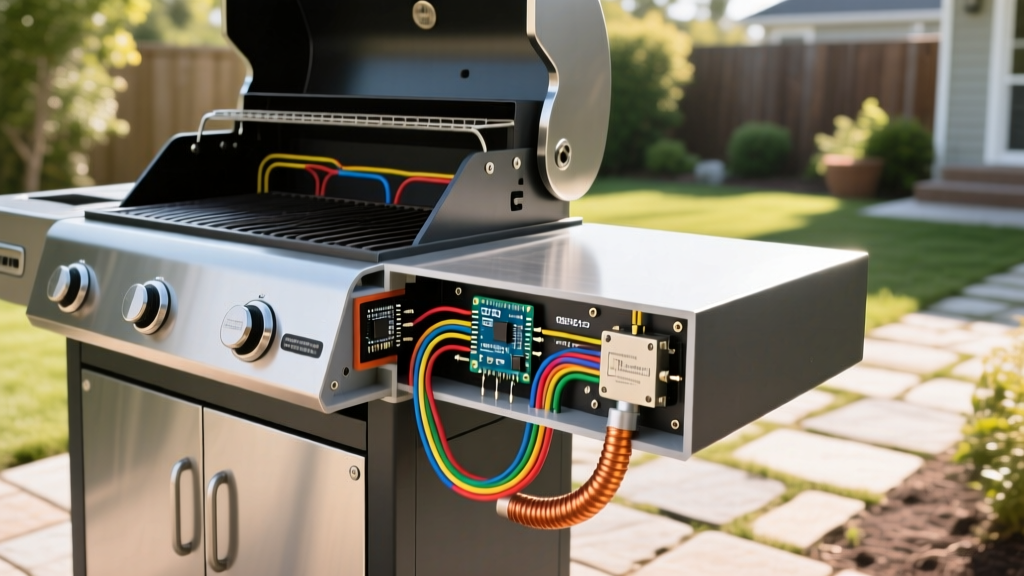
Integrating an outdoor bbq frame and electrical wiring into a cohesive outdoor kitchen island presents a unique set of hazards that standard residential wiring is not designed to handle. Unlike a standard indoor kitchen, a metal-framed BBQ island subjects electrical components to extreme thermal cycling, airborne grease, high-pressure water from hose cleanups, and corrosive marinades. When a homeowner or contractor treats a stainless steel BBQ island frame like a standard interior stud wall, the result is almost always nuisance tripping, degraded insulation, or severe shock hazards.
As of 2026, the average cost to retrofit a failed outdoor kitchen electrical system ranges from $1,200 to $3,500, largely due to the labor required to fish new wires through grease-caked, heat-warped conduit. This troubleshooting guide dives deep into the specific failure modes of BBQ island wiring and provides actionable, code-compliant solutions based on the latest National Electrical Code (NEC) standards.
The Thermal and Grease Degradation Matrix
Before troubleshooting a specific fault, you must understand how the environment inside a BBQ frame actively attacks electrical components. The table below outlines the primary environmental stressors and the specific wiring materials required to survive them.
| Environmental Stressor | Failure Mode | Standard Material (Fails) | Required 2026 Upgrade | Approx. Cost (2026) |
|---|---|---|---|---|
| Radiant Heat (Firebox) | Insulation melting, short circuits | Standard NM-B (Romex) | 12 AWG XHHW-2 (90°C rated) | $0.55 / ft |
| Airborne Grease | Receptacle contact fouling, arcing | Standard weatherproof covers | Taymac ML550 Extra-Duty Cover | $34.00 / ea |
| Thermal Expansion | Wire nuts loosening, open neutrals | Standard plastic wire nuts | Wago 221 Lever-Nuts (Enclosed) | $0.85 / ea |
| High-Pressure Washdown | Water ingress, GFCI failure | Standard die-cast boxes | Red Dot / Appleton FS/FD Cast Boxes | $65.00 / ea |
Step-by-Step Troubleshooting: GFCI and Breaker Faults
The most common complaint with outdoor BBQ wiring is a Ground Fault Circuit Interrupter (GFCI) that refuses to stay reset. According to the National Fire Protection Association (NFPA), NEC Article 210.8(A)(3) mandates GFCI protection for all outdoor receptacles, but the harsh BBQ environment creates unique tripping scenarios.
Symptom 1: The GFCI Trips Only During High-Heat Cooking
The Diagnosis: If your GFCI trips specifically when the grill is hot or when the rotisserie motor is running, you are likely dealing with thermal-induced insulation breakdown or a grounded neutral caused by thermal expansion.
The Fix:
- Inspect the Firebox Clearance: Measure the distance between the BBQ firebox and the nearest electrical junction box. If it is less than 14 inches, radiant heat is degrading the wire insulation. You must install a ceramic fiber blanket (like Kaowool) between the firebox and the framing.
- Upgrade to XHHW-2: Pull out any THHN or NM-B wire near the heat zone. Replace it with 12 AWG XHHW-2 (Cross-Linked Polyethylene). XHHW-2 has a significantly higher thermal tolerance and resists moisture absorption better than standard PVC insulation.
- Check for Induced Voltage: High-end BBQs use heavy-duty gas solenoid valves. When these engage, they can create an electromagnetic spike that trips sensitive electronic GFCIs. Install a Leviton GFNT2-W (Self-Testing GFCI) which features advanced microprocessor filtering to ignore harmless inductive spikes.
Symptom 2: Arc Fault (AFCI) Nuisance Tripping on Island Lighting
The Diagnosis: Many modern outdoor kitchens include LED under-counter task lighting. If the AFCI breaker trips when the BBQ hood lights or island pendants are turned on, the issue is usually a neutral-to-ground fault hidden inside the metal frame, or incompatible LED drivers.
The Fix:
- Isolate the lighting circuit from the receptacle circuit. Never put outdoor LED lighting and high-draw BBQ receptacles on the same AFCI/GFCI breaker.
- Verify that the LED drivers are rated for 'Damp/Wet' locations. Standard indoor LED drivers leak micro-amp ground currents when exposed to outdoor humidity, which the AFCI interprets as a parallel arc.
Bonding the Metal Frame: The Most Missed NEC Requirement
A massive safety oversight in DIY and even some professional outdoor kitchen builds is the failure to properly bond the metal BBQ frame. Stainless steel and aluminum frames are highly conductive. If a hot wire chafes against the ungrounded metal frame, the entire island becomes energized at 120V or 240V. Because the island sits on pavers or concrete (which are poor grounds), the breaker will not trip, creating a lethal shock hazard for anyone touching the grill and the ground simultaneously.
Per NEC Article 250.104(B), exposed structural metal that may become energized must be bonded to the equipment grounding conductor. In an outdoor kitchen, the metal island frame absolutely qualifies as exposed structural metal.
How to Properly Bond a BBQ Island Frame
Do not rely on the metal studs touching each other for continuity; stainless steel framing screws do not provide a reliable, low-impedance ground path.
- Run a continuous 6 AWG bare copper bonding jumper along the entire perimeter of the metal frame.
- Use specialized grounding lugs (such as the Ilsco GBL-4) attached to the frame with stainless steel bolts and star washers to bite through any powder coating or oxidation.
- Tie this 6 AWG bonding jumper directly to the equipment grounding bar in your outdoor subpanel or the main panel's ground bus.
- Verify continuity with a low-resistance ohmmeter. The resistance between any point on the BBQ frame and the ground bus should read less than 0.5 ohms.
Conduit Selection for High-Moisture BBQ Zones
When troubleshooting water ingress, the conduit system is usually the culprit. Standard PVC conduit (Schedule 40) is fine for underground runs, but where it transitions into the BBQ island, it often fails due to UV degradation and physical impact from heavy grill lids or propane tanks.
Pros and Cons of Conduit Types for BBQ Islands
- Liquid-Tight Flexible Metal Conduit (LFMC): Excellent for tight bends around BBQ gas lines and rotisserie motors. Drawback: The plastic coating can become brittle after 3-4 years of direct UV exposure. Must be painted with UV-resistant mastic or hidden inside the cabinetry.
- Rigid Galvanized Steel (RGS): The gold standard for physical protection. Drawback: Highly susceptible to internal condensation. If used outdoors, it must be equipped with drain fittings at every low point to prevent water accumulation that leads to short circuits.
- PVC Schedule 80: Superior impact resistance compared to Schedule 40. Drawback: Thicker walls reduce the internal diameter, limiting the number of wires you can pull. Always upsize to 1-inch conduit for 12 AWG wire runs to ensure easy future troubleshooting.
For comprehensive outdoor electrical safety guidelines, always cross-reference your installation with the Electrical Safety Foundation International (ESFI) outdoor safety protocols, which emphasize the necessity of elevated, weather-sealed junction boxes in outdoor culinary spaces.
Real-World Edge Case: The 'Ghost' Voltage in Stainless Steel Sinks
A frequent troubleshooting call involves a homeowner feeling a mild 'tingle' when touching the stainless steel prep sink integrated into the BBQ island, even though no appliances are running.
The Root Cause: This is almost always caused by capacitive coupling or a shared neutral issue in a multi-wire branch circuit (MWBC) feeding the island. If the neutral wire is undersized or has a high-resistance connection at the panel, the return current seeks an alternate path. If the sink drain is made of metal and touches the metal island frame, and the frame is improperly bonded, the sink becomes a parallel neutral path.
The Resolution:
- Disconnect the MWBC and replace it with a dedicated 20A, 2-pole circuit with an oversized (10 AWG) neutral.
- Install a dielectric union or a flexible rubber hose section between the metal sink drain and any underground metal plumbing to break the accidental ground loop.
- Ensure the sink basin itself is bonded to the island frame using a 6 AWG copper strap.
Frequently Asked Questions (FAQ)
Can I run standard Romex (NM-B) inside a covered outdoor BBQ island?
No. Even if the island has a roof, the NEC classifies the interior of an outdoor kitchen as a 'damp' or 'wet' location due to humidity, temperature swings, and hose washdowns. NM-B paper wrapping acts like a sponge for moisture, leading to catastrophic insulation failure. You must use individual THWN-2 or XHHW-2 conductors inside a rated conduit.
Do I need a dedicated subpanel for my outdoor BBQ kitchen?
If your island requires more than two 20A circuits (e.g., receptacles, lighting, a built-in refrigerator, and a 240V electric grill), installing a 60A or 100A outdoor-rated subpanel (like the Siemens W060L1100) is highly recommended. This reduces voltage drop over long underground runs and provides a localized disconnecting means, which is critical for emergency troubleshooting and fire safety.
Why does my BBQ rotisserie motor cause the outdoor lights to dim?
Rotisserie motors have a high inrush current when starting. If your lighting and receptacles are on the same circuit, or if the wire run from the main panel exceeds 75 feet using 14 AWG wire, you will experience significant voltage drop. Upgrade the feed wire to 10 AWG copper and separate the lighting onto its own dedicated 15A circuit.
Troubleshooting an outdoor bbq frame and electrical wiring system requires looking beyond the electrical components and understanding the physical, thermal, and environmental realities of outdoor cooking. By upgrading to high-temp wire, enforcing strict metal-frame bonding, and utilizing heavy-duty weatherproof enclosures, you can ensure your outdoor kitchen remains both a culinary masterpiece and an electrically safe environment for years to come.