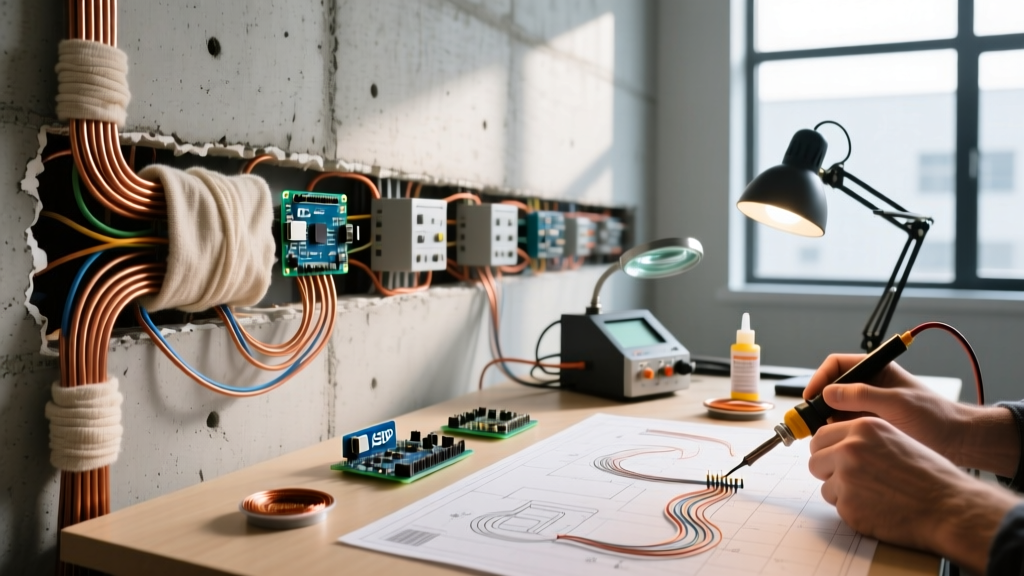

The Hidden Liability of Legacy Insulation in Commercial Real Estate
When acquiring or renovating pre-1950s commercial properties, property managers and electrical contractors frequently encounter a major hidden liability: cloth electrical wiring. Originally installed as a premium upgrade over early open-wire systems, cloth-covered wiring is now a primary red flag for commercial insurance underwriters and fire marshals. In 2026, with the enforcement of stringent NEC (National Electrical Code) standards and the increased electrical loads demanded by modern commercial HVAC, data centers, and LED lighting arrays, legacy wiring systems pose severe arc-fault and thermal degradation risks.
Unlike residential rewiring, commercial remediation involves complex three-phase power distributions, strict occupancy fire codes, and the preservation of historical architectural elements. This comprehensive guide details how to identify, assess, and systematically replace cloth electrical wiring in commercial environments while maintaining compliance with the latest electrical codes and minimizing business interruption.
Identifying Pre-1950s Commercial Wire Types
Not all vintage wiring is identical. Commercial electricians must accurately identify the specific insulation chemistry to determine the abatement strategy and safety protocols required. The three most common types of cloth electrical wiring found in commercial structures include:
- Rubber-Insulated Code Wire (Cotton Braid): The most prevalent type, featuring a vulcanized rubber core wrapped in a cotton or rayon braid. The rubber was often treated with tin or lead to prevent sulfur corrosion of the copper. Over decades, the rubber desiccates, turning into a brittle dust that flakes off when disturbed.
- Rubinoid and Cambric Cloth: Used heavily in commercial switchboards and early industrial conduits, Rubinoid consisted of layers of cambric cloth impregnated with an asphalt-based compound. While more heat-resistant than standard Code Wire, it becomes highly rigid and prone to cracking when bent.
- Asbestos-Jacketed Wiring: Frequently installed in commercial boiler rooms, elevator shafts, and high-heat manufacturing zones from the 1930s through the 1970s. The outer braid contains asbestos fibers for extreme thermal protection. Disturbing this wiring without proper hazmat abatement is a severe OSHA violation and a major health hazard.
NEC 2026 Compliance and the Grandfather Clause Myth
A common misconception in commercial real estate is that existing cloth electrical wiring is permanently grandfathered under the NEC. While the National Fire Protection Association (NFPA) does not mandate the immediate removal of legacy wiring if it is entirely undisturbed and functioning within its original safe parameters, the grandfather clause evaporates the moment a modification occurs.
Under NEC 2026 Article 110.12 (Mechanical Execution of Work) and local commercial building codes, any addition, alteration, or repair to a branch circuit containing cloth wiring requires the entire circuit to be brought up to current code. This typically means replacing the circuit entirely with modern THHN/THWN-2 conductors in EMT conduit or installing properly rated MC (Metal Clad) cable.
Insurance Underwriting Reality: Major commercial property insurers, including FM Global and standard Lloyd's of London syndicates, routinely deny coverage or impose massive premiums for commercial spaces with active cloth wiring. The U.S. Fire Administration (USFA) consistently highlights degraded vintage insulation as a leading cause of concealed electrical fires in older commercial districts.
Commercial Remediation Strategies and 2026 Cost Matrix
Choosing the right remediation strategy depends on the building's occupancy type, historical status, and budget. Below is a comparison of the primary approaches utilized by commercial electrical contractors in 2026.
| Remediation Strategy | Description & Application | Estimated 2026 Cost (Commercial) | Code Compliance Level |
|---|---|---|---|
| Full Commercial Rewire | Complete removal of all cloth wiring and installation of new EMT conduit or MC cable. Required for high-load areas and new tenant build-outs. | $14.50 - $24.00 per sq. ft. | 100% NEC 2026 Compliant |
| Selective Circuit Abatement | Replacing only the circuits that are actively modified or show thermal damage via infrared scanning. Leaves undisturbed legacy lighting circuits intact. | $8.00 - $12.00 per linear ft. | Partial (Grandfathered for untouched circuits) |
| Pigtail Encapsulation | Splicing modern pigtails to intact cloth wiring inside accessible junction boxes using specialized WAGO or Ideal wire connectors. (Note: Highly restricted in commercial codes). | $3.50 - $6.00 per connection | Non-Compliant for most commercial occupancies |
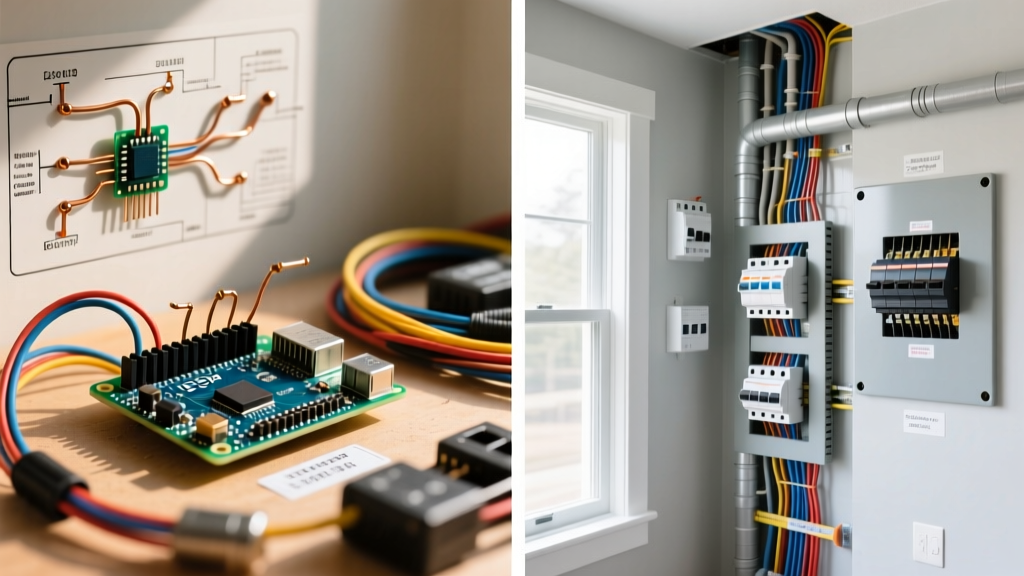
| Panel & Service Upgrade | Upgrading from legacy 100A fuse panels to modern 400A Schneider Electric PowerPact panelboards with ground fault protection. | $8,500 - $14,200 per service | 100% NEC 2026 Compliant |
Execution: Fishing THHN Through Historical Masonry
Replacing cloth electrical wiring in historical commercial buildings requires specialized techniques to avoid destroying original plaster, terracotta facades, or exposed brickwork. The National Park Service (NPS) Preservation Briefs strongly advise against indiscriminate demolition for utility upgrades. Instead, commercial electricians utilize the following step-by-step methodology:
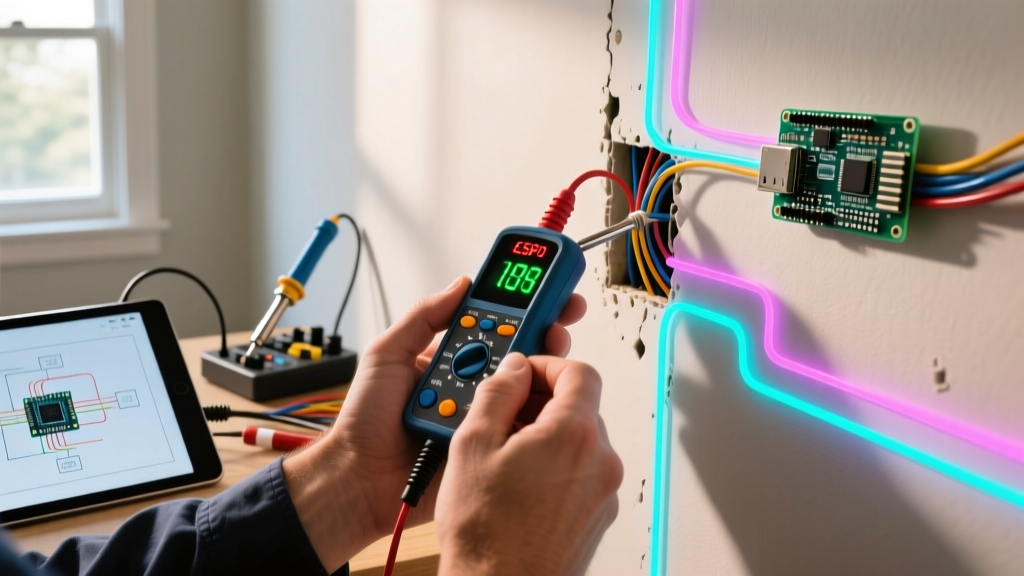
- Infrared Thermography & Borescope Mapping: Before cutting into walls, contractors use FLIR commercial thermal cameras to map active heat signatures of loaded legacy circuits, followed by 1/4-inch borescope insertions to map balloon framing and masonry voids.
- Strategic Access Point Creation: Instead of tearing down drywall or plaster, electricians cut precise 4x4 inch access panels at the top and bottom of wall cavities, preserving the majority of the historical finish.
- Flexible Conduit Fishing: Using Greenlee heavy-duty fish tapes and vacuum-assisted pull strings, flexible EMT or smurf tube is navigated through irregular masonry voids. This creates a permanent, code-compliant sleeve for pulling new 10 AWG or 12 AWG THHN/THWN-2 copper conductors.
- Concealed Junction Box Installation: Where continuous pulls are impossible, deep octagonal junction boxes are installed in accessible ceiling plenums or raised access floors, ensuring all splices remain accessible per NEC Article 314.29.
Asbestos Abatement and Safety Protocols
When dealing with asbestos-jacketed cloth electrical wiring, standard electrical remediation halts immediately. Commercial contractors must coordinate with licensed asbestos abatement firms. The abatement process involves negative air pressure containment, HEPA-filtered ventilation, and wet-removal techniques to prevent fiber aerosolization. Electrical workers must hold specific EPA or state-level hazmat certifications to legally disconnect and cap these circuits prior to the abatement team removing the physical wire. Failure to follow these protocols can result in commercial fines exceeding $150,000 per violation under OSHA and EPA regulations.
Frequently Asked Questions (FAQ)
Does NEC 2026 require AFCI protection for legacy commercial circuits?
While AFCI (Arc-Fault Circuit Interrupter) requirements in the NEC have historically focused on residential dwellings, NEC 2026 has expanded AFCI mandates to include commercial dormitories, assisted living facilities, and specific mixed-use commercial spaces. If you are rewiring a cloth-wired circuit in one of these occupancies, an AFCI breaker in the new panelboard is mandatory. For standard retail or office spaces, standard thermal-magnetic breakers remain acceptable unless local municipal amendments dictate otherwise.
Can I just pigtail cloth wiring in a commercial retail space?
No. Pigtailing (connecting a short piece of modern copper wire to the end of the degraded cloth wire using a wire nut) is widely considered a temporary and dangerous fix in commercial environments. The vibration from commercial HVAC systems and the thermal expansion from modern lighting loads cause the brittle, desiccated rubber insulation further up the wire to crack and expose bare copper inside the wall cavity. Most commercial electrical inspectors will fail an installation that relies on pigtailing for legacy cloth wiring.
How do I handle cloth wiring in a historic commercial facade?
For historic facades, surface-mounted metal raceways (like Legrand Wiremold) painted to match the architectural trim are often the most code-compliant and preservation-friendly solution. This avoids drilling through load-bearing historic masonry while providing a fully grounded, modern conduit for new THHN conductors.