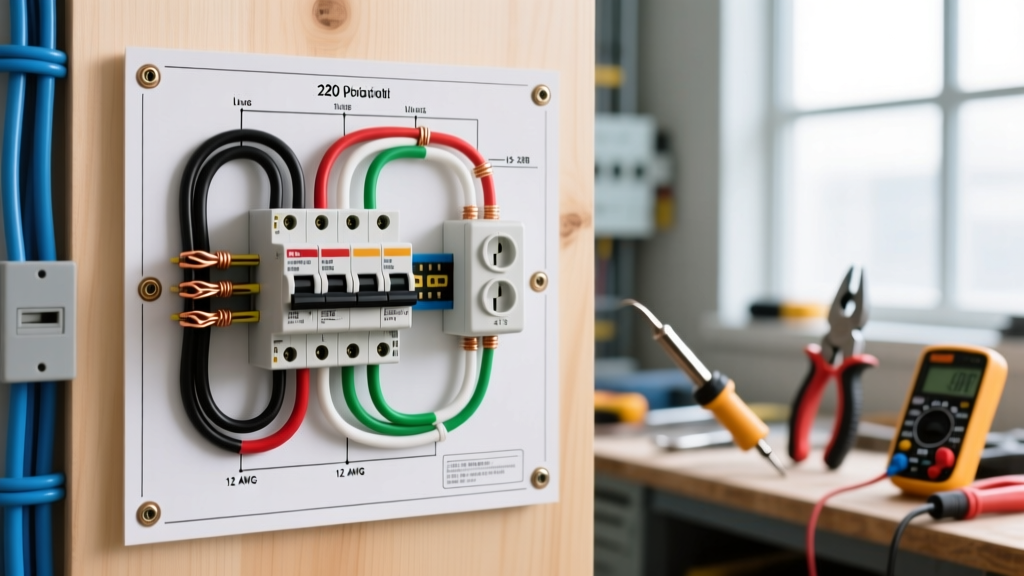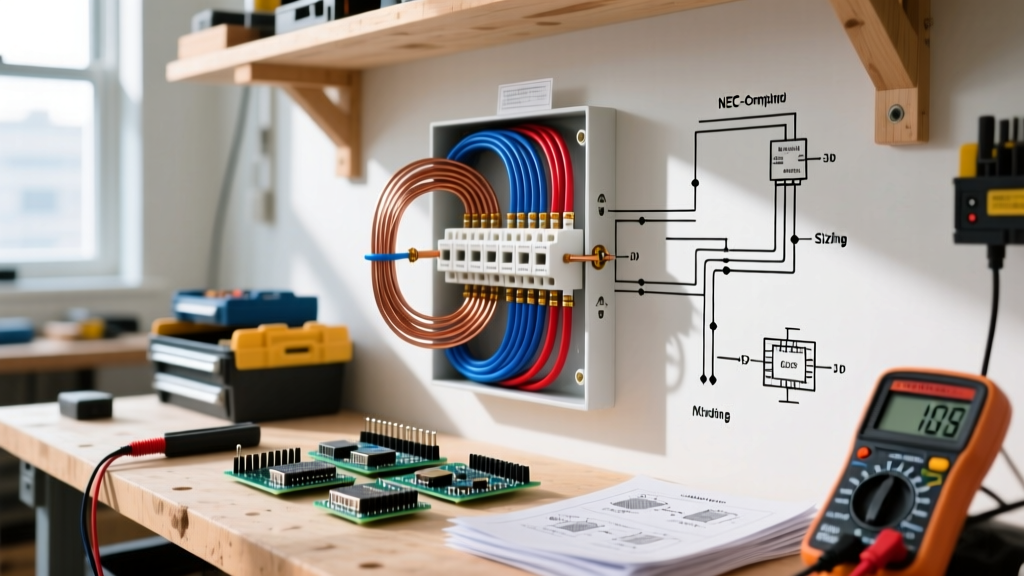

The Stakes of Subpanel Wiring: Safety and Code Compliance
Wiring an electrical subpanel is one of the most common ways to extend power to a detached garage, workshop, or home addition. However, it is also one of the most frequent sources of severe electrical code violations. Unlike swapping a receptacle or installing a light fixture, a subpanel handles high-amperage feeder circuits and dictates the grounding topology for an entire branch of your electrical system. Mistakes here do not just trip breakers; they create parallel neutral paths, energize appliance enclosures, and pose lethal electrocution and fire hazards.
According to the National Fire Protection Association (NFPA), electrical distribution and lighting equipment failures account for tens of thousands of structural fires annually. To ensure your installation is safe, legal, and inspectable, you must adhere strictly to the National Electrical Code (NEC). This guide breaks down the critical safety and code compliance requirements for wiring an electrical subpanel, focusing on the technical nuances that separate a professional installation from a dangerous DIY hack.
The Golden Rule: Grounding vs. Bonding Isolation
The single most misunderstood concept in residential electrical work is the difference between grounding and bonding, specifically regarding NEC Article 250.32. In your main service panel, the neutral (grounded conductor) and the ground (equipment grounding conductor) are bonded together. In a subpanel, they must remain strictly isolated.
Code Reference: NEC 250.32(B)(1) explicitly requires that an equipment grounding conductor must be run with the supply conductors to a separate building or structure, and the grounded (neutral) conductor must not be connected to the equipment grounding conductor or to any grounding electrode at the separate building.
Why Isolation Matters (The Physics of Objectionable Current)
If you bond the neutral and ground bars in a subpanel, you create a parallel path for neutral return current. Electricity takes all available paths back to the source. If bonded at the subpanel, a portion of the 120V neutral return current will travel back to the main panel via the bare copper ground wire, the conduit, and even the plumbing. This "objectionable current" energizes the grounding system, meaning the metal casing of your table saw or refrigerator could carry a lethal voltage potential relative to the earth.
- Main Panel: Neutral and Ground are bonded (usually via a green bonding screw or copper jumper strap).
- Subpanel: Neutral and Ground are isolated. The green bonding screw must be removed and discarded or kept in the panel's knockout bag. You must install a separate, add-on ground bar for the equipment grounding conductors.
Feeder Sizing and Overcurrent Protection
Sizing the feeder wires and the overcurrent protection device (breaker) correctly is mandated by NEC Article 310 and Article 240. You must use a 4-wire feeder system: two ungrounded (hot) conductors, one grounded (neutral) conductor, and one equipment grounding conductor. The ground wire can be one size smaller than the current-carrying conductors, but many electricians run the same gauge for simplicity and future-proofing.
Standard Subpanel Feeder Sizing Chart (75°C Column)
The following table assumes copper or aluminum conductors rated for 75°C terminations, which is the standard for most modern residential breakers and panel lugs.
| Subpanel Rating | Feeder Breaker Size | Copper Wire Gauge (THHN/THWN-2) | Aluminum Wire Gauge (XHHW-2 / SER) | Equipment Ground Wire (Copper) |
|---|---|---|---|---|
| 60 Amp | 60A (2-Pole) | #6 AWG | #4 AWG | #10 AWG |
| 100 Amp | 100A (2-Pole) | #3 AWG | #1 AWG | #8 AWG |
| 125 Amp | 125A (2-Pole) | #1 AWG | #1/0 AWG | #6 AWG |
| 200 Amp | 200A (2-Pole) | #2/0 AWG | #4/0 AWG | #4 AWG |
Note: Always calculate voltage drop for long runs. NEC 310.15(B) recommends a maximum 3% voltage drop on the feeder. If your detached garage is over 100 feet from the main panel, you must upsize your wire gauge by at least one step to compensate for resistance.
Grounding Electrode Systems for Detached Buildings
A common point of failure during electrical inspections involves the Grounding Electrode System (GES) at detached structures. According to OSHA electrical safety standards and NEC 250.32(B)(2), if you are wiring an electrical subpanel in a detached building (like a standalone garage or barn), you must install a local grounding electrode system, typically consisting of two 5/8-inch copper-clad ground rods driven 8 feet into the earth, spaced at least 6 feet apart.
The ground rods must be bonded to the subpanel's isolated equipment grounding bar using a minimum #6 AWG bare copper grounding electrode conductor (GEC). Crucially, this GEC connects only to the ground bar, never the neutral bar. This provides a path to dissipate lightning strikes and static buildup into the earth without violating the neutral-ground isolation rule.
Torque Specifications: The Hidden Code Requirement
Since the 2017 NEC cycle, and heavily enforced by inspectors today, NEC 110.14(D) requires that all electrical terminations be tightened to the manufacturer's specified torque values using a calibrated torque tool. You can no longer just "tighten until tight."
For example, when wiring a 100-amp Square D QO or Homeline subpanel, the manufacturer specifies that the main neutral lug requires 45 inch-pounds of torque, while the branch circuit neutral screws require 20 inch-pounds. Under-torquing leads to thermal expansion/contraction loosening the wire over time, causing arcing and fires. Over-torquing strips the aluminum threads or crushes the copper strands, increasing resistance. Invest in a digital torque screwdriver (such as the CDI 401SM or Wiha 61081) before starting your subpanel installation.
Outbuilding Disconnecting Means
If your subpanel is located in a separate building from the main service disconnect, NEC 225.31, 225.33, and 230.2 require a local disconnecting means. This means you cannot simply run feeder wires directly into a main-lug subpanel without a way to shut off all power locally.
- Main Breaker Subpanel: The easiest solution is to use a subpanel that features a built-in main breaker. This acts as the local disconnect.
- Separate Disconnect Switch: If using a main-lug panel, you must install a fused or unfused AC disconnect switch adjacent to the subpanel.
This safety requirement ensures that first responders or homeowners can completely de-energize the detached structure without having to walk back to the main house in an emergency.
Common Code Violations to Avoid
Based on data from electrical inspection authorities and training resources like Mike Holt Enterprises, here are the most frequent violations cited when wiring an electrical subpanel:
- Using 3-Wire Feeders for New Installations: Prior to the 2008 NEC, 3-wire feeders (2 hots, 1 neutral) to detached buildings were allowed if there were no continuous metallic paths (like water pipes) between the buildings. This exception has been completely removed. All new subpanels require a 4-wire feeder.
- Mixing Grounds and Neutrals on the Same Bar: In a subpanel, every neutral must terminate on the isolated neutral bar, and every ground must terminate on the ground bar. Sharing terminal screws (lugging two wires under one screw) is a violation of NEC 110.14(A) unless the lug is specifically listed for multiple conductors.
- Running NM-B (Romex) Outdoors or Underground: Non-metallic sheathed cable is not rated for wet locations. If your feeder runs outside or underground, you must use UF-B cable for direct burial, or pull THWN-2 individual conductors through a continuous run of Schedule 80 PVC or rigid metal conduit.
- Missing Bushings on Metallic Conduit: If you use rigid metal conduit (RMC) or intermediate metal conduit (IMC) for your feeder, NEC 300.16 requires a grounding bushing at the panel entry to bond the conduit to the panel enclosure, preventing inductive heating and ensuring a low-impedance fault path.
Frequently Asked Questions (FAQ)
Can I use a main breaker panel as a subpanel?
Yes. In fact, using a panel with a main breaker is highly recommended for detached buildings to satisfy the local disconnect requirement. Simply ensure you remove the green bonding screw or strap that connects the neutral bar to the panel enclosure.
Does the ground wire need to be the same size as the hot wires?
No. NEC Table 250.122 dictates the minimum size for equipment grounding conductors based on the rating of the overcurrent device. For a 100A breaker, a #8 AWG copper ground is sufficient, even if you are using #3 AWG copper for the hot and neutral conductors. However, if you upsize the hot wires for voltage drop, you must proportionally increase the ground wire size per NEC 250.122(B).
Do I need a permit to wire an electrical subpanel?
Yes. In almost all jurisdictions, installing a new subpanel and running a new feeder circuit requires an electrical permit and a final inspection by the local Authority Having Jurisdiction (AHJ). Working without a permit can void your home insurance policy in the event of an electrical fire.