
The Ultimate Wiring Diagram for Strat Electronics and Mobile Touring Rigs
The Fender Stratocaster is not just a masterpiece of mid-century industrial design; it is a foundational pillar of DIY electronics and audio engineering. Whether you are assembling a custom partscaster in your home workshop or integrating a mobile touring studio into a Sprinter van or RV, understanding the exact wiring diagram for Strat configurations is essential. As of 2026, the explosion of off-grid mobile studios and vehicle-based touring rigs has introduced a new layer of complexity to guitar electronics: vehicular electromagnetic interference (EMI). Single-coil pickups are notoriously susceptible to the high-frequency noise generated by modern RV solar charge controllers, alternators, and power inverters.
This guide bridges the gap between traditional luthiery and mobile electrical engineering. We will break down the standard 5-way switch wiring matrix, detail precise soldering temperatures for component longevity, and provide actionable vehicle-specific grounding strategies to keep your Stratocaster dead-quiet on the road.
Core Component Specifications: The Stratocaster BOM
Before firing up your soldering iron, you must source the correct components. The Stratocaster’s high-impedance passive circuit relies on specific potentiometer tapers and capacitor values to achieve its signature glassy tone. Using the wrong values will result in a muddy sweep or premature high-end roll-off.
| Component | Specification / Model | Function & Notes |
|---|---|---|
| Potentiometers (x3) | CTS 450G Series, 250kΩ, Audio Taper | 250k is standard for single-coils to prevent excessive treble bleed. Audio taper ensures a smooth volume swell. |
| 5-Way Selector Switch | Oak Grigsby or CRL 5-Way Lever | Spring-return mechanism. Superior contact pressure compared to generic imported wafer switches. |
| Tone Capacitor | 0.047µF (Orange Drop or Mustard) | Determines the frequency roll-off point. 0.047µF yields a warm, vocal-like midrange when the tone pot is rolled back. |
| Output Jack | Switchcraft 11 Mono (1/4') | Heavy-duty nickel-silver contacts. Essential for high-vibration mobile/vehicle environments. |
| Hookup Wire | 22 AWG Stranded, Cloth-Pushback | Stranded wire resists the mechanical shock and vibration inherent in touring vehicles and RVs. |
Step-by-Step: Wiring the 5-Way Switch and Control Cavity
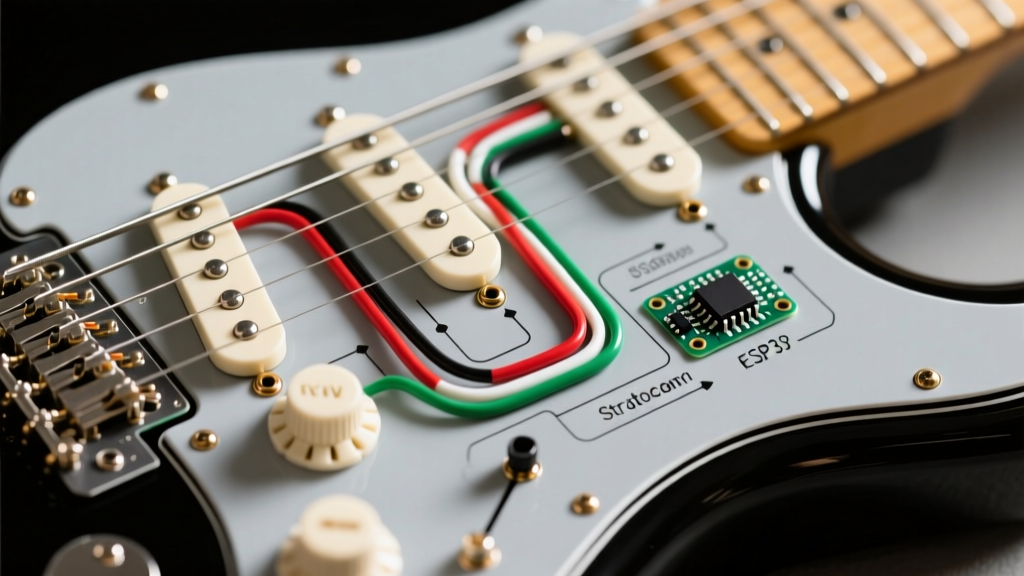
The standard Stratocaster wiring diagram utilizes a common-ground architecture. The most critical mistake DIYers make is creating 'ground loops' inside the cavity or failing to properly prep the solder joints.
1. Prepping and Tinning
Set your soldering station (e.g., Hakko FX-888D or Pinecil) to 350°C (662°F) for switch lugs and wire tinning. When soldering to the back casing of the CTS potentiometers, you must increase the temperature to 380°C (715°F) and use a chisel tip. The pot casing acts as a massive heat sink; if your iron is too cool, you will create a 'cold joint' that looks dull and grainy, leading to intermittent signal dropouts when the guitar is bumped inside a vehicle rack.
Pro-Tip: Always scuff the back of the potentiometer casings with 220-grit sandpaper and apply a small dab of rosin-core flux before tinning. This reduces the time the iron needs to sit on the pot, protecting the internal carbon track from heat damage.
2. The 5-Way Switch Routing
The Oak Grigsby 5-way switch features two distinct wafers (the 'input' side and the 'output' side).
- Position 1 (Bridge): Bridge pickup hot wire to Lug 1A.
- Position 2 (Bridge + Middle): Lugs 1A and 2A are bridged by the wiper.
- Position 3 (Middle): Middle pickup hot wire to Lug 2A.
- Position 4 (Middle + Neck): Lugs 2A and 3A are bridged.
- Position 5 (Neck): Neck pickup hot wire to Lug 3A.
The Vehicle-Specific Challenge: Mobile Rig EMI and Grounding
As more musicians transition to mobile RV studios and van-life touring rigs in 2026, a new enemy of the Stratocaster has emerged: dirty vehicular power. When you plug a Stratocaster into an amplifier powered by an RV's electrical system, you are exposing high-impedance single-coil pickups to severe electromagnetic fields.
Solar Charge Controllers and PWM Noise
Most off-grid vehicles utilize Pulse Width Modulation (PWM) or Maximum Power Point Tracking (MPPT) solar charge controllers (like those from Victron Energy or Renogy). These devices switch DC current at high frequencies to regulate battery charging. This switching noise bleeds into the vehicle's chassis ground and the AC inverter's output. When you plug into an amp running off a Modified Sine Wave Inverter, the square-wave harmonics will induce a massive, unusable buzz in your Strat's bridge and middle pickups.
Implementing a Faraday Cage in the Control Cavity
To combat mobile EMI, standard Stratocaster wiring is insufficient. You must shield the control and pickup cavities. According to best practices outlined by luthier supply experts at StewMac, applying 2-mil copper shielding tape to the entire cavity and connecting it to the common ground creates a localized Faraday cage.
- Line the pickup and control cavities with overlapping copper tape.
- Solder a dedicated 22 AWG ground wire from the copper shielding directly to the back of the volume pot.
- Ensure the pickguard is also shielded with copper or conductive aluminum foil, creating a continuous ground plane when screwed into the body.
- Vehicle Ground Isolation: If your mobile studio amp is suffering from alternator whine, insert a DI box with a ground-lift switch or an audio isolation transformer between the Strat's output and the vehicle's audio interface. Never lift the safety ground on the RV's AC power plug, as this violates NFPA 70 (National Electrical Code) safety standards for mobile environments and poses a lethal shock hazard.
Essential Touring Mod: The Treble Bleed Circuit
When playing live in a vehicle-based mobile venue or running long cable runs to a front-of-house mixer, rolling back your Strat's volume knob typically results in a loss of high-end clarity. A 'Treble Bleed' modification allows high frequencies to bypass the volume pot, maintaining your tone at lower volumes.
The 2026 Standard Treble Bleed Values:
- Capacitor: 0.001µF (1nF) ceramic disc.
- Resistor: 150kΩ (1/4 watt) in parallel with the capacitor.
Solder this parallel network between the input lug (Lug 1) and the output wiper (Lug 2) of the master volume pot. This specific parallel configuration prevents the volume taper from becoming overly abrupt, a common issue when using a capacitor alone.
Troubleshooting Common Stratocaster Wiring Faults
| Symptom | Probable Cause | Diagnostic Fix |
|---|---|---|
| Position 4 (Neck+Middle) is out of phase / thin | Reverse wound/reverse polarity (RWRP) mismatch. | Swap the hot and ground wires on the middle pickup. Ensure the middle pickup is specifically designed as RWRP for hum-canceling in positions 2 and 4. |
| Scratchy, intermittent volume drops | Cold solder joint on pot casing or dirty carbon track. | Reflow the ground joints at 380°C. If the track is worn, replace the CTS pot; contact cleaner is only a temporary fix for physical wear. |
| Massive 60Hz hum that stops when touching strings | Missing ground to the Tremolo Claw. | Verify the ground wire soldered to the spring claw in the back cavity is securely connected to the common ground bus on the volume pot. |
| High-pitched whine in an RV/Mobile Rig | PWM Solar Controller or LED Dimmer EMI. | Install copper cavity shielding, use a Pure Sine Wave inverter for the amp, and utilize a shielded, high-capacitance instrument cable. |
Final Thoughts on Mobile and Studio Wiring
Mastering the wiring diagram for Strat electronics is about more than just following a schematic; it is about understanding the electrical environment in which the instrument operates. By utilizing premium components like CTS pots and Oak Grigsby switches, executing flawless high-temperature solder joints, and implementing aggressive copper shielding for mobile and RV touring rigs, you ensure that your Stratocaster delivers pristine, noise-free tone whether you are in a treated studio or parked off-grid in the wilderness.