
The Critical Importance of NEC Compliance in Sub-Panel Wiring
Extending electrical capacity to a detached garage, workshop, or home addition requires precision, adherence to the National Electrical Code (NEC), and a deep understanding of load balancing. A 100-amp sub-panel is the industry sweet spot for heavy-duty DIY shops, EV charger installations, and multi-room additions. However, executing a safe wiring diagram for 100 amp sub panel configurations is not just about making connections; it is about preventing electrical fires, avoiding lethal shock hazards, and passing municipal inspections on the first attempt.
In 2026, electrical inspectors are stricter than ever regarding grounding electrode systems (GES) and feeder disconnects. According to the National Fire Protection Association (NFPA 70), improper sub-panel wiring remains a leading cause of residential electrical fires. This guide provides a comprehensive, code-compliant breakdown of how to wire a 100A sub-panel, complete with exact wire gauges, torque specifications, and equipment recommendations.
The Golden Rule: Floating Neutrals and Isolated Grounds
The most common—and most dangerous—mistake made when wiring a sub-panel is bonding the neutral bar to the ground bar. In your main service panel, the neutral and ground are bonded together at the main disconnect. However, NEC Article 250.142 strictly prohibits this at any downstream sub-panel.
Code Alert: If you bond the neutral to the ground at a sub-panel, normal neutral return current will travel along the bare copper ground wire back to the main panel. This energizes the grounding system, creating a severe shock hazard and potential electromagnetic interference (EMF) that can destroy sensitive electronics.
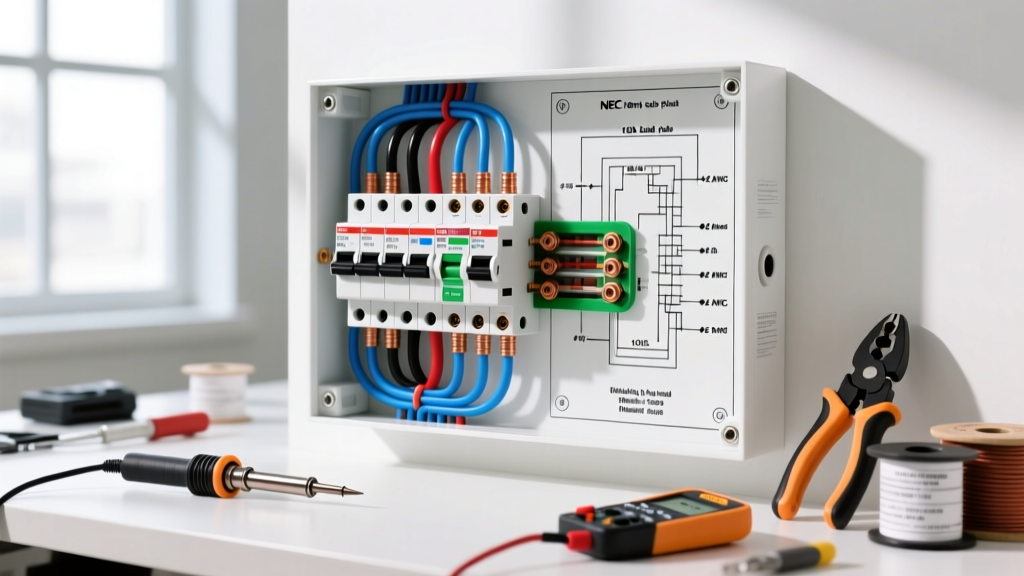
When following your wiring diagram for 100 amp sub panel setups, you must ensure the neutral bar is completely isolated (floating) from the metal panel enclosure. Most modern panels, like the Square D Homeline series, ship with a green bonding screw or strap. You must remove this screw or strap before terminating any wires. For a visual confirmation of proper isolation, refer to the Schneider Electric Sub-Panel Bonding Guidelines.
Decoding the Wiring Diagram: The 4-Wire Feeder
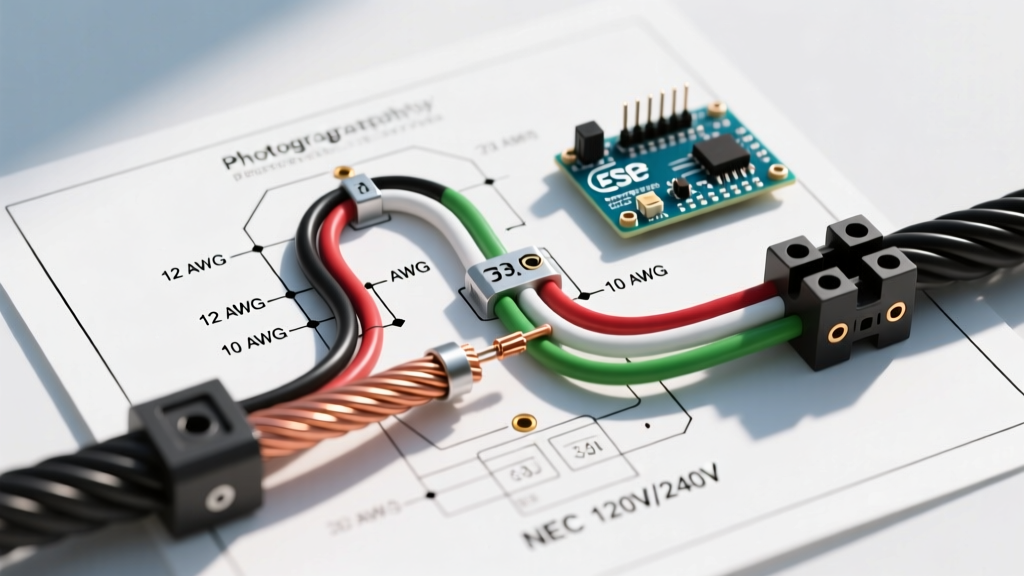
Modern NEC standards mandate a 4-wire feeder system for all sub-panels. The wiring diagram consists of four distinct conductors running from the main panel's 100A double-pole breaker to the sub-panel's main lugs.
1. The Hot Legs (Phase A and Phase B)
Two insulated wires (typically Black and Red) connect to the main breaker in the main panel and terminate on the two main lugs of the sub-panel. These provide 120V each to ground, and 240V across both legs.
2. The Neutral Conductor (Phase C)
The white insulated wire terminates on the isolated, floating neutral bar in the sub-panel. This bar must never make physical contact with the metal enclosure.
3. The Equipment Grounding Conductor (EGC)
The bare copper or green insulated wire terminates on the dedicated ground bar, which must be physically bonded to the metal panel enclosure. This provides a safe path for fault currents to trip the breaker during a short circuit.
Conductor Sizing & Material Matrix (NEC Table 310.16)
Wire sizing is dictated by NEC Table 310.16, based on the 75°C column for standard THHN/THWN-2 conductors pulled through conduit (PVC, EMT, or Liquid-Tight). Never undersize your feeder cables, as voltage drop over long distances can damage motors and compressors.
| Conductor Type | Material | Insulation | AWG / kcmil Size | Ampacity (75°C) | Estimated Cost (per 100 ft) |
|---|---|---|---|---|---|
| Hot / Neutral (x3) | Copper | THHN/THWN-2 | #3 AWG | 100 Amps | $280 - $320 |
| Hot / Neutral (x3) | Aluminum | XHHW-2 | #1 AWG | 100 Amps | $110 - $140 |
| Ground (EGC) | Copper | THHN/THWN-2 | #8 AWG | N/A | $35 - $45 |
| Ground (EGC) | Aluminum | XHHW-2 | #6 AWG | N/A | $15 - $25 |
Note: If you are burying direct-burial cable (like URD) instead of pulling THHN through conduit, you must follow the 60°C column or specific cable ampacity charts, which often requires upsizing to #1 AWG Copper or #1/0 AWG Aluminum.
Grounding Electrode System (GES) at Detached Structures
If your 100-amp sub-panel is located in a detached structure (e.g., a separate garage or barn), NEC Article 250.32 requires a local Grounding Electrode System in addition to the Equipment Grounding Conductor run with the feeder.
- Ground Rods: Install two 5/8-inch copper-clad steel ground rods, minimum 8 feet long.
- Spacing: Rods must be spaced at least 6 feet apart.
- Grounding Electrode Conductor (GEC): Connect the ground rods to the sub-panel's ground bar using #6 AWG bare copper wire (or #4 AWG if the rods are subject to physical damage).
This local grounding system protects the structure from lightning strikes and stabilizes the voltage to earth, working in tandem with the EGC to ensure rapid breaker tripping during internal faults.
Equipment Selection & 2026 Pricing Realities
Selecting the right panel ensures you have adequate spaces for future expansion. A 100A panel with only 12 spaces will fill up immediately once you add 240V circuits for welders or EV chargers. Always buy a panel with at least 24 to 40 spaces.
Recommended Sub-Panels
- Square D Homeline HOM1224L125PG: 125A Main Lug, 24 spaces, 48 circuits. Includes factory-installed ground bar and isolated neutral. Retail: ~$85.
- Siemens P4081B1100CU: 100A Main Lug, 40 spaces, 80 circuits. Excellent for large workshops. Retail: ~$145.
Feeder Breaker at Main Panel
You must protect the feeder wires with a 100A double-pole breaker at the main panel. For Square D Homeline systems, use the HOM2100 breaker (Retail: ~$45). Ensure your main panel has two adjacent, available slots.
Top 3 Fatal Code Violations Inspectors Flag
According to data from the Electrical Safety Foundation International (ESFI), improper panel terminations lead to arcing and thermal events. Avoid these common violations:
- Double-Tapping Neutrals: NEC Article 408.41 strictly prohibits terminating more than one neutral wire under a single screw terminal on the neutral bar. While some ground bars allow two ground wires per screw (if listed for it), neutrals must always have their own dedicated screw.
- Missing Exterior Disconnect (NEC 230.71): If the sub-panel serves as the main feed to a new one- or two-family dwelling addition, the 2023/2026 NEC may require an exterior emergency disconnect. For detached garages, Article 225.31 requires a disconnecting means at the structure; a main-lug sub-panel with a local main breaker satisfies this.
- Improper Torque: Hand-tightening lugs is a fire hazard. Use a calibrated inch-pound torque screwdriver. Square D HOM main lugs typically require 45-50 in-lbs, while neutral/ground bar screws require 20-25 in-lbs. Always verify the torque chart printed on the panel's wiring diagram label.
Step-by-Step Termination Sequence
To maintain a safe working environment, follow this exact sequence when executing your wiring diagram:
- Shut off the main breaker at the primary service panel and verify zero voltage with a CAT III multimeter.
- Mount the sub-panel and pull the 4-wire feeder through the conduit knockout, leaving at least 8 inches of slack inside the box.
- Strip exactly 3/4 inch of insulation from the hot and neutral conductors using a calibrated wire stripper.
- Terminate the Equipment Grounding Conductor (EGC) to the bonded ground bar first. Torque to spec.
- Terminate the Neutral conductor to the isolated, floating neutral bar. Torque to spec.
- Terminate the two Hot conductors to the sub-panel's main lugs. Torque to spec.
- Install the 100A feeder breaker in the main panel and terminate the hot and neutral wires there.
- Perform a continuity test between the neutral bar and the ground bar at the sub-panel before energizing. The multimeter must read 'OL' (Open Loop / Infinite Resistance). If it reads continuity, you have an illegal bond.
Frequently Asked Questions
Can I use a 100A main breaker panel as a sub-panel?
Yes. You can use a panel with a built-in 100A main breaker as a sub-panel. Simply land your two hot feeder wires on the main breaker's lugs. This is actually preferred for detached structures, as it satisfies the NEC requirement for a local disconnecting means.
Do I need a ground rod if my sub-panel is in the same house?
No. If the sub-panel is located within the same continuous building structure as the main panel, you only need the 4-wire feeder (including the EGC). Ground rods are only required for detached structures or separate buildings per NEC Article 250.32.
What size conduit do I need for #1 Aluminum wire?
For three #1 AWG XHHW-2 aluminum conductors and one #6 AWG ground wire, NEC Chapter 9 Table 4 dictates that a 1-inch Schedule 40 PVC conduit or 1-inch EMT is sufficient, provided you do not exceed the 40% conduit fill ratio. However, upgrading to 1.25-inch conduit is highly recommended for easier pulling and future expansion.