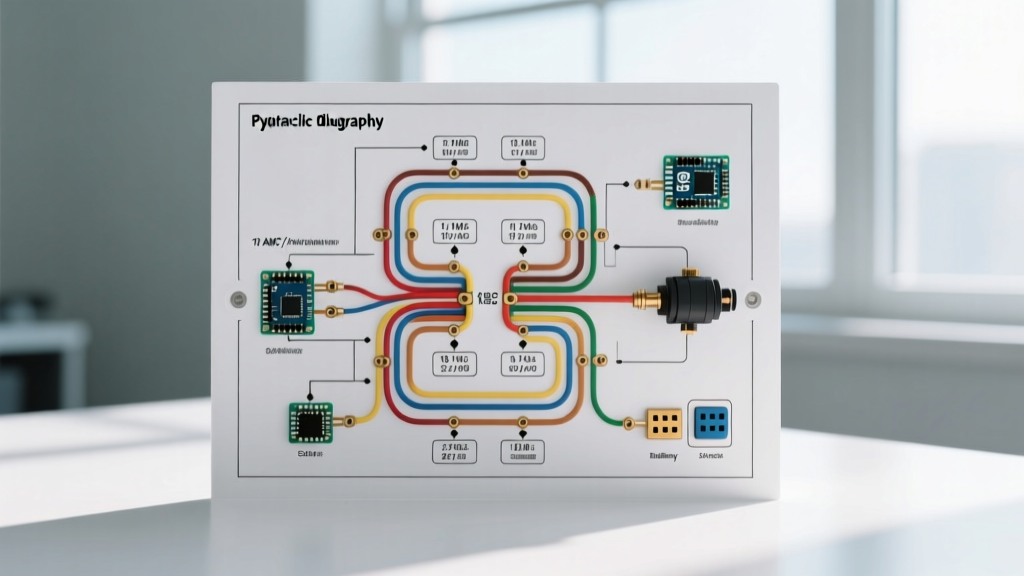

Introduction to Hydraulic Dump Trailer Electrical Systems
Wiring a standard utility trailer is a straightforward task, but a hydraulic dump trailer introduces a massive inductive load that changes the entire electrical architecture. Unlike flatbeds or enclosed cargo trailers, a dump trailer requires a dedicated onboard 12V deep-cycle battery to power the hydraulic pump motor, which can draw anywhere from 150 to 250 amps under peak load. You cannot run a hydraulic pump directly through the tow vehicle’s 7-way connector. Instead, the 7-way connector is used to power the trailer lights, electric brakes, breakaway system, and a battery charge line to maintain the onboard dump battery.
In this comprehensive guide, we break down the exact wiring diagram for hydraulic dump trailers, focusing on heavy-duty component selection, proper wire gauge sizing for 2026 high-output alternators, and the critical solenoid configurations required to prevent catastrophic relay failure.
The Standard 7-Way RV Blade Pinout
The industry standard for heavy-duty trailers is the 7-way RV blade connector, governed by the SAE J286 standard. When wiring the trailer-side plug (typically a molded pigtail like the Hopkins 20046 or Bargman 50-87-009), you must adhere to the standard color codes to ensure compatibility with modern tow vehicles.
| Pin Position | Function | Standard Wire Color | Recommended Gauge |
|---|---|---|---|
| 1 (Top Left) | Left Turn / Stop | Yellow or Green | 12 AWG |
| 2 (Bottom Left) | Reverse Lights / Aux | Black or Purple | 12 AWG |
| 3 (Center) | Ground (Chassis) | White | 10 AWG or 8 AWG |
| 4 (Top Right) | Right Turn / Stop | Green or Yellow | 12 AWG |
| 5 (Bottom Right) | Electric Brakes | Blue | 10 AWG |
| 6 (Top Center) | Tail / Running Lights | Brown | 12 AWG |
| 7 (Bottom Center) | 12V Auxiliary / Charge Line | Black or Red | 10 AWG, 8 AWG, or 6 AWG |
Hydraulic Pump Motor & Solenoid Wiring (Deep Dive)
The most common mistake DIYers make when building or repairing a dump trailer is wiring the hydraulic pump motor directly to a dashboard switch or using an undersized automotive starter relay. Buyers Products hydraulic power units and similar 12V DC pumps require a continuous-duty solenoid to handle the extreme amperage.
Sizing the Motor Feed Wire
The cables running from the trailer battery to the solenoid, and from the solenoid to the pump motor, must be sized for 250 amps. For runs under 10 feet, 2/0 AWG welding cable is the industry standard. Do not use standard THHN copper wire; the stranded, highly flexible welding cable resists vibration and prevents internal strand breakage at the crimp lugs.
Selecting the Correct Solenoid
You must use a continuous-duty solenoid. A standard Ford starter relay (intermittent duty) is designed to engage for 3 to 5 seconds. A dump trailer lifting a 10,000 lb load may require the pump to run for 15 to 30 seconds. An intermittent relay will overheat, and its internal copper contacts will weld together, causing the pump to run continuously until the battery dies or the wires catch fire.
Expert Recommendation: Use the Cole Hersee 24059 or Trombetta 114-2411-010 continuous-duty solenoid. These are rated for 250A continuous and feature copper contacts that resist welding under heavy inductive loads.
The Up/Down Control Switch
The control switch mounted on the trailer tongue or in the truck cab should be a Momentary-Off-Momentary (MOM-OFF-MOM) switch, such as the Cole Hersee 90220. This ensures the solenoid is only energized while the operator is actively holding the switch, preventing accidental deployment. The switch only carries the low amperage required to trigger the solenoid coil (usually under 2 amps), so 14 AWG wire is perfectly adequate for the switch circuit.
Breakaway Switch and Battery Charge Line Integration
The breakaway system is a critical safety requirement. If the trailer detaches from the tow vehicle, the lanyard pulls a pin from the breakaway switch, sending 12V power directly to the electric brake magnets to lock the trailer wheels. We recommend the Tekonsha 2028 or 50-85-313 breakaway kits, which include a weather-sealed switch and a dedicated 12V 5Ah battery.
The 2026 Charge Line Dilemma
Historically, the 12V auxiliary pin (Pin 7) on the 7-way connector was wired with 10 AWG wire to trickle-charge the trailer battery. However, modern 2026 tow vehicles feature high-output alternators (200A to 400A) and smart charging systems that drop voltage when the vehicle detects a low-draw state. Furthermore, many dump trailer owners are upgrading to Group 31 LiFePO4 (Lithium Iron Phosphate) batteries, which can accept charge rates of 100A or more.
If you connect a 10 AWG charge line to a lithium battery with a built-in BMS (Battery Management System), the BMS will pull maximum amperage, causing massive voltage drop across the 10 AWG wire. This can melt the 7-way plug or trigger the tow vehicle’s alternator protection mode.
- For standard AGM/Lead-Acid Batteries: 10 AWG wire is sufficient for a 15A trickle charge over a 20-foot run.
- For LiFePO4 Batteries: Upgrade the charge line to 6 AWG wire and install a 40A DC-DC charger (like the Renogy DCC50S) on the trailer. This regulates the charge, protects the tow vehicle’s alternator, and provides the correct charging profile for lithium cells.
Step-by-Step Grounding Strategy (The #1 Failure Point)
According to eTrailer's comprehensive wiring FAQ, over 80% of trailer lighting and brake faults are caused by poor grounding. On a hydraulic dump trailer, the grounding challenge is compounded by the pivot points of the dump bed and the hydraulic hinges.
- Main Harness Ground: The white ground wire from the 7-way plug must be terminated directly to the main trailer chassis frame using a 10 AWG or 8 AWG ring terminal. Use a star washer to bite through the paint and rust down to bare metal.
- Dump Bed Grounding: Do not rely on the hydraulic hinges or pivot bolts to ground the lights mounted on the dump bed. Hydraulic fluid, grease, and pivot movement create high resistance. Run a dedicated 12 AWG ground wire (often called a pigtail or jumper) from the main chassis frame directly to the dump bed subframe.
- Motor Ground: The hydraulic pump motor must be grounded directly to the battery negative terminal using 2/0 AWG cable, or to the main chassis within 12 inches of the motor using a heavy-duty braided ground strap.
- Corrosion Protection: After crimping and bolting all ground connections, coat the terminals generously with dielectric grease or a liquid electrical tape to prevent galvanic corrosion.
Troubleshooting Common Hydraulic Dump Trailer Wiring Faults
When your dump trailer malfunctions on a job site, you need a systematic approach to diagnose the issue. Here are the most common failure modes and their specific solutions:
1. Pump Motor Runs Slow or Bogs Down Under Load
- Cause: Severe voltage drop at the motor. The pump requires 12.5V+ to operate efficiently; if voltage drops below 10.5V, amperage spikes, and the motor bogs down.
- Fix: Load-test the onboard battery. Check for corrosion on the solenoid large posts. Ensure you are using 2/0 AWG cables, not undersized 4 AWG battery cables.
2. Trailer Brakes Lock Up When Headlights are Turned On
- Cause: A short between the tail light circuit (Brown wire) and the electric brake circuit (Blue wire). This often happens at the rear junction box where wires are bundled tightly, or inside a corroded light fixture where the filaments cross.
- Fix: Inspect all rear marker lights and the main rear junction box. Separate the blue and brown wires and apply heat shrink tubing.
3. Breakaway Switch Drains the Main Dump Battery
- Cause: The breakaway switch was wired directly to the main dump battery instead of its own dedicated breakaway battery, and the breakaway pin was left partially engaged or the switch failed internally.
- Fix: Always use the dedicated 5Ah battery included in the Tekonsha breakaway kit. Wire the breakaway switch exclusively to this small battery, and wire the charge line from the 7-way (Pin 7) to maintain both the main battery and the breakaway battery via a dual-battery isolator.
4. Solenoid Clicks but Pump Does Not Run
- Cause: The solenoid coil is engaging (the click), but the internal high-amperage contacts are pitted or carbon-fouled, preventing current from reaching the motor.
- Fix: Bypass the solenoid temporarily with a heavy-duty jumper cable. If the pump runs, the solenoid is defective and must be replaced. Do not attempt to clean the internal contacts of a sealed continuous-duty solenoid.
Final Safety and Compliance Notes
When wiring a hydraulic dump trailer, always ensure your electric brake controller in the tow vehicle is properly calibrated to the trailer's gross vehicle weight rating (GVWR). Furthermore, all exterior wiring should be routed through split-loom conduit and secured with UV-resistant zip ties every 12 inches to prevent abrasion against the steel frame. By following this wiring diagram and utilizing heavy-duty, continuous-duty components, your dump trailer will deliver reliable performance for years to come.