
Understanding Line Voltage vs. Low Voltage Systems
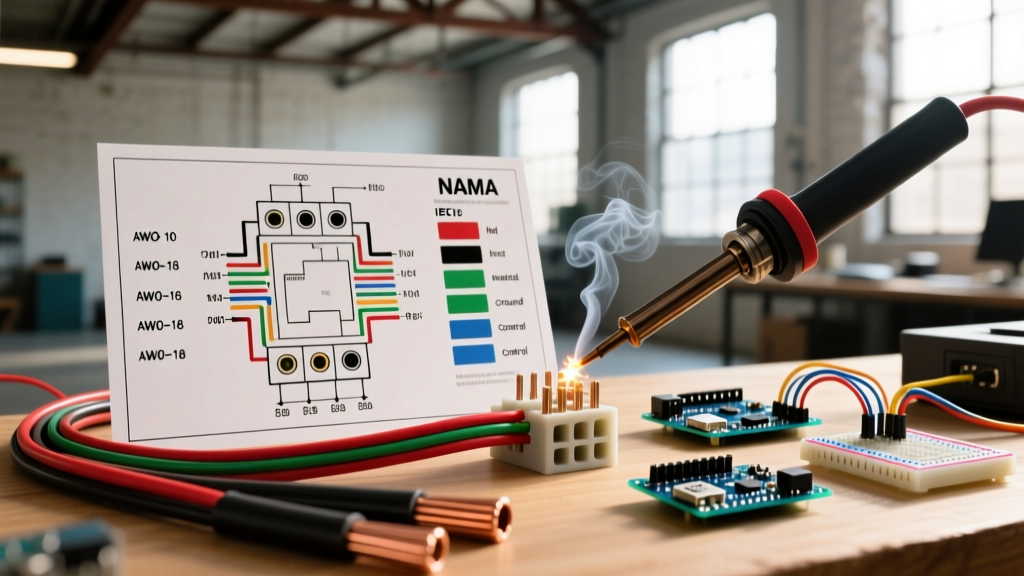
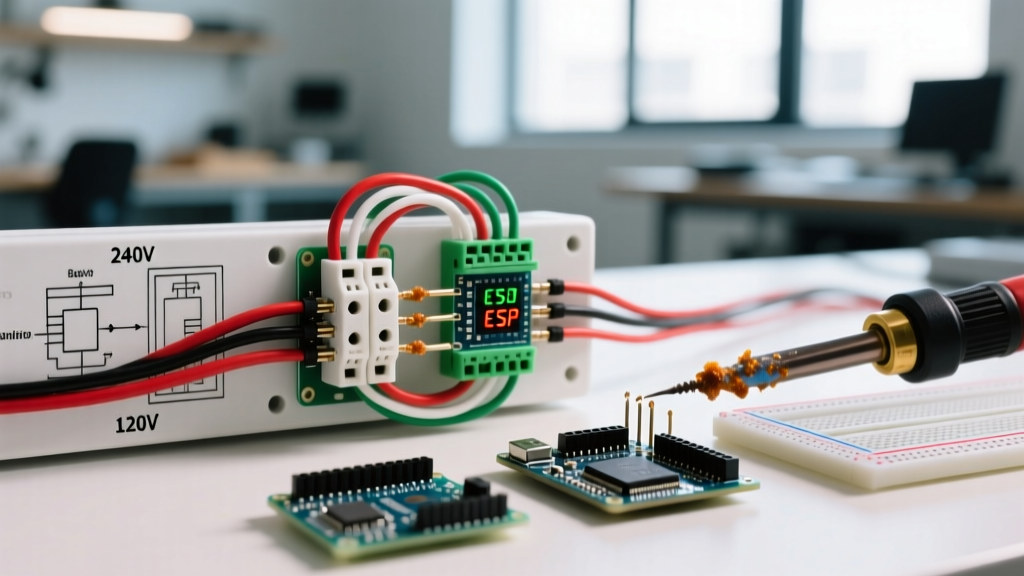
Before consulting any electric baseboard thermostat wiring diagram, you must definitively confirm your system's voltage class. Unlike central HVAC systems that rely on 24V low-voltage control circuits, electric baseboard heaters operate directly on line voltage—typically 240V or 120V. Connecting a standard 24V smart thermostat to a line-voltage baseboard heater will instantly destroy the thermostat's internal circuitry and create a severe fire hazard.
According to the U.S. Department of Energy, electric resistance baseboard heaters are 100% efficient at converting electricity to heat, making proper voltage matching and circuit sizing critical for both safety and performance. Always verify the voltage printed on the heater's manufacturing data plate (usually located on the inside of the end cap) before purchasing a thermostat.
Critical Safety Warning: Line voltage (120V-240V) carries a lethal shock hazard. Always shut off the dedicated breaker at the main panel and verify the absence of voltage using a non-contact tester (such as the Klein NCVT-3) before opening the wall box or heater junction box.
Single-Pole vs. Double-Pole Thermostats: Which Do You Need?
When reviewing an electric baseboard thermostat wiring diagram, you will encounter two primary switch configurations. Your choice dictates how the circuit is interrupted and whether the heater can be completely de-energized from the wall.
| Feature | Single-Pole Thermostat | Double-Pole Thermostat |
|---|---|---|
| Wires Required | 2 (Line & Load) | 4 (Line 1, Line 2, Load 1, Load 2) |
| Circuit Interruption | Breaks only one 'hot' leg | Breaks both 'hot' legs simultaneously |
| True 'Off' State? | No (heater remains energized) | Yes (heater fully de-energized) |
| Typical Use Case | 120V circuits or basic 240V setups | 240V circuits (NEC recommended) |
| Avg. Cost (2026) | $25 - $40 | $35 - $65 |
While single-pole thermostats are cheaper and easier to wire, the National Fire Protection Association (NFPA) and most local electrical codes strongly prefer or mandate double-pole thermostats for 240V baseboard heaters to ensure the unit can be completely isolated for maintenance without relying solely on the breaker panel.
Calculating Circuit Load & Wire Gauge Requirements
A common failure point in baseboard installations is undersized wiring. Baseboard heaters are considered 'continuous loads' under NEC Article 210.20, meaning the circuit must be rated for 125% of the heater's maximum amperage.
- 15-Amp Circuit (14/2 NM-B Wire): Max continuous load is 12 Amps. At 240V, this supports up to 2,880 Watts. At 120V, it supports up to 1,440 Watts.
- 20-Amp Circuit (12/2 NM-B Wire): Max continuous load is 16 Amps. At 240V, this supports up to 3,840 Watts. At 120V, it supports up to 1,920 Watts.
- 30-Amp Circuit (10/2 NM-B Wire): Max continuous load is 24 Amps. At 240V, this supports up to 5,760 Watts (rarely used for single baseboard units, more common for multiple daisy-chained units).
The 240V Electric Baseboard Thermostat Wiring Diagram (Double-Pole)
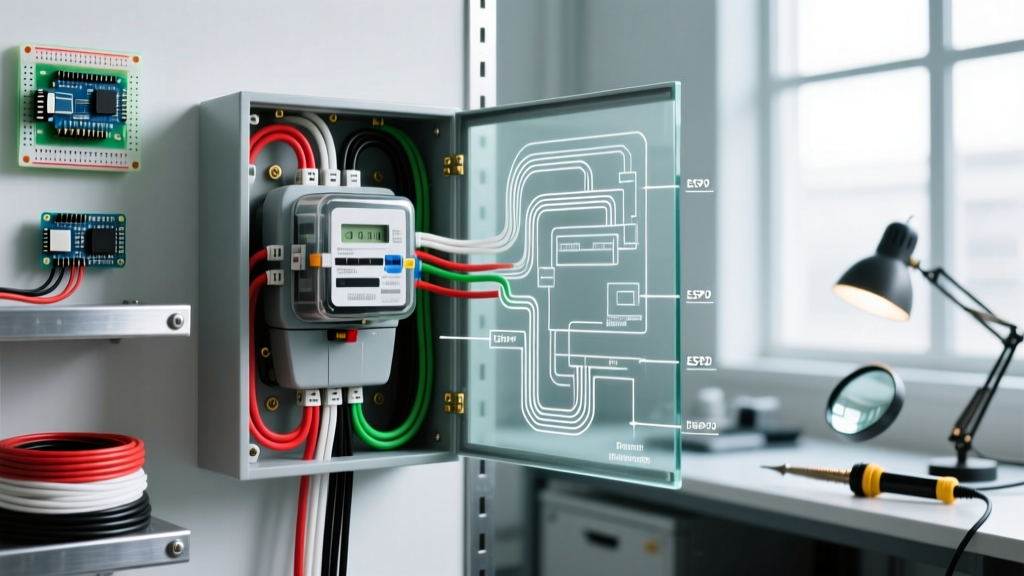
This is the most common and code-compliant configuration for modern homes. You will need a double-pole thermostat (e.g., Cadet B-Mech or Honeywell CT410B) and a 240V double-pole breaker.
Step-by-Step Wiring Procedure
- Power Verification: Turn off the double-pole breaker. Test the wires in the wall box with a voltage tester to confirm zero voltage.
- Prepare the Wall Box: Ensure you are using a deep single-gang or double-gang electrical box (like the Carlon B618RR) to accommodate the stiff 12 AWG or 14 AWG wires and the thermostat's depth.
- Identify Line vs. Load: The 'Line' wires come from the breaker panel. The 'Load' wires go to the baseboard heater. If unsure, cap all wires, turn the breaker on briefly, and test which pair is hot (Line). Turn breaker back off.
- Connect the Line Wires: Connect the two Line wires (usually Black and Red from a 12/2 or 14/2 cable) to the thermostat's 'L1' and 'L2' terminals. Polarity does not matter here.
- Connect the Load Wires: Connect the two Load wires (going to the heater) to the thermostat's 'T1' and 'T2' (or 'Load') terminals.
- Grounding: Connect the bare copper ground wires from both the Line and Load cables together with a wire nut. Attach a pigtail to the metal wall box (if metal) and another to the thermostat's green grounding screw. NEC 250.148 requires the device to be grounded.
- Mount and Test: Carefully fold the wires into the box, screw the thermostat to the wall plate, attach the cover, and restore power.
The 120V Electric Baseboard Thermostat Wiring Diagram (Single-Pole)
Older homes, additions, or specific plug-in style hardwired units may use 120V. This requires a single-pole thermostat and a standard single-pole 15A or 20A breaker.
- Line Connection: Connect the hot 'Line' wire (Black) from the breaker panel to the single 'Line' terminal on the thermostat.
- Load Connection: Connect the 'Load' wire (Black or Red) heading to the heater to the single 'Load' terminal on the thermostat.
- Neutral Bypass: The white 'Neutral' wires from the panel and the heater should be wire-nutted together and pushed to the back of the box. The single-pole thermostat does not connect to the neutral wire.
- Grounding: Connect all bare copper ground wires together, pigtailing to the box and the thermostat ground screw.
2026 Market Guide: Recommended Thermostat Models
When replacing an old mechanical dial, upgrading to a digital or smart line-voltage thermostat can reduce heating costs by 10-15% through precise temperature holding and scheduling.
- Cadet B-Mech (Double Pole): A robust, bi-metallic mechanical thermostat. Priced around $45. Excellent for high-dust environments where digital sensors might fail. Features a positive-off position.
- Honeywell CT410B: A versatile digital thermostat compatible with both 120V and 240V systems (up to 16.7A). Priced at $35. Features an easy-to-read backlit display and simple 4-wire installation.
- Mysa Smart Thermostat for Baseboard: The leading line-voltage smart thermostat in 2026. Priced at $139. Offers Wi-Fi connectivity, geofencing, and integration with Alexa/HomeKit. Requires a neutral wire for its internal Wi-Fi radio, meaning you must have a neutral wire available in your wall box (often requires upgrading older 2-wire setups to 3-wire).
Common Wiring Failure Modes & Troubleshooting
1. Heater Refuses to Turn Off (Stuck Relay)
Symptom: The room is sweltering, and turning the thermostat dial to 'Off' does not stop the heater from radiating heat.
Cause: In cheap mechanical thermostats, the internal bimetallic contacts can arc and weld themselves together over time, especially if the heater draws near the thermostat's maximum amperage rating (usually 16A or 22A).
Fix: Turn off the breaker immediately. Replace the mechanical thermostat with a digital model that uses a solid-state relay or a heavy-duty contactor.
2. Breaker Trips Immediately Upon Reset
Symptom: You reset the breaker, and it instantly snaps back to the 'Trip' or 'Off' position.
Cause: A dead short. This is usually caused by a pinched wire inside a crowded wall box, a loose wire nut touching the metal box, or a burned-out heating element inside the baseboard unit that has shorted to the chassis.
Fix: Disconnect the thermostat. Use a multimeter to test for continuity between the hot wires and the ground wire. If continuity exists, you have a short. Inspect the wall box for crushed insulation, then test the baseboard element itself.
3. Heater Hums but Produces No Heat
Symptom: A distinct 60Hz electrical hum emanates from the baseboard, but the fins remain cold.
Cause: If using a 240V heater on a 120V circuit, or if one leg of a double-pole breaker has failed/tripped, the heater is only receiving half its required voltage. The resistance elements will vibrate (hum) but cannot generate sufficient thermal energy.
Fix: Verify voltage at the heater's junction box with a multimeter. You should read 240V across the two hot wires. If you read 120V, replace the double-pole breaker.
Frequently Asked Questions
Can I use a standard Nest or Ecobee on a line-voltage baseboard heater?
No. Standard smart thermostats like the Nest Learning Thermostat or Ecobee SmartThermostat are designed exclusively for 24V low-voltage forced-air or heat pump systems. Connecting them to 120V or 240V line voltage will cause catastrophic failure. You must purchase a smart thermostat specifically rated for line-voltage baseboard heaters, such as the Mysa or Sinopé TH1124ZB.
Does it matter which wire goes to L1 and L2 on a double-pole thermostat?
For standard, non-polarized double-pole line-voltage thermostats, polarity does not matter. You can connect Line 1 to L1 and Line 2 to L2, or swap them. The thermostat simply acts as a dual mechanical switch breaking both hot legs simultaneously. However, always defer to the specific manufacturer's diagram included in the box, as some advanced digital models with internal electronics may require specific line/load orientation.