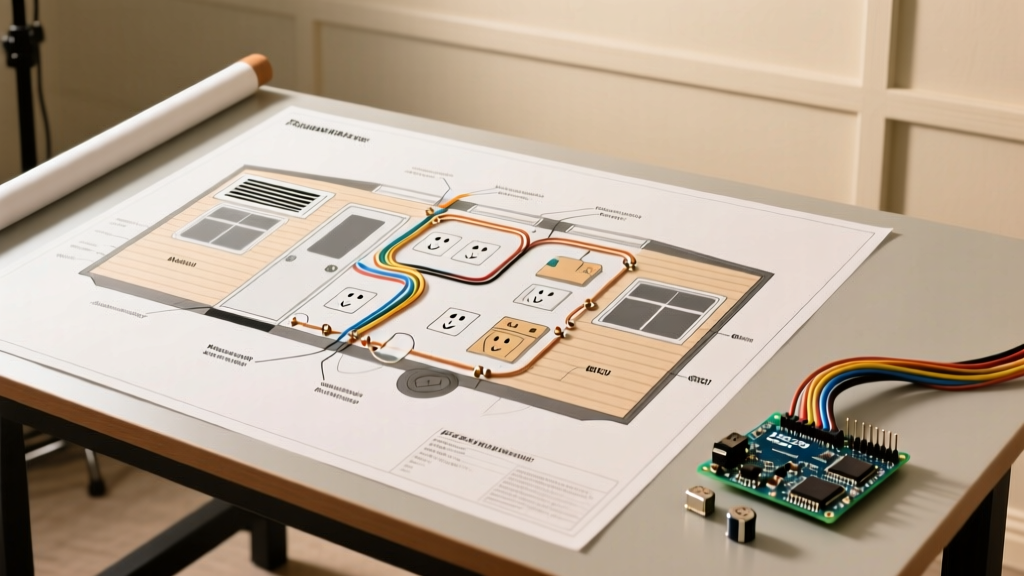

The Unique Electrical Architecture of Double-Wide Homes
Wiring a manufactured home is fundamentally different from stick-built construction. When analyzing double wide mobile home electrical wiring diagrams, you are not just looking at a single continuous circuit map; you are examining two distinct electrical halves that must be seamlessly married on-site. During manufacturing, the electrical system is governed by the HUD Code (specifically 24 CFR Part 3280). However, once the home is sited, the power supply, grounding, and exterior connections fall under the National Electrical Code (NEC) Article 550.
A standard modern double-wide utilizes a 200-amp outdoor disconnect (such as the Siemens W0408ML1206) that feeds an interior main breaker panel located in one half of the home. The critical component unique to double-wide diagrams is the crossover junction box, which routes power from the main panel to the second half of the house, often feeding a secondary sub-panel or directly branching into heavy appliance circuits.
Decoding the Schematic: Legends and Line Types
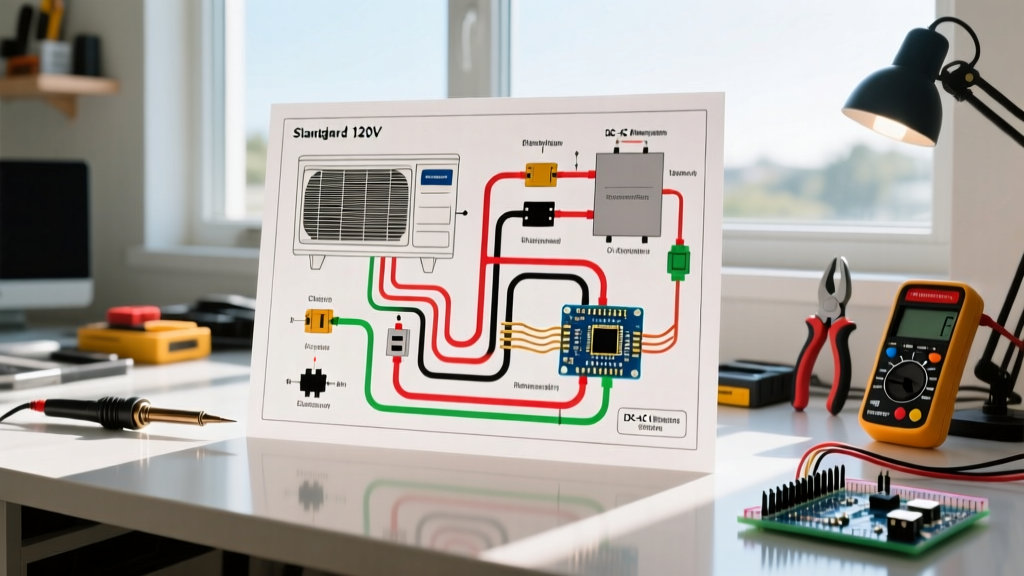
Before connecting any major appliance, you must understand the visual language of the manufacturer's schematic. Double-wide diagrams typically separate the 'Main Feed' from the 'Branch Circuits'.
- Solid Black Lines: Represent 120V hot legs (L1 or L2).
- Dashed or White Lines: Represent the grounded neutral conductor (N).
- Green or Bare Lines: Represent the equipment grounding conductor (G).
- Heavy Bold Lines: Indicate the main feeder or crossover harness (typically 4/0 AL or 2/0 CU).
Expert Insight: Never assume the neutral and ground buses are bonded in a mobile home sub-panel. Under NEC 550.16, the neutral and ground must be kept strictly isolated in any interior panel that is fed from an outdoor disconnect or a main panel in the opposite half of the double-wide.
Appliance Circuit Requirements Matrix
Appliance wiring in a double-wide requires strict adherence to the diagram's load calculations. Because the physical width of the home limits wire routing through the floor joist cavities (often only 6 to 8 inches deep), wire gauge and breaker sizing must be exact to prevent voltage drop and overheating. Below is a 2026 standard reference table for common double-wide appliance circuits.
| Appliance Type (Example Model) | Voltage | Breaker Size | Wire Gauge (Copper) | Receptacle / Termination |
|---|---|---|---|---|
| Electric Range (GE JBS56) | 240V | 40A (2-Pole) | 8 AWG | NEMA 14-50R |
| Heat Pump Water Heater (Rheem ProTerra) | 240V | 30A (2-Pole) | 10 AWG | Hardwired (Whip) |
| Electric Dryer (LG DLE7000) | 240V | 30A (2-Pole) | 10 AWG | NEMA 14-30R |
| Central HVAC (Goodman GSZC18) | 240V | 60A (2-Pole) | 4 AWG | Hardwired Disconnect |
| Dishwasher / Disposal Combo | 120V | 20A (Single) | 12 AWG | Hardwired / Split Receptacle |
Step-by-Step: Wiring a 240V Appliance at the Crossover
One of the most complex tasks depicted in double wide mobile home electrical wiring diagrams is routing a 240V appliance circuit that resides in the opposite half of the home from the main panel. Here is the professional procedure for wiring an electric range in the secondary half.
Step 1: Verify the Crossover Harness Capacity
Locate the crossover junction box, usually found near the marriage line in the utility closet or under the floor near the main I-beam. Most modern double-wides use a pre-manufactured AFC Cable Systems Mobile Home Feeder (rated for 100A or 200A). Ensure the harness has spare capacity. If the main panel is 200A and the crossover is rated for only 50A, you cannot add a 40A range circuit without upgrading the crossover to a 4/0 AL quadplex cable.
Step 2: Route the Branch Circuit Through the Floor Cavity
Unlike stick-built homes where you drill through 2x10 studs, mobile home floor joists are often engineered wood I-joists. Never drill the top or bottom flanges. The wiring diagram will show a specific 'chase' or utility channel. Run your 8/3 NM-B (Romex) cable through the pre-punched holes in the webbing of the I-joists, maintaining at least 1.25 inches of clearance from the floor decking to prevent nail punctures.
Step 3: Terminate at the Sub-Panel or Main Panel
Strip the 8/3 NM-B cable. Connect the bare copper ground to the isolated ground bus bar. Connect the white neutral to the neutral bus bar (ensure the bonding screw is removed if this is a sub-panel). Connect the black and red hot legs to a new Eaton BR240 (40A 2-pole) breaker. Torque the breaker lugs to exactly 20 in-lbs using a calibrated torque screwdriver to prevent arcing.
Step 4: Install the NEMA 14-50R Receptacle
At the range location, wire the NEMA 14-50R receptacle. The diagram will specify the orientation. Typically, the ground pin faces down. Connect the red and black wires to the brass X and Y terminals, the white wire to the silver neutral terminal, and the bare ground to the green grounding screw. Use a receptacle with built-in tamper-resistant (TR) shutters, as mandated by recent NEC updates.
Common Failure Modes and Troubleshooting
When an appliance fails to operate or control boards fry shortly after installation in a double-wide, the issue almost always traces back to a misinterpretation of the wiring diagram at the marriage line.
The 'Floating Neutral' Catastrophe
If the neutral connection at the crossover junction box is loose or corroded, the 120V circuits in the home will become series circuits. Instead of receiving 120V, your appliance control boards (like the PCB on a modern Samsung refrigerator or the logic board on a Rheem water heater) may receive up to 240V, instantly destroying the electronics. Diagnostic Step: Use a Fluke 87V multimeter to measure voltage from L1 to Neutral, and L2 to Neutral at the sub-panel. Both should read exactly 120V (+/- 3%). If one reads 140V and the other 100V, shut off the main disconnect immediately and re-torque the crossover neutral lugs to 40 in-lbs.
Multi-Wire Branch Circuit (MWBC) Errors
Older double-wide diagrams frequently utilized MWBCs (sharing one neutral for two 120V hot legs) to save copper. If you are replacing an old breaker panel, you must ensure the two hot legs are on opposite phases (L1 and L2) and utilize a handle-tied breaker. Placing them on the same phase will cause the shared neutral to carry the combined amperage, leading to a melted neutral bus and a potential fire.
2026 Code Updates and Safety Upgrades
The electrical landscape for manufactured homes continues to evolve. According to the NFPA 70 (National Electrical Code), several critical updates affect how we interpret and execute appliance wiring diagrams today.
- AFCI Protection: Almost all 120V, 15A and 20A branch circuits supplying appliances (like dishwashers and refrigerators) now require Arc-Fault Circuit Interrupter (AFCI) protection. Upgrade standard breakers to combination-type AFCI breakers (e.g., Square D HOM120CAFIC).
- GFCI for Garages and Exteriors: If your double-wide includes an attached carport or exterior appliance outlets (like a freezer in an exterior utility closet), GFCI protection is mandatory.
- Surge Protective Devices (SPD): With the proliferation of smart appliances featuring sensitive Wi-Fi modules, installing a Type 1 or Type 2 SPD (like the Eaton CHSPT2ULTRA) at the main panel is highly recommended to protect against grid surges entering through the outdoor disconnect.
Final Verification and Commissioning
Before energizing any newly wired appliance in a double-wide mobile home, perform a dead-front test. With the main breaker OFF, use a continuity tester to verify there is no short between the hot legs and the ground. Verify the grounding electrode system at the outdoor disconnect includes two ground rods spaced at least 6 feet apart, driven into the earth, as required by NEC 550.32. For further energy efficiency standards regarding manufactured home appliances, refer to the U.S. Department of Energy's Manufactured Homes guidelines.
By strictly following the manufacturer's double wide mobile home electrical wiring diagrams and adhering to modern NEC codes, you ensure a safe, reliable, and code-compliant electrical system capable of supporting the heavy loads of modern household appliances.