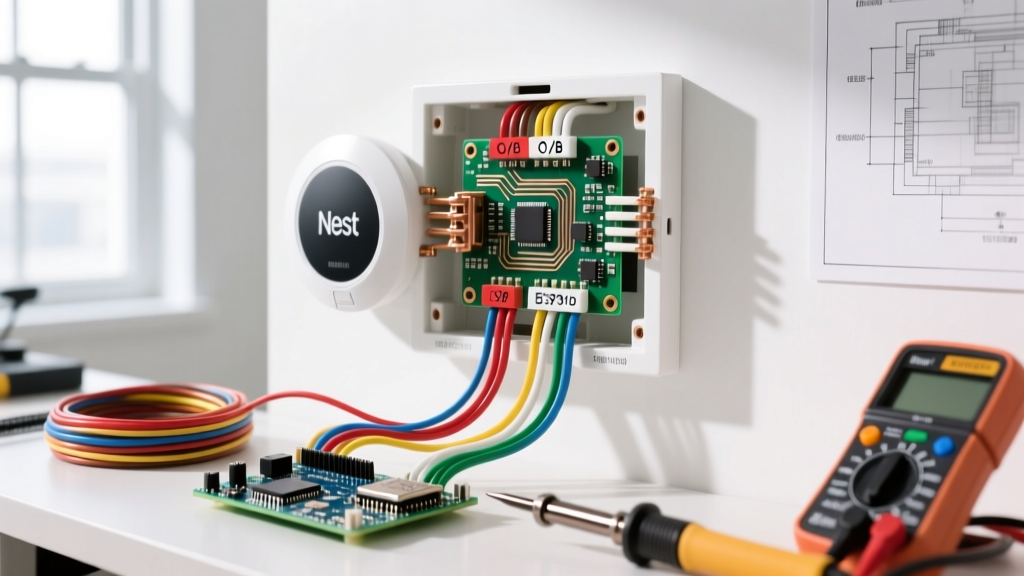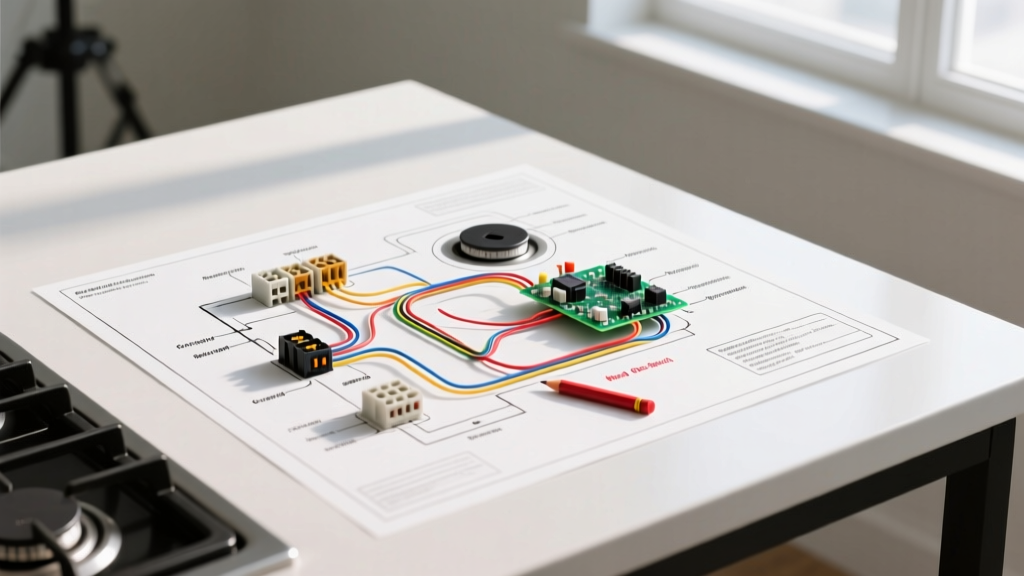

Why the Factory 7-Way Fails High-Draw Big Tex Accessories
Big Tex Trailers—particularly heavy-duty models like the 14ET Equipment Tilt, 16ET, and 70PI Pipe trailers—are industry staples for contractors and haulers. However, when you outfit these trailers with aftermarket 12,000 lb electric winches, hydraulic dump pumps, or high-lumen LED work light arrays, the standard 7-way RV connector quickly becomes a severe bottleneck. The auxiliary 12V pin (Pin 4) on a standard 7-way plug is typically wired with 10 AWG or 12 AWG wire from the tow vehicle, protected by a 30A or 40A breaker. Attempting to pull 60+ amps through this factory wiring results in massive voltage drop, melted connector pins, and tripped breakers.
To solve this, professional upfitters run a dedicated heavy-gauge feed from the tow vehicle battery directly to a trailer-mounted auxiliary breaker panel. When sourcing a reliable wiring diagram for Big Tex trailer auxiliary setups, the goal is to completely isolate high-draw DC accessories from the delicate factory lighting harness. This ensures compliance with FMCSA Part 393 electrical regulations, which mandate that trailer lighting circuits remain uninterrupted by auxiliary accessory loads.
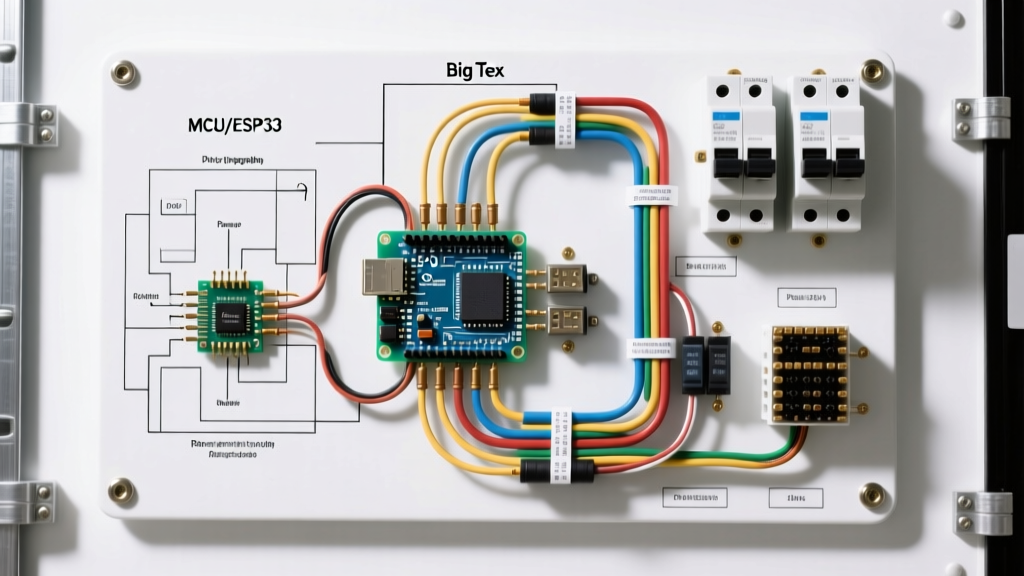
The Auxiliary Wiring Diagram for Big Tex Trailer Panels
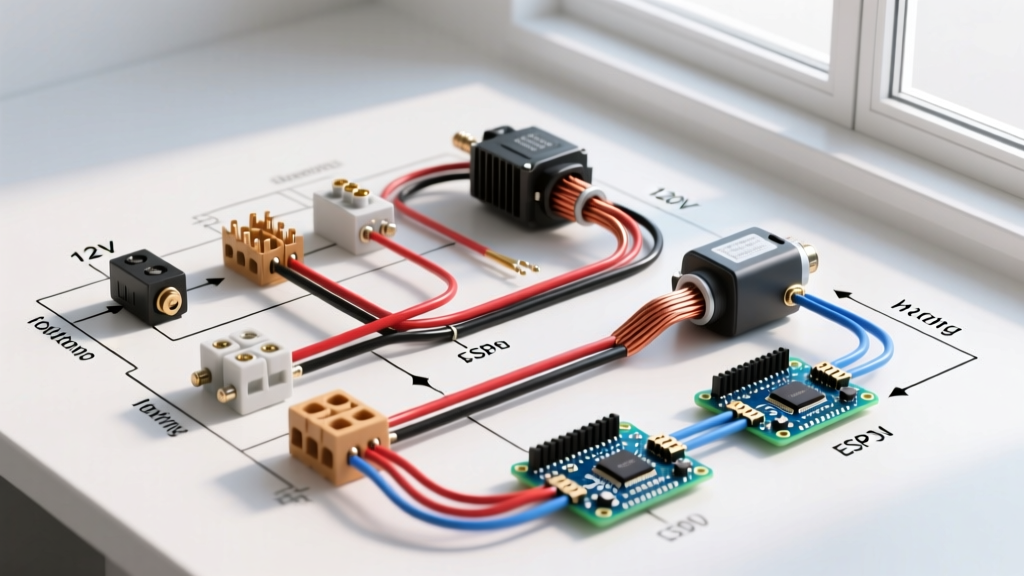
The custom wiring diagram for Big Tex trailer applications outlined below bypasses the 7-way auxiliary pin entirely. Instead, it utilizes a dedicated 4 AWG marine-grade feed line routed through the trailer tongue, terminating at a centralized, weather-sealed breaker panel. This panel then distributes protected 12V power to your winch solenoids, hydraulic pump relays, and auxiliary lighting blocks.
Component Sourcing & Breaker Selection (2026 Market Guide)
As of early 2026, copper prices have stabilized, but buying cheap, copper-clad aluminum (CCA) wire for mobile DC applications remains a critical safety hazard. Always specify 100% stranded tinned copper wire to resist the vibration and moisture inherent in trailer environments. Furthermore, avoid cheap bimetallic thermal resettable breakers for high-draw winch circuits; they suffer from thermal fatigue and will prematurely trip on cold mornings when winch inrush currents spike.
- Main Feed Wire: 4 AWG Stranded Tinned Copper (Marine Grade). Cost: ~$2.80/ft.
- Breaker Panel: Blue Sea Systems ST Blade (12-Circuit) with integrated 100A main breaker. Cost: ~$85 - $110.
- Branch Circuit Fuses: ATO/ATC standard automotive blade fuses (20A for LED work lights, 30A for hydraulic solenoids).
- Terminals: Heat-shrink ring terminals with 3M marine adhesive liner.
DC Voltage Drop & Wire Sizing for 25-Foot Trailer Runs
Mobile DC systems operate at a nominal 12.6V to 14.4V. A voltage drop exceeding 3% (0.36V) at the load will cause hydraulic pumps to overheat and winches to stall. The table below dictates the minimum wire gauge required based on the total run length (tow vehicle battery to trailer panel, plus trailer panel to load).
| Wire Gauge (AWG) | Max Continuous Amps | Voltage Drop at 25ft (12V) | Recommended Application |
|---|---|---|---|
| 10 AWG | 30A | 1.02V (8.5%) | Interior dome lights, camera feeds |
| 8 AWG | 40A | 0.64V (5.3%) | Small water pumps, light bars |
| 6 AWG | 60A | 0.40V (3.3%) | Single electric winch (8k-9k lb) |
| 4 AWG | 80A+ | 0.25V (2.1%) | 12k Winches, hydraulic dump pumps |
Step-by-Step Panel & Breaker Installation
Installing this system requires integrating with the Big Tex trailer's physical frame without compromising the structural integrity of the tongue or the factory modular lighting harness. The ABYC E-11 standards for DC electrical systems on mobile platforms heavily emphasize chafe protection and secure mechanical terminations, which we apply to this trailer build.
Step 1: Upgrading the Tow Vehicle Feed
Run 4 AWG red wire from the tow vehicle's alternator/battery positive terminal. Install a 100A magnetic hydraulic circuit breaker or a Class-T fuse within 7 inches of the vehicle battery. Route the wire to the rear bumper, terminating at a heavy-duty Anderson Powerpole (SB50) quick-disconnect plug. This allows you to completely sever the high-amp connection when unhitching the Big Tex trailer.
Step 2: Routing and Grommeting the Main Feed
Feed the 4 AWG wire from the Anderson plug through the Big Tex trailer tongue. Critical Edge Case: Big Tex trailers often feature sharp, unpainted steel edges inside the tongue tube where the factory wiring is pulled. You must use a heavy-duty rubber grommet or split-loom corrugated tubing sealed with silicone at the entry and exit points. A single vibration-induced short against the steel tongue will result in a catastrophic fire if the main fuse fails to clear the fault in time.
Step 3: Mounting the Blue Sea Breaker Block
Mount the Blue Sea ST Blade panel inside a weather-sealed polyurethane project box (e.g., Bud Industries NBF-32306) bolted to the inside of the trailer tongue or the forward crossmember. Use stainless steel hardware and apply a bead of marine sealant behind the mounting brackets to prevent moisture intrusion into the hollow steel frame members.
Step 4: Establishing the Ground Return
The most common failure point in trailer wiring is a poor ground. Do not rely on the hitch ball for a ground return for high-draw accessories. Run a 4 AWG black wire from the negative bus bar on your breaker panel directly to the trailer frame. Use a heavy-duty sanding disc to strip the paint and powder coating down to bare, shiny steel. Bolt the ring terminal using a Grade 8 bolt and star washer, then coat the entire termination in dielectric grease to prevent galvanic corrosion.
Expert Insight: Never use self-tapping sheet metal screws for DC ground connections on a Big Tex trailer frame. The vibration of highway towing will elongate the pilot hole over time, increasing resistance, generating heat, and ultimately melting the ground wire insulation. Always drill, tap, and use a machine bolt with a lock nut.
Common Failure Modes & Troubleshooting
Even with a flawless wiring diagram for Big Tex trailer setups, environmental factors can degrade the system. Here is how to diagnose the most common issues encountered in the field:
- Winch Clicks but Won't Turn: This is rarely a winch motor issue. It is almost always a voltage drop caused by corroded Anderson Powerpole contacts or an undersized ground wire. Measure voltage directly at the winch solenoid under load. If it drops below 10.5V, upgrade your connections.
- Hydraulic Pump Runs Slowly and Overheats: Hydraulic dump trailers require massive inrush currents (often 150A+ for a split second). If your main breaker panel is rated for only 100A continuous, the pump will choke. Upgrade the main feed to 2/0 AWG welding cable and use a 200A Class-T fuse for dedicated hydraulic pump circuits.
- Intermittent Accessory Failure: Check the factory Big Tex modular connector located near the tongue. While this guide focuses on bypassing it for high-draw items, if your auxiliary panel shares a ground bus with the factory lighting harness, a corroded factory pin can backfeed voltage into your auxiliary panel's ground bus, causing erratic behavior.
Frequently Asked Questions
Can I just upgrade the 7-way plug to handle my winch?
No. While heavy-duty 7-way plugs with larger pins exist, the wiring inside your tow vehicle's factory harness is still likely 10 AWG or 12 AWG, and the vehicle's factory alternator fuse will blow under a 60A winch load. A dedicated 4 AWG auxiliary line is mandatory.
Do I need to disconnect the auxiliary panel when towing?
With an Anderson SB50 quick-disconnect plug installed at the rear of the tow vehicle, you simply unplug the single heavy-gauge cable when unhitching. The breaker panel on the Big Tex trailer remains safely de-energized when disconnected from the tow vehicle battery.
What if my Big Tex trailer has an onboard battery?
If your trailer features a deep-cycle battery for breakaway brakes or off-grid winching, you must install a DC-to-DC battery charger (like a Victron Orion-Tr Smart) between your new auxiliary breaker panel and the trailer battery. This prevents the tow vehicle alternator from overcharging the trailer battery during long highway drives.