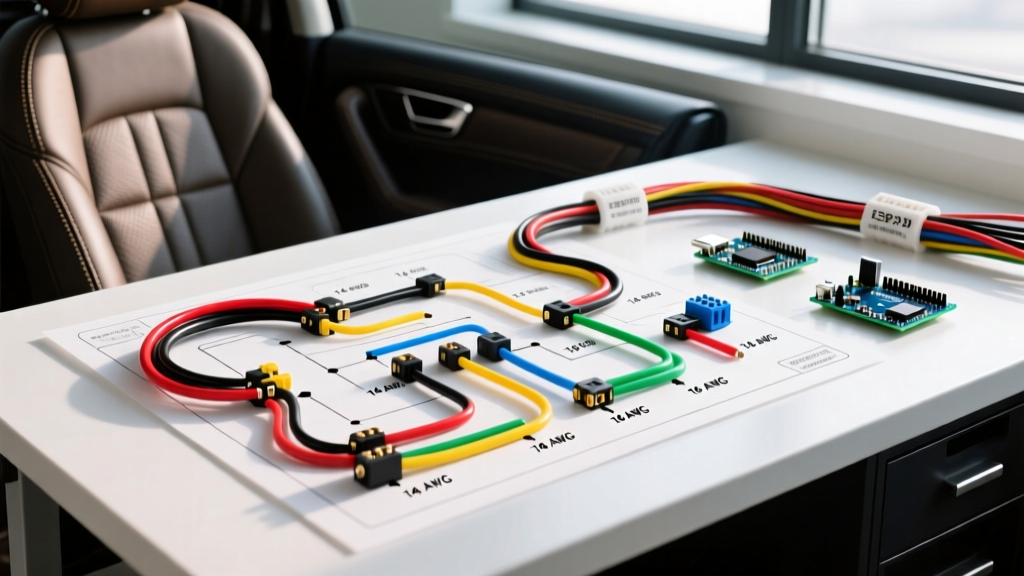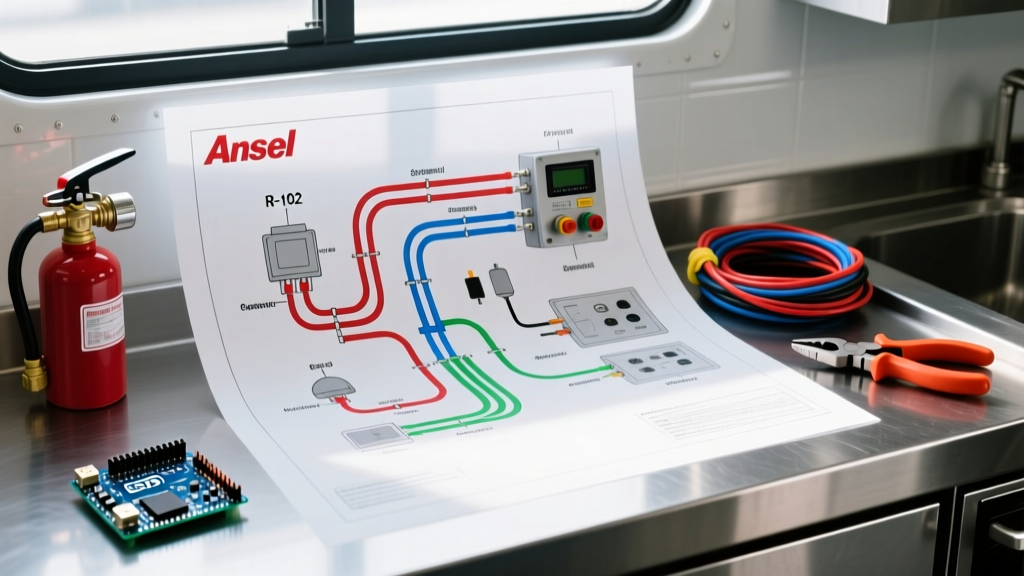

Introduction to Mobile Ansul Fire Suppression Wiring
Integrating a commercial fire suppression system into a mobile environment presents unique electrical and mechanical challenges. For mobile food trucks and catering vehicles, the wiring diagram for Ansul system configurations must account for constant vibration, high humidity, grease-laden air, and the transition between shore power and vehicle alternator power. As of the 2026 NFPA 96 code cycle, mobile cooking operations are strictly required to have automated fire suppression that seamlessly integrates with the vehicle's gas and electrical shutoff protocols.
This guide breaks down the exact electrical architecture required to wire an Ansul Piranha or R-102 control head in a 12VDC mobile food truck environment, ensuring compliance with NFPA 96 standards for mobile cooking and reliable operation when every second counts.
Decoding the Core Electrical Components
Before tracing the wires, you must understand the specific hardware used in modern Ansul mobile setups. Unlike static commercial kitchens that rely on 120VAC or 24VAC, food trucks primarily operate on 12VDC or 24VDC battery banks, requiring specialized solenoid valves and relays.
The Automan Control Head & Microswitches
The heart of the electrical circuit is the Automan control head. When the system is triggered (either manually via the pull station or automatically via fusible links melting at 360°F), the mechanical actuation pushes a plunger that engages a Single Pole Double Throw (SPDT) microswitch assembly. This microswitch is the brain of the electrical shutdown sequence.
- Common (C): Receives the 12VDC positive feed from the vehicle's fused ignition or auxiliary battery bus.
- Normally Closed (NC): Completes the circuit to the hood ventilation fan relay during normal operation.
- Normally Open (NO): Closes upon system actuation, sending 12VDC to the gas shutoff solenoid and the audible/visual alarm.
Gas Shutoff Solenoid Integration
Mobile food trucks typically use a 12VDC automatic gas shutoff valve (such as the ASCO Red-Hat series). Because the Ansul microswitch is rated for roughly 5 amps, and a heavy-duty gas solenoid can draw a high inrush current, the wiring diagram for Ansul system setups in vehicles must utilize an automotive-grade 12VDC relay to protect the microswitch contacts from arcing and premature failure.
Expert Callout: Vibration-Proofing Your Connections
In a static kitchen, wire nuts and electrical tape are standard. In a food truck bouncing over potholes, those connections will fail. According to Johnson Controls fire suppression guidelines, all mobile Ansul wiring must utilize crimped ring terminals with heat-shrink insulation, secured with Loctite threadlocker on all terminal block screws. Never use push-in spade connectors in high-vibration zones.
Mobile-Specific Wire Gauge & Component Matrix
Selecting the correct wire type is critical. Standard THHN copper wire is stranded but not designed for the continuous flexing and vibration of a commercial vehicle. You must use SAE J1128 GXL or TXL automotive primary wire, or marine-grade tinned copper.
| Component | Voltage Rating | Recommended Wire Gauge | Wire Type (2026 Standard) | Terminal Style |
|---|---|---|---|---|
| Main Power Feed (Battery to Panel) | 12VDC | 10 AWG | Marine Tinned Stranded | Ring Terminal (3/8 inch) |
| Automan Microswitch Feed | 12VDC | 14 AWG | SAE J1128 GXL | Heat-Shrink Ring |
| Gas Solenoid Valve Relay | 12VDC | 12 AWG | SAE J1128 GXL | Heavy-Duty Spade |
| Hood Fan Shutdown Relay | 12VDC / 120VAC | 14 AWG (DC) / 12 AWG (AC) | THHN (AC side only) | Fork / Ring Hybrid |
| Audible Alarm Bell | 12VDC | 16 AWG | SAE J1128 GXL | Insulated Spade |
Step-by-Step 12VDC Wiring Sequence
Follow this exact sequence to wire the electrical shutdown loop for a food truck Ansul system. Always disconnect the vehicle's battery and shore power before beginning.
Step 1: Establish the Fused Power Source
Run a 10 AWG marine-grade wire from the positive terminal of the vehicle's auxiliary battery bank to a dedicated 15-amp maxi-fuse holder mounted within 18 inches of the battery. From the fuse, run 14 AWG wire to the Common (C) terminal on the Automan microswitch assembly inside the control head.
Step 2: Wire the Exhaust Fan Shutdown
Most food truck exhaust fans run on 120VAC via an inverter or generator. Run a 14 AWG 12VDC wire from the Normally Closed (NC) terminal on the microswitch to the coil ground (Pin 85) of a standard 12VDC automotive relay. Connect Pin 86 to a switched 12VDC ignition source. When the Ansul system fires, the microswitch breaks the NC circuit, de-energizing the relay and cutting power to the 120VAC exhaust fan contactor.
Step 3: Wire the Gas Shutoff Solenoid
Run a 14 AWG wire from the Normally Open (NO) terminal on the microswitch to Pin 86 of a heavy-duty 30-amp automotive relay. Connect Pin 85 to a solid chassis ground. Connect Pin 30 to a fused 12VDC constant hot source, and Pin 87 directly to the positive terminal of the 12VDC gas shutoff solenoid. Ground the solenoid's negative terminal to the chassis. Upon actuation, the NO circuit closes, energizing the relay and dropping the hammer on the gas line.
Step 4: Integrate the Audible and Visual Alarms
Tee off the wire feeding Pin 86 of the gas shutoff relay to power a 12VDC piezoelectric alarm bell and a strobe light mounted on the exterior of the food truck. This alerts the operator and nearby pedestrians that the system has discharged and the kitchen is safe to approach.
Common Failure Modes in Vibrating Vehicles
Even with a perfect wiring diagram for Ansul system layouts, mobile environments introduce unique failure modes. Inspect these specific areas during your bi-annual maintenance checks:
- Microswitch Misalignment: The constant slamming of food truck service doors can shift the Automan control head bracket by millimeters. If the mechanical plunger no longer fully depresses the microswitch button, the gas valve will not shut off during a fire. Use a digital multimeter to test continuity across the NO and NC terminals monthly.
- Grease Ingress Short Circuits: Airborne grease bypassing the hood filters can coat the microswitch terminals. Over time, this creates a conductive carbon path that can cause phantom voltage drops or false alarms. Always ensure the microswitch enclosure is sealed with its factory rubber gasket.
- Voltage Drop on Long Runs: If the auxiliary battery is located at the rear of the truck and the Ansul head is at the front, a 16 AWG wire will suffer severe voltage drop, potentially failing to trigger the gas solenoid. Always oversize wire runs over 15 feet by one AWG step.
Frequently Asked Questions
Can I wire the Ansul system directly to the vehicle's alternator?
No. The fire suppression electrical loop must be tied to a constant 12VDC auxiliary battery bank. If the system is wired to a switched ignition source and the engine is turned off during a fire, the gas shutoff valve and alarms will not receive power.
Do I need a separate wiring diagram for the Ansul Piranha vs. the R-102?
The electrical microswitch logic remains identical between the Piranha (wet chemical) and R-102 (dry/wet hybrid) systems. The difference lies in the mechanical actuation and plumbing, not the 12VDC electrical shutdown sequence.
Are wireless microswitches legal for food truck Ansul systems?
As of 2026, NFPA 17A and local fire marshals generally require hardwired, mechanically actuated SPDT microswitches for commercial cooking fire suppression. Wireless RF relays are not approved for life-safety gas shutoff applications in mobile kitchens due to the risk of signal interference in crowded urban environments.
For further verification on electrical safety standards for commercial mobile kitchens, refer to the testing and certification protocols outlined by UL Fire Safety resources. Proper execution of your Ansul wiring ensures your business remains operational, compliant, and, most importantly, safe.