
The Thermal Threshold: Defining the Boundaries
When fabricators, HVAC technicians, and electronics engineers evaluate welding soldering brazing processes, the distinction is not merely semantic; it is rooted in metallurgical thermodynamics. The fundamental dividing line rests on a single question: Does the base metal melt?
According to the American Welding Society (AWS), welding involves the fusion of base metals, often with the addition of a filler. Soldering and brazing, conversely, rely on capillary action to draw a molten filler metal between solid base metals. The arbitrary but universally accepted thermal boundary between soldering and brazing is 450°C (840°F).
The AWS Definition: If the filler metal melts below 450°C, it is soldering. If it melts above 450°C but the base metal remains solid, it is brazing. If the base metal itself reaches its liquidus state, it is welding.
The Thermal Threshold Matrix
Understanding the mechanical limits of each process is critical for material-specific applications. Below is a comparative matrix detailing operational thresholds and joint characteristics.
| Process | Thermal Threshold | Base Metal State | Typical Joint Strength | Common Filler Alloy |
|---|---|---|---|---|
| Soldering | < 450°C (840°F) | Solid | 5,000 - 15,000 PSI | SAC305, Sn63/Pb37 |
| Brazing | > 450°C (840°F) | Solid | 20,000 - 60,000 PSI | BAg-24, BCuP-5 |
| Welding | > Base Metal Melt | Liquid (Fused) | Matches Base Metal | ER70S-6, 4043 Al |
Material-Specific Deep Dives
Choosing the right process depends heavily on the specific metallurgy of your workpiece. Here is how welding, soldering, and brazing interact with the most common industrial materials.
1. Copper and Brass: The Capillary Kingdom
Copper is highly thermally conductive, meaning it pulls heat away from the joint rapidly. This makes it an ideal candidate for both soldering and brazing, but requires specific filler metals to avoid galvanic corrosion and embrittlement.
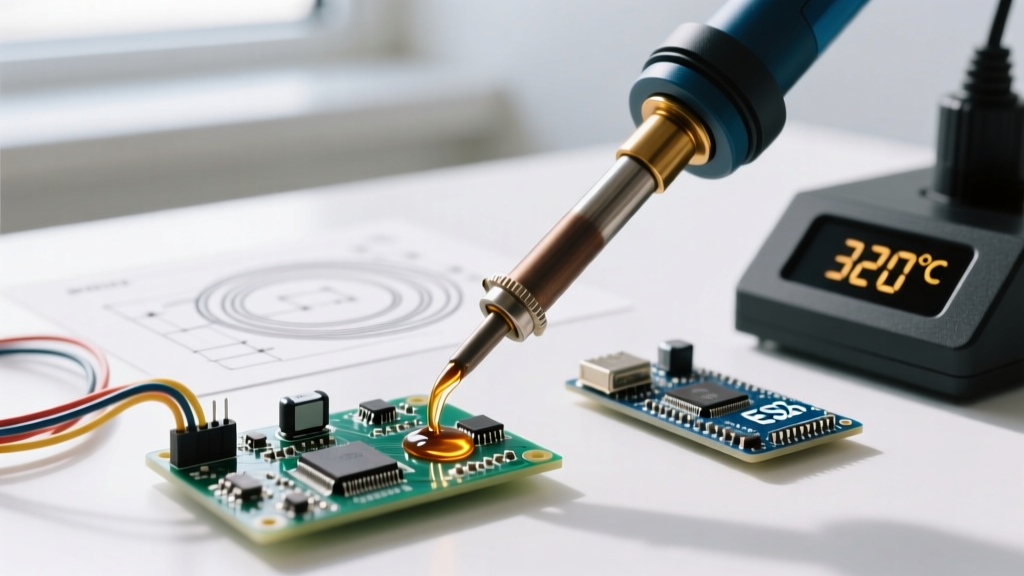
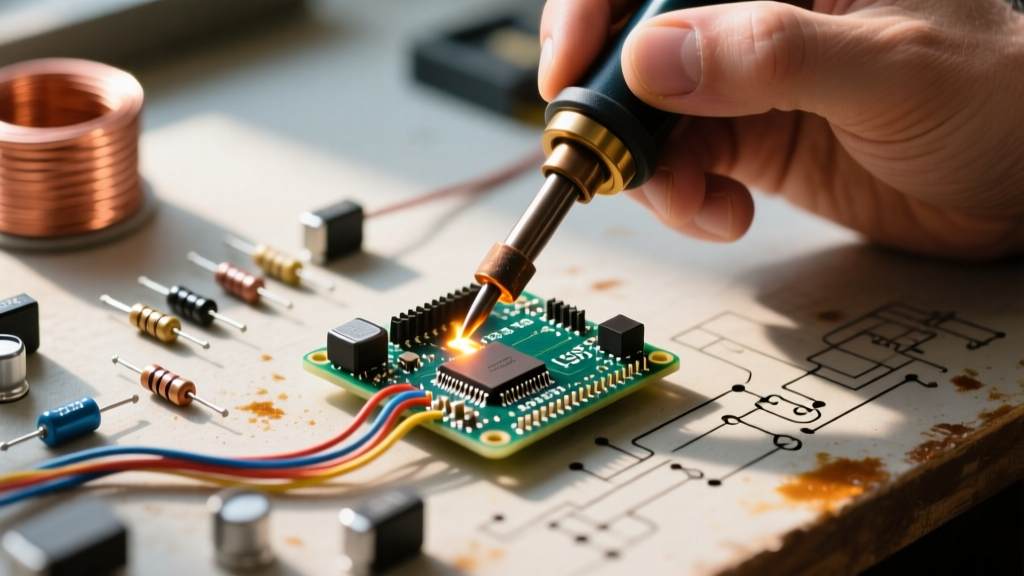
- Soldering (Electronics & Plumbing): For PCBs, SAC305 (96.5% Tin, 3.0% Silver, 0.5% Copper) is the 2026 industry standard for lead-free compliance, melting at 217°C–220°C. For potable water plumbing, Sn95/Sb5 (Tin-Antimony) is preferred over traditional 50/50 lead-tin due to modern health codes.
- Brazing (HVAC & Refrigeration): When joining copper-to-copper in high-pressure HVAC linesets, BCuP-5 (15% Silver, Copper-Phosphorus) is the gold standard. The phosphorus acts as a self-fluxing agent, eliminating the need for chemical flux which can cause internal corrosion if not purged. Warning: Never use BCuP alloys on steel or nickel alloys; the phosphorus will form brittle phosphide compounds at the grain boundaries, leading to catastrophic joint failure under vibration.
2. Steel and Cast Iron: Structural Integrity vs. Repair
Steel’s high melting point (approx. 1,370°C to 1,530°C depending on carbon content) makes it versatile, but its carbon content dictates the joining method.
- Welding (Mild Steel): For structural mild steel (A36), Gas Metal Arc Welding (GMAW/MIG) using ER70S-6 wire provides a 70,000 PSI tensile strength match. The 'S' denotes solid wire, and the '6' indicates higher deoxidizers (silicon and manganese) to handle surface rust and mill scale.
- Brazing (Cast Iron & High Carbon): Welding cast iron often results in cracking in the Heat Affected Zone (HAZ) due to rapid cooling and martensite formation. Instead, brazing with an RBCuZn-A (Copper-Zinc/Tin Bronze) rod via Oxy-Acetylene at roughly 900°C allows for strong joints (up to 40,000 PSI) without melting the base metal, preserving the cast iron's microstructure.
3. Aluminum: The Oxide Challenge
Aluminum presents a unique metallurgical hurdle: its surface oxide layer (Al2O3) melts at 2,072°C, while the base aluminum beneath it melts at just 660°C. This disparity complicates all three processes.
- Soldering: Standard rosin or acid fluxes cannot penetrate the aluminum oxide layer. Soldering aluminum requires specialized reactive fluxes (containing fluorides) or ultrasonic soldering irons that use cavitation to mechanically disrupt the oxide layer in real-time.
- Welding (TIG/GTAW): Alternating Current (AC) TIG welding is mandatory for aluminum. The Electrode Positive (EP) half-cycle provides the 'cleaning action' that blasts away the oxide layer, while the Electrode Negative (EN) half-cycle provides penetration. For 6061-T6 aluminum, 4043 filler is standard, but fabricators must account for HAZ softening. The heat of welding destroys the T6 temper, dropping the yield strength in the HAZ from 40 ksi down to roughly 15 ksi.
Decision Flowchart: Which Process to Choose?
Use this rapid decision framework when evaluating a new fabrication or repair project:
- Is the joint subject to high structural loads or dynamic fatigue?
- Yes: Choose Welding. (Ensure base metal is weldable; avoid high-carbon steels without pre/post-heat treatment).
- No: Proceed to step 2.
- Will the joint be exposed to temperatures exceeding 200°C (392°F) in operation?
- Yes: Choose Brazing. Solder will suffer from creep and eventual failure at elevated temperatures.
- No: Proceed to step 3.
- Are you joining dissimilar metals (e.g., Copper to Steel) or thin gauge materials prone to warping?
- Yes: Choose Brazing. The lower heat input prevents warping, and capillary action bridges dissimilar metallurgies beautifully.
- No: Choose Soldering (especially for electrical conductivity or sealed, low-stress plumbing).
Real-World Failure Modes and Troubleshooting
Even with the correct process selected, improper execution leads to specific, identifiable failure modes. Recognizing these is a hallmark of expert fabrication.
Soldering: The 'Cold' Joint and Disturbed Solidification
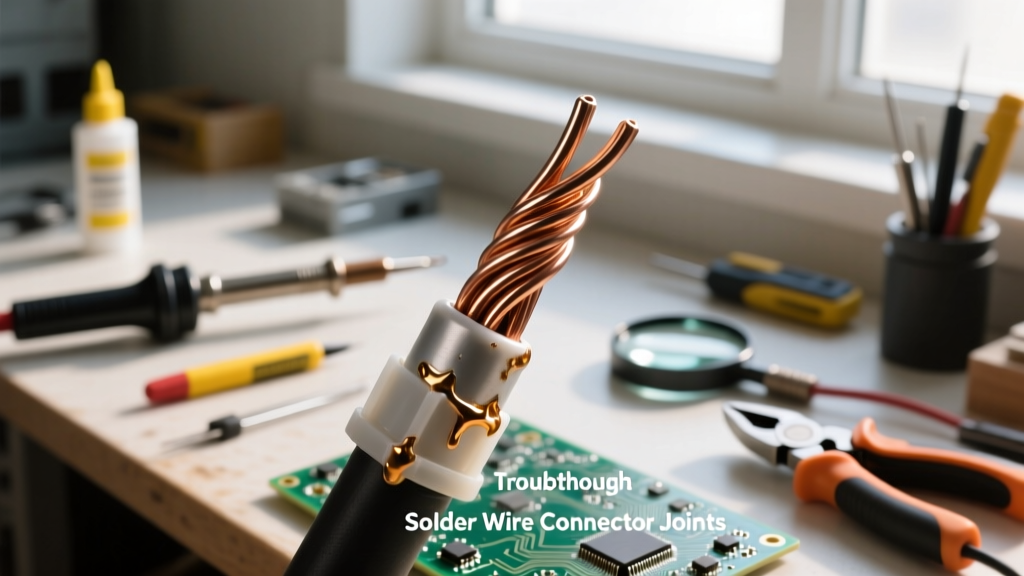
A cold solder joint is rarely about the absolute temperature being too low; it is usually about thermal mass and disturbance. If a component lead acts as a heatsink and the solder solidifies while the joint is still moving (even microscopically), the crystalline structure fractures, resulting in a dull, grainy appearance and high electrical resistance. Fix: Apply heat to the workpiece, not the solder wire, and use a flux-cored wire like Kester 245 to ensure proper wetting before the iron is removed.
Brazing: Porosity and Capillary Starvation
Braze porosity occurs when flux or base metal oxides become trapped in the joint. This is almost always caused by improper joint clearance. For optimal capillary action with silver brazing alloys (BAg series), the radial clearance must be strictly maintained between 0.001 and 0.005 inches at brazing temperature. Remember that metals expand when heated; a slip-fit at room temperature may be too tight at 1,400°F, starving the joint of filler metal.
Welding: Undercut and HAZ Cracking
Undercut—a groove melted into the base metal adjacent to the weld toe—is caused by excessive amperage or incorrect travel speed. It creates a severe stress concentrator that will initiate fatigue cracks under cyclic loading. Furthermore, when welding high-strength low-alloy (HSLA) steels, hydrogen-induced cracking (HIC) in the HAZ is a major risk. Fix: Use low-hydrogen electrodes (like E7018) and strictly follow the pre-heat and interpass temperature guidelines outlined by Lincoln Electric and AWS D1.1 standards to allow hydrogen to diffuse out of the weld pool before it solidifies.
Summary
Mastering the nuances of welding, soldering, and brazing requires moving beyond basic definitions and understanding the metallurgical realities of your specific materials. Whether you are leveraging the self-fluxing properties of phosphorus-copper alloys in HVAC systems, managing the HAZ degradation in 6061 aluminum TIG welds, or ensuring undisturbed solidification in SAC305 electronics soldering, precision in thermal management and filler selection is the true differentiator between a temporary fix and a permanent, engineered joint.