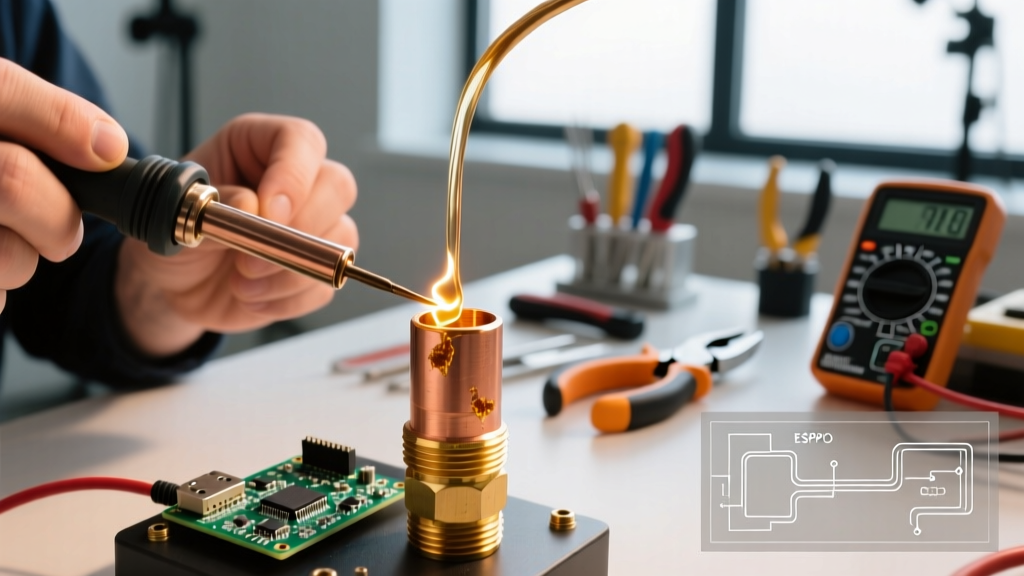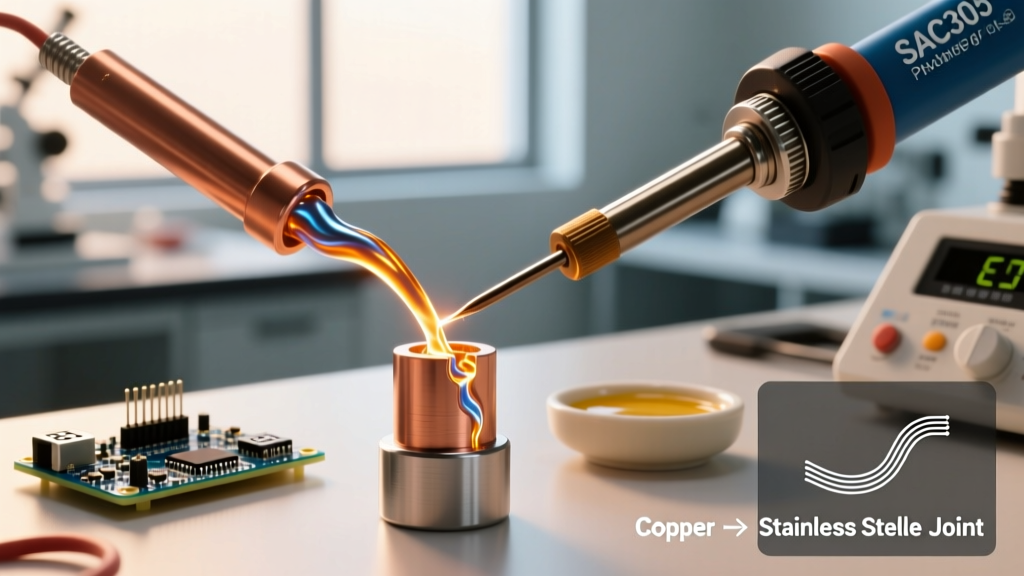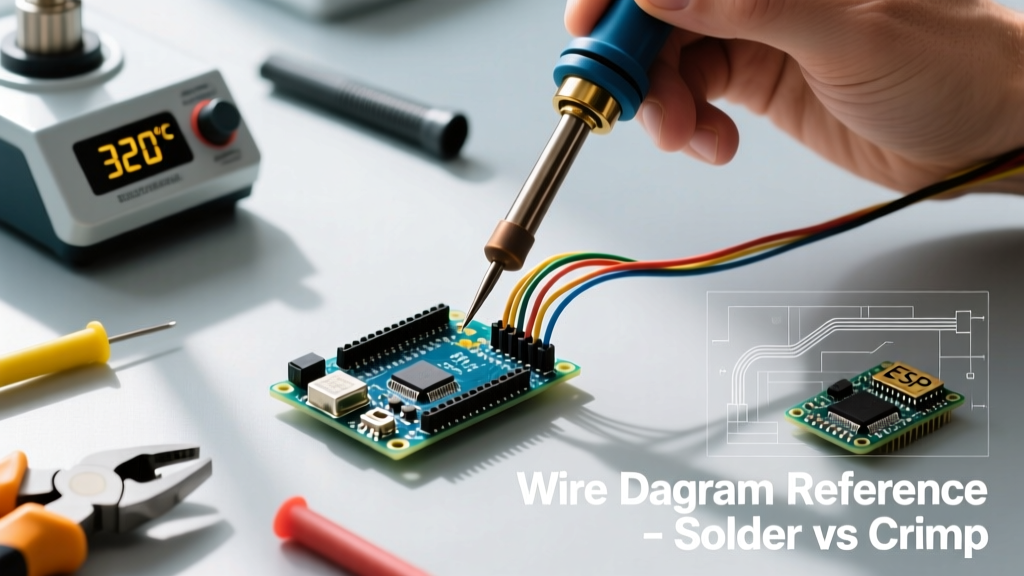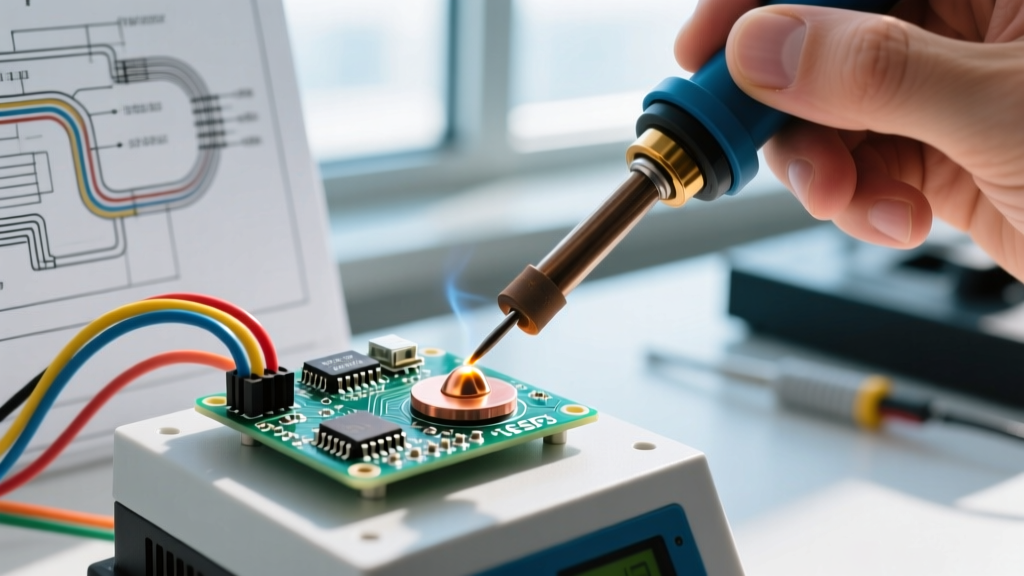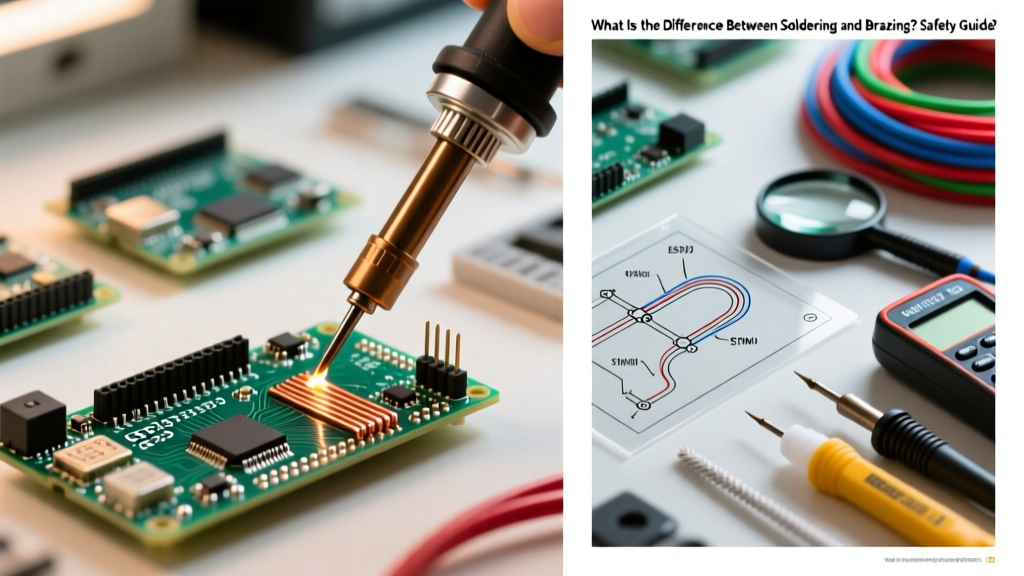

The 840°F Threshold: Defining the Boundary
When assembling electronics, plumbing, or HVAC systems, understanding what is the difference between soldering and brazing is not just a matter of semantics—it is a critical safety and structural imperative. According to the American Welding Society (AWS), the definitive dividing line between these two capillary joining processes is temperature. Soldering occurs at temperatures below 840°F (450°C), while brazing takes place at temperatures above 840°F, yet always below the melting point of the base metals being joined.
This thermal threshold dictates everything from the metallurgical composition of your filler alloys to the personal protective equipment (PPE) required in your workspace. In 2026, with the widespread adoption of lead-free electronics manufacturing and stricter indoor air quality standards for HVAC contractors, mastering the safety protocols for both processes is essential for any serious DIYer or technician.
Core Comparison Matrix: Soldering vs. Brazing
| Characteristic | Soldering | Brazing |
|---|---|---|
| Temperature Range | 350°F – 840°F (175°C – 450°C) | 1,100°F – 2,200°F (590°C – 1,200°C) |
| Base Metal State | Remains solid; no structural alteration | Remains solid; may undergo annealing |
| Common Filler Alloys | Sn63/Pb37, SAC305 (Tin/Silver/Copper) | BCuP (Copper-Phosphorus), BAg (Silver) |
| Primary Heat Sources | Weller WE1010NA (70W Iron), Hot Air | Bernzomatic TS8000 (MAP-Pro), Oxy-Acetylene |
| Joint Clearance | 0.001" – 0.003" | 0.002" – 0.005" |
| Primary Safety Hazard | Rosin flux fumes (Colophony asthma) | Cadmium toxicity, UV radiation, thermal burns |
Metallurgy and Filler Metal Selection
The filler metals used in these processes are fundamentally different, driven by the thermal requirements of the joint. For standard electronics soldering, SAC305 (96.5% Tin, 3.0% Silver, 0.5% Copper) is the industry standard, melting at roughly 430°F (221°C). For plumbing, traditional 95/5 (Tin/Antimony) or 50/50 (Tin/Lead) solders are utilized, though lead is strictly banned in potable water systems under the Safe Drinking Water Act.
Brazing alloys, conversely, rely on copper, silver, and zinc. A staple in HVAC refrigeration lines is Harris Stay-Brite or Sil-Fos (a copper-phosphorus alloy). Sil-Fos melts around 1,300°F (705°C) and is unique because the phosphorus acts as a built-in flux when joining copper-to-copper, eliminating the need for external chemical fluxes. However, if you are brazing copper to brass or steel, you must switch to a silver-bearing alloy (like Harris Stay-Silv 15) and apply a borax-based black flux to prevent oxidation.
Soldering Safety: Mitigating Chemical and Particulate Hazards
While soldering lacks the extreme thermal and UV hazards of brazing, it presents insidious respiratory risks that are frequently ignored in home workshops.
The Colophony (Rosin) Hazard
The most significant danger in electronics soldering is not lead inhalation—lead does not vaporize at 700°F soldering temperatures. The true hazard is the flux. Rosin-based fluxes (derived from pine sap) contain abietic acid. When heated, this acid decomposes into a complex aerosol of aliphatic aldehydes and gases. According to occupational health studies, repeated exposure to colophony fumes is a leading cause of occupational asthma and chronic contact dermatitis.
- Best Practice: Never rely on a desk fan to blow fumes away from your face; this merely disperses them into the room. Use a dedicated HEPA and activated carbon fume extractor, such as the Hakko FA-400 or Weller WFE 2X, positioned 4 to 6 inches from the solder joint.
- PPE Requirement: Standard ANSI Z87.1 clear safety glasses are sufficient to protect against accidental solder splatter, but a properly fitted N95 or P100 respirator with an organic vapor cartridge is recommended for prolonged sessions in poorly ventilated spaces.
Brazing Safety: Thermal, Radiant, and Toxicological Risks
Brazing elevates the risk profile exponentially. You are now dealing with open flames exceeding 3,000°F, base metals glowing cherry-red, and potentially lethal vaporized metals. The OSHA guidelines for welding, cutting, and brazing mandate strict adherence to ventilation and PPE protocols.
The Cadmium Threat in Silver Brazing Alloys
Historically, cadmium was added to silver brazing alloys (such as the legacy Easy-Flo 3) to lower the melting point and improve flow. When heated past 1,000°F, cadmium vaporizes and instantly oxidizes into cadmium oxide fumes. Inhalation of these fumes can cause metal fume fever, severe pulmonary edema, and long-term kidney damage. While the CDC and NIOSH have heavily regulated cadmium, cheap, unbranded brazing rods imported from overseas still occasionally contain it.
Critical Safety Rule: Always verify the AWS classification of your brazing rod. Stick to cadmium-free alloys like Harris Safety-Silv or Lucas-Milhaupt Sil-Fos. If you must use cadmium-bearing alloys for specialized aerospace repairs, a supplied-air respirator and localized exhaust ventilation are non-negotiable.
Optical Radiation and Eye Protection
Unlike the dull orange glow of a soldering iron, an oxy-acetylene brazing flame and the resulting incandescent copper/steel emit intense ultraviolet (UV) and infrared (IR) radiation. Staring at a brazing joint without protection will cause 'arc eye' (photokeratitis) and accelerate cataract formation.
- Shade Selection: For torch brazing, OSHA recommends a filter lens shade between 4 and 6. Products like the Phillips Safety Products Shade 5 Brazing Glasses provide the necessary IR/UV blocking while allowing enough visible light transmission to monitor the capillary flow of the silver alloy.
- Fire Watch: Brazing transfers massive amounts of conductive heat. A copper pipe brazed in a wall cavity can ignite wooden studs 18 inches away. Always use a flame-resistant welding blanket (e.g., fiberglass or silica cloth rated to 2,000°F) and maintain a 30-minute fire watch after the torch is extinguished.
Joint Design and Capillary Action Mechanics
Both processes rely on capillary action to draw the molten filler metal into the joint, but the required clearances differ due to the varying surface tension and viscosity of the alloys at their respective operating temperatures.
- Soldering Clearances: Because solder is highly fluid at 450°F, optimal lap joint clearances are incredibly tight—typically 0.001" to 0.003". If the gap is too wide, the solder will not bridge the joint, resulting in a weak, concave fillet.
- Brazing Clearances: Brazing alloys are more viscous. Furthermore, you must account for the differential thermal expansion of the base metals at 1,300°F. If you are brazing a stainless steel rod into a copper fitting, the copper will expand significantly more than the steel. Therefore, the room-temperature clearance must be designed so that at brazing temperature, the gap closes to the ideal 0.002" – 0.005" range.
Common Failure Modes and Troubleshooting
Understanding how joints fail highlights why the distinction between these processes matters.
- Cold Solder Joints (Soldering): Caused by insufficient heat transfer, often due to an undersized iron tip or oxidized pads. The flux fails to activate, leaving a dull, grainy, and highly resistive connection. Fix: Increase thermal mass (use a chisel tip) and apply fresh flux.
- Zinc Fuming / Brittle Joints (Brazing): If you overheat brass (a copper-zinc alloy) during brazing, the zinc boils off at 1,650°F, creating white, toxic smoke and leaving the base metal porous and brittle. Fix: Use a neutral or slightly carburizing flame, and keep the torch moving to avoid localized hot spots.
- Flux Inclusions: In brazing, if the joint is not heated evenly, the flux can become trapped inside the capillary space, creating a mechanical void that will fail under hydraulic pressure. Always heat the base metal broadly, allowing the thermal mass of the part to melt the filler rod, not the direct flame.
Conclusion
Ultimately, what is the difference between soldering and brazing? It is the boundary between molecular adhesion and metallurgical alloying. Soldering is a low-temperature process ideal for electrical conductivity and low-stress plumbing, requiring vigilance against chemical fumes. Brazing is a high-temperature structural joining method capable of withstanding extreme pressures and vibrations, demanding rigorous thermal, radiant, and toxicological safety protocols. By respecting the 840°F threshold and equipping your workshop with the correct extraction and PPE gear, you ensure both the integrity of your joints and the longevity of your health.