
The Macro Lens Workbench: Defining the 840°F Threshold
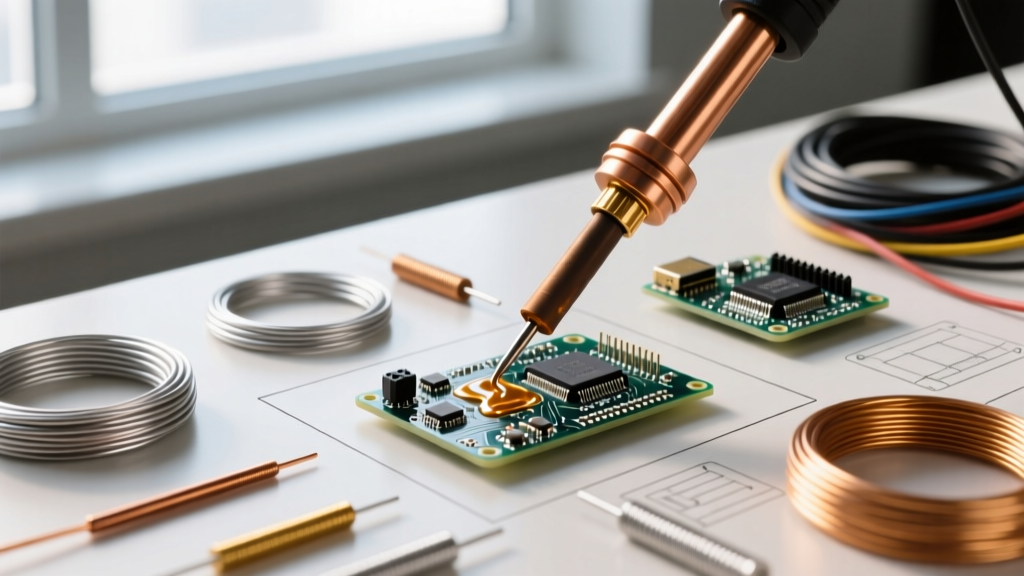
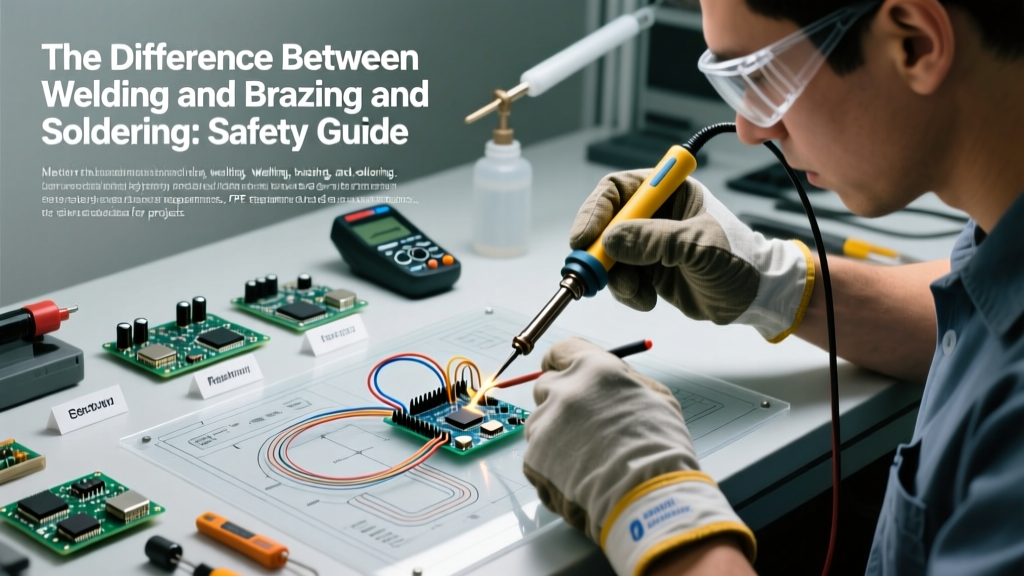
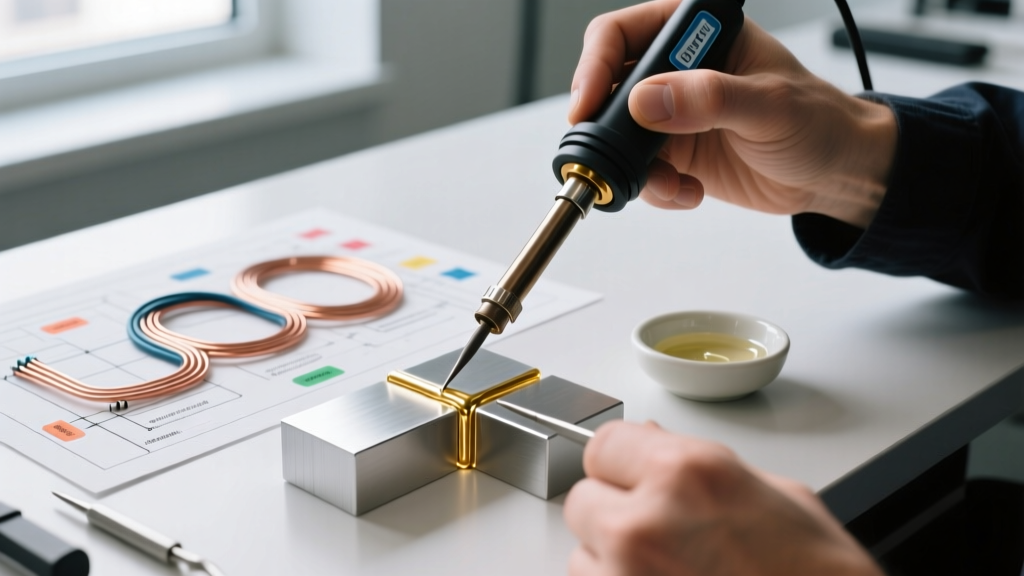
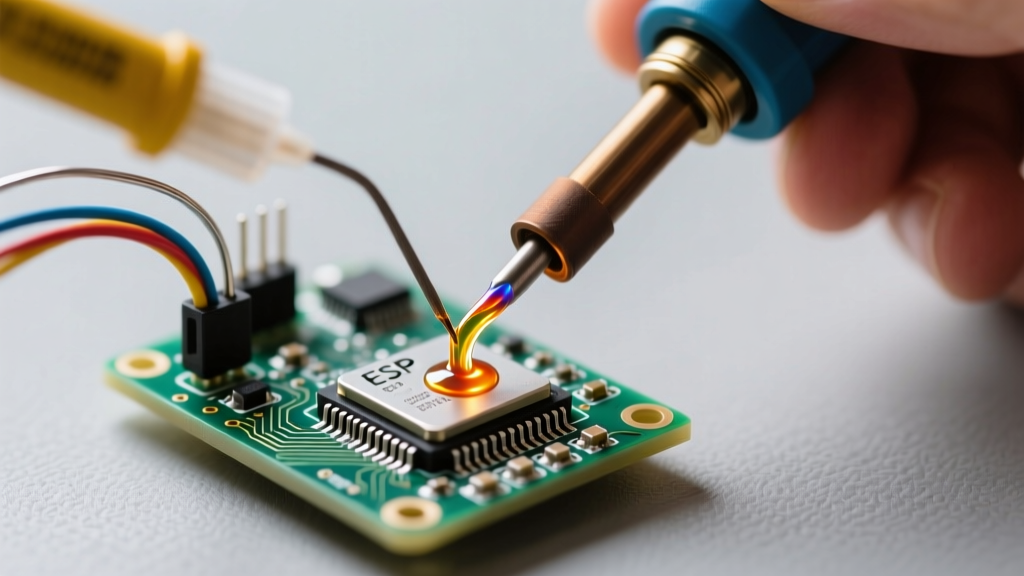
Welcome to the macro-lens workbench. When we zoom in at 100x magnification, the difference between soldering and brazing isn't just a number on an infrared thermometer—it is a violent, beautiful metallurgical transformation. In this visual guide, we treat your screen like a camera viewfinder, breaking down the exact visual cues, color shifts, and fluid dynamics that separate a catastrophic joint failure from a permanent, leak-proof bond.
According to the American Welding Society (AWS), the definitive dividing line between these two processes is 840°F (449°C). Below this threshold, we are soldering; above it, we are brazing. But as we will see in our macro shots, the base metal's behavior, the flux's boiling point, and the filler metal's capillary action tell the real story.
🎥 ON-SCREEN GRAPHIC: [Split Screen] Left: 95/5 Solder melting at 460°F on dull copper. Right: Sil-Fos 15 brazing rod flowing into cherry-red copper at 1300°F. Text overlay: 'Base metal NEVER melts in either process.'
Visual Comparison Matrix: Alloys, Temps, and 2026 Costs
Before we roll the camera on our step-by-step scenes, let's review the data sheet. The following matrix outlines the specific alloys we use in the field today, complete with current 2026 market pricing and visual melting indicators.
| Process | Filler Alloy (Model/Type) | Composition | Melting Range | Visual Indicator | 2026 Avg. Cost (per lb) |
|---|---|---|---|---|---|
| Soldering (Plumbing) | Oatey Safe Flo (Lead-Free) | 95% Tin / 5% Antimony | 452°F - 464°F | Silver liquid mirror, instant wicking | $28.00 - $34.00 |
| Soldering (Electronics) | Kester 44 Rosin Core | 60% Tin / 40% Lead | 361°F - 374°F | Glossy smooth fillet, flux boils gently | $35.00 - $42.00 |
| Brazing (HVAC/ACR) | Harris Safety-Silv 15 | 15% Ag / 80% Cu / 5% P | 1190°F - 1495°F | Copper glows cherry-red, alloy flashes | $55.00 - $70.00 |
| Brazing (Steel/Iron) | Lucas-Milhaupt Braze 505 | 50% Ag / 34% Cu / 16% Zn | 1225°F - 1425°F | Requires white flux paste, bright flow | $180.00 - $220.00 |
Scene 1: Soldering Copper Plumbing (Macro Walkthrough)
Setup: 1/2-inch Type L copper pipe, Oatey No. 95 water-soluble flux, 95/5 Tin-Antimony solder, standard propane torch with a pencil-tip nozzle.
Visual Cue 1: Flux Activation and Oxide Stripping
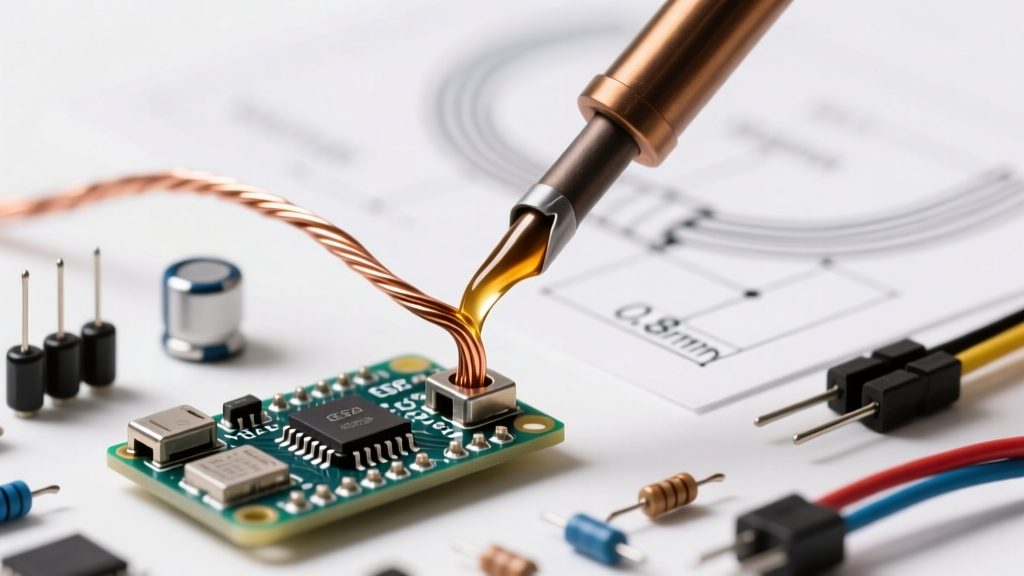
As the camera focuses on the joint, the copper surface is a dull, oxidized pink. We apply the flame, sweeping back and forth. At roughly 212°F (100°C), the water-soluble flux begins to bubble aggressively. Macro detail: Watch the flux turn from a milky white paste to a translucent, amber-like liquid. This is the exact moment the chemical acids are stripping the copper oxide layer, exposing raw, reactive metal. If you apply solder now, it will ball up and roll off. The metal isn't hot enough to accept the alloy.
Visual Cue 2: The Capillary Draw
We continue heating the fitting, not the pipe. At 450°F, the flux becomes completely clear and highly fluid. We touch the 95/5 solder wire to the opposite side of the joint. Visual magic: The solid wire doesn't just melt from the torch's heat; it flashes into a liquid mirror the millisecond it touches the fitting. Driven by capillary action, the silver liquid is violently sucked up into the microscopic gap between the pipe and the fitting. You will see a distinct, shiny silver ring form at the base of the joint. Once that ring is continuous, the camera pans away. The joint is full.
Scene 2: Brazing HVAC Line Sets (Macro Walkthrough)
Setup: 3/8-inch ACR copper line set, Harris Safety-Silv 15 (BCuP-5), Oxygen-Acetylene torch with a swirl-combustion tip, dry nitrogen purge.
As noted by experts at Lucas-Milhaupt's Brazing Academy, copper-to-copper brazing with phosphorus-bearing alloys does not require external flux because the phosphorus acts as a deoxidizer. However, the internal environment requires strict management.
Visual Cue 1: The Cherry-Red Glow and Nitrogen Purge
Before the torch is lit, we establish an Oxygen-Free Dry Nitrogen (OFDN) purge at 2 to 3 Cubic Feet per Hour (CFH). While invisible to the camera, this prevents internal copper oxide scale, which the EPA Section 608 guidelines warn can destroy modern HVAC compressor valves. We apply the oxy-acetylene flame. The copper transitions from dull pink to dark brown, then to a bright, glowing cherry-red. Macro focus: The copper is now at roughly 1300°F. It is on the absolute edge of melting (copper melts at 1984°F), but the structural integrity holds.
Visual Cue 2: Sil-Fos Wetting and Flow
We introduce the Safety-Silv 15 rod. Unlike the soft solder in Scene 1, this brazing rod requires intense radiant heat from the base metal to melt. As the rod touches the cherry-red fitting, it snaps into a highly fluid, almost watery state. Because of the 15% silver content, the alloy 'wets' the copper beautifully, diving deep into the joint. The visual indicator of a complete braze is a smooth, brass-colored fillet that wraps entirely around the joint circumference without pitting or black soot inclusions.
Visual Diagnostics: Reading Joint Failures
When a joint fails a pressure test, the macro lens reveals exactly what went wrong. Memorize these visual failure modes:
- The 'Cold Solder' Ball (Soldering): The solder looks like a bead of water resting on a freshly waxed car. Cause: The base metal was below 400°F. The flux never activated, leaving an oxide barrier that prevented metallurgical bonding.
- Black Flux Inclusions (Brazing): The brass-colored fillet is speckled with hard, black glass-like spots. Cause: Overheating the joint when using silver alloys that require white flux (like Braze 505). The flux burned and trapped carbon inside the alloy matrix.
- The 'Burned' Copper Joint (Brazing): The copper pipe adjacent to the joint is warped, heavily pitted, and covered in thick, flaky black scale. Cause: Holding the oxy-acetylene torch in one spot too long without sweeping, or failing to use a nitrogen purge, resulting in internal oxidation that flakes off and clogs the system.
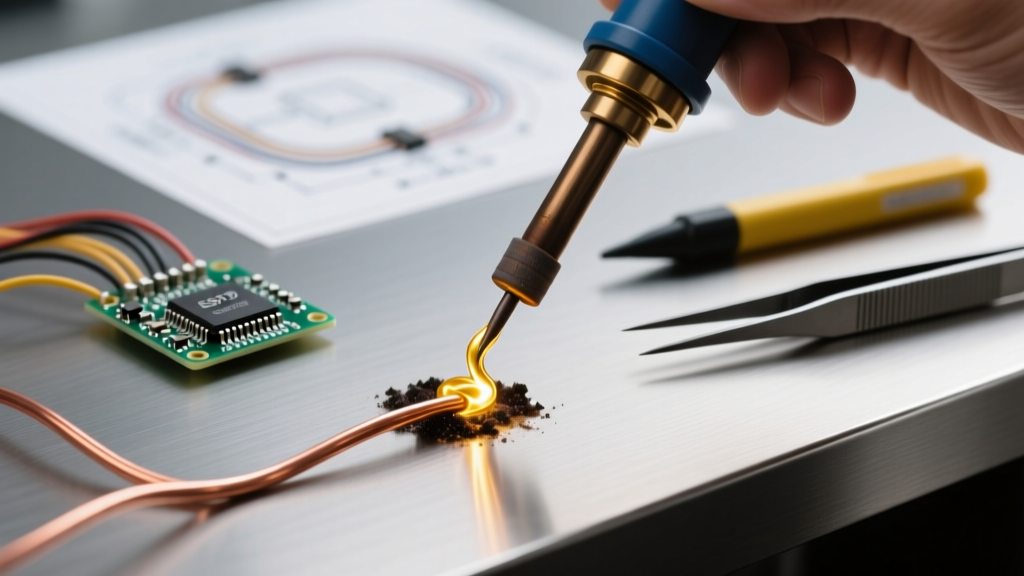
- Porosity and Pinholes (Both): Microscopic craters on the surface of the cooled filler metal. Cause: Removing the torch too quickly. The joint must be allowed to cool naturally; quenching with a wet rag or water causes thermal shock and trapped gas bubbles to burst through the surface.
Expert Loadout: Torch Tips and Gas Mixes
To achieve the visual perfection described above, your equipment must match the metallurgy. In 2026, the industry standard for HVAC brazing is the swirl-combustion torch tip (e.g., Victor TurboTorch). Unlike standard pencil tips that push a blunt wall of flame, swirl tips create a vortex of gas that wraps around the copper pipe, heating the joint evenly from 360 degrees. This prevents the localized overheating that leads to the 'burned copper' failure mode mentioned above.
For soldering electronics or delicate plumbing, an air-acetylene mix (like the Bernzomatic TS4000) provides a pinpoint, high-velocity flame that delivers heat precisely to the joint without scorching adjacent insulation or sensitive PCB traces.
Summary: Trust the Visual Cues
Whether you are joining 1/2-inch water lines with 95/5 solder or brazing a 410A refrigerant circuit with Sil-Fos 15, the metallurgy always leaves a visual trail. By training your eye to recognize the exact moment flux clears, the precise shade of cherry-red copper, and the fluid dynamics of capillary action, you transition from guessing temperatures to mastering the craft. Keep your macro lens ready, your nitrogen flowing, and your torch moving.