
The Reality of Budget Solder Alloys in 2026
As of 2026, global supply chain shifts and rising raw material costs have pushed premium soldering consumables—like Kester 44 or Alpha Metals—into a higher price bracket, often exceeding $35 for a standard 4oz spool. Consequently, both hobbyists and budget-conscious repair technicians are increasingly turning to Harbor Freight soldering wire (typically sold under the Pittsburgh brand name) to keep overhead low. Priced between $5.99 and $8.99 for a 4oz spool, it offers an undeniable economic advantage. However, getting professional, IPC-compliant results from budget solder requires a deep understanding of its metallurgical quirks, flux inconsistencies, and thermal behaviors.
Budget solder wire often suffers from three primary manufacturing variances: inconsistent flux core distribution, wider alloy tolerance ranges (meaning a nominal 60/40 mix might actually be 58/42 with trace impurities), and higher moisture absorption in the rosin. When approached with standard soldering techniques, these variances lead to cold joints, excessive spattering, and oxidized pads. But by applying targeted professional methodologies, you can elevate Harbor Freight soldering wire to perform reliably for through-hole components, heavy-gauge wiring, and general DIY electronics.
Spec Breakdown: Budget vs. Premium Solder
Understanding the exact differences between discount store solder and industry-standard wire is the first step in compensating for its shortcomings. Below is a comparative matrix based on bench testing of standard 0.031" diameter rosin-core wires.
| Feature | Harbor Freight (Pittsburgh) | Kester 44 (Premium) | Alpha Metals (Premium) |
|---|---|---|---|
| Nominal Alloy | 60/40 or 63/37 (Varies) | 60/40 or 63/37 | 63/37 (Eutectic) |
| Average Price (4oz) | $6.99 | $34.50 | $29.00 |
| Flux Core Percentage | ~1.1% (Inconsistent) | 2.2% (Precise) | 2.0% (Precise) |
| Spatter Tendency | High (Moisture prone) | Low | Low |
| Melt Consistency | Wide plastic range | Tight tolerance | Sharp eutectic point |
According to metallurgical data from Indium Corporation, even slight deviations in the tin-to-lead ratio can widen the "plastic range" (the temperature gap between solidus and liquidus states). A wider plastic range means the solder remains semi-solid for a longer period during cooling, making it highly susceptible to "disturbed joints" if the component shifts even microscopically before full crystallization.
5 Professional Techniques to Elevate Budget Solder
To bridge the gap between discount materials and professional workmanship, implement the following five techniques on your workbench.
1. Supplemental Flux is Non-Negotiable
The most common failure mode when using Harbor Freight soldering wire is a cold, grainy joint caused by premature flux burnout. The rosin core in budget wire is often thinner and less active than premium equivalents. Pro Tip: Always apply an external, high-activity liquid or tacky flux before introducing the iron. Use a no-clean flux like MG Chemicals 8341 or Amtech NC-559-V2-TF. Apply a microscopic bead to the pad and lead, then feed the budget wire. The supplemental flux will encapsulate the joint, preventing oxidation and compensating for the wire's weak internal core.
2. Thermal Profiling for Sluggish Rosin
Premium 63/37 eutectic solder melts sharply at 183°C (361°F). However, due to trace impurities (like antimony or bismuth) often found in budget smelting processes, the effective melting point can shift, and the flux may require higher activation temperatures. If you are using a digitally controlled station like the Hakko FX-888D or Pine64 Pinecil V2, set your tip temperature to 345°C - 355°C (roughly 20°C higher than you would use with Kester). This ensures the rosin activates rapidly, cleaning the pad before the solder alloy fully liquefies.
3. The "Pre-Tin and Wipe" Spatter Mitigation
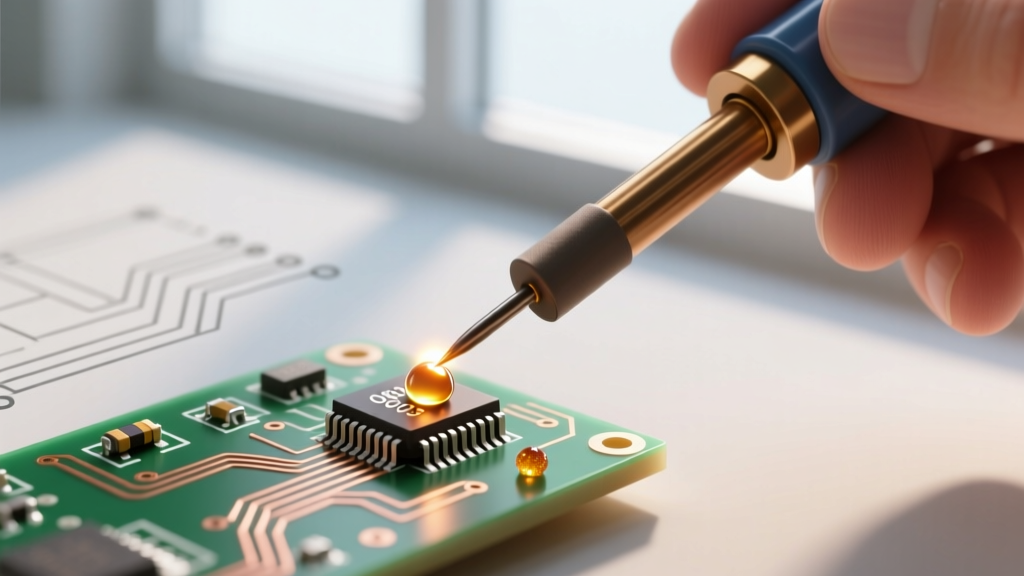
Budget solder wire is notoriously prone to moisture absorption, which causes violent spattering when the iron hits the wire. This spatter creates microscopic solder spheres that can lodge under IC pins, violating the cleanliness requirements outlined in the IPC-A-610 acceptance standards. To combat this:
- Feed the solder onto the iron tip directly, away from the PCB.
- Allow the flux to boil off and the solder to pool on the tip.
- Wipe the tip on dry brass wool to remove the oxidized flux residue.
- Transfer the clean, molten pool to your target joint.
4. Aggressive Tip Preservation
Impurities and higher dross content in Harbor Freight soldering wire will pit and corrode standard iron-plated soldering tips much faster than premium wire. Never use a wet cellulose sponge to clean your tip when working with budget solder; the thermal shock combined with acidic residue will micro-fracture the iron plating. Rely exclusively on dry brass wire wool, and always leave a thick blob of fresh solder on the tip before powering down your station to act as a sacrificial oxidation barrier.
5. Desoldering Requires Chemical Assistance
Removing components soldered with budget wire is notoriously difficult. The low-grade rosin turns into a hard, tar-like resin when reheated, preventing desoldering wick from absorbing the alloy. When reworking a joint originally done with Harbor Freight wire, flood the area with isopropyl alcohol (99%) and a generous amount of fresh, premium flux paste before applying your desoldering braid (such as Chip Quik SMD291AX). The fresh flux will re-suspend the carbonized budget rosin, allowing the wick to pull the solder cleanly through the plated through-holes.
Expert Insight: "When working to NASA Workmanship Standards for high-reliability assemblies, budget solder is strictly prohibited due to the inability to verify the exact elemental composition of the spool. However, for consumer electronics repair, automotive wiring, and DIY audio projects, the mechanical strength of a properly fluxed budget joint is more than adequate."
When to Avoid Budget Solder Entirely
While mastering Harbor Freight soldering wire is a valuable skill for saving money on general projects, there are specific edge cases where the financial risk of a failed joint far outweighs the $25 savings on a spool of premium solder. Avoid budget wire in the following scenarios:
- Fine-Pitch SMD Components: For 0402 resistors, QFN chips, or LGA pads, the inconsistent diameter and aggressive spatter of budget wire will cause immediate bridging.
- High-Vibration Environments: Budget 60/40 wire with a wide plastic range is prone to micro-cracking under mechanical stress if the joint was disturbed during the extended cooling phase.
- High-Temperature PCBs: If you are soldering components that will operate near their thermal limits (e.g., power supply MOSFETs), the lower purity of budget solder can lead to premature thermal fatigue and joint failure.
Frequently Asked Questions
Is Harbor Freight lead-free solder any good?
Harbor Freight occasionally stocks lead-free (SAC305 or similar) alternatives. Lead-free budget solder is generally not recommended for DIYers. It requires much higher temperatures (380°C+), which rapidly destroys budget soldering iron tips and lifts PCB pads. Stick to their 60/40 or 63/37 leaded options for hobbyist use, ensuring proper ventilation and hand-washing protocols are followed.
Why does my Harbor Freight solder look dull and grainy?
A dull, grainy appearance is the hallmark of a "disturbed joint" or excessive oxidation. Because budget 60/40 solder has a plastic range between 183°C and 190°C, any movement of the wire or component while the joint is cooling through this 7-degree window will fracture the crystalline structure. Use a "helping hands" tool to hold components perfectly still, and apply external flux to lower the surface tension for a smoother fillet.
How should I store budget solder to extend its shelf life?
The cardboard spools and thin plastic wrapping provided by discount brands offer zero moisture protection. Store your Harbor Freight soldering wire in a sealed Ziploc bag with two or three indicating silica gel packets. This prevents the internal rosin core from absorbing ambient humidity, drastically reducing the spitting and spattering effect when the wire meets a hot iron tip.