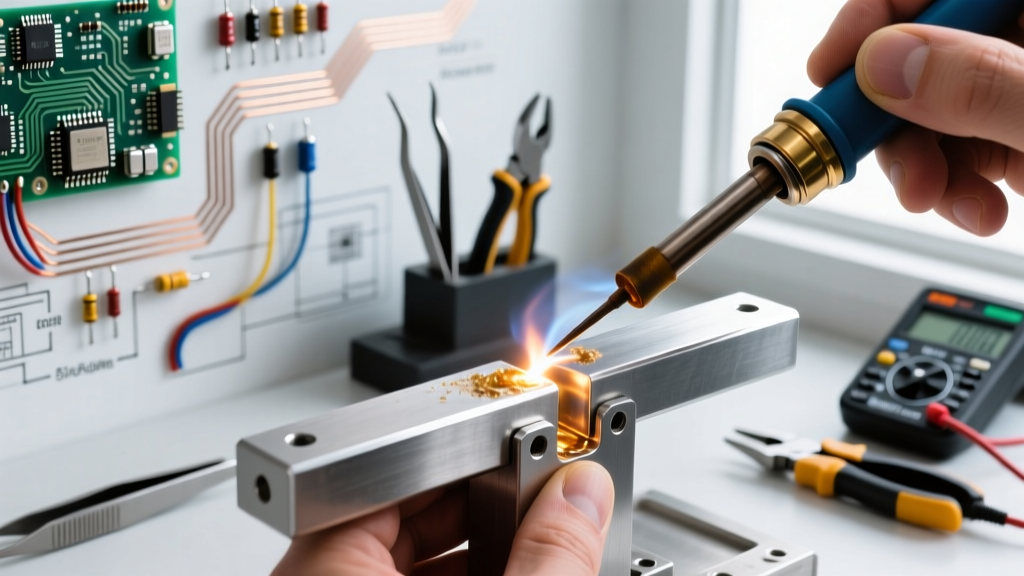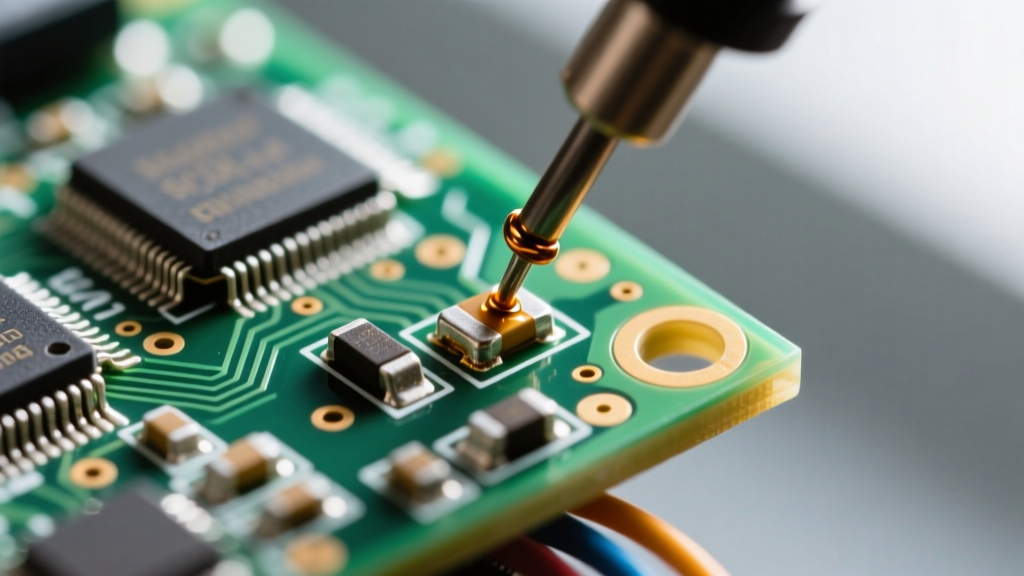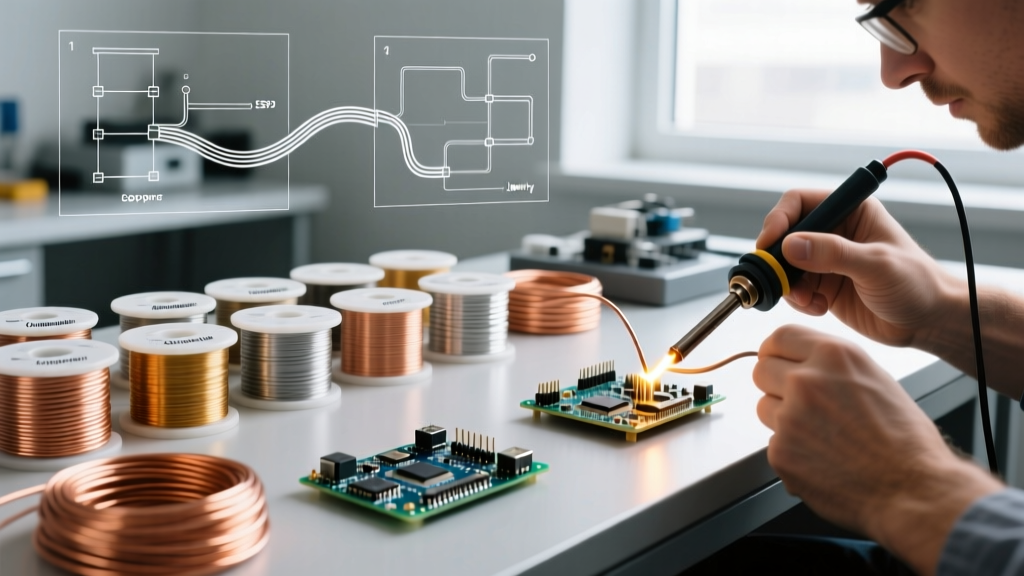

The Metallurgy of the Soldering Wire Roll: Beyond Generic Electronics
When most hobbyists and technicians purchase a soldering wire roll, they default to a standard 63/37 tin-lead or a basic SAC305 lead-free spool. While these alloys are the undisputed champions of printed circuit board (PCB) assembly, applying them to structural metals, plumbing, or specialized alloys like aluminum and stainless steel is a recipe for catastrophic joint failure. Soldering is fundamentally a metallurgical bonding process, not just a mechanical glue. The base material dictates the required alloy, flux chemistry, and thermal profile.
In this material-specific guide, we break down exactly how to select, handle, and optimize your soldering wire roll based on the substrate you are joining. Whether you are repairing a copper heat exchanger, attempting the notoriously difficult aluminum-to-copper transition, or sizing a silver soldering wire roll for jewelry, understanding the underlying chemistry is mandatory for achieving IPC-compliant or structurally sound joints.
Decoding Alloys and Flux Cores
Before matching a wire to a metal, you must understand the two components of any flux-cored soldering wire roll: the alloy (the filler metal) and the flux core (the chemical cleaning agent). According to IPC standards, fluxes are categorized by activity level and halide content (e.g., ROL0, REL1). Using the wrong flux activity on the wrong metal oxide layer will result in dewetting or severe post-solder corrosion.
Eutectic vs. Non-Eutectic Alloys
For precision work, you want a eutectic alloy like Sn63Pb37. Eutectic alloys transition from solid to liquid at a single, specific temperature (183°C / 361°F). Non-eutectic alloys, like Sn60Pb40, have a 'plastic range' (183°C to 188°C) where the solder is a mushy paste. If the joint moves during this plastic phase, you create a disturbed joint—a grainy, weak connection that fails under thermal cycling.
| Alloy Designation | Composition | Melting Point | Primary Application | Avg. Cost (1lb Roll) |
|---|---|---|---|---|
| Sn63Pb37 | 63% Tin, 37% Lead | 183°C (361°F) | General PCB, Copper wire | $35 - $45 |
| SAC305 | 96.5% Sn, 3% Ag, 0.5% Cu | 217°C - 220°C | RoHS PCB, High-temp copper | $65 - $85 |
| Sn42Bi58 | 42% Tin, 58% Bismuth | 138°C (280°F) | Step-soldering, heat-sensitive | $90 - $110 |
| Sn95Sb5 | 95% Tin, 5% Antimony | 235°C - 240°C | High-temp plumbing, HVAC | $55 - $70 |
Material-Specific Selection Matrix
The base metal's oxide layer is the primary enemy of solder wetting. Here is how to tackle the four most common material categories.
1. Copper and Brass: The Standard Substrates
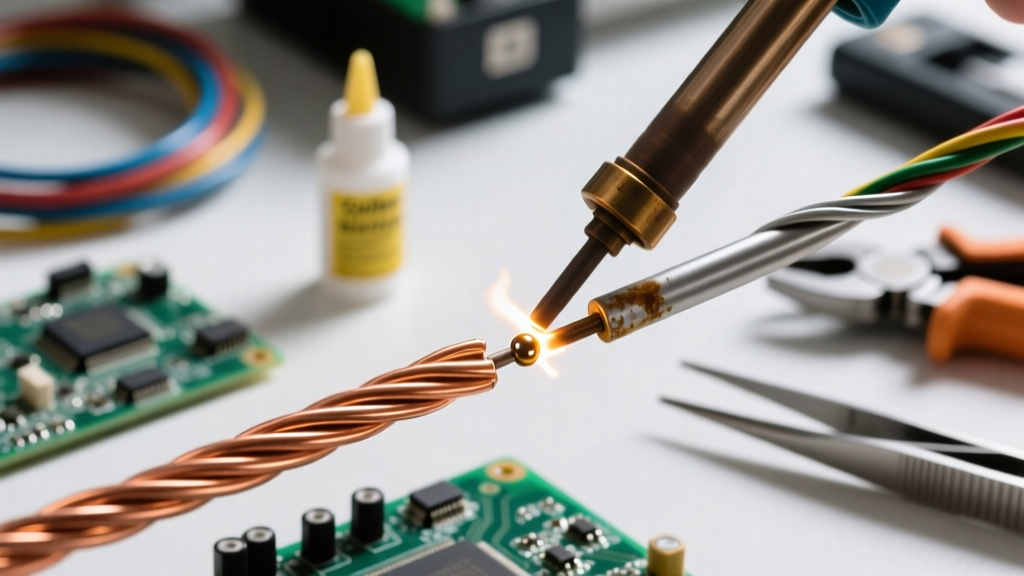
Copper is the most solderable metal in existence, provided its surface is free of heavy tarnish. For electronics, a standard Sn63Pb37 or SAC305 soldering wire roll with a ROL0 (Rosin, Low-activity, 0% Halides) flux core like Kester 44 or Multicore LF318 is ideal. The rosin flux gently removes minor copper oxides without leaving corrosive residues.
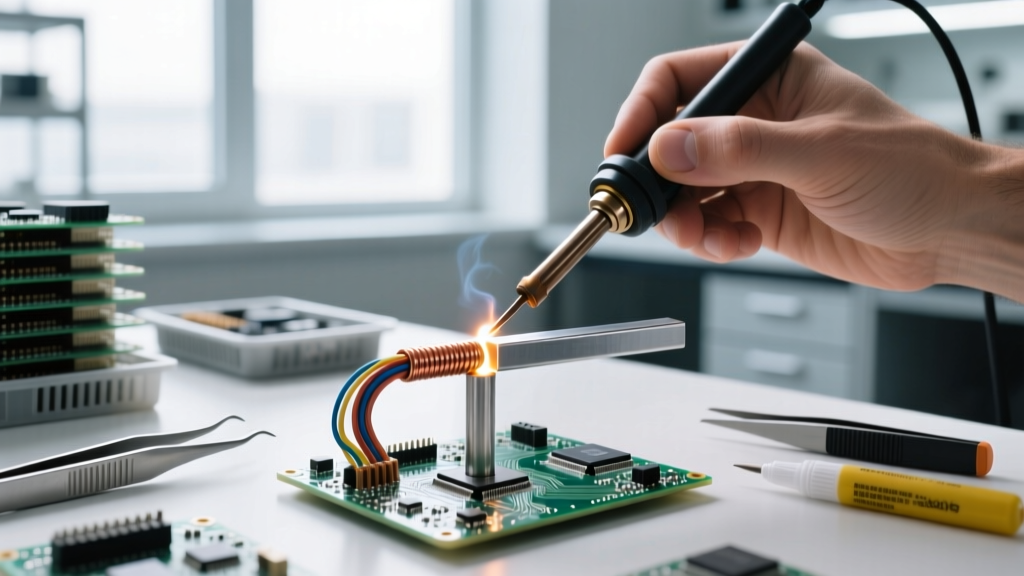
Expert Tip: When soldering heavy-gauge copper wire (e.g., 10 AWG or larger) for high-current applications, the thermal mass of the wire will wick heat away from your iron. Use a thicker soldering wire roll (0.062' / 1.5mm) to transfer thermal energy directly into the joint via the molten solder pool, rather than relying solely on the iron's tip.
2. Aluminum: The Oxide Nightmare
Soldering aluminum is notoriously difficult because it instantly forms a layer of aluminum oxide (Al2O3) when exposed to air. While aluminum melts at 660°C, aluminum oxide melts at 2,072°C. Standard rosin fluxes cannot penetrate this barrier. If you try to use a standard electronics soldering wire roll on aluminum, the solder will simply ball up and roll off.
The Solution: You must use a specialized zinc-based or fluoride-based acid flux (such as Alusol or Harris AlumiClean). Because these fluxes are highly corrosive, they are rarely cored inside the wire itself. Instead, you apply the liquid flux to the joint, mechanically abrade the aluminum surface through the flux pool using a stainless steel brush to break the oxide layer, and then feed a solid-core or specialized flux-cored zinc-tin alloy wire (like Sn70Zn30, melting at 199°C) into the joint. Post-solder, the joint must be neutralized and sealed to prevent galvanic corrosion.
3. Stainless Steel: The Chromium Barrier
Like aluminum, stainless steel relies on a passive chromium oxide layer for its corrosion resistance. This layer actively repels molten solder. To solder stainless steel, you need an H1 (High-activity, Halide-containing) acid flux, typically zinc chloride or hydrochloric acid-based.
Warning: Never use acid-core plumbing soldering wire rolls on PCBs or near electronic components. The halide residues will cause rapid dendritic growth and short circuits. For stainless steel structural joints, apply the aggressive liquid flux, heat the steel to roughly 300°C, and use a high-tin solid wire (Sn95Sb5). The joint must be thoroughly washed with a baking soda solution post-solder to neutralize the acid.
4. Jewelry and Precious Metals: Silver Soldering
When working with sterling silver or gold, standard tin-based electronics solder is useless; it lacks the structural integrity and color-matching properties required for jewelry. Instead, you must use a silver soldering wire roll (which is technically a brazing alloy, containing 40% to 80% silver). Jewelry solder is graded by its melting temperature to allow for multi-step soldering without remelting previous joints:
- Easy Solder: Melts at ~650°C (Used for final, delicate clasps).
- Medium Solder: Melts at ~700°C (Used for secondary joints).
- Hard Solder: Melts at ~750°C (Used for the primary structural seams).
These wires do not contain internal flux. You must coat the piece in a borax-based paste flux (like Aquaflux) and use a high-BTU torch rather than a standard soldering iron.
Wire Gauge and Roll Economics: Sizing for the Job
Buying a 1lb soldering wire roll is economically efficient, but only if you select the correct diameter. Using wire that is too thick for micro-soldering leads to excessive flux splatter and bridged pads. Using wire that is too thin for heavy plumbing means you spend more time feeding wire than heating the joint, leading to cold joints.
Diameter Selection Guide
- 0.015' (0.4mm): Essential for 0402 and 0201 SMD components, and micro-BGA rework.
- 0.031' (0.8mm): The universal standard for general through-hole PCB assembly and basic wire splicing.
- 0.050' (1.2mm): Ideal for large terminal lugs, XT60/XT90 RC battery connectors, and heavy ground planes.
- 0.125' (3.2mm): Reserved for copper plumbing and stained glass (copper foil) work.
From a 2026 purchasing perspective, buying a 100g spool of specialized low-temperature Bismuth solder (Sn42Bi58) is recommended, as it costs upwards of $100 per pound and is only needed for niche step-soldering applications. Conversely, standard Sn63Pb37 is best purchased in 1lb rolls, which typically offer a 30% cost-per-ounce discount over smaller 4oz spools.
Storage, Shelf Life, and IPC Compliance
A soldering wire roll is a perishable chemical tool. The flux core degrades over time as the solvents evaporate and the activators oxidize. According to Kester's technical documentation, standard rosin-cored (RMA) wire has a shelf life of roughly 2 to 3 years when stored properly. However, water-soluble (WS) and no-clean (NC) fluxes have a much shorter viable window—often just 6 to 12 months—because their highly active organic acids break down faster.
Proper Storage Protocol:
- Store wire rolls in an airtight container or sealed anti-static bag.
- Include a silica gel desiccant pack to control humidity, which accelerates flux skinning.
- Keep the storage environment between 15°C and 25°C. Extreme heat causes the flux to bleed out of the wire core, resulting in uneven flux distribution during soldering.
- If a roll is past its shelf life, the wire may still melt, but the flux will leave a hard, dark, inactive residue, resulting in poor wetting and violating NIST-traceable reliability testing parameters for aerospace or medical electronics.
Troubleshooting Material-Specific Failures
Even with the correct soldering wire roll, environmental factors can ruin a joint. Here is how to diagnose the two most common material-specific failures:
Dewetting on Stainless or Tinned Steel
Symptom: The solder initially flows, then retracts into islands, exposing the base metal. Cause: The base metal's oxide layer reformed faster than the flux could protect it, or the iron temperature was too low to sustain the thermal reaction. Fix: Increase iron temperature by 20°C, apply fresh liquid flux directly to the bare metal before heating, and use a wider chisel tip to maximize thermal transfer.
Galvanic Corrosion on Aluminum-to-Copper Joints
Symptom: The joint turns into a white, powdery crust and fails mechanically within weeks. Cause: Aluminum and copper are far apart on the galvanic series. In the presence of atmospheric moisture, they create a battery, corroding the aluminum. Fix: You cannot rely on bare solder to seal this. After making the joint with a zinc-tin alloy and specialized flux, you must hermetically seal the entire joint with marine-grade heat shrink tubing lined with polyurethane adhesive, or coat it heavily in a conformal silicone potting compound.
Final Thoughts
Mastering the soldering process requires looking past the soldering iron and focusing on the consumables. By matching your soldering wire roll's alloy, flux chemistry, and diameter to the specific metallurgical properties of your base material, you transition from merely 'sticking metal together' to engineering reliable, long-lasting molecular bonds.