
The Metallurgy of Solder: What Is Soldering Wire Made Of?
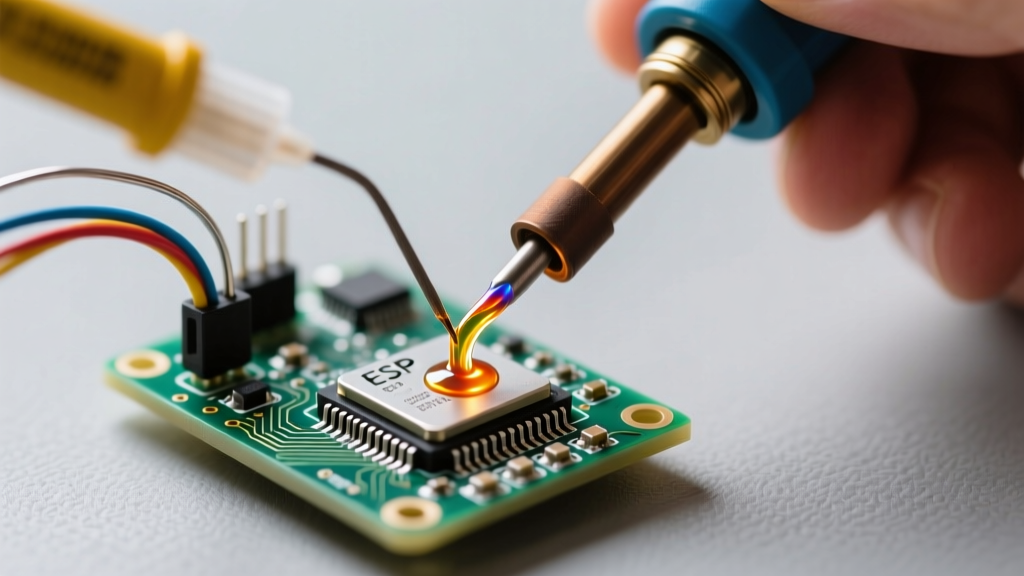
When electronics hobbyists, HVAC technicians, and jewelry makers ask, what is soldering wire made of, the answer extends far beyond a simple metallic thread. Soldering wire is a precisely engineered composite of base metal alloys and a chemical flux core, designed to melt at specific temperatures, wet copper pads, and create a reliable metallurgical bond. Understanding the exact composition of your solder wire is not just academic trivia; it is the foundational step in the 'Tool & Technique Pairing' methodology. If you pair a high-temperature lead-free alloy with an underpowered soldering station or the wrong tip geometry, you will inevitably suffer from cold joints, lifted pads, and rapid tip degradation.
In this comprehensive guide, we will dissect the exact elemental compositions of modern solder wires, explore the hidden flux cores, and provide a definitive framework for pairing specific alloys with the correct soldering iron temperatures and tip shapes.
Base Metal Alloys: The Structural Backbone
The outer sheath of soldering wire is an alloy—a mixture of two or more metals engineered to achieve a specific melting point (liquidus) and solidification point (solidus). The composition dictates the wire's tensile strength, electrical conductivity, and thermal fatigue resistance.
1. Tin (Sn): The Universal Binder
Tin is the primary ingredient in almost all modern soldering wires. It is chosen for its excellent wetting properties (its ability to flow and bond with copper and gold) and its relatively low melting point of 232°C (450°F). Whether you are using traditional leaded solder or modern RoHS-compliant lead-free variants, tin usually makes up 60% to 99% of the alloy.
2. Lead (Pb): The Traditional Plasticizer
Historically, lead was added to tin to lower the melting point and eliminate the 'pasty' phase (the temperature range where the solder is neither fully solid nor fully liquid). The legendary Sn63/Pb37 (63% Tin, 37% Lead) is a true eutectic alloy, meaning it melts and freezes at a single, exact temperature: 183°C (361°F). While restricted in commercial consumer electronics by the IPC and global RoHS directives due to toxicity concerns outlined by OSHA, Sn63/Pb37 remains the gold standard for hobbyists, aerospace, and vintage electronics restoration in 2026 due to its unmatched ease of use.
3. Silver (Ag) and Copper (Cu): The Lead-Free Reinforcers
When lead was removed from commercial manufacturing, engineers had to compensate for the loss of mechanical strength and the increase in melting temperature. Adding trace amounts of silver (usually 3% to 4%) and copper (0.5% to 1%) to tin creates the SAC (Tin-Silver-Copper) family of alloys. Silver improves joint shear strength and thermal fatigue resistance, while copper prevents the solder from aggressively leaching the copper traces off the PCB pad.
4. Bismuth (Bi): The Low-Temperature Specialist
Bismuth is increasingly popular in 2026 for specialized low-temperature soldering wires (e.g., Sn42/Bi58). Melting at just 138°C (280°F), bismuth alloys are essential for reworking heat-sensitive components, flexible PCBs, and step-soldering (where a secondary joint must be made without melting the primary joint).
The Hidden Core: Flux Chemistry
Soldering wire is rarely solid metal; it is typically extruded as a hollow tube containing 1% to 3% flux by weight. The flux is a chemical cleaning agent that removes oxidation from the metal surfaces immediately before the molten alloy flows. Without flux, solder will ball up and refuse to wet the pad.
- Rosin (R, RMA, RA): Derived from pine tree sap. RMA (Rosin Mildly Activated) is the most common for general electronics. It leaves a hard, amber residue that is non-corrosive but can interfere with high-impedance circuits if not cleaned with isopropyl alcohol.
- Water-Soluble (OA - Organic Acid): Highly aggressive and leaves a conductive, corrosive residue. It must be washed off with distilled water immediately after soldering. Common in heavy-duty wiring and plumbing.
- No-Clean: Formulated with synthetic resins and halide-free activators. The residue is designed to be left on the board, as it is non-conductive and non-corrosive. Ideal for high-volume automated manufacturing and quick DIY repairs.
Tool & Technique Pairing: Matching Alloys to Soldering Irons
Knowing what soldering wire is made of is only half the battle. The true mark of an expert is pairing the specific alloy with the correct soldering station temperature and tip geometry. Using a conical tip for heavy-gauge wire, or under-temping a SAC305 alloy, guarantees failure.
| Alloy Composition | Melting Point (Liquidus) | Optimal Iron Temp | Best Tip Geometry | Primary Use Case |
|---|---|---|---|---|
| Sn63/Pb37 (Leaded) | 183°C (361°F) | 300°C - 320°C | Chisel (2.4mm - 3.2mm) | General DIY, through-hole, vintage repair |
| SAC305 (Lead-Free) | 217°C - 220°C (422°F - 428°F) | 350°C - 380°C | Bevel / Hoof (for drag) or Wide Chisel | Modern SMD, RoHS commercial PCBs |
| Sn99.3/Cu0.7 (SCW) | 227°C (441°F) | 360°C - 390°C | Heavy Chisel (4mm+) | Thick gauge wires, ground planes, plumbing |
| Sn42/Bi58 (Bismuth) | 138°C (280°F) | 200°C - 220°C | Fine Conical (0.4mm) | Flex PCBs, heat-sensitive sensors, step-soldering |
2026 Pro-Tip on Tip Degradation: Lead-free alloys like SAC305 and SCW are notoriously aggressive. The tin in lead-free solder aggressively dissolves the iron plating on standard soldering tips up to three times faster than leaded solder. If you are transitioning to lead-free, invest in specialized lead-free tip series (such as the Weller LTF or Hakko T18-LF series) which feature thicker iron plating and specialized ceramic composite cores to maintain thermal transfer at the higher 380°C operating temperatures required.
Deep Dive: Real-World Pairing Scenarios
Scenario A: Reworking a 2026 Automotive ECU (SAC305)
Automotive electronics operate in high-vibration, high-temperature environments, which is why manufacturers use SAC305 or SAC405 (4% silver) for its superior shear strength. The Pairing: Use a high-thermal-recovery station (like the Hakko FX-951 or JBC CD-2BQE) set to 360°C. Use a 'Hoof' or 'Bevel' tip (2mm). The flat, scooped face of the hoof tip holds a small reservoir of molten SAC305, allowing you to drag-solder fine-pitch IC pins without bridging, while the high thermal mass prevents the joint from cooling prematurely.
Scenario B: Restoring a 1970s Audio Amplifier (Sn63/Pb37)
Vintage audio gear features large, oxidized through-hole pads and thick component leads that act as massive heat sinks. The Pairing: Use Sn63/Pb37 (0.031" diameter) with RMA flux. Set a standard station (like the Weller WE1010) to 340°C. Use a large, flat screwdriver/chisel tip (4.0mm). The wide surface area maximizes thermal transfer to the heavy copper leads, while the eutectic nature of Sn63 ensures the joint snaps instantly from liquid to solid the moment you remove the iron, preventing the dreaded 'disturbed joint' crystallization.
Scenario C: Splicing Thermocouple Wires (High-Temp Silver Solder)
If you are repairing industrial kilns, standard electronic solder will melt when the kiln fires up. You need a high-temperature silver-bearing alloy (e.g., Sn10/Pb88/Ag2), which melts around 268°C (514°F). The Pairing: This requires a heavy-duty 80W to 120W iron. Standard electronics stations will thermal-stall and fail to melt this wire. Use a massive 6mm chisel tip and pre-tin both wires separately before joining them.
Edge Cases & Failure Modes
Even when you know exactly what your soldering wire is made of, environmental and technique variables can cause catastrophic joint failure.
- The 'Pasty Phase' Disturbance: Non-eutectic lead-free solders (like SAC305) have a 'pasty' range of about 3°C between solidus and liquidus. If the component moves while the solder is in this semi-solid slush phase, the joint will develop micro-cracks, resulting in a dull, grainy appearance and high electrical resistance. Fix: Hold the component perfectly still for 3-4 seconds after removing the iron.
- Flux Exhaustion: If you hold the iron on the joint for more than 4-5 seconds, the chemical activators in the flux core will boil off and burn. The solder will oxidize instantly, turning into a gray, crusty ball that refuses to flow. Fix: Remove the iron, let the joint cool, and apply external liquid or gel flux before re-heating.
- Tombstoning in SMD: When using SAC305 on 0402 or 0201 surface-mount components, uneven heating can cause one pad to reflow before the other. The surface tension of the molten solder will pull the component upright like a tombstone. Fix: Use a hot air rework station to pre-heat the board to 150°C before applying the iron, ensuring both pads reach the 217°C liquidus simultaneously.
Frequently Asked Questions
Can I mix leaded and lead-free solder?
It is highly discouraged. Mixing Sn63/Pb37 with SAC305 creates a quaternary alloy with a drastically widened pasty phase and compromised mechanical strength. In high-reliability aerospace applications governed by NASA Workmanship Standards, mixing alloys is a strict violation that results in immediate board rejection. If you must transition a board from lead-free to leaded for repair, you must first use a solder wick to remove 95% of the original lead-free solder from the pads.
Why does my lead-free solder look dull and grainy?
Unlike leaded solder, which dries to a bright, shiny mirror finish, SAC305 and SCW alloys naturally dry to a dull, matte, or slightly grainy finish. This is a normal metallurgical characteristic of lead-free tin-copper crystallization, not necessarily a sign of a cold joint. However, if the joint is physically cracked or looks like a pile of sand, it is a cold joint caused by insufficient iron temperature or movement during cooling.
What is the shelf life of soldering wire?
The metal alloy itself never expires. However, the flux core inside the wire can dry out or degrade over time. Standard rosin-core solder has a shelf life of about 2 to 3 years if stored in a cool, dry environment. Water-soluble (OA) flux wires have a shorter shelf life of 12 to 18 months, as the activators can absorb ambient moisture and become prematurely acidic, which can corrode the wire from the inside out.