
The Golden Rule: The 450°C (840°F) Threshold
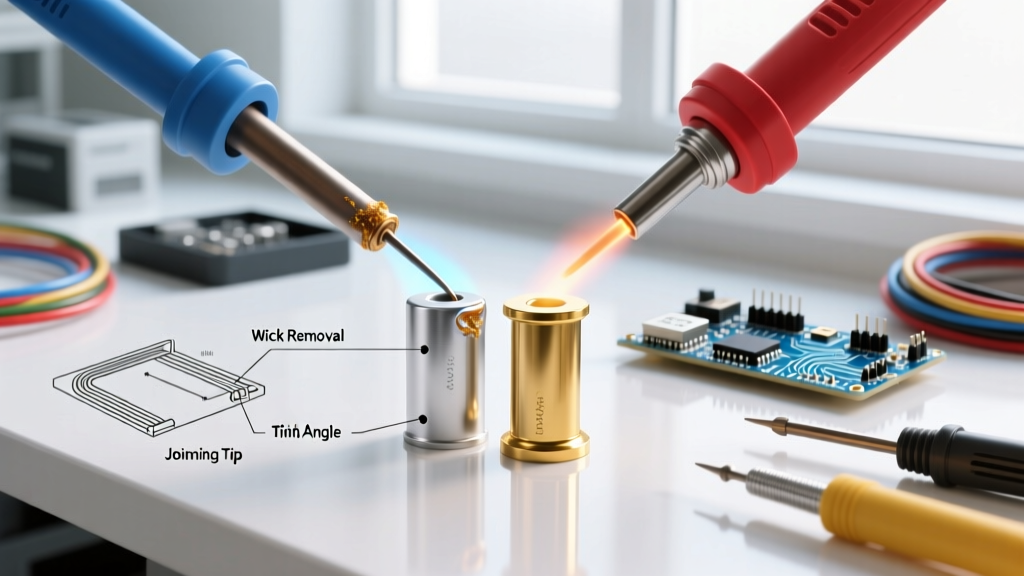
When you first pick up a torch or an iron to join two pieces of metal, you are likely to ask: what's the difference between soldering and brazing? While both processes use a filler metal to join base metals without melting the base metals themselves, the dividing line between the two is strictly defined by temperature.
According to the American Welding Society (AWS), the metallurgical boundary is exactly 450°C (840°F). If your filler metal melts below this threshold, you are soldering. If it melts above this threshold, you are brazing. This single temperature distinction dictates everything from the tools you buy and the flux you use, to the structural integrity of your final joint.
Beginner Callout: Never confuse 'silver soldering' with soft soldering. In the HVAC and jewelry trades, 'silver soldering' is actually a form of brazing because the silver-bearing alloys melt well above 450°C (often around 600°C to 750°C).
Soldering Explained: Low Heat, High Precision
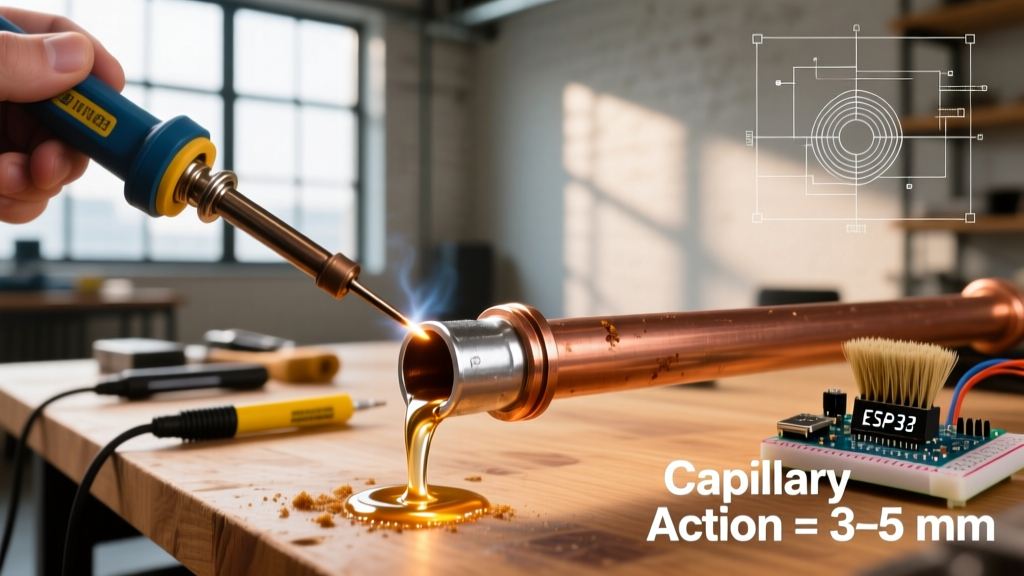
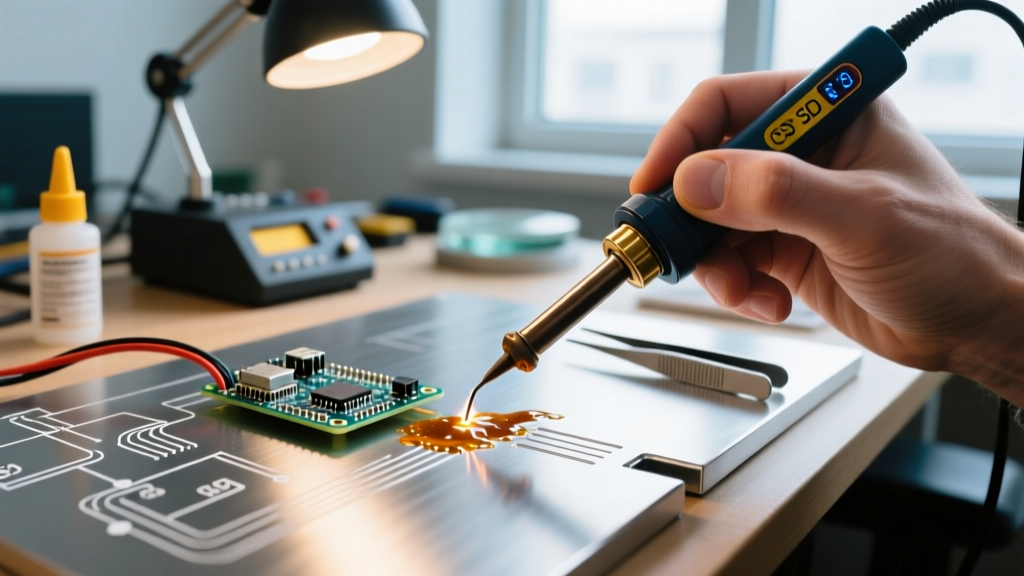
Soldering is the domain of electronics, delicate plumbing, and stained glass. Because the temperatures are relatively low, soldering relies heavily on capillary action and immaculate surface preparation. The base metal is heated just enough to melt the solder, which then wicks into the microscopic pores of the joint.
Common Filler Metals & 2026 Pricing
- SAC305 (96.5% Sn, 3.0% Ag, 0.5% Cu): The modern lead-free standard for PCBs. It melts at 217°C–220°C. As of 2026, a 1lb spool of Kester SAC305 wire (0.031" diameter) costs roughly $45 to $55.
- Sn63/Pb37 (63% Tin, 37% Lead): The eutectic classic. It melts at a precise 183°C with no plastic phase, making it incredibly forgiving for beginners. Still widely used in aerospace and vintage electronics restoration.
- 95/5 Tin-Antimony: Used for potable water copper lines. Melts around 235°C and costs about $35 per pound.
The Right Tools for Soldering
For electronics, a temperature-controlled station like the Weller WE1010 or the Hakko FX-888D (typically $100–$130) is mandatory to prevent thermal pad lift-off on PCBs. For copper plumbing, a standard MAPP gas or MAP-Pro torch (like the Bernzomatic TS8000) provides more than enough BTU output to heat a 1/2-inch copper fitting to 230°C in seconds.
Brazing Explained: High Heat, Structural Integrity
Brazing is where metalworking meets structural engineering. Because the filler metals melt at much higher temperatures, the resulting joints can achieve tensile strengths that often exceed the strength of the base metals themselves. A properly brazed lap joint can withstand tensile stresses exceeding 40,000 PSI.
Common Filler Metals & 2026 Pricing
- BCuP-5 (Harris Stay-Silv 5): Contains 5% silver, 6% phosphorus, and 89% copper. It is self-fluxing on copper-to-copper joints and melts between 643°C and 813°C (1190°F–1495°F). A 1lb tube costs approximately $85 to $105 in 2026. You can view specific alloy specs via the Harris Products Group.
- BAg-24 (50% Silver Braze): Used for joining dissimilar metals like stainless steel to brass. Requires a separate white or black brazing flux. Melts around 630°C–705°C. Highly expensive, often exceeding $300 per pound.
- Brass (Copper-Zinc): Used for basic steel repairs and torch-welding. Melts around 900°C. Requires heavy borax-based fluxes.
The Right Tools for Brazing
A standard propane torch will not cut it for brazing. You need high-BTU output. Beginners usually start with MAP-Pro or Propylene torches for small HVAC lines. For structural steel or thicker metals, an Oxy-Acetylene setup (like the Smith Little Torch or a Victor Journeyman outfit) is required to reach the 700°C+ ambient heating zone necessary to melt the filler rod without freezing the joint.
Head-to-Head Comparison Matrix
| Feature | Soldering | Brazing |
|---|---|---|
| Temperature Threshold | Below 450°C (840°F) | Above 450°C (840°F) |
| Typical Joint Strength | Low to Medium (5,000 - 15,000 PSI) | High (30,000 - 60,000+ PSI) |
| Base Metal Alteration | None (Metallurgical properties unchanged) | Minimal (May anneal work-hardened metals) |
| Capillary Action | Highly dependent on tight clearances (0.001" - 0.003") | Moderate (Clearances of 0.002" - 0.005") |
| Primary Heat Sources | Soldering irons, hot air, light torches | Oxy-acetylene, induction, furnace |
| Flux Chemistry | Rosin (RMA), No-Clean, mild organic acids | Potassium fluoroborate, borax, fluorides |
Real-World Failure Modes to Avoid
Understanding what's the difference between soldering and brazing is only half the battle; knowing how they fail in the real world is what separates novices from experts.
Soldering Edge Cases
- Cold Joints on PCBs: Moving a component before the SAC305 solder fully transitions through its plastic phase (the 3-degree window between liquidus and solidus) results in a grainy, fractured joint that will fail under thermal cycling.
- Capillary Starvation in Plumbing: If you apply solder to a copper fitting before the base metal inside the joint reaches the melting point of the solder, the solder will 'cap' the outside edge but fail to wick to the back of the fitting, leading to slow pinhole leaks under water pressure.
Brazing Edge Cases
- Zinc Fume Fever: Brazing galvanized steel with a brass rod vaporizes the zinc coating (which boils at 907°C). Inhaling zinc oxide fumes causes severe flu-like symptoms. Always grind off galvanization 2 inches back from the braze joint and use forced ventilation.
- Flux Inclusions: In brazing, if you overheat the joint, the flux can burn and turn into a hard, glassy slag that gets trapped inside the capillary space. This creates a false joint that looks perfect on the outside but has zero internal adhesion.
Your Step-by-Step Decision Framework
Not sure which process your DIY project requires? Follow this quick diagnostic flow:
- Is the joint load-bearing or subject to high vibration? If yes, you must braze. Solder will fatigue and crack under mechanical stress.
- Will the joint be exposed to temperatures over 150°C (300°F)? If yes, braze. Standard tin-lead and SAC solders will lose structural rigidity and eventually melt or creep.
- Are you joining delicate electronics, thin sheet metal (under 24 gauge), or heat-sensitive components? If yes, solder. The high heat of brazing will instantly warp thin metals and destroy silicon chips.
- Is the joint strictly for sealing liquids/gases at low pressure? Soldering is perfectly adequate and much faster for tasks like sealing copper water lines or sheet metal ductwork.
Final Thoughts for the Beginner
Mastering both techniques requires respecting the thermal limits of your materials. Soldering is an exercise in precision, patience, and surface chemistry. Brazing is an exercise in thermal management, joint design, and structural foresight. By keeping the 450°C threshold in mind, you will always select the right filler metal, the right flux, and the right heat source for the job at hand.