
Beyond Basic Sweat Soldering: The Advanced Plumber's Playbook
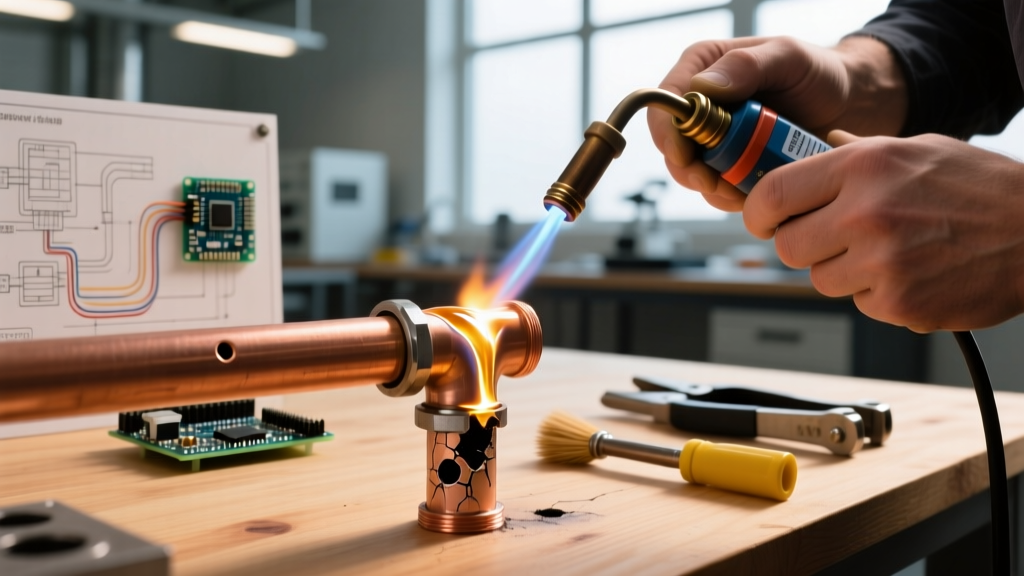
Soldering copper water pipes is a foundational skill, but transitioning from basic DIY repairs to master-level plumbing requires a deep understanding of metallurgy, thermal dynamics, and fluid edge-case management. While standard "sweat" soldering works for accessible, dry, horizontal joints, professional environments routinely present severe constraints: active water lines, vertical capillary limits, and extreme proximity to combustible framing. In 2026, with the rising costs of copper and the zero-tolerance standard for leak callbacks, mastering advanced techniques for soldering copper water pipes is not optional—it is a baseline requirement for high-tier tradesmen.
This guide bypasses elementary flux-and-torch tutorials, diving directly into the advanced methodologies, specialized alloys, and thermal management strategies used by elite mechanical contractors.
Metallurgical Precision: Selecting the Right Filler Alloy
Amateurs default to whatever solder is on the hardware store shelf. Professionals select filler metals based on the specific tensile, thermal, and vibrational demands of the joint. For potable water systems, lead-free compliance (NSF/ANSI 61) is mandatory, but the alloy composition drastically alters the joint's integrity.
| Alloy Designation | Composition | Melting Range (°F) | Tensile Strength (PSI) | Best Application Scenario |
|---|---|---|---|---|
| Oatey Safe Flo | 95/5 Tin-Antimony | 452°F - 464°F | 6,500 | Standard residential potable water; horizontal joints. |
| Harris Stay-Brite 8 | 8% Silver, 92% Tin | 535°F - 575°F | 13,000 | High-vibration lines, commercial HVAC, and refrigerant copper. |
| Sil-Fos 15 | 15% Silver, 80% Cu, 5% Phos | 1,150°F - 1,495°F | 38,000 | Copper-to-copper brazing; high-pressure medical gas lines. |
Pro Insight: When soldering copper water pipes in high-vibration environments (such as near booster pumps or commercial recirculation loops), standard 95/5 tin-antimony can suffer from fatigue cracking over time. Upgrading to an 8% silver-bearing alloy like Harris Stay-Brite 8 provides a massive bump in tensile strength and creates a more ductile joint that absorbs micro-vibrations without fracturing.
Thermal Dynamics: Torch Selection and Heat Sinking
Achieving the optimal capillary draw requires heating the fitting—not the pipe—to the exact melting point of the solder within seconds. Lingering heat destroys flux, oxidizes the copper, and creates "cold joints."
Moving Past Standard Propane
While a standard Bernzomatic TS3000 ($35) is fine for 1/2-inch residential lines, it lacks the BTU output for 1-inch to 2-inch mains or heavily heat-sunk environments. Advanced practitioners utilize:
- Bernzomatic TS8000 (MAPP/Propylene substitute): Operating at ~$55, this torch delivers a concentrated, 360-degree swirl flame that wraps around the fitting, reducing localized overheating and cutting solder time by 40% on 3/4-inch lines.
- TurboTorch T-503 (Acetylene/Air): The industry standard for commercial plumbers. Acetylene burns significantly hotter and faster than propylene. The self-igniting swirl tip concentrates heat precisely inside the fitting cup, requiring a $250+ initial investment but paying for itself in labor savings on large-diameter pipe.
Active Heat Sinking
When soldering within 2 inches of a threaded brass valve or a previous solder joint, thermal conductivity will melt adjacent work. Instead of relying solely on wet rags (which create steam burns), apply a commercial heat-sink paste like RectorSeal No. 5 or use specialized silicone heat-sink putty. This creates a thermal break that absorbs excess BTUs, protecting internal Teflon seals and adjacent solder rings.
Edge Case Mastery: The "Wet Pipe" Conundrum
Nothing ruins capillary action faster than steam. If a single drop of water is present inside the joint during heating, it flashes to steam, expanding 1,600 times in volume and blowing the molten solder out of the fitting. The old DIY trick of stuffing white bread into the pipe to absorb water is a severe liability in 2026; bread can swell, block aerators, and foster bacterial growth in dead legs.
The Professional Standard: Cryogenic Pipe Freezing
For active lines where main shutoffs are inaccessible or drained systems that won't fully empty, elite plumbers use liquid CO2 pipe freezing kits, such as the Rothenberger Super Freeze ($450+). By clamping a freezing jacket over the pipe upstream of the joint, CO2 expands and drops the localized temperature to -110°F, creating a solid ice plug in under 60 seconds. This holds back hydrostatic pressure up to 120 PSI, allowing you to solder a completely dry joint downstream. Once the joint cools, the ice thaws in minutes with zero residual debris.
Defying Gravity: Vertical and Overhead Capillary Joints
Soldering copper water pipes vertically or overhead fights gravity's pull on molten filler metal. Standard wire solder will drip and pool at the bottom of the fitting, leaving the top half of the joint starved and prone to pinhole leaks.
The Tinning Flux Protocol
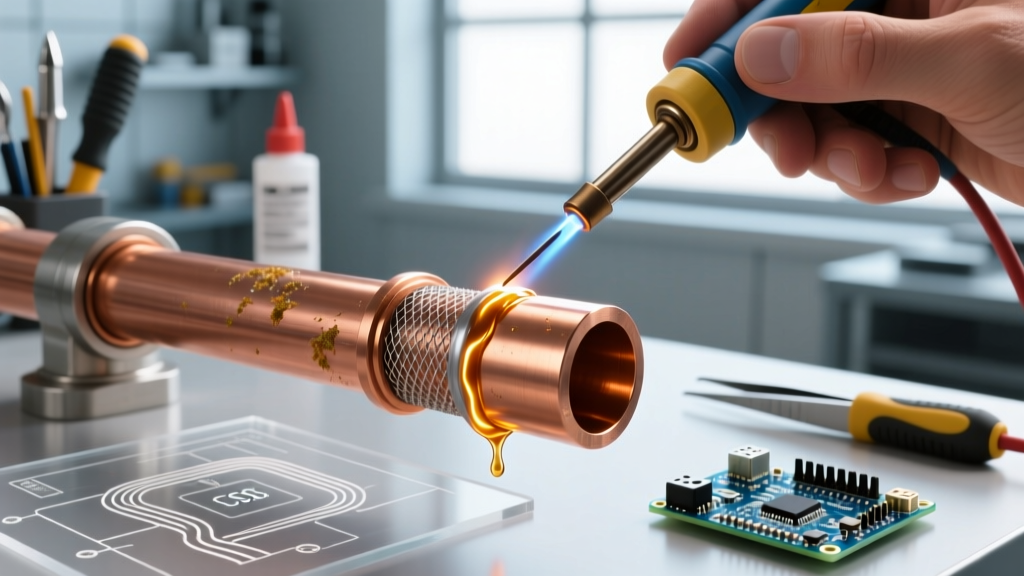
To successfully solder vertical stacks, you must switch from standard paste flux to a Tinning Flux (such as Oatey No. 95). Tinning flux contains suspended powdered solder (usually 95/5 or silver-bearing). Follow this exact sequence:
- Clean and Prep: Abrade both the pipe OD and fitting ID with 120-grit sandpaper or a wire brush until bright and shiny.
- Apply Tinning Flux: Coat the pipe end generously. The thick, petroleum-based tinning flux will not run down the pipe like standard water-soluble fluxes.
- Heat the Fitting Base: Apply the torch flame to the bottom of the vertical fitting. Heat rises, naturally drawing the thermal energy upward through the fitting cup.
- Feed at 3 and 9 O'Clock: Never feed solder at the 6 o'clock (bottom) position on a vertical joint. Apply the wire solder at the 3 o'clock and 9 o'clock positions simultaneously. The tinning flux will lower the surface tension, allowing the capillary action to pull the solder upward to the 12 o'clock position before gravity can pull it down.
- Wipe the Joint: Immediately after removing the flame, wipe the joint with a heavy, dry cotton rag to smooth the solder ring and prevent gravity-induced drips as the alloy cools.
Proximity Soldering and Combustible Protection
Soldering copper water pipes inside finished walls or near engineered lumber (OSB/I-joists) carries massive fire risks. The Occupational Safety and Health Administration (OSHA) strictly mandates fire watch protocols during hot work. Relying on a spray bottle of water is grossly negligent.
Advanced practitioners utilize intumescent heat shields and Kevlar soldering mats. Products like the Flame Fighter Solder Mat can withstand direct impingement from a 3,000°F torch for several minutes without transferring enough heat to ignite the wood framing behind it. Additionally, always use a non-contact infrared thermometer to verify that the backside of the framing lumber remains below 150°F post-soldering.
Post-Solder Verification: The Pressure Decay Test
Visual inspection of a solder ring is insufficient for commercial or high-value residential work. After soldering copper water pipes, the system must undergo a hydrostatic pressure test. Pressurize the isolated copper loop to 1.5 times the system's working pressure (typically 150 PSI for a 100 PSI municipal feed) using a calibrated manifold gauge. Hold the pressure for a minimum of 2 hours. A pressure drop of even 1 PSI indicates a micro-leak, likely caused by flux boiling out of an improperly cleaned joint or a cold solder connection. Only after a successful decay test should the pipes be insulated and the walls closed.
Authoritative References & Standards
To ensure your techniques align with current building codes and metallurgical standards, consult the following resources:
- Copper Development Association (CDA): The definitive Copper Tube Handbook provides exhaustive data on capillary joint clearances, thermal expansion rates, and alloy compatibility.
- Environmental Protection Agency (EPA): Review the National Primary Drinking Water Regulations to ensure all fluxes and filler metals meet NSF/ANSI 61 potable water standards, particularly regarding lead and antimony leaching limits.
- OSHA Hot Work Guidelines: Adhere strictly to OSHA's Welding, Cutting, and Brazing safety standards to mitigate fire hazards and respiratory risks from flux vaporization in confined spaces.