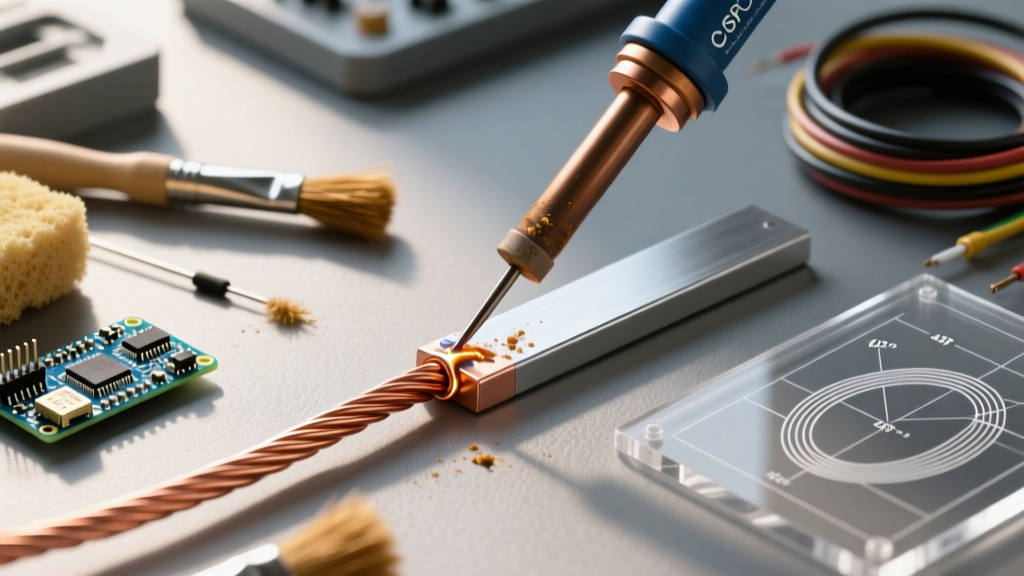

The 840°F Divide: Defining the Metallurgical Boundary
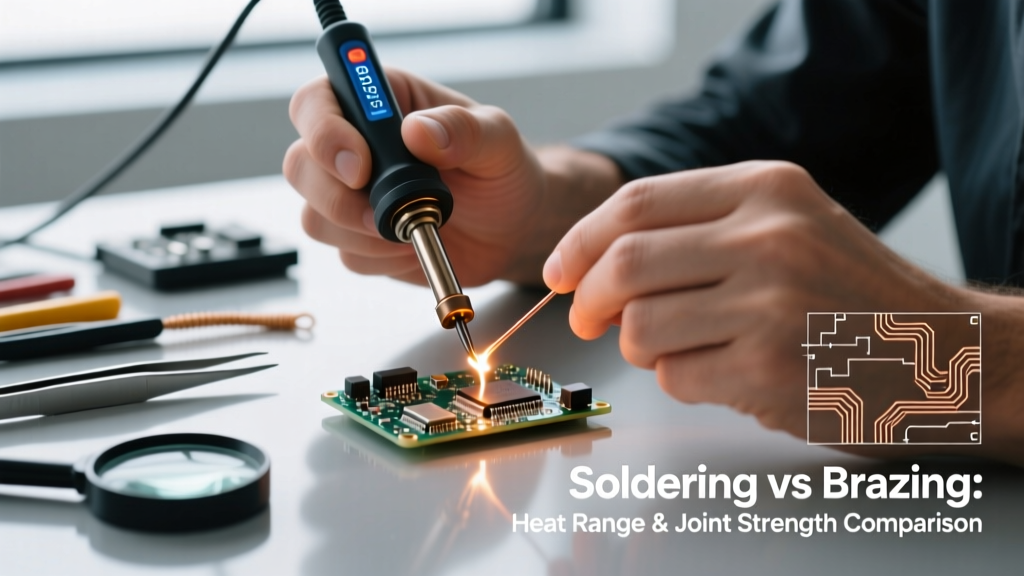
When joining metals in electrical, plumbing, or HVAC applications, understanding the thermal threshold is critical for joint integrity. According to the American Welding Society (AWS), the major temperature that separates soldering and brazing is 840°F (450°C). This is not an arbitrary number; it represents a fundamental shift in metallurgical behavior, filler alloy composition, and capillary dynamics.
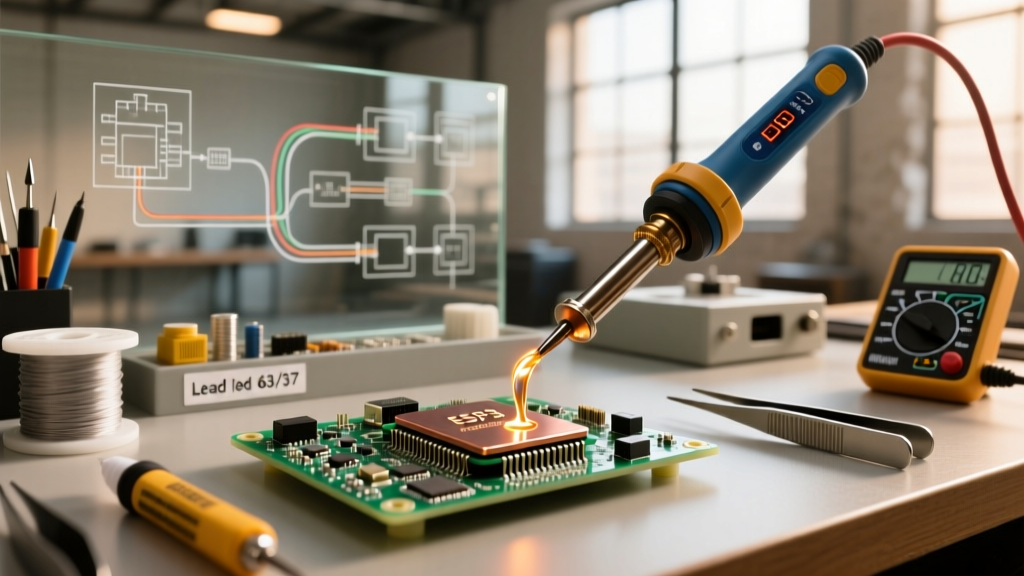
Below 840°F, you are soldering. The base metals remain entirely solid, and the joint relies on a low-temperature filler (typically tin-lead, tin-copper, or tin-silver) wetting the surface. Above 840°F, you cross into brazing. The filler metals shift to copper-phosphorus, brass, or silver-based alloys, requiring significantly higher BTU output and specialized fluxes to prevent base metal oxidation.
As of 2026, the transition to A2L mildly flammable refrigerants (like R-454B and R-32) in HVAC systems has made this distinction more critical than ever. These modern systems operate at higher pressures, meaning soft-soldered joints that might have held up in older R-410A systems are now catastrophic failure points. Below, we break down the most common mistakes technicians and DIYers make when navigating this thermal divide, and how to solve them.
4 Costly Mistakes Across the 840°F Threshold
Mistake #1: Relying on Soft Solder for High-Pressure Refrigeration Lines
The Error: Using 95/5 tin-antimony soft solder (which melts around 450°F) on copper refrigeration lines. While 95/5 is technically approved for some low-pressure water lines, it lacks the tensile strength and vibration resistance for modern high-pressure HVAC compressors.
The Solution: Cross the 840°F threshold and use a BCuP-5 brazing alloy (15% silver, 80% copper, 5% phosphorus). This alloy melts at approximately 1,175°F and flows at 1,300°F. The phosphorus acts as a built-in flux when joining copper-to-copper, eliminating the need for external chemical fluxes that can trap corrosive residues inside the pipe. Expect to pay around $55 to $70 per ounce for high-quality 15% silver rod (e.g., Lucas-Milhaupt Braze Alloy 15) in 2026, but the joint integrity is non-negotiable for pressurized systems.
Mistake #2: The BTU Trap (Under-Powering the Heat Source)
The Error: Attempting to braze a 1/2-inch copper pipe using a standard 60W soldering station (like the classic Weller WES51) or a basic blue propane torch. A standard propane torch burns at a maximum of 3,600°F, which sounds well above the 840°F brazing threshold. However, temperature is not heat (BTUs). Propane lacks the thermal transfer rate to heat a large copper mass to 1,200°F before the surrounding flux burns off and the base metal oxidizes.
The Solution: Upgrade your heat source. For DIYers and light plumbing, switch to a MAP-Pro yellow cylinder torch (burning at 4,000°F with a much higher BTU transfer rate, costing about $18 per cylinder). For professional HVAC and heavy electrical busbar brazing, invest in an Oxy-Acetylene setup (like the Smith Mini-Torch outfit, retailing around $350). Oxy-acetylene burns at 5,800°F, allowing you to localize the heat and achieve capillary flow in seconds without annealing the entire length of the pipe.
Mistake #3: Flux Incineration at High Temperatures
The Error: Applying standard rosin-core flux or water-soluble plumbing paste to a brazing joint. Standard soldering fluxes are designed to activate at 350°F and will completely incinerate, turning into a hard, glassy carbon crust by the time your torch reaches 1,000°F. This prevents the braze alloy from wetting the base metal, resulting in a cold, brittle joint.
The Solution: Use a flux rated for high-temperature brazing. Look for products that meet the AWS A5.31 Type FB3-K specification, such as Harris Stay-Clean liquid flux. This flux remains active up to 1,200°F, effectively dissolving copper oxides right as the silver braze alloy reaches its flow point. Always quench and wire-brush the joint post-braze, as residual brazing flux is highly corrosive to copper over time.
Mistake #4: The "Silver Solder" Misnomer
The Error: Purchasing "silver solder" from a hobby shop or general hardware store, assuming it is a high-temperature brazing alloy. In the electronics and hobbyist world, "silver solder" usually refers to SAC305 (96.5% Tin, 3.0% Silver, 0.5% Copper). This is a soft solder that melts at just 430°F—well below the 840°F dividing line.
The Solution: Read the AWS classification on the packaging. If you need true structural brazing, look for BAg (Brazing Silver) classifications, such as BAg-24 (50% Silver), which melts at 1,270°F. If you are doing electronics, stick to SAC305, but recognize you are soft-soldering, not brazing.
Technical Comparison Matrix: Soldering vs. Brazing
To visualize the operational differences dictated by the 840°F threshold, refer to the matrix below:
| Attribute | Soft Soldering (<840°F) | Brazing (>840°F) |
|---|---|---|
| Typical Filler Metals | Tin-Lead (Sn63/Pb37), SAC305, Tin-Antimony | Copper-Phosphorus (BCuP), Silver (BAg), Brass (RBCuZn) |
| Joint Clearance | 0.002" to 0.005" | 0.001" to 0.003" (Tighter tolerance required) |
| Heat Source | Iron (40W-100W), Hot Air, Standard Propane | MAP-Pro, Oxy-Acetylene, Oxy-Propane, Induction |
| Base Metal Effect | None (Metallurgical structure unchanged) | Can cause annealing (softening) of work-hardened copper |
| Primary Applications | PCB assembly, low-pressure water lines, sheet metal | HVAC refrigeration, structural steel, high-pressure hydraulics |
Expert Insight: The Capillary Action Tolerance
Master Technician Tip: The Copper Development Association emphasizes that capillary action—the mechanism that draws molten filler into a lap joint—behaves differently above and below 840°F. Because brazing alloys have higher surface tension and viscosity at their flow points, the joint clearance must be tighter. If you leave a 0.006" gap that works perfectly for 60/40 soft solder, a 15% silver braze alloy will simply bridge over the outside of the gap, failing to penetrate the joint depth and creating a catastrophic leak under pressure.
Final Verdict
Recognizing that the major temperature that separates soldering and brazing is 840°F (450°C) is the first step toward professional-grade metal joining. Soldering is about wetting a surface with low thermal stress; brazing is about alloying a joint with high structural integrity. By matching your filler alloy, heat source BTU output, and flux chemistry to the correct side of the 840°F divide, you eliminate weak joints, prevent flux burns, and ensure your assemblies survive the rigorous demands of modern 2026 electrical and mechanical systems.