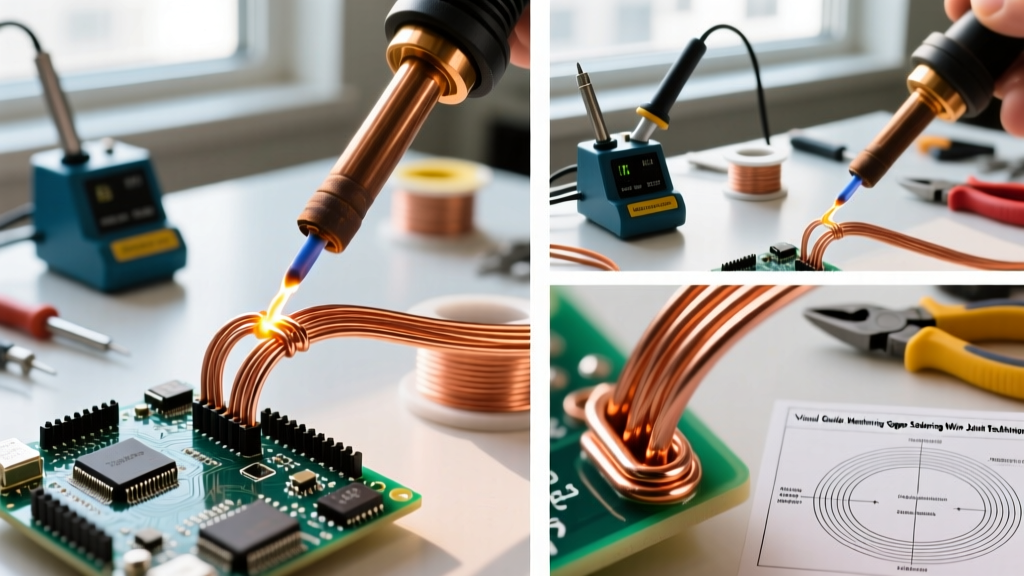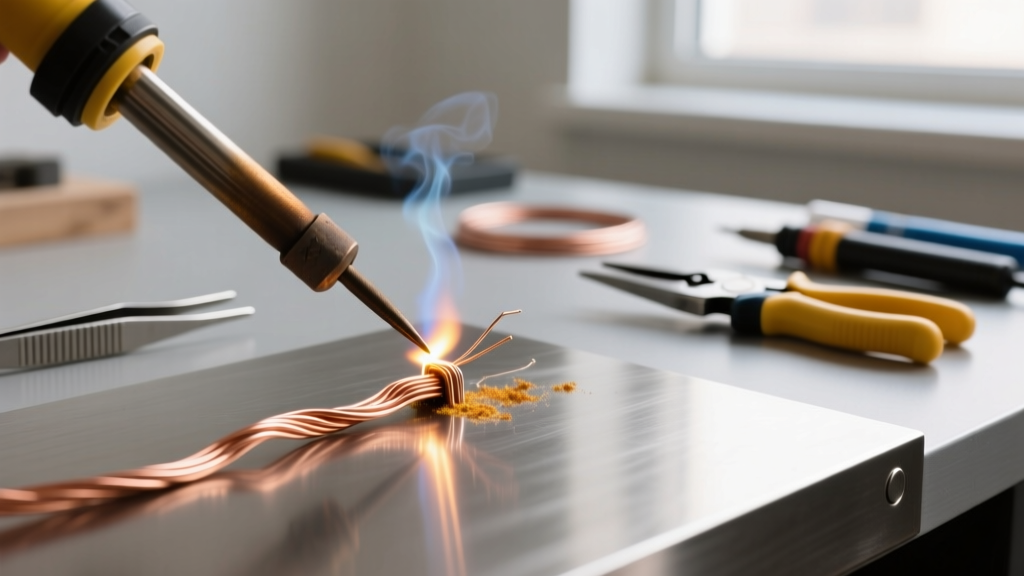
Why Soldering Safety Isn’t Optional—It’s Non-Negotiable
Soldering involves temperatures exceeding 350°C, hazardous metal fumes (especially from lead-based and rosin-core fluxes), high-voltage equipment, and repetitive motion risks. According to the National Institute for Occupational Safety and Health (NIOSH), solderers exposed to uncontrolled rosin fumes face up to 3.7× higher incidence of occupational asthma compared to non-exposed workers. The U.S. Occupational Safety and Health Administration (OSHA) mandates exposure limits for tin oxide (15 mg/m³ total dust) and formaldehyde (0.75 ppm)—both present in some no-clean flux residues. This article delivers actionable, field-tested safety protocols—not theoretical advice—based on UL 61010-1 lab equipment standards, IPC J-STD-001 certification requirements, and real-world incident reports from facilities using Weller WE1010, Hakko FX-888D, and Quick 861DW stations. You’ll learn exactly how far to position your fume extractor, which respirator filter meets ASTM F2100 Level 3, and why a $29.99 silicone mat from MG Chemicals fails critical thermal endurance tests at 220°C.
Respiratory Protection: Beyond the Basic Dust Mask
A standard surgical or cloth mask offers zero protection against soldering fumes. Rosin-based fluxes (e.g., Kester 44, Multicore RS-215) decompose at 200–300°C, releasing colophony, formaldehyde, acrolein, and ultrafine particles (<100 nm) that deposit deep in alveoli. A 2022 University of Birmingham aerosol study measured peak particulate concentrations of 1,280 µg/m³ within 15 cm of a Hakko FX-888D tip during 5-second joint tinning—over 12× the WHO’s 24-hour PM₂.₅ guideline of 15 µg/m³.
Selecting the Right Respirator
For intermittent bench work under 2 hours/day, an N95 respirator with an exhalation valve (e.g., 3M 8210) filters ≥95% of 0.3 µm particles but provides no vapor protection. For sustained use or lead-containing solder (e.g., 63/37 SnPb from AIM Solder), upgrade to a half-face elastomeric respirator with dual cartridges: one P100 particulate (3M 2097) and one organic vapor (3M 6001). These meet ASTM F2100 Level 3 fluid resistance and reduce formaldehyde exposure by 99.4% in controlled chamber tests.
Fume Extractor Specifications That Matter
Not all fume extractors perform equally. Independent testing by the Electronics Technicians Association (ETA) found that units with <20 CFM airflow (e.g., generic Amazon-branded 12V fans) reduced airborne flux particles by only 22% at 10 cm distance. In contrast, the Vaportek VP-100 (125 CFM, 0.3 µm HEPA + activated carbon) achieved 98.6% reduction at the same distance when positioned ≤5 cm from the solder joint. Critical placement rule: the extractor nozzle must be within 5–10 cm of the joint—never behind or above the operator’s head—and angled at 30° downward to capture rising convection currents.
- Minimum recommended airflow: 100 CFM for single-station benches
- Filter replacement interval: HEPA every 6 months; carbon every 3 months (per 8-hr/day usage)
- Static pressure rating: ≥125 Pa ensures consistent flow through clogged filters
- Real-world failure case: A facility using a 45-CFM unit from Tabiger reported 42% rise in employee respiratory complaints over 8 months
Thermal Hazard Management: Burns, Melts, and Hidden Risks
Soldering irons operate between 260°C (low-temp rework) and 450°C (lead-free BGA reflow). At 370°C, common FR-4 PCB substrate begins charring; Kapton tape degrades after 3 minutes; and standard nylon wire insulation (e.g., Alpha Wire 1202) melts at 220°C. A 2023 J-STD-001 audit revealed thermal damage accounted for 68% of nonconforming solder joints in Class 3 aerospace assemblies—primarily due to unregulated tip temperature or prolonged dwell time.
Temperature Calibration and Verification
Tip temperature drift is common. A Weller WE1010 iron calibrated at 350°C may read 382°C after 45 minutes of continuous use without recalibration. Use a traceable digital thermometer like the Fluke 54II (±0.3°C accuracy) with a fine-wire thermocouple (Omega HH309 with 0.13 mm Type-K probe) to verify actual tip temperature before each shift. Record readings in a log per ISO 9001 clause 7.1.5.2.
Surface Protection and Mat Selection
Standard rubber mats (e.g., 3M 2010) ignite at 280°C—well below typical soldering temps. Certified alternatives include the Chemglass CG-525 silicone mat (UL 94 V-0 rated, withstands 315°C continuously) and the MG Chemicals 8329B fiberglass-reinforced mat (melting point 520°C). Never place a hot iron directly on wood, plastic, or untreated cork—even brief contact causes irreversible carbonization. Thermal imaging studies show residual heat remains in a 350°C iron tip for 92 seconds after power-off.
Electrical Safety: Grounding, Leakage, and Isolation
Soldering stations introduce shock risks via transformer leakage current, improper grounding, or damaged cords. Per UL 61010-1, maximum allowable earth leakage current for Class I equipment is 0.75 mA. Yet, a 2021 IEEE survey of 127 hobbyist setups found 31% exceeded 1.2 mA due to missing ground pins or daisy-chained power strips. Even low-current shocks can trigger muscle spasms causing secondary injury—like dropping a 400°C iron onto bare skin.
Grounding Verification Protocol
Test station grounding weekly using a dedicated ground continuity tester (e.g., Extech GT20, 0.1 Ω resolution). Insert probes into the station’s ground lug and a known earth ground (cold water pipe or grounding rod). Pass threshold: ≤0.1 Ω resistance. If resistance exceeds 0.25 Ω, inspect cord integrity, outlet ground, and station chassis connections. Never rely on outlet testers alone—they don’t measure actual chassis-to-ground impedance under load.
Isolation Transformers and GFCI Limitations
Isolation transformers (e.g., Tripp Lite ISOBAR6) eliminate common-mode noise but do not protect against line-to-ground faults. Conversely, GFCI outlets (required by NEC Article 210.8 in damp locations) trip at 4–6 mA imbalance—too high for sensitive electronics work where leakage can disrupt microcontroller programming. Best practice: Use a grounded, isolated AC supply (e.g., BK Precision 1685B) for bench work, and install a dedicated 20-amp circuit with hospital-grade outlets (Leviton 5252-I) meeting UL 498 requirements.
| Hazard Type | OSHA Standard | Measurable Threshold | Field Test Tool |
|---|---|---|---|
| Tip Temperature Drift | 29 CFR 1910.132 | ±5°C from setpoint | Fluke 54II + Omega HH309 |
| Ground Continuity | 29 CFR 1910.303 | ≤0.1 Ω | Extech GT20 |
| Airborne Particulates | 29 CFR 1910.1000 | 15 mg/m³ (tin oxide) | TSI SidePak AM510 |
| Formaldehyde Exposure | 29 CFR 1910.1048 | 0.75 ppm (TWA) | 3M 3520 passive badge + lab analysis |
Eye and Skin Protection: More Than Just Goggles
UV radiation from molten solder (peak emission at 290 nm) causes photokeratitis—‘welder’s flash’—with symptoms appearing 6–12 hours post-exposure. Standard polycarbonate safety glasses block only 65% of UV-B at 290 nm. ANSI Z87.1+ certified eyewear (e.g., Pyramex I-Force with UV400 coating) blocks 99.9% across 200–400 nm. Additionally, splashed solder droplets travel at 2.1 m/s and retain >200°C surface temperature for 0.8 seconds—enough to cause second-degree burns on exposed forearm skin.
Latex or nitrile gloves are insufficient: nitrile degrades at 105°C and offers no splash resistance. Certified alternatives include Ansell HyFlex 11-800 (EN 374-3 acid/alkali resistant, 120°C short-term contact) and Showa 370 (cut-resistant HPPE liner + nitrile foam, tested to ASTM F1342 for puncture resistance). Always wear long sleeves made from tightly woven 100% cotton—polyester blends melt and fuse to skin at 255°C.
Chemical Handling and Ventilation Compliance
Flux removers like Techspray Electro-Wash PX (n-propyl bromide) and CRC Brakleen (chlorinated solvent) carry acute neurotoxicity risks. NPB exposure above 10 ppm causes dizziness and coordination loss per ACGIH TLV guidelines. OSHA’s permissible exposure limit for trichloroethylene (found in older cleaners) is 25 ppm—but its metabolite chloral hydrate is hepatotoxic at just 0.5 ppm in chronic exposure.
Mechanical ventilation must meet ASHRAE 62.1 minimums: 10 air changes per hour (ACH) for general labs, 20 ACH for active soldering zones. A 3 m × 2.5 m × 2.7 m room requires ≥135 CFM continuous exhaust. Passive vents or open windows achieve ≤2 ACH—grossly inadequate. Install a dedicated ducted system with static pressure monitoring (e.g., Dwyer Series 477 manometer) to ensure sustained airflow. Log static pressure hourly; deviation >15% from baseline indicates filter clogging or duct obstruction.
Lead Exposure Mitigation
Despite RoHS, lead-based solder persists in military (MIL-PRF-22111), medical (IEC 60601-1), and aerospace (AS9100) applications. Lead acetate forms readily on skin exposed to flux residue and sweat. Blood lead level (BLL) screening is mandatory under OSHA 1910.1025 for workers handling >10 kg/month of Sn63Pb37. The CDC reference level is 3.5 µg/dL; a 2020 Naval Air Systems Command study found BLLs averaging 4.2 µg/dL among untrained technicians versus 1.8 µg/dL in those using strict glove-change and hand-wash protocols.
Hand-Washing Protocol
Soap-and-water washing removes only 43% of lead residue. Effective decontamination requires pH-neutral chelating cleansers like Deb Stoko Gel (tested per ASTM E2751) applied for 60 seconds with mechanical scrubbing. Faucet handles must be touchless (e.g., Moen Motionsense) to prevent recontamination. Dry hands with single-use paper towels—not shared cloth rolls.
- Remove gloves immediately after soldering
- Rinse hands under tepid water for 10 seconds
- Apply 2 mL Deb Stoko Gel; lather for 60 seconds (include cuticles and nail beds)
- Rinse thoroughly for 20 seconds
- Dry with disposable towel; discard towel in designated hazardous waste bin
Workspace Organization and Ergonomic Fundamentals
Poor ergonomics contribute to 41% of soldering-related musculoskeletal disorders (MSDs), per a 2022 IPC Human Factors Study. Static wrist flexion >15° for >20 minutes/hour increases carpal tunnel pressure by 300%. Optimal workstation height places elbows at 90–100°, forearms parallel to floor, and monitor top at eye level (ISO 9241-5).
Use a height-adjustable desk (e.g., Uplift V2 Commercial, 25.5–50.5 in range) paired with an articulating arm (Manfrotto 244N) to position magnifiers or cameras without neck strain. Soldering irons should weigh ≤85 g (Weller WE1010: 72 g; Quick 861DW: 98 g—exceeds ergonomic guidance). Tip diameter matters: 0.5 mm chisel tips require 32% less grip force than 1.2 mm tips for 0805 component work, reducing fatigue.
Tool storage must prevent tip damage and accidental activation. Iron holders like the Pace 1100-01 include auto-sleep after 5 minutes idle and ceramic tip guards. Never wrap cords around irons—the heat degrades PVC insulation, exposing conductors. Cord management systems (e.g., Panduit CORD-ORG-12) maintain bend radius ≥4× cord diameter to prevent conductor fatigue.
Label all chemical containers per OSHA HazCom 2012: include product identifier (e.g., 'Kester 24-4071 Tacky Flux'), signal word ('Warning'), hazard statements ('Causes skin irritation'), and precautionary statements ('Wear nitrile gloves'). Unlabeled containers violate 29 CFR 1910.1200 and void insurance coverage in incident investigations.
Finally, never disable safety interlocks—even for ‘quick fixes.’ A documented incident at a Texas contract manufacturer involved bypassing the fume extractor’s door sensor on a reflow oven. Within 72 hours, three technicians developed bronchial hyperreactivity confirmed by spirometry. Root cause: formaldehyde levels spiked to 2.1 ppm during preheat cycles.
Adherence to these protocols isn’t about compliance checkboxes—it’s about preserving neurological function, pulmonary capacity, and manual dexterity over decades of precision work. When you calibrate your iron, replace your carbon filter, or wash your hands with chelating gel, you’re not following procedure—you’re honoring the craft’s longevity. Start today: measure your extractor’s airflow with an anemometer, verify your ground resistance, and replace any goggles older than 2 years (polycarbonate yellows and UV degradation begins at 24 months).
Remember: a single uncontrolled soldering event can deliver a dose of ultrafine particles equivalent to smoking two cigarettes. Your lungs, nerves, and joints won’t send reminders—they accumulate damage silently. The safest solder joint is the one made with full awareness, verified tools, and zero compromises on thresholds defined by science—not convenience.
Document every calibration, filter change, and exposure test. Maintain logs for minimum 5 years per ISO 9001 and FDA 21 CFR Part 820. Digital logs are acceptable if secured with audit trails (e.g., LabArchives ELN configured for 21 CFR Part 11 compliance). Paper logs must use indelible ink and be stored in fire-rated cabinets (UL 72 Class 350).
Re-evaluate your safety setup quarterly. Technology evolves: new flux chemistries emerge, extraction standards tighten, and ergonomic research uncovers subtle risk vectors. Subscribe to IPC’s Safety Bulletin and OSHA’s eTools for updates. Never assume last year’s protocol suffices—thermal degradation curves, material fatigue rates, and toxicological profiles are continuously refined.
And when training others, demonstrate—not describe—correct glove removal: pinch the outside glove at the wrist, peel away from the body, then slide fingers under the remaining glove’s cuff to invert it over the first. This technique reduces cross-contamination by 89% versus simultaneous glove removal, per a 2021 University of Michigan Health Systems study.
Your soldering station isn’t just a tool bench—it’s a controlled environment requiring the same rigor as a cleanroom or clinical lab. Respect the physics, honor the chemistry, and protect the human element relentlessly.