
The Physics of Sweat Soldering: Capillary Action
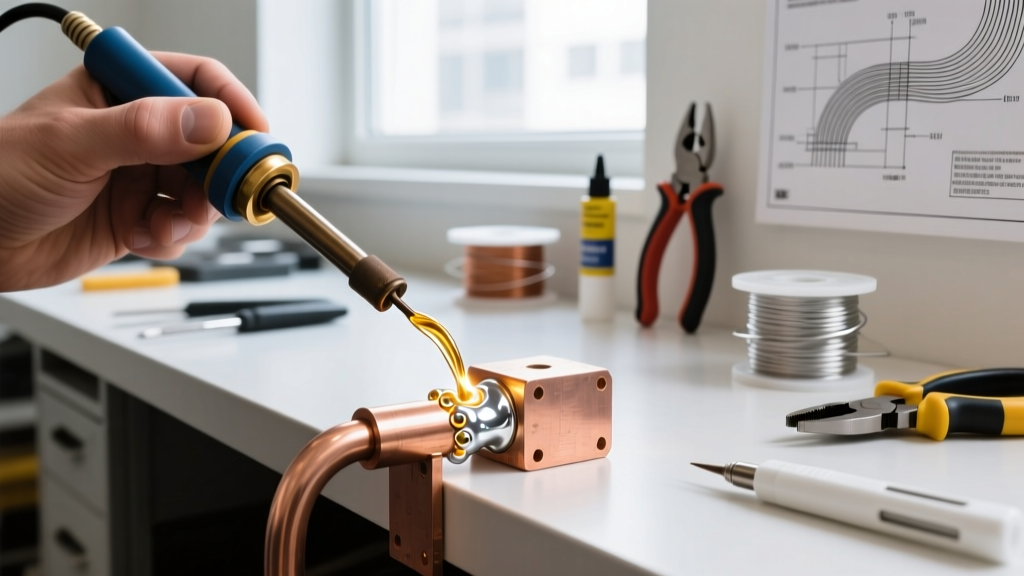
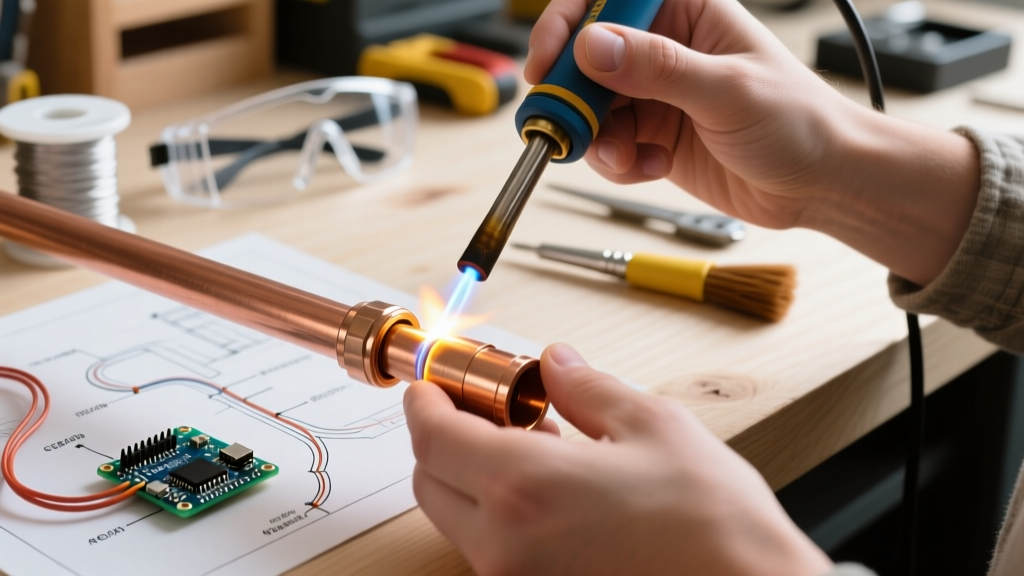
Soldering copper pipe—commonly known in the plumbing and HVAC trades as "sweat soldering"—is fundamentally an exercise in fluid dynamics and metallurgy. Unlike electrical soldering, where the goal is simply to create a conductive bridge, plumbing soldering relies on capillary action to draw molten copper pipe soldering wire into the annular space between the pipe and the fitting. For capillary action to function correctly, the clearance gap must be strictly maintained between 0.002 and 0.005 inches. If the gap is too wide, surface tension fails, and the joint will leak. If the gap is too tight, the flux and molten alloy cannot penetrate, resulting in a starved joint.
Decoding Copper Pipe Soldering Wire Alloys
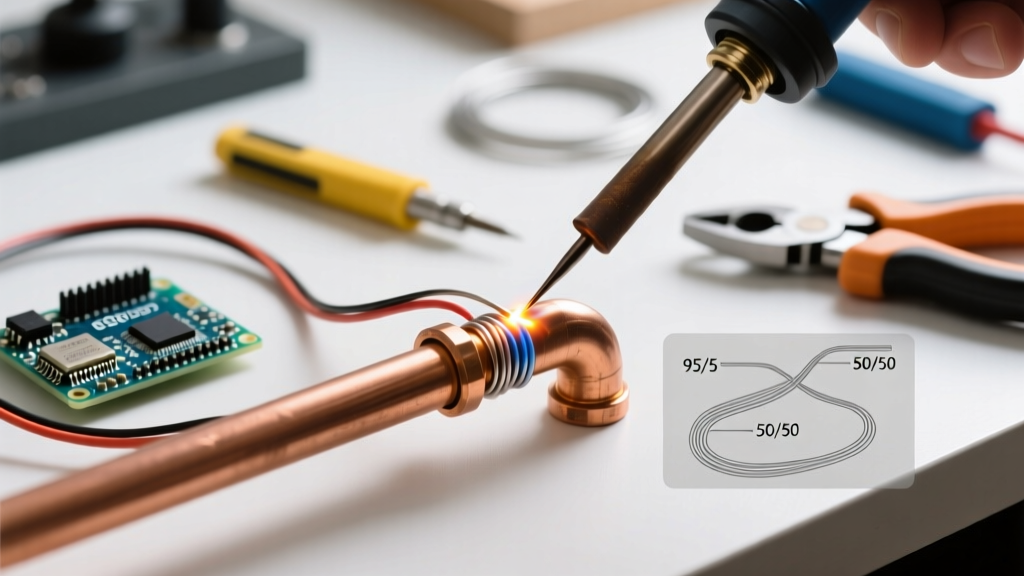
Selecting the correct copper pipe soldering wire is not a one-size-fits-all decision. The alloy you choose dictates the melting temperature, the joint's tensile strength, and its legal compliance for potable water systems. As of 2026, the market is dominated by lead-free formulations due to strict federal mandates, but legacy alloys still see use in specific drain, waste, and vent (DWV) applications.
| Alloy Designation | Composition | Melting Range | Primary Application | Avg. Cost (2026) |
|---|---|---|---|---|
| 95/5 (Tin/Copper) | 95% Tin, 5% Copper | 430°F - 440°F | Potable water, general plumbing | $38 - $45 / lb |
| 50/50 (Tin/Lead) | 50% Tin, 50% Lead | 360°F - 420°F | DWV, non-potable drains (Legacy) | $25 - $30 / lb |
| Silver-Bearing | 96% Tin, 4% Silver | 420°F - 430°F | HVAC, high-vibration lines | $75 - $85 / lb |
| 95/5 Antimony | 95% Tin, 5% Antimony | 430°F - 470°F | High-pressure steam, industrial | $42 - $50 / lb |
The 95/5 Standard for Potable Water
The 95/5 Tin-Copper alloy (such as Oatey Safe-Flo or Worthington Lead-Free) is the undisputed standard for modern residential and commercial potable water lines. The addition of 5% copper prevents the tin from dissolving the base copper pipe at high temperatures, a phenomenon known as "copper erosion." Under the Reduction of Lead in Drinking Water Act, any solder used on pipes carrying water for human consumption must contain less than 0.2% lead. Using 50/50 solder on a kitchen sink supply line is not just a code violation; it is a severe health hazard, as the EPA notes that lead leaching from legacy plumbing remains a critical public health issue.
When to Use Silver-Bearing Wire
While standard 95/5 is fine for static water lines, HVAC technicians working on copper refrigerant lines or high-vibration compressor loops should upgrade to a silver-bearing copper pipe soldering wire (like Harris Stay-Brite 8 or similar 4% silver alloys). The silver increases the tensile strength and fatigue resistance of the joint, preventing micro-fractures caused by compressor vibration. Furthermore, silver-bearing solders exhibit superior wetting characteristics, flowing more readily into tight capillary spaces.
Flux Chemistry: The Unsung Hero of Copper Joints
You cannot solder copper without flux. When heated, copper rapidly oxidizes, forming a black copper oxide layer that molten solder will not adhere to. Flux chemically strips this oxide and prevents further oxidation during the heating phase.
- Tallow/Petroleum-Based (e.g., Oatey No. 95): The industry standard for potable water. It is water-soluble, meaning the residual flux inside the pipe will safely dissolve and wash away when the water is turned on, preventing long-term corrosion.
- Zinc Chloride (Acid Flux): Highly aggressive. Never use this on copper water lines. It is designed for steel or galvanized metals and will cause rapid pinhole leaks in copper if not perfectly neutralized.
- Rosin-Based: Primarily used for electrical copper wire. It is non-corrosive but lacks the thermal stability and aggressive cleaning power needed for thick-walled copper plumbing tubes.
Torch Selection and Heat Dynamics
The heat source dictates your workflow speed and joint integrity. Standard blue-tank propane (burning at roughly 3,600°F) is sufficient for 1/2-inch and 3/4-inch Type M or L copper. However, when soldering 1-inch lines or working in cold environments, the thermal mass of the copper dissipates heat faster than a propane torch can apply it. In these scenarios, upgrade to MAP-Pro (yellow tank, burning at 3,730°F) or an Acetylene-based TurboTorch. The higher flame temperature reduces dwell time, which is critical because prolonged heating burns the flux, rendering it useless and resulting in a cold joint.
Step-by-Step Sweat Soldering Procedure
- Cut and Ream: Use a rotary tube cutter for a square cut. Crucially, use the attached reaming blade to remove the internal burr. An un-reamed pipe creates turbulent water flow, which causes cavitation and eventual pinhole leaks downstream of the joint.
- Mechanical Cleaning: Clean the outside of the pipe and the inside of the fitting using 120-grit aluminum oxide emery cloth or a specialized copper wire brush. Never use steel wool; it leaves behind iron particles that will cause galvanic corrosion and green pinhole leaks within months.
- Apply Flux: Apply a thin, even layer of water-soluble flux to the pipe end, extending about 1/16-inch past the fitting depth. Insert the pipe and give it a quarter-turn to distribute the flux evenly and eliminate air pockets.
- Heat the Fitting, Not the Pipe: Apply the torch flame to the fitting (the female cup), not the pipe. The fitting has more mass and needs more heat. Keep the flame moving to avoid localized scorching.
- Test with Solder: Do not test the joint's temperature with the torch flame. Remove the flame and touch the copper pipe soldering wire to the joint seam. If the copper is at the correct temperature (approx. 450°F), the wire will instantly melt and be drawn into the joint via capillary action.
- Feed and Wipe: Feed the wire until a continuous bead of solder appears around the entire perimeter of the joint. For a 1/2-inch joint, this typically requires about 1/2-inch to 3/4-inch of wire. Wipe the joint with a damp rag to smooth the bead and remove excess flux.
Troubleshooting Common Failure Modes
The "Water in the Line" Steam Blowout
If you are repairing an existing line and cannot fully drain the system, residual water will turn to steam when heated. This steam pressure will physically blow the molten solder out of the joint, creating a porous, leaking mess. The Fix: Use the "bread trick." Push a tightly wadded piece of plain white bread (no crusts, no seeds) into the pipe upstream of the joint. The bread acts as a temporary dam, absorbing the water. Once soldered and the water is turned back on, the bread dissolves completely and passes through the aerators without clogging valves.
Cold Joints and Solder Balling
If the solder balls up and rolls off the copper instead of flowing into the seam, you have a cold joint or contaminated copper. This happens when the flux was burned off before the solder was applied, or if the pipe was not cleaned down to bright, shiny copper. You cannot simply add more flux and reheat; the joint must be disassembled, mechanically cleaned again, and re-soldered from scratch.
Pro-Tip for HVAC Techs: When brazing or soldering copper refrigerant lines, always purge the inside of the tubing with dry nitrogen at a very low flow rate (1-2 CFM). This prevents internal copper oxide scale from forming, which can break loose and destroy the compressor's expansion valve. For more on occupational safety when handling heavy metals and flux fumes, refer to the OSHA guidelines on lead and soldering safety.
Mastering the use of copper pipe soldering wire requires respecting the metallurgy of the alloys and the physics of capillary flow. By selecting the correct 95/5 or silver-bearing wire, pairing it with the right tallow-based flux, and applying precise thermal control, you will produce joints that easily outlast the 50-year lifespan of the copper tubing itself.