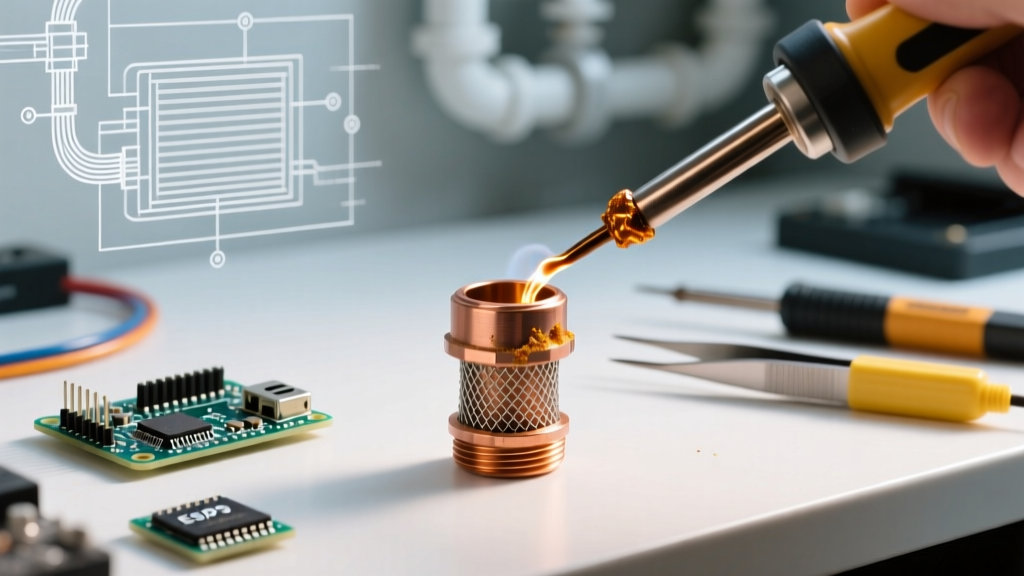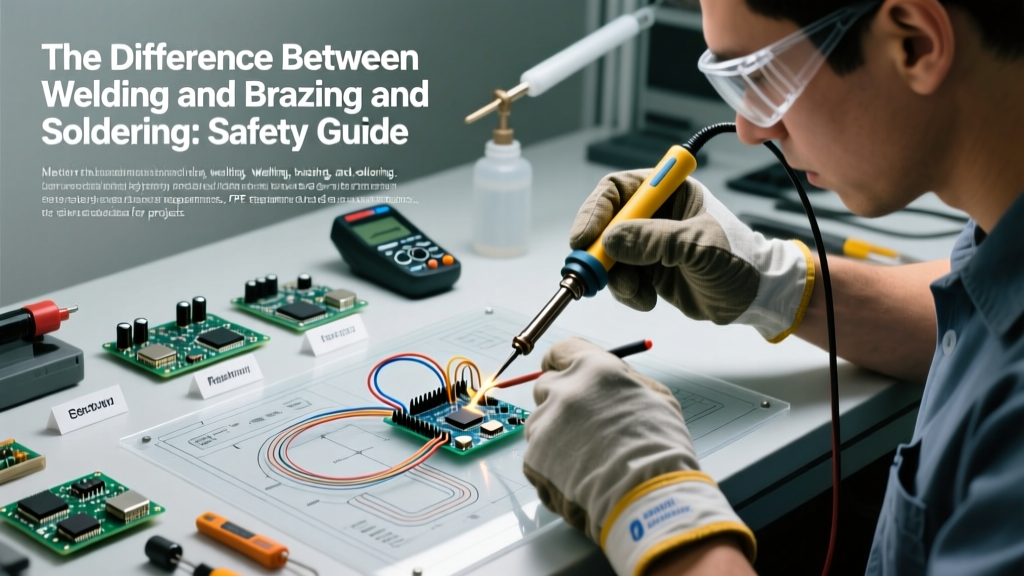

The Thermal Boundary: Why the Difference Between Welding and Brazing and Soldering Matters
Understanding the exact difference between welding and brazing and soldering is not merely an academic exercise in metallurgy; it is the foundational baseline for workshop safety. Confusing these three thermal joining processes leads to catastrophic safety oversights. Using a soldering iron's lightweight carbon filter to manage MIG welding fumes will result in severe respiratory damage, while wearing a Shade 12 auto-darkening welding helmet to inspect a delicate PCB solder joint is a recipe for physical injury from blind spots. In 2026, with stricter indoor air quality regulations and advanced alloy compositions, knowing where the thermal boundaries lie dictates your PPE, ventilation infrastructure, and material handling protocols.
The fundamental dividing line rests on the melting point of the base metal versus the filler metal, with a critical thermal threshold at 840°F (450°C). According to OSHA hot work standards, misclassifying these processes exposes operators to vastly different toxicological profiles, from rosin-induced asthma in electronics to hexavalent chromium exposure in structural steel fabrication.
Thermal & Hazard Comparison Matrix
| Process | Temperature Range | Base Metal State | Filler Metal State | Primary Safety Hazard |
|---|---|---|---|---|
| Soldering | Below 840°F (450°C) | Solid | Melted | Rosin flux fumes (Colophony), Lead toxicity |
| Brazing | Above 840°F (450°C) | Solid | Melted | Cadmium fumes, Fluoride flux burns, intense UV/IR |
| Welding | 2,500°F - 10,000°F+ | Melted | Melted | Arc flash, Hexavalent chromium, severe thermal burns |
Soldering Safety: Managing Sub-840°F Hazards
Soldering relies on capillary action to draw a molten filler metal (solder) between solid base metals. In modern electronics and precision plumbing, the industry standard has shifted heavily toward lead-free alloys like SAC305 (96.5% Tin, 3.0% Silver, 0.5% Copper), which melts at roughly 423°F (217°C). Iron tips are typically set between 660°F and 750°F (350°C - 400°C).
The Invisible Threat: Colophony and Flux Fumes
The primary danger in soldering is not the heat, but the flux. Rosin-based (colophony) fluxes vaporize at soldering temperatures, releasing aliphatic aldehydes and hydrochloric acid gases. The UK Health and Safety Executive (HSE) classifies rosin fumes as a potent respiratory sensitizer, directly linked to occupational asthma.
- Best Practice: Never rely on ambient room ventilation. Use source-capture fume extractors equipped with HEPA and activated carbon filters, such as the Weller WAC001 or Hakko FA-400. Position the extraction nozzle exactly 2 to 4 inches from the solder joint to capture the thermal plume before it reaches the operator's breathing zone.
- Material Handling: If you are still maintaining legacy equipment using Sn63Pb37 (63% Tin / 37% Lead) eutectic solder, strict hand-washing protocols and dedicated eating zones are mandatory to prevent lead ingestion. Blood lead level (BLL) monitoring is recommended for high-volume production environments.
Brazing Safety: The High-Temperature Capillary Zone
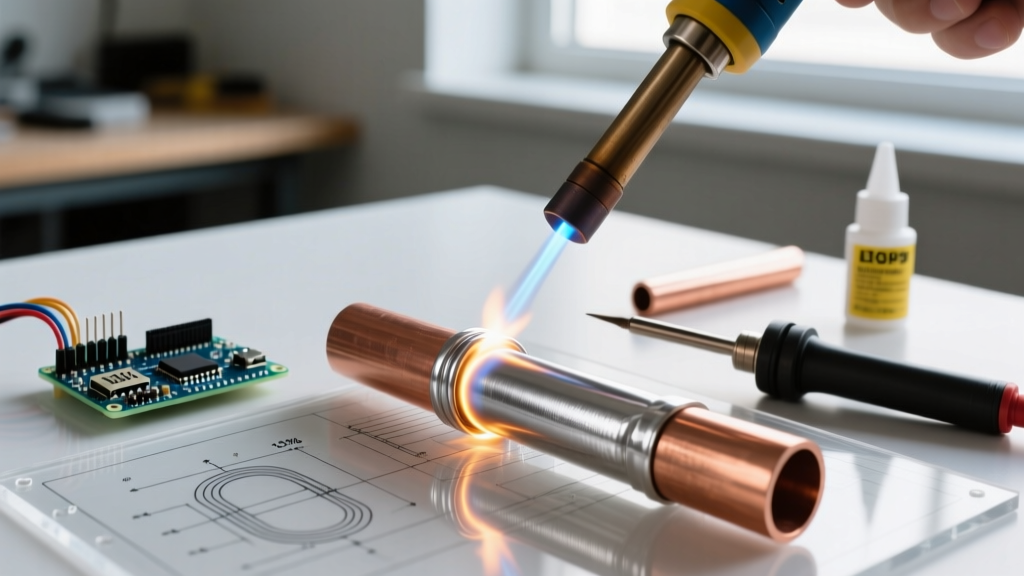
Brazing crosses the 840°F (450°C) threshold. The base metal remains solid, but the filler metal melts at significantly higher temperatures than soft solder. This process is ubiquitous in HVAC refrigeration lines, structural copper assemblies, and heavy-duty steel framing.
Cadmium Toxicity and Fluoride Fluxes
Brazing introduces severe chemical hazards that soldering does not. Historically, silver brazing alloys like BAg-1 contained up to 24% Cadmium to lower the melting point and improve flow. When heated with an oxy-acetylene torch, cadmium vaporizes into highly toxic cadmium oxide fumes. Inhalation can cause chemical pneumonitis and fatal pulmonary edema (cadmium fume fever). While largely phased out in 2026, legacy stock still exists in older workshops.
Expert Directive: Always verify your brazing rod classification. Switch to Cadmium-free alternatives like AWS BAg-7 (Silver/Copper/Zinc/Tin) or Lucas-Milhaupt Sil-Fos alloys for copper-to-copper joints, which eliminate the cadmium hazard entirely while maintaining structural integrity.
Furthermore, brazing steel or stainless steel requires fluoride-based fluxes (e.g., Harris Stay-Clean). When overheated, these fluxes can release hydrogen fluoride gas, which causes severe respiratory tract irritation and deep tissue burns upon contact with skin moisture. Proper localized exhaust ventilation (LEV) and heavy-duty nitrile gloves during post-braze cleaning are non-negotiable.
Welding Safety: Melting the Base Metal
Welding fundamentally alters the equation by melting the base metals themselves, often requiring an arc that burns at 6,000°F to 10,000°F. Processes like GMAW (MIG), SMAW (Stick), and GTAW (TIG) generate intense ultraviolet (UV) and infrared (IR) radiation, alongside a massive volume of metallic particulate fume.
Hexavalent Chromium and Arc Flash Protocols
When welding austenitic stainless steels (like 304 or 316 grades), the heat converts naturally occurring chromium into Hexavalent Chromium [Cr(VI)], a known human carcinogen. NIOSH guidelines emphasize that standard disposable dust masks are entirely ineffective against Cr(VI) and ultra-fine welding particulates (which measure less than 1 micron and bypass the body's natural respiratory defenses).
Welding PPE & Engineering Controls
| Hazard Category | Soldering / Light Brazing | Heavy Brazing / Welding (MIG/TIG/Stick) |
|---|---|---|
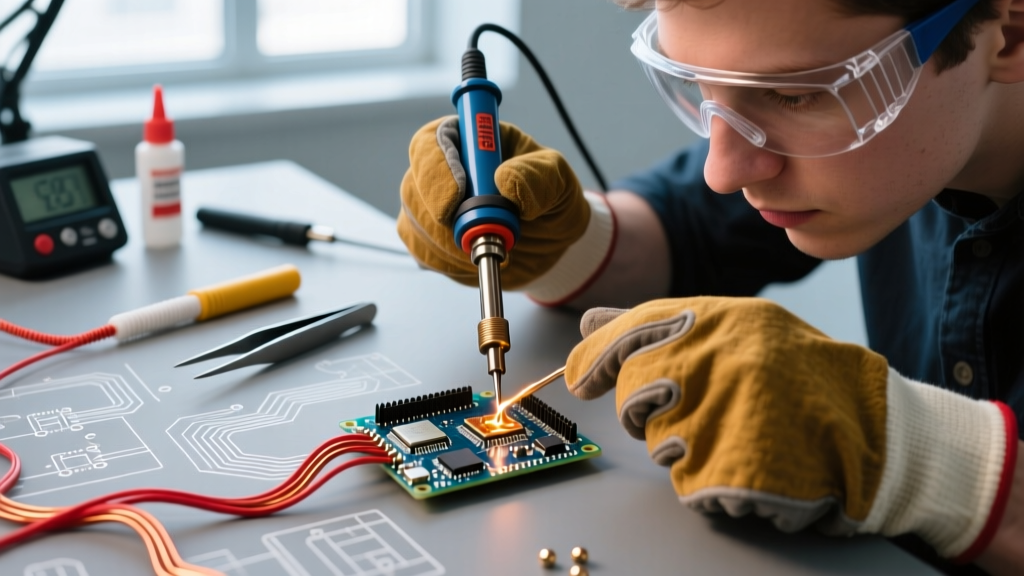
| Eye Protection | ANSI Z87.1 Safety Glasses (Clear/Tinted) | Auto-Darkening Helmet (Shade 9-13, e.g., Lincoln Viking 3350) |
| Respiratory | Half-mask with OV/P100 cartridges (e.g., 3M 6291) | PAPR Hood (Powered Air Purifying Respirator) or Supplied Air |
| Skin / Hand | Heat-resistant silicone finger cots, ESD-safe gloves | Flame-resistant aluminized sleeves, heavy goatskin welding gloves |
| Ventilation | Benchtop HEPA/Carbon Source Capture | Overhead canopy hood, downdraft tables, or cross-draft booths |
Real-World Failure Modes: When Techniques Cross Over
Ignoring the difference between welding and brazing and soldering leads to catastrophic mechanical and safety failures in the field. Here are two common edge cases:
Failure Mode 1: The Solder-Braze Confusion in HVAC
The Scenario: A technician attempts to repair a high-pressure R-410A refrigeration copper line using soft solder (Sn95/Sb5) and a standard propane torch, rather than brazing with a silver-phosphorus alloy (BCuP-5) and an oxy-acetylene setup.
The Result: The soft solder melts at 475°F. Under the 400+ PSI operating pressure and high compressor discharge temperatures of R-410A, the solder joint suffers creep deformation and catastrophic rupture, releasing refrigerant and causing potential frostbite or asphyxiation in confined spaces. Rule: Soft solder is strictly prohibited on high-pressure refrigerant lines.
Failure Mode 2: The Braze-Weld Overheat
The Scenario: An operator uses a brazing torch and BAg-7 silver filler on a thin-walled 4130 chromoly steel bicycle frame, applying too much heat in an attempt to 'melt the joint together' like a weld.
The Result: Because brazing relies on the base metal remaining solid, overheating the chromoly steel past its critical transformation temperature without proper post-weld heat treatment (PWHT) destroys the alloy's crystalline structure. The joint becomes brittle and fails under dynamic load. Rule: If the base metal pools and melts, you are welding, not brazing, and your filler metal chemistry is likely incompatible.
Frequently Asked Questions (FAQ)
Can I use the same respirator for soldering and welding?
No. A 3M half-mask with Organic Vapor/P100 cartridges (like the 6006/2097 combo) is excellent for capturing rosin flux fumes and light brazing particulates. However, welding generates massive volumes of sub-micron metallic oxides and, in some cases, toxic gases like ozone and carbon monoxide that quickly overwhelm cartridge filters. For welding, especially in enclosed spaces or with stainless steel, a PAPR (Powered Air Purifying Respirator) system integrated into your welding hood is the required safety standard.
Why is brazing considered safer than welding for thin metals?
Brazing operates at lower temperatures than welding and does not melt the base metal. This prevents the severe thermal warping, burn-through, and heat-affected zone (HAZ) weakening that occurs when welding thin gauge metals (like 24-gauge sheet metal or thin-wall copper). From a safety perspective, the lower heat input also reduces the risk of severe radiant burns and lowers the volume of toxic base-metal fumes generated.
Is lead-free solder safer than leaded solder?
From an environmental and ingestion standpoint, yes. However, lead-free alloys like SAC305 require higher iron temperatures (often 350°C+ compared to 300°C for Sn63Pb37). These higher temperatures cause rosin-based fluxes to vaporize more aggressively, potentially increasing the volume of asthma-inducing fumes. Therefore, upgrading to lead-free solder must be paired with an upgrade in your fume extraction capabilities.