
The Physics of Failure: Thermal Mass vs. Wattage
Soldering is fundamentally an exercise in thermal management. When your iron soldering wire refuses to melt, balls up on the tip, or fails to flow into a joint, the root cause is almost always a breakdown in heat transfer or chemical activation. Many hobbyists and even seasoned technicians blame the solder alloy itself, but in 90% of cases, the issue lies in the thermal mismatch between the soldering station, the tip geometry, and the copper mass of the printed circuit board (PCB).
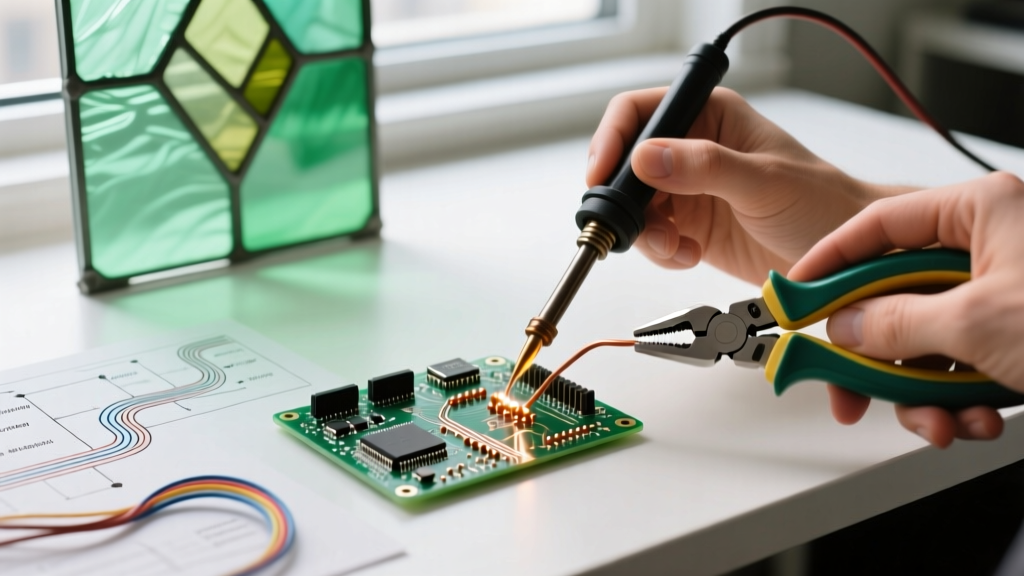
A common scenario involves attempting to use 0.062-inch (1.5mm) diameter wire on a heavy ground plane using a low-wattage iron. The PCB acts as a massive heat sink, pulling thermal energy away from the joint faster than a 15W or 30W iron can replenish it. Consequently, the wire never reaches its liquidus state. Upgrading to a temperature-controlled station like the Hakko FX-888D (65W, typically $115-$130) or the Weller WE1010NA (70W, around $120) provides the necessary thermal recovery rate to keep the tip temperature stable during high-demand applications.
Wire Diameter vs. Thermal Demand Matrix
| Wire Diameter | Primary Use Case | Minimum Iron Wattage | Recommended Tip Style |
|---|---|---|---|
| 0.015" (0.38mm) | 0402/0603 SMD, Micro-soldering | 15W - 30W | Micro Pencil (0.5mm) |
| 0.031" (0.80mm) | Standard Through-Hole, 0805 SMD | 40W - 60W | Chisel (1.6mm - 2.4mm) |
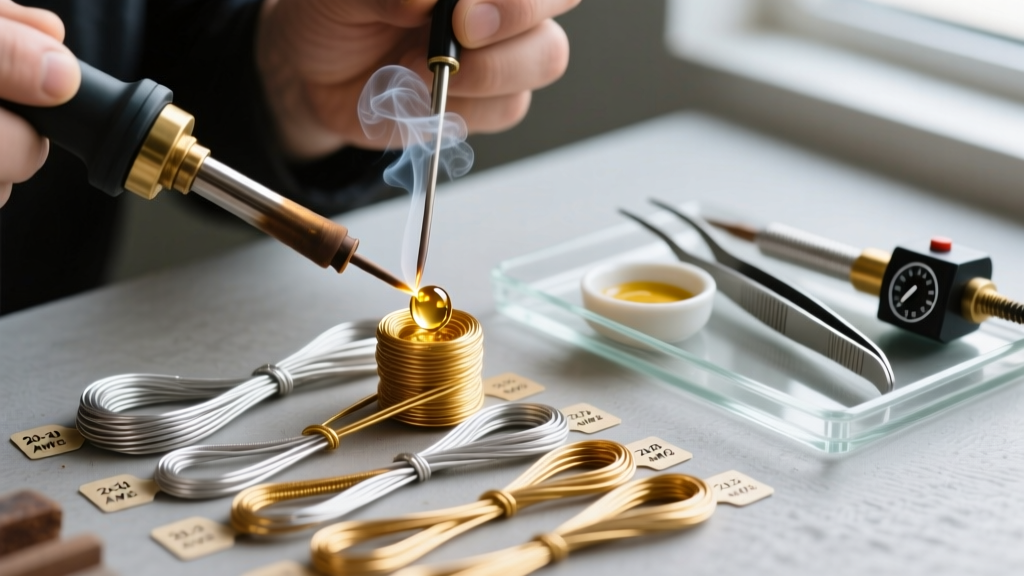
| 0.062" (1.57mm) | Heavy Gauge Wire, Large Ground Planes | 65W - 80W | Wide Chisel / Bevel (3.2mm+) |
| 0.090"+ (2.3mm+) | Stained Glass, Heavy Automotive Lugs | 100W+ (or Iron) | Massive Chisel / Blowtorch |
Alloy Composition and Melting Points
Not all solder wire is created equal. The metallurgical composition of your wire dictates its melting point, wetting characteristics, and required tip temperature. If you are applying lead-free solder with temperature profiles calibrated for leaded solder, the wire will feel gummy and refuse to flow.
- Sn60Pb40 (Leaded Eutectic): Melts at a sharp 183°C (361°F). Eutectic alloys transition instantly from solid to liquid without a plastic (semi-solid) phase, making them incredibly forgiving for beginners. Brands like Kester 44 remain the gold standard for reliability.
- SAC305 (Lead-Free): Composed of 96.5% Tin, 3.0% Silver, and 0.5% Copper. It melts between 217°C and 220°C (422°F - 428°F). SAC305 requires higher tip temperatures and exhibits a grainier, duller finish when cooled. It is highly susceptible to oxidation if the iron is left idle.
- Sn95Sb5 (High-Temperature): Melts at 232°C - 240°C. Used for step-soldering or high-heat environments where standard joints might reflow unintentionally.
Expert Insight: If you are transitioning from leaded to lead-free wire, you must increase your station's set temperature by roughly 40°C to 50°C to compensate for the higher liquidus point and the poorer thermal conductivity of lead-free alloys. However, do not exceed 380°C (715°F), or you will rapidly degrade your tip's iron plating.
Flux Degradation: The Invisible Culprit
Flux is the chemical engine that drives soldering. It removes metal oxides from the copper pad and the wire, allowing the molten alloy to wet the surface. Most rosin-based (RMA) fluxes activate around 150°C and begin to boil off and carbonize rapidly past 250°C.
If your soldering station is set to 400°C (752°F) to compensate for a large ground plane, the flux core inside your iron soldering wire will vaporize instantly upon contact with the tip. Without active flux, the molten solder oxidizes immediately, resulting in dry, crumbly balls that roll off the pad. The fix is not more heat; it is external flux. Applying a high-quality no-clean or rosin gel flux (such as MG Chemicals 8341 or Amtech NC-559) directly to the joint before applying the wire ensures there is enough chemical activator to survive the thermal assault.
Diagnostic Troubleshooting Matrix
Use the following matrix to quickly diagnose and resolve the most common wire feed and flow failures on the workbench.
| Symptom | Root Cause | Exact Fix / Action |
|---|---|---|
| Wire melts but forms spherical balls on the tip | Tip oxidation or flux burn-off preventing wetting. | Cool iron to 250°C. Apply tip tinner (e.g., Hakko 599B). Wipe on brass sponge. Re-tin with fresh Sn60Pb40 wire. |
| Wire bends against the joint without melting | Insufficient thermal mass; joint acting as heat sink. | Switch to a wider chisel tip to increase surface contact area. Apply external liquid flux to aid heat transfer. |
| Solder flows but looks dull, grainy, and brittle | Cold joint or movement during the plastic cooling phase. | Ensure the joint remains completely stationary for 3-5 seconds after removing the iron. Verify iron temp is at least 40°C above alloy liquidus. |
| Wire melts but pulls away from the PCB pad | Pad oxidation, conformal coating residue, or contaminated surface. | Clean pad with 99% Isopropyl Alcohol (IPA). Lightly scour with a fiberglass scratch pen. Apply aggressive RA (Rosin Activated) flux. |
Tip Oxidation and the 'Black Tip' Syndrome
Modern soldering tips are not solid copper; they are copper cores plated with a thin layer of iron to prevent the molten solder from dissolving the copper (a process called leaching). When this iron plating is exposed to high temperatures and atmospheric oxygen, it forms iron oxide—a black, crusty layer that entirely rejects solder. When this happens, your iron soldering wire will simply slide off the tip like water off a hot skillet.
According to the comprehensive soldering guidelines maintained by NASA's Workmanship Standards, maintaining the tinning layer on the iron plating is critical for joint reliability and thermal transfer. Never use abrasive materials like sandpaper, files, or steel wool to clean an oxidized tip, as this will strip the iron plating down to the copper, permanently ruining the tip.
Step-by-Step Tip Recovery Protocol
- Reduce Temperature: Turn your station down to 250°C (482°F). High heat accelerates oxidation; lowering it halts the chemical reaction.
- Chemical Reduction: Dip the oxidized tip into a specialized tip tinner/activator (like the Hakko 599B). The acidic salts in the tinner will chemically strip the oxidation.
- Mechanical Wiping: Immediately plunge the tip into a dry brass wire sponge. Never use a wet cellulose sponge for heavily oxidized tips, as the rapid thermal shock can cause micro-fractures in the iron plating.
- Immediate Re-tinning: The moment the tip is clean, feed a generous amount of thick, flux-cored Sn60Pb40 wire over the entire working surface to create a protective barrier against oxygen.
Industry Standards for Wetting and Flow
Proper flow is not just about aesthetics; it dictates the mechanical and electrical integrity of the joint. The IPC (Association Connecting Electronics Industries) outlines strict criteria for solder wetting in their J-STD-001 standard. A properly flowed joint should exhibit a smooth, concave fillet with a contact angle of less than 90 degrees. If your wire is pooling into a convex dome (a 'blob'), it indicates poor wetting, usually caused by insufficient flux activity, inadequate heat reaching the pad, or surface contamination.
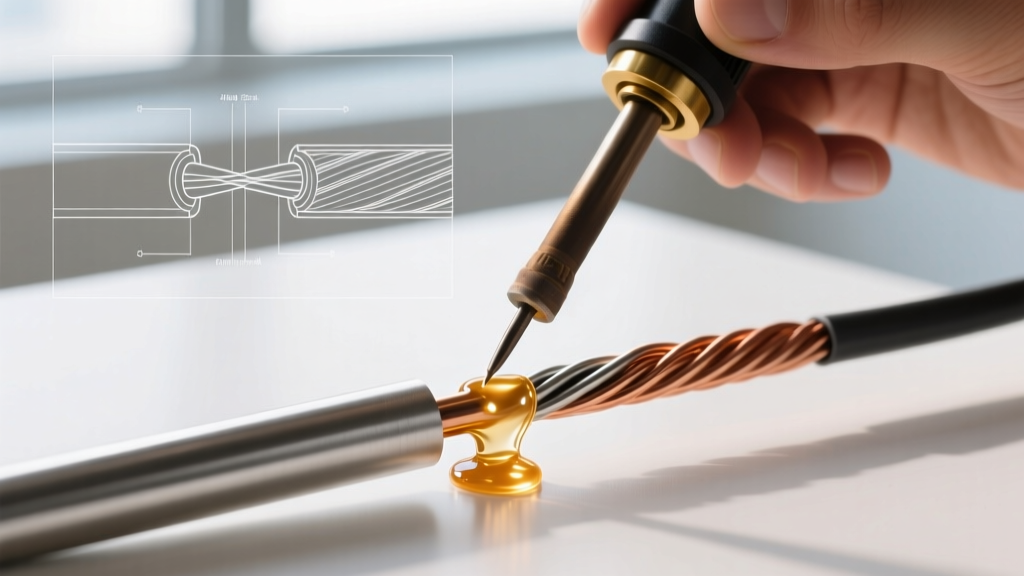
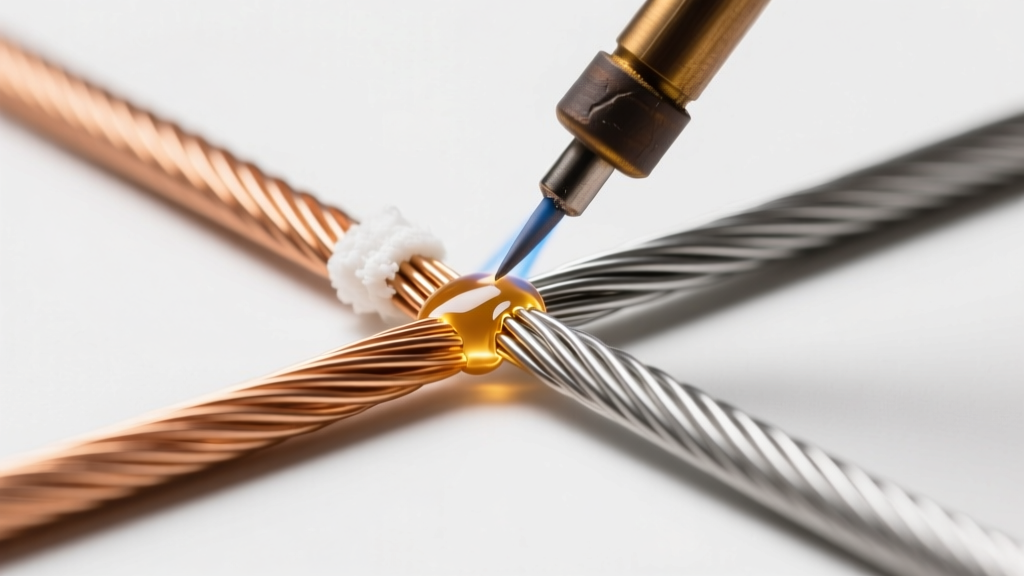
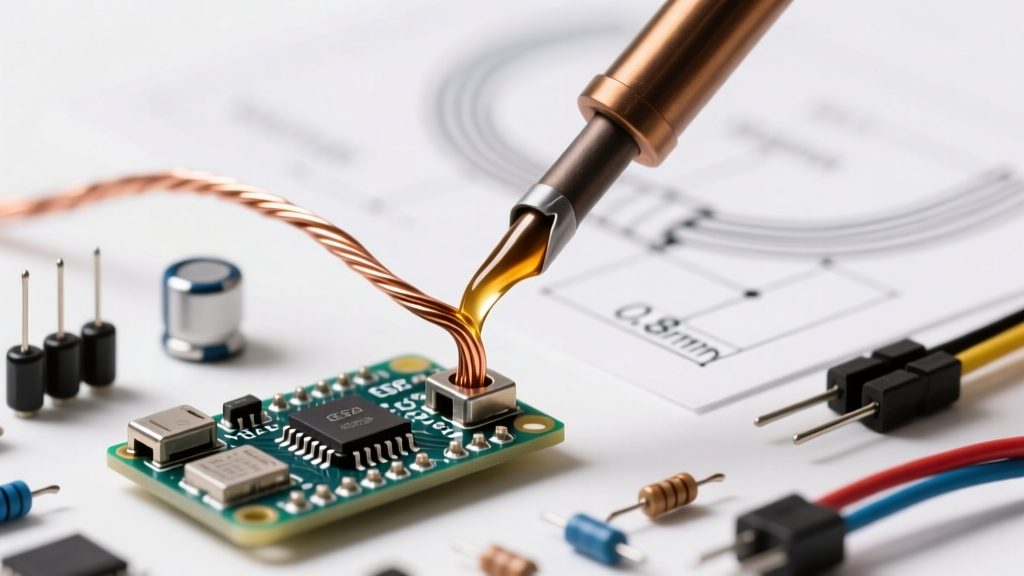
Furthermore, when working with multi-strand copper wire rather than PCB pads, the wire itself must be pre-tinned. Attempting to solder a raw, untinned copper strand directly to a pad often results in the flux being trapped inside the wire bundle, causing long-term corrosion and a mechanically weak joint. Always apply flux to the stripped wire, heat it, and feed the iron soldering wire into the strands until the alloy wicks entirely through the bundle.
FAQ: Iron Soldering Wire Edge Cases
Why does my solder wire spark or pop when it touches the iron?
This is the flux core boiling violently. If the pops are excessive and spitting hot flux onto your skin, your tip temperature is likely set far too high for the specific flux type (e.g., using a water-soluble organic acid flux at 400°C). Lower the temperature to 315°C-330°C and allow the flux to activate smoothly.
Can I use plumbing solder wire for electronics?
Absolutely not. Plumbing solder is typically 95/5 tin-antimony or lead-based acid-core solder. The acid flux used in plumbing is highly corrosive and will rapidly destroy copper traces on a PCB and cause catastrophic short circuits over time. Always use rosin-core (RMA) or no-clean flux specifically formulated for electronics.
How long does a spool of solder wire last before it goes bad?
Solid metal alloys do not expire. However, the flux core can dry out or degrade if exposed to UV light and extreme heat over several years. If your wire is over 5-7 years old and refuses to wet properly despite correct temperatures, the flux has likely crystallized or evaporated. Switch to a fresh spool and use external gel flux to compensate.