
The Core Difference Between Brazing Soldering and Welding
If you are stepping into the world of DIY electronics, metal fabrication, or HVAC repair, you will quickly encounter three distinct metal-joining processes. While they all share the goal of fusing materials together, the difference between brazing soldering and welding comes down to one fundamental rule: Does the base metal melt?
The AWS Threshold Rule: According to the American Welding Society (AWS), the dividing line between soldering and brazing is 450°C (842°F). Below this temperature, it is soldering. Above it, it is brazing. In both processes, the base metal remains solid. In welding, the base metal itself is melted to form the joint.
Understanding this thermal threshold is critical for selecting the right equipment, filler metal, and safety gear for your project. Let us break down each process from a beginner's perspective, complete with specific alloy data and real-world applications.
Soldering: Low Heat, High Precision
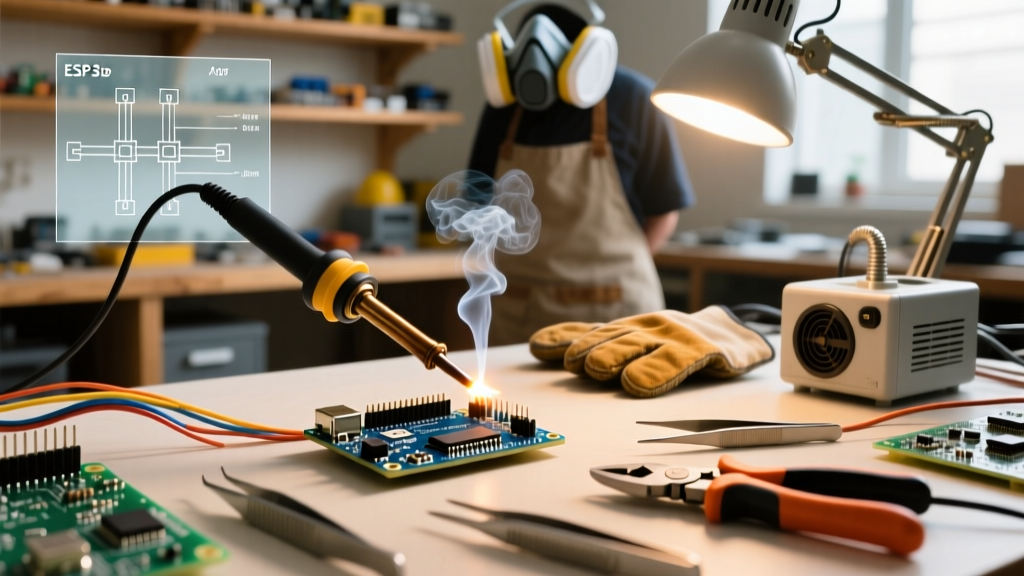
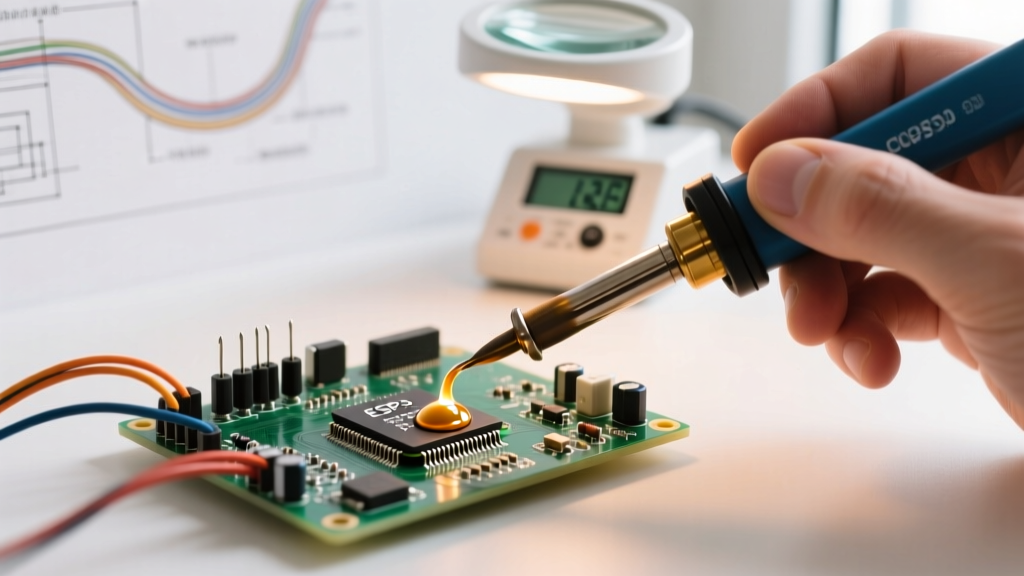
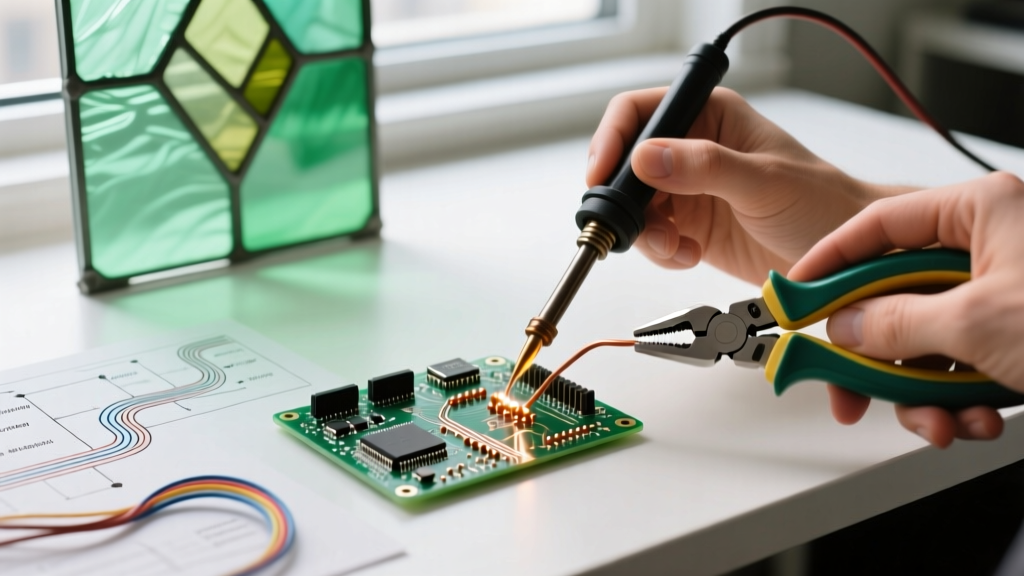
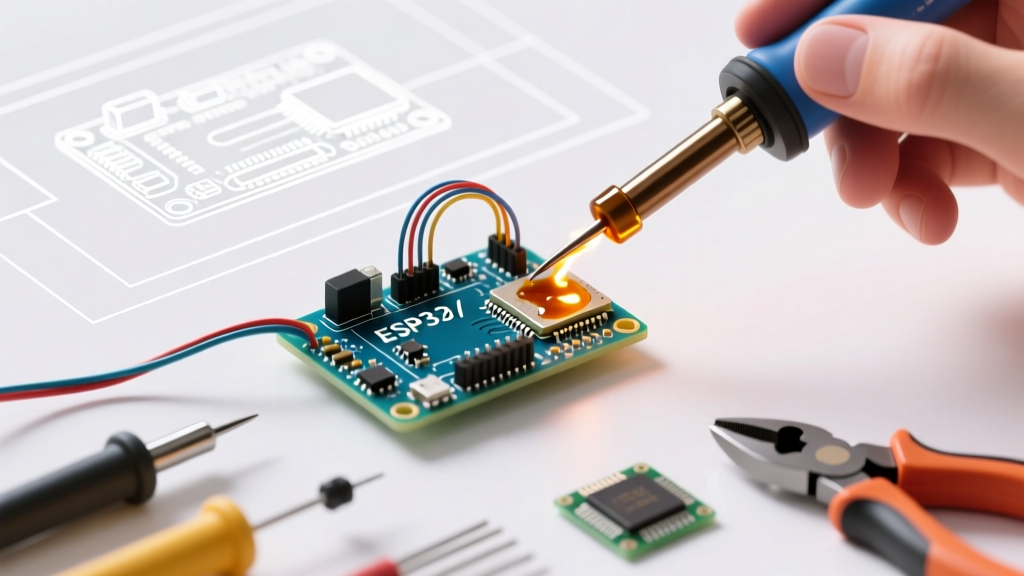
Soldering is the backbone of the electronics industry and a staple for delicate metalwork like stained glass or jewelry. Because the base metal never reaches its melting point, soldering relies on capillary action and metallurgical wetting to bond the filler metal (solder) to the surface.
Temperature Ranges and Alloys
Soldering occurs at temperatures below 450°C (842°F), with most electronics work happening between 217°C and 350°C. As of 2026, the industry standard for lead-free electronics assembly remains SAC305 (96.5% Tin, 3.0% Silver, 0.5% Copper), which has a melting point of 217°C (423°F).
- Soft Soldering (Below 400°C): Used for PCBs, wires, and plumbing (with lead-free tin-copper alloys). Requires a standard soldering iron, like the Hakko FX-888D (approx. $110).
- Flux Chemistry: Soldering requires flux to remove oxidation. For electronics, Rosin Mildly Activated (RMA) or No-Clean fluxes are standard, governed by the IPC J-STD-004 specification. For plumbing, water-soluble or petroleum-based fluxes are mandatory.
Joint Strength and Limitations
Soldered joints are relatively weak in shear and tensile strength (typically 5,000 to 8,000 PSI). They are excellent for electrical conductivity and sealing out moisture, but they will fail under heavy mechanical loads or high-temperature environments.
Brazing: The Heavy-Duty Middle Ground
Brazing bridges the gap between delicate electronics and heavy structural welding. Like soldering, the base metal does not melt. However, because it occurs above 450°C (842°F), brazing creates significantly stronger metallurgical bonds through deep capillary penetration.
Capillary Action and Joint Clearances
The secret to a successful brazed joint is the gap clearance. For optimal capillary draw, the joint gap must be tightly controlled—typically between 0.001 and 0.005 inches at room temperature. If the gap is too wide, the filler metal will not draw through; if it is too tight, flux entrapment can cause joint failure.
Common Filler Metals
- BCuP (Copper-Phosphorus): Melts around 700°C (1292°F). Used extensively in HVAC for copper-to-copper joints. The phosphorus acts as a self-fluxing agent on pure copper, eliminating the need for external chemical flux.
- BAg (Silver Alloys): Often mistakenly called "silver solder," these are actually brazing alloys. A common alloy like BAg-7 (56% Silver) melts at 620°C (1148°F) and is used for joining dissimilar metals like brass to steel or carbide to steel tooling.
Brazed joints routinely achieve shear strengths exceeding 40,000 PSI, making them ideal for bicycle frames, refrigeration lines, and structural plumbing.
Welding: Melting the Base Metal
Welding is a fusion process. The heat source (arc, laser, or gas flame) melts the base metals and usually a filler metal, creating a shared molten pool that solidifies into a single continuous piece of metal.
Metallurgical Fusion and the HAZ
Because the base metal melts, welding requires temperatures that exceed the melting point of the workpiece. For mild steel, this means exceeding 1,370°C (2,500°F). This intense heat creates a Heat-Affected Zone (HAZ) around the weld, where the metal's crystalline structure changes, often requiring post-weld heat treatment to prevent brittleness.
Common Beginner Processes
- MIG (GMAW): Uses a continuously fed wire (e.g., ER70S-6) and shielding gas (75% Argon / 25% CO2). Best for general fabrication and automotive repair. Entry-level 120V welders cost around $500-$700.
- TIG (GTAW): Uses a non-consumable tungsten electrode and separate hand-fed filler rod. Offers the highest precision and is mandatory for aluminum and stainless steel aerospace/food-grade tubing.
For a deeper dive into welding equipment and safety standards, the educational resources at Miller Welds provide excellent foundational guides for beginners.
Comparison Matrix: Soldering vs. Brazing vs. Welding
| Feature | Soldering | Brazing | Welding |
|---|---|---|---|
| Base Metal Melts? | No | No | Yes |
| Operating Temp | < 450°C (842°F) | > 450°C (842°F) | > 1,370°C (2,500°F+) |
| Joint Strength | Low (Electrical/Seal) | High (Mechanical) | Highest (Structural) |
| Primary Heat Source | Soldering Iron, Hot Air | Oxy-Acetylene, MAP-Pro Torch | Electric Arc, Laser, TIG |
| Metallurgical Bond | Surface Wetting | Capillary Diffusion | Fusion / Coalescence |
| Typical Equipment Cost | $50 - $250 | $75 - $400 | $500 - $2,500+ |
Decision Framework: Which Process Should You Use?
When planning a DIY project in 2026, use this quick framework to select your joining method:
- Is the joint carrying electrical current or micro-signals? Use Soldering. Welding or brazing will destroy delicate PCB traces and semiconductor components.
- Are you joining dissimilar metals (e.g., copper to brass) or working on thin-walled tubing? Use Brazing. Welding thin copper or brass usually results in burn-through and porosity.
- Is the joint subject to high impact, heavy structural loads, or extreme fatigue? Use Welding. A properly penetrated TIG or MIG weld will match or exceed the tensile strength of the parent metal.
Common Beginner Mistakes to Avoid
Soldering: The "Cold Joint"
Applying solder to the iron tip and then wiping it onto the pad transfers heat poorly, resulting in a dull, grainy "cold joint" that violates IPC-A-610 acceptability standards. Fix: Heat the pad and the component lead simultaneously for 2-3 seconds, then feed the solder wire directly into the joint, not the iron tip.
Brazing: Flux Inclusions
Overheating the flux causes it to boil and trap gas bubbles inside the capillary joint, leading to catastrophic leaks in HVAC systems. Fix: Use a neutral or slightly carburizing oxy-acetylene flame, and keep the torch moving to distribute heat evenly across the fitting, not just the filler rod.
Welding: Porosity from Contamination
Welding over rust, paint, or oil introduces hydrogen and carbon into the molten pool, causing Swiss-cheese-like porosity. Fix: Always use an angle grinder with a flap disc to clean the base metal down to bright, shiny steel at least 1 inch back from the weld joint.
Frequently Asked Questions
Is "Silver Soldering" actually soldering?
No. In industrial terminology, "silver solder" is a misnomer. Alloys containing significant silver (like BAg series) melt well above 450°C and are technically brazing alloys. True soft solders are primarily tin-based.
Can I braze aluminum?
Yes, but it requires specialized zinc-aluminum or aluminum-silicon filler rods and rigorous mechanical cleaning (stainless steel wire brushing under a solvent) to break through the aluminum oxide layer, which melts at a much higher temperature (2,072°C) than the base aluminum itself.
Do I need shielding gas for brazing?
Generally, no. Brazing relies on chemical fluxes or self-fluxing alloys (like copper-phosphorus) to displace oxygen. However, in high-end aerospace manufacturing, vacuum brazing or argon-atmosphere furnace brazing is used to eliminate the need for chemical fluxes entirely.