
The Anatomy of a Modern Soldering Tip and Why Cleaning Matters
Before dissecting the contents of a professional cleaning soldering tip kit, it is critical to understand the metallurgy of the tool you are maintaining. Modern soldering iron tips are not solid pieces of metal; they are complex, multi-layered engineered components. At the core sits a high-purity copper cylinder chosen for its exceptional thermal conductivity. This copper core is electroplated with a microscopically thin layer of iron (typically 0.1mm to 0.15mm thick) to prevent the molten solder from dissolving the copper. Finally, the working end is pre-tinned with a solder alloy to prevent oxidation during storage.
When you heat a tip to 350°C (662°F), the iron plating is constantly under assault from atmospheric oxygen, forming iron oxide. This black, crusty layer acts as a thermal insulator, drastically reducing heat transfer to your PCB pads and components. A comprehensive cleaning soldering tip kit is designed to strip this oxidation without breaching the fragile iron plating. If the iron layer is compromised, the underlying copper core will dissolve into the solder pool within hours, destroying a $10 to $15 replacement tip. Below, we break down exactly what is included in a high-end tip maintenance kit, the science behind each component, and how to use them without causing catastrophic failure.
Component 1: The Brass Wire Sponge (Dry Mechanical Cleaning)
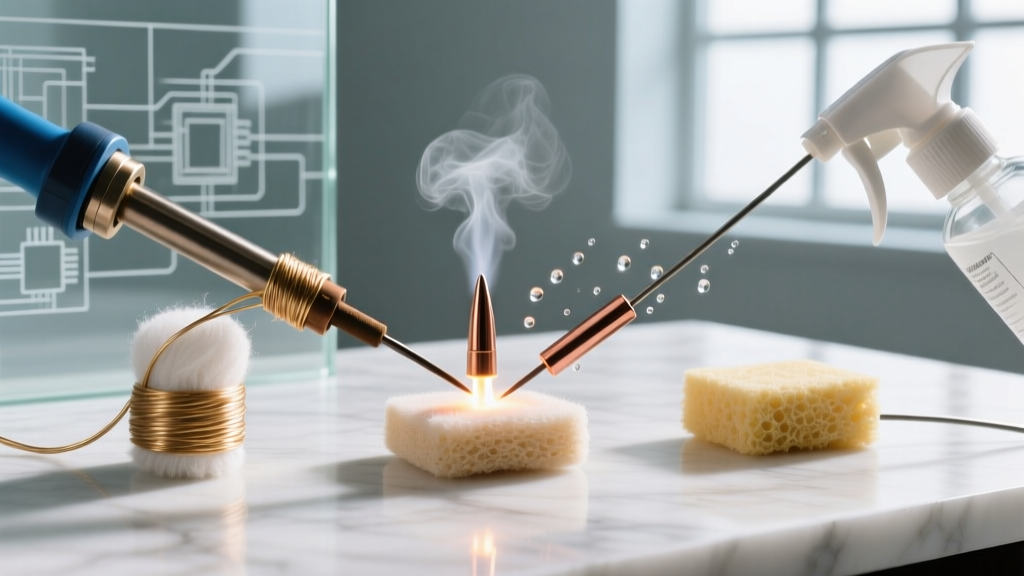
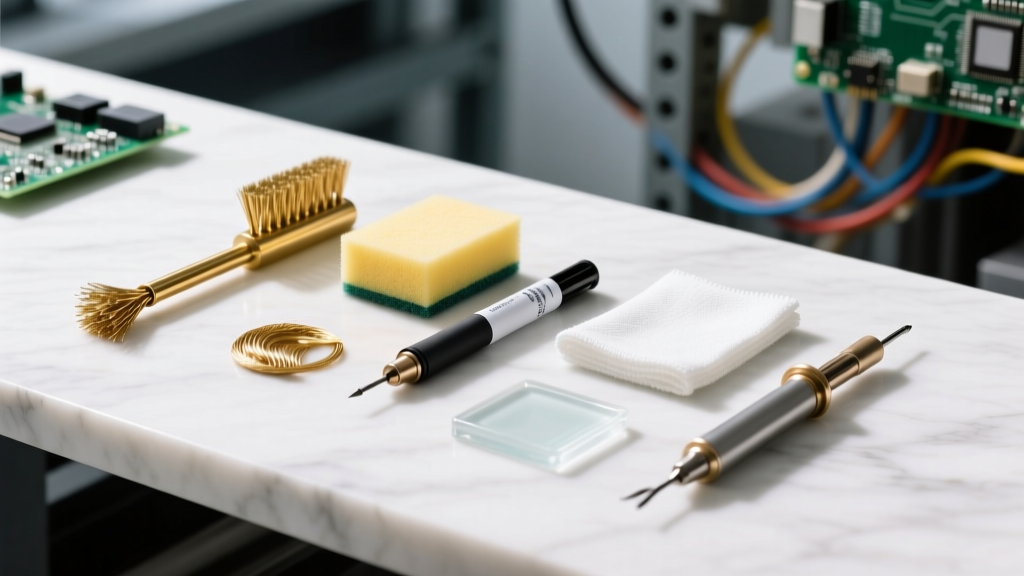
The centerpiece of any premium cleaning soldering tip kit (such as the iconic Hakko 599B or Weller WBC100) is the brass wire sponge. Housed in a heat-resistant metallic or high-temp silicone basin, this coil of shaved brass wire serves as the primary daily maintenance tool.
Why Brass and Not Steel?
Many beginners mistakenly reach for steel wool or wire brushes. This is a fatal error. Steel has a Brinell hardness of roughly 120-200 HB, which is dangerously close to or harder than the electroplated iron layer on your tip. Scrubbing a tip with steel wool will physically scratch and strip the iron plating, exposing the copper core to immediate dissolution. Brass, conversely, has a much lower Brinell hardness (typically 60-90 HB). It is hard enough to scrape away brittle iron oxide and carbonized flux residue, but soft enough that it will yield before scratching the iron plating.
Usage Protocol: Insert the heated tip into the brass coil and twist gently in a figure-eight motion. The brass shavings trap the oxidized solder and flux ash, pulling it away from the tip. Because it is a 'dry' cleaning method, it does not subject the tip to thermal shock, making it the safest daily cleaning method recommended by experts at Weller Tools Knowledge Base.
Component 2: High-Density Cellulose Sponges (Wet Thermal Cleaning)
Almost every soldering station ships with a small, yellow, porous block. This is a high-density cellulose sponge, designed for wet cleaning. While effective at removing bulk solder and heavy flux carbonization, it carries inherent risks if used improperly.
The Danger of Thermal Shock and Mineral Deposits
When a 350°C tip touches a wet sponge, the surface temperature plummets by over 150°C in milliseconds. This rapid contraction can cause micro-fissures in the iron plating. Furthermore, if you use standard tap water, the dissolved minerals (calcium, magnesium) will bake onto the hot tip, creating hard water spots that degrade thermal transfer and promote localized pitting.
- Hydration Rule: Always use distilled or deionized water. Never use tap water.
- Saturation Level: The sponge should be damp, not dripping. A good test is to squeeze it firmly; if water drips out, it is too wet and will cause severe thermal shock. Aim for roughly 40% moisture saturation.
- Wiping Technique: Wipe the tip across the surface in a single, fluid motion. Do not bury or hold the tip in the sponge.
Component 3: Tip Tinner and Activator Paste (Chemical Restoration)
When mechanical cleaning fails and the tip turns a stubborn, matte black, you need chemical intervention. A proper cleaning soldering tip kit includes a small tin of tip tinner/polisher (such as MG Chemicals 8341 or Amtech Tip Tinner), typically costing between $9 and $14 in 2026.
The Chemistry of Tip Tinning
Tip tinner is not just raw solder. It is a highly engineered paste composed of three distinct elements: 1) Solder powder (usually Sn63/Pb37 or lead-free SAC305), 2) Rosin (to provide a protective barrier against oxygen), and 3) Mild organic acid activators. The activators are specifically formulated to chemically reduce iron oxide back into raw iron at soldering temperatures, while the solder powder immediately wets the newly exposed metal.
Warning: Never use liquid plumbing flux or highly acidic paste flux to clean a tip. The aggressive hydrochloric or zinc chloride activators in plumbing fluxes will eat through the iron plating and destroy the tip permanently.
Usage Protocol: Set your station to a lower temperature (around 250°C - 280°C). Dip the blackened tip directly into the tinner paste for 2 to 3 seconds. You will see it bubble and smoke as the activators strip the oxidation. Remove the tip and immediately wipe it on your brass sponge to reveal a perfectly shiny, tinned surface. For a deeper understanding of chemical tip restoration, refer to Adafruit's Guide to Excellent Soldering.
Component 4: Abrasive Polishing Bars (The Last Resort)
Some heavy-duty kits include a specialized polishing bar (like the Weller WPB1). This is a fiberglass or ultra-fine abrasive stick designed to physically sand away heavy corrosion. This component is highly controversial and should be used with extreme caution.
Using an abrasive bar on a standard iron-plated tip will instantly sand through the 0.1mm iron layer, ruining the tool. Polishing bars are strictly intended for two scenarios: 1) Restoring solid copper tips (which lack iron plating and are common in high-power, heavy-duty grounding applications), or 2) Salvaging a completely dead, heavily pitted iron-plated tip that is already destined for the trash. If you are working with standard PCB electronics and plated tips, leave the polishing bar out of your daily workflow.
Component Matrix: What to Use and When
| Kit Component | Primary Function | Risk to Iron Plating | Avg Cost (2026) | Frequency of Use |
|---|---|---|---|---|
| Brass Wire Sponge | Dry mechanical oxide removal | Very Low | $12 - $18 | After every joint / Daily |
| Cellulose Sponge | Wet bulk solder removal | Moderate (Thermal Shock) | $2 - $5 | As needed for heavy buildup |
| Tip Tinner Paste | Chemical reduction of black oxide | Low (If used correctly) | $9 - $14 | Weekly or when tip turns black |
| Abrasive Polishing Bar | Heavy mechanical sanding | Extreme (Destructive) | $6 - $10 | Emergency salvage only |
| Tip Cleaning Drill Bit | Clearing clogged hot-air nozzles | N/A (For nozzles only) | $8 - $12 | Monthly maintenance |
Step-by-Step Tip Restoration Workflow
If you have inherited a neglected soldering station or left your iron on overnight, the tip will likely be coated in a thick, black crust of burned flux and iron oxide. Do not throw the tip away. Follow this exact restoration sequence using your cleaning soldering tip kit:
- Pre-Heat and Flux: Turn the station on to 300°C. Apply a generous amount of standard rosin-core solder wire to the tip. Even if it balls up and rolls off, the fresh flux will begin softening the carbonized crust.
- Brass Sponge Agitation: While the tip is hot, plunge it into the brass wire sponge and twist vigorously. The combination of the fresh flux and the brass shavings will lift the majority of the carbon buildup.
- Chemical Stripping: Drop the temperature to 260°C. Dip the tip into the tip tinner paste for 3 seconds. The organic acids will chemically reduce the remaining black iron oxide.
- Final Wipe and Re-Tin: Wipe the tip lightly on a damp (distilled water) cellulose sponge to remove the acidic residue, then immediately apply a thick coat of fresh, high-quality solder (preferably 63/37 leaded for storage, as it has a lower melting point and better wetting properties).
- Storage: Turn off the station. The thick blob of solder on the tip will act as a sacrificial anode, oxidizing in place of the iron plating while the tool sits on your bench.
Summary: Protecting Your Investment
A high-quality soldering tip from brands like Hakko, Weller, or JBC can cost anywhere from $12 to over $60 for specialized micro-tips. A comprehensive cleaning soldering tip kit costs roughly $35 to $45 upfront, but it will extend the lifespan of your tips by 300% to 500%. By understanding the specific metallurgical purpose of the brass wire, the thermal risks of the cellulose sponge, and the chemical power of the tip tinner, you transition from simply 'wiping a hot piece of metal' to executing precision tool maintenance. Always prioritize the brass sponge and chemical tinner over abrasive force, and your tips will deliver flawless thermal transfer for years to come.