
Why Soldering Tip Tinning Tools Make the Perfect Maker Gift
Ask any seasoned electronics engineer or DIY maker what their most frustrating workshop expense is, and they will likely point to a drawer full of ruined, oxidized soldering iron tips. In 2026, with the price of premium lead-free soldering stations like the Weller WE1010NA and Hakko FX-951 hovering between $120 and $350, the cost of replacing degraded tips adds up quickly. A single high-quality replacement tip can cost $10 to $15, and a heavy user might burn through dozens a year if they neglect proper maintenance.
This is where the art and science of soldering tip tinning comes in. Tinning—the process of coating the iron-plated copper core of a soldering tip with a fresh layer of solder and flux—prevents oxidation, ensures optimal thermal transfer, and extends tip life by up to 400%. For the upcoming holiday season or birthday milestones, gifting a curated selection of tip tinning compounds, premium flux-cored wires, and mechanical cleaners is a highly practical, deeply appreciated gesture for any electronics enthusiast. Here is our definitive 2026 gift guide to the best soldering tip tinning accessories, categorized by the type of maker you are shopping for.
The Metallurgy of Tip Degradation: Why Tinning is Non-Negotiable
To buy the right gift, it helps to understand the failure mode of a soldering tip. Modern tips are not solid copper; they feature a copper core for rapid heat transfer, plated with a microscopically thin layer of iron (typically 0.003 to 0.008 inches thick) to resist solder erosion. When exposed to ambient air at operating temperatures (315°C to 380°C), this iron plating oxidizes almost instantly, forming a black, crusty layer of iron oxide that refuses to accept molten solder. This is known in the industry as 'Black Tip Syndrome.'
According to Hakko's official tip care guidelines, leaving a tip bare and un-tinned while resting in a holder accelerates this oxidation exponentially. Tinning creates an airtight metallic seal over the iron plating, sacrificing the outer layer of solder to oxidation so the underlying tip remains pristine. Furthermore, adherence to IPC J-STD-001 standards for soldered electrical assemblies mandates strict tip maintenance to prevent cold joints and thermal damage to sensitive SMD components.
Tier 1: Tip Tinner Compounds & Pastes (For the Frustrated Tinkerer)
Tip tinner compounds are aggressive, flux-heavy pastes designed to chemically strip oxidation and re-tin a degraded tip in seconds. They are the ultimate 'save the day' gift for a maker who frequently forgets to tin their iron before powering it down.
1. Hakko B3358 Tip Refresher (Lead-Free Paste)
Price: ~$18.50 | Best For: Users of lead-free SAC305 solder.
The Hakko B3358 is a staple in professional assembly houses. It contains a highly active rosin-based flux suspended in a matrix of fine lead-free solder powder.
How to use it: The recipient simply dabs the hot tip (set to 350°C) into the paste for 3 to 5 seconds. The flux boils, stripping the iron oxide, while the solder powder melts and alloys with the iron plating. A quick wipe on a brass sponge leaves a mirror-finish tinned tip.
2. MG Chemicals 8341 No-Clean Solder Paste
Price: ~$24.00 (10g syringe) | Best For: Precision SMD rework and low-residue environments.
While technically a reflow paste, MG Chemicals 8341 is a favorite among advanced hobbyists for manual tip tinning because of its REL0 (rosin, low-solids, no-clean) flux classification. It leaves virtually zero corrosive residue, making it a safe gift for those working on sensitive RF circuits or audio boards where flux contamination can alter impedance or introduce noise.
Tier 2: Premium Solder Wires for Manual Tinning (For the Audio & Precision Nerd)
For the purist who prefers manual tinning using standard solder wire, the gift of premium, high-flux wire is a game-changer. Cheap, no-name Amazon solder lacks the internal flux cores required to maintain a tip during the tinning process.
3. Kester 245 63/37 Eutectic Wire (.031' Diameter)
Price: ~$38.00 per 1lb spool | Best For: Audiophiles, vintage synth restorers, and general DIYers.
Kester's 245 flux-cored wire is widely considered the gold standard in electronics manufacturing. The 63/37 (Tin/Lead) eutectic alloy melts at a precise 183°C, eliminating the plastic phase found in lead-free alternatives. The '245' designation refers to its highly active, yet safe, rosin-based flux core. Gifting a 1lb spool of .031' Kester 245 ensures the maker has the perfect medium for both delicate SMD tinning and heavier through-hole work. The high flux volume actively cleans the tip during every manual tinning swipe.
4. Multicore Crystal 505 Lead-Free Wire
Price: ~$45.00 per 1lb spool | Best For: Commercial prototypers and RoHS-compliant environments.
If the recipient works in a commercial or educational setting where lead is strictly banned, Multicore Crystal 505 (Sn95.5/Ag3.8/Cu0.7) is the premium choice. It requires higher iron temperatures (360°C+), making a high-quality, flux-rich wire essential to prevent the tip from burning out during the tinning process.
Tier 3: Mechanical Tip Cleaners & Prep Tools (The Perfect Stocking Stuffers)
You cannot properly tin a tip if it is caked in carbonized flux residue. Mechanical cleaners are the necessary precursor to chemical tinning. These make excellent, budget-friendly stocking stuffers (all under $15).
- Hakko 599B 'Tip Cleaner' Brass Sponge (~$12.50): Unlike traditional cellulose sponges that require water and cause severe thermal shock (micro-fracturing the iron plating when a 350°C tip touches cold water), the 599B uses coiled brass shavings. It scrapes away oxidation without dropping the tip's core temperature, preserving the structural integrity of the iron layer.
- Edsyn WS100 Silicone Sponge (~$9.00): A modern alternative to cellulose. This high-temperature silicone sponge requires zero water. The user simply wipes the tip across the dry silicone matrix, which grabs carbonized flux and loose solder dross, prepping the tip perfectly for a fresh coat of tinning solder.
- Chemtronics Soder-Wick Rosin Flux Braid (~$8.00): While primarily for desoldering, high-quality copper wick is invaluable for pulling heavily oxidized, burnt solder off a neglected tip before applying a tinner compound.
Comparison Matrix: Tinning Methods & Gift Suitability
| Tinning Method | Best Use Case | Operating Temp | Gift Profile | Est. Cost |
|---|---|---|---|---|
| Tip Tinner Paste (e.g., Hakko B3358) | Rescuing oxidized 'Black Tips' | 350°C - 380°C | The forgetful hobbyist | $15 - $20 |
| Eutectic Wire (e.g., Kester 245) | Daily manual tinning & precision work | 315°C - 330°C | The audio/vintage purist | $35 - $45 |
| No-Clean Paste (e.g., MG 8341) | SMD rework & sensitive RF boards | 250°C - 300°C | The micro-soldering pro | $20 - $25 |
| Brass Wool (e.g., Hakko 599B) | Pre-tinning mechanical cleaning | Ambient (Prevents thermal shock) | Stocking stuffer / Add-on | $10 - $15 |
Bonus Guide: How to Rescue a 'Black Tip' (Include This in Your Gift Card!)
If you are gifting a tip tinning kit to a beginner, they will inevitably face 'Black Tip Syndrome.' Print out this quick rescue protocol and include it in the gift box to showcase your domain expertise:
- Do NOT use sandpaper or a file. Abrasives will instantly destroy the microscopic iron plating, exposing the copper core to rapid dissolution. The tip will be permanently ruined.
- Lower the temperature. Drop the station to 250°C. High heat bakes flux into a hard, glass-like carbon shell.
- Apply Tip Tinner Compound. Plunge the tip into a Hakko B3358 or similar paste. Rotate slowly for 5 seconds. The active rosin flux will chemically reduce the iron oxide.
- Wipe and Re-tin. Wipe the tip firmly in a dry brass sponge (Hakko 599B) to remove the sloughed-off oxide and excess flux.
- Seal the Tip. Immediately apply a generous blob of fresh Kester 245 solder to the working faces of the tip before returning it to the holder.
Building the Ultimate 2026 'Tip Saver' Gift Basket
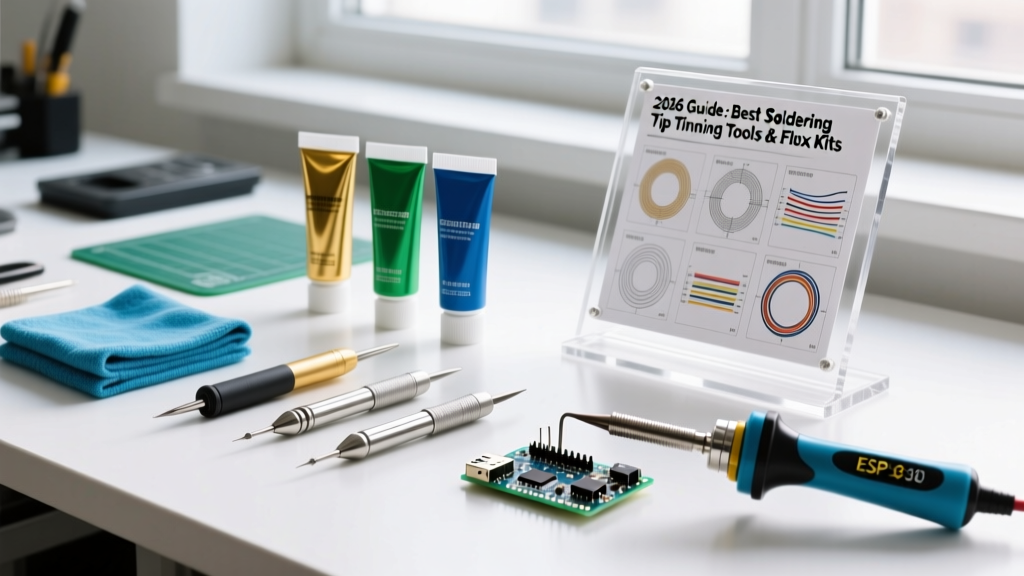
For the ultimate presentation, skip the single-item gift and build a comprehensive 'Tip Saver' maintenance basket. Here is a highly specific, $65 bundle that covers every angle of soldering tip tinning and maintenance:
- 1x Hakko 599B Brass Sponge ($12.50) - For thermal-shock-free wiping.
- 1x Hakko B3358 Tip Refresher Paste ($18.50) - For chemical oxide reduction.
- 1x Spool of Kester 245 63/37 .031' Wire, 4oz ($14.00) - For daily manual tinning and high-quality joints.
- 1x Edsyn WS100 Dry Silicone Sponge ($9.00) - For quick, waterless flux removal.
- 1x Fiberglass Scratch Pen (~$6.00) - Warning: Only for extreme emergencies where chemical tinning fails and the iron plating is already compromised.
Package these items in a small, anti-static ESD-safe bag or a metal tin. By gifting the tools for proper soldering tip tinning, you are not just giving a consumable; you are giving the gift of flawless thermal transfer, perfect solder joints, and hundreds of dollars in saved equipment costs over the lifespan of their soldering station.