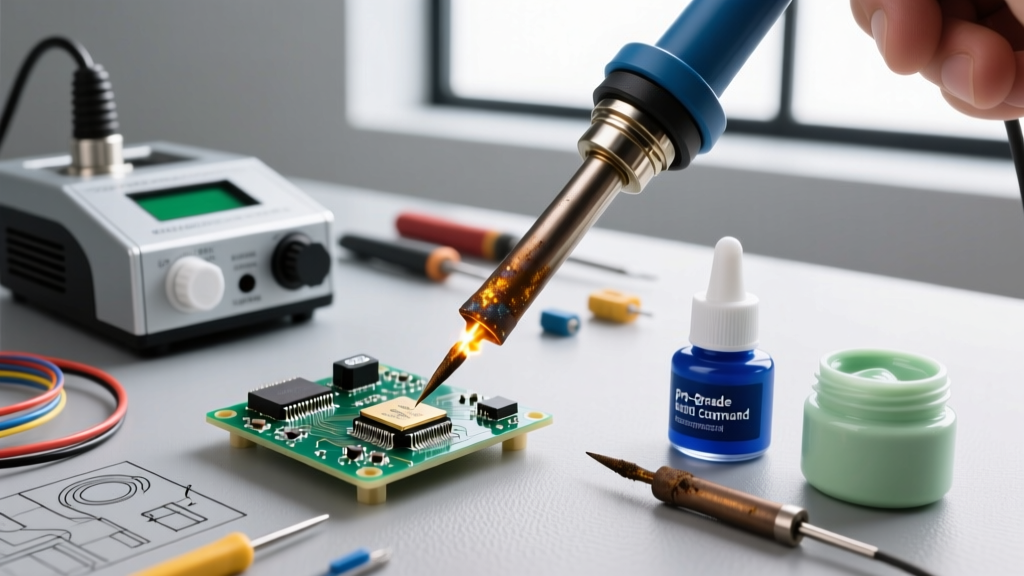

The Chemistry of Tip Oxidation: Why Iron Plating Fails
Every soldering iron tip, from a $15 hobbyist pencil to a $300 JBC cartridge, shares a common vulnerability: oxidation. Modern soldering tips are not solid copper. They consist of a high-conductivity copper core electroplated with a thin layer of iron (typically 100 to 200 micrometers thick) to prevent the solder from dissolving the copper. When this iron plating is exposed to air at high temperatures, it rapidly forms iron oxide (Fe2O3). This black, crusty layer acts as a thermal insulator, destroying heat transfer and preventing solder wetting.
In the context of IPC J-STD-001 standards for soldered electrical assemblies, proper tip wetting is non-negotiable for achieving reliable metallurgical bonds. This is where a soldering tip activator becomes critical. Unlike mechanical cleaners that merely scrape the surface, chemical activators use a precise blend of aggressive fluxes and solder alloys to chemically strip the oxide layer and instantly re-tin the iron plating. However, the quality of these activators varies wildly between hobbyist and professional kits.
Expert Insight: Running a soldering station above 380°C (716°F) accelerates iron oxidation exponentially. If you are constantly reaching for your tip activator, your idle temperature is likely too high.
Hobbyist Kits: The Limits of Basic Tinner and Mechanical Scrapers
When beginners purchase an entry-level soldering kit (typically priced between $30 and $60), the included 'tip cleaner' is rarely a true chemical activator. Instead, hobbyist kits usually rely on two inferior methods:
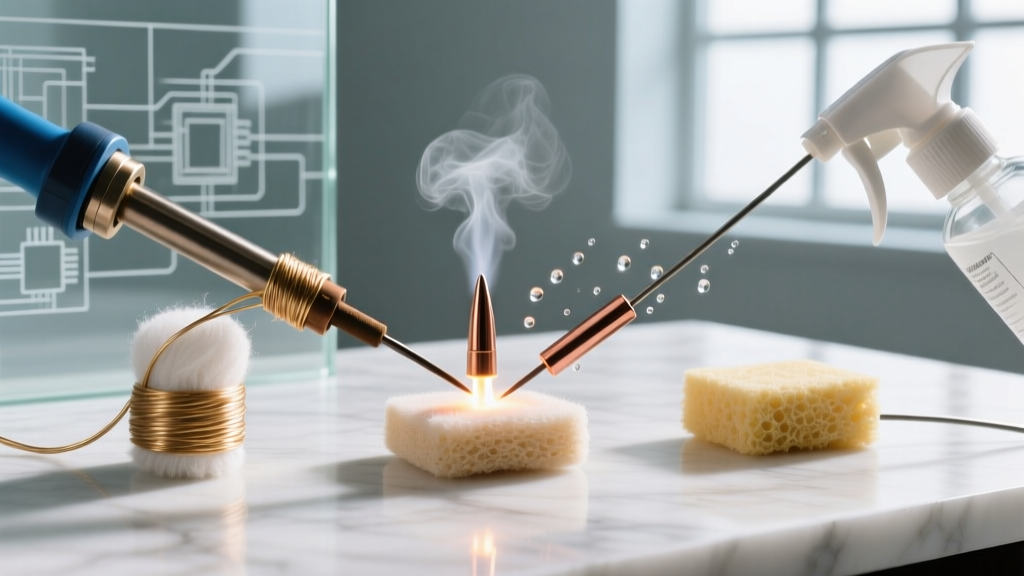
- Wet Cellulose Sponges: Dousing a 350°C tip in a wet sponge causes immediate thermal shock. This rapid contraction creates micro-fractures in the iron plating, eventually exposing the copper core to molten solder, which destroys the tip from the inside out.
- Brass Wire Sponges (e.g., generic clones of the Hakko 599B): While excellent for removing excess solder without dropping the tip temperature, brass shavings cannot remove heavy black oxidation. They only polish the surface.
- Generic 'Tip Tinner' Cakes: The small silver tins included in cheap kits are often just low-grade rosin flux mixed with 60/40 (tin/lead) solder dust. They lack the chemical abrasives required to cut through severe oxidation and often leave a sticky, carbonized residue that bakes onto the tip at high temperatures.
For occasional DIY wiring or basic through-hole Arduino projects, a brass sponge and fresh 63/37 solder are usually sufficient. But when a hobbyist tip turns completely black and refuses to melt solder, these basic kit inclusions will fail to restore it.
Professional Kits: Advanced Soldering Tip Activator Formulations
Professional electronics manufacturing and high-volume rework stations demand zero downtime. When a production tip oxidizes, technicians use specialized chemical soldering tip activator compounds, such as the Weller WDC2, Edsyn TC-1, or Amtech Tip Tinner. These compounds typically cost between $18 and $35 for a 50g container—a steep premium over hobbyist alternatives, but vastly cheaper than replacing $40 to $90 OEM tips.
What Makes Pro Activators Different?
Professional activators are complex metallurgical pastes. They contain three critical components:
- Phosphoric Acid or Ammonium Salt Fluxes: These mild chemical abrasives are specifically formulated to dissolve iron oxide at lower temperatures (around 250°C to 280°C) without etching or pitting the underlying iron plating.
- SAC305 or Sn63/Pb37 Powder: High-purity, microscopic spheres of solder alloy are suspended in the flux. As the flux strips the oxide, the solder powder instantly melts and wets the newly exposed iron, preventing flash-oxidation.
- Thermal Buffers: Pro compounds are engineered to absorb heat gradually, preventing the thermal shock associated with wet sponges.
Comparison Matrix: Hobbyist vs Professional Activators
| Feature | Hobbyist Kit 'Tinner' | Professional Soldering Tip Activator |
|---|---|---|
| Primary Chemistry | Mild Rosin (RMA) + Solder Dust | Ammonium Salts / Mild Acid + Solder Powder |
| Alloy Composition | Sn60/Pb40 (often impure) | SAC305 (Lead-Free) or High-Purity Sn63/Pb37 |
| Oxide Removal Power | Low (fails on heavy black crust) | High (strips severe oxidation in seconds) |
| Residue Left Behind | Heavy, sticky carbon buildup | Minimal, easily wiped on dry brass |
| Average Cost (2026) | $3.00 - $8.00 (20g) | $18.00 - $35.00 (50g) |
| Best Use Case | Light maintenance, preventing dry-out | Rescuing dead tips, production line maintenance |
Step-by-Step: Restoring a Severely Oxidized Tip
If your iron tip is coated in a thick, black, non-wetting crust, do not attempt to scrape it with sandpaper or a file—this will instantly destroy the iron plating and ruin the tip. Instead, follow this professional restoration protocol using a high-quality soldering tip activator.
- Drop the Temperature: Turn your soldering station down to 250°C (482°F) for leaded solder activators, or 280°C (536°F) for lead-free SAC305 activators. High heat will instantly burn the flux in the activator, rendering it useless.
- The Plunge and Roll: Plunge the blackened tip directly into the activator compound. Hold it there for 3 to 5 seconds. You will see a violent boil and smoke—this is the flux reacting with the iron oxide. Gently roll the tip in a circular motion to ensure all sides are coated.
- The Wipe: Remove the tip and immediately wipe it on a dry brass wire sponge. The black crust and spent flux will slough off, revealing a shiny, silver-tinned surface.
- Apply Sacrificial Solder: The alloy inside the activator is meant for cleaning, not for making electrical joints. Immediately apply a thick coat of your standard, high-quality workspace solder (e.g., Kester 245 or Alpha Metals) to the tip before returning it to the holder.
- Repeat if Necessary: For heavily neglected tips, you may need to repeat steps 2 through 4 two or three times to fully penetrate the oxide layers.
Edge Case: When to Abandon the Activator
A chemical soldering tip activator is a restorative treatment, not a miracle cure. It can only fix oxidation on intact iron plating. You must discard the tip if you observe any of the following fatal failure modes:
- Pitting and Cratering: If the tip surface feels rough or has microscopic craters, the iron plating has been breached. Solder will dissolve the copper core, creating a concave hollow.
- Copper Bleed: If you see a distinct reddish/copper color showing through the silver tinning, the iron layer is gone. No activator can fix this.
- Deformed Geometry: If the chisel or conical tip has physically warped or bent, the internal copper core has been compromised by excessive mechanical pressure.
As outlined in the Hakko official tip care guidelines, attempting to use an activator on a pitted tip will only result in contaminated solder joints and poor thermal transfer. In these cases, immediate replacement of the cartridge or tip is the only IPC-compliant solution.
Frequently Asked Questions
Can I use plumbing flux (acid paste) as a soldering tip activator?
Never. Plumbing fluxes contain highly concentrated hydrochloric or zinc chloride acids. While they will strip oxidation, they will aggressively eat through the iron plating in seconds, permanently destroying the tip and leaving corrosive residues that will ruin your circuit boards.
How often should I use a tip activator?
A professional soldering tip activator should be an emergency rescue tool, not a daily maintenance step. If you properly tin your tip with fresh solder before placing it in the holder, and use a dry brass sponge during work, you should only need the chemical activator once every few months when accidental dry-outs occur.
Do lead-free activators work on leaded tips?
Yes, but with a caveat. Lead-free activators (containing SAC305) require higher activation temperatures (around 280°C+). If you are strictly working with 63/37 leaded solder, purchasing a dedicated leaded tip tinner will yield faster, lower-temperature oxide removal with less thermal stress on your heating element.