
The Metallurgy of the Iron Cladding: Why Tinning Matters
At its core, tinning a soldering tip is not merely about preparing for the next joint; it is a critical metallurgical defense mechanism. Modern soldering tips are not solid copper. They consist of a high-thermal-conductivity copper core plated with a microscopic layer of iron (typically 50 to 100 microns thick) to prevent the copper from dissolving into molten solder. Above the iron sits a thin chromium or nickel barrier, and finally, the working face is pre-tinned with solder.
When that protective layer of solder is wiped away and exposed to ambient oxygen at high temperatures, the iron cladding oxidizes almost instantly. Once iron oxide forms, solder will not wet the surface, resulting in a 'dead' tip. However, the methodology for tinning a soldering tip varies drastically depending on whether you are wielding a $30 hobbyist smart-iron or a $500 professional active-tip station. Understanding these differences is the key to maximizing tip longevity and joint quality.
Hobbyist Kits: Overcoming Thermal Lag and Oxidation
The hobbyist and prosumer market in 2026 is dominated by highly capable, budget-friendly stations like the Pinecil V2 ($26), the classic Hakko FX-888D ($110), and various Weller clones. These kits generally rely on passive ceramic heating elements where the thermocouple and heater are separated from the tip by an air gap or mechanical sleeve.
The Thermal Lag Problem
Because hobbyist kits suffer from thermal lag, users frequently compensate for poor heat transfer by cranking the temperature dial to 380°C or even 400°C. This is catastrophic for tip life. Standard rosin-based flux (ROL0) begins to burn and carbonize at around 350°C, leaving a black, insulating crust on the tip. Furthermore, operating at 400°C accelerates iron oxidation by a factor of four compared to 320°C.
The Hobbyist Tinning Protocol
When tinning a soldering tip on a passive hobbyist station, you must manage the thermal mass manually:
- Pre-Tin Before Wiping: Never wipe the tip and leave it bare. Apply a thick bead of 63/37 (Sn63Pb37) eutectic solder to the working face immediately before making your joint.
- The Sacrificial Blob: After completing the joint, wipe the tip on your cleaning medium, and instantly apply a fresh, generous blob of solder. This sacrificial layer will oxidize instead of the iron plating while the iron sits idle in the holder.
- Temperature Discipline: Force yourself to keep the station between 315°C and 330°C for standard 0.8mm to 1.2mm pitch through-hole and SMD work. If the solder isn't flowing, you need a wider tip (like a Hakko T18-D24 chisel), not a higher temperature.
Professional Stations: Active Tip Technology and Precision
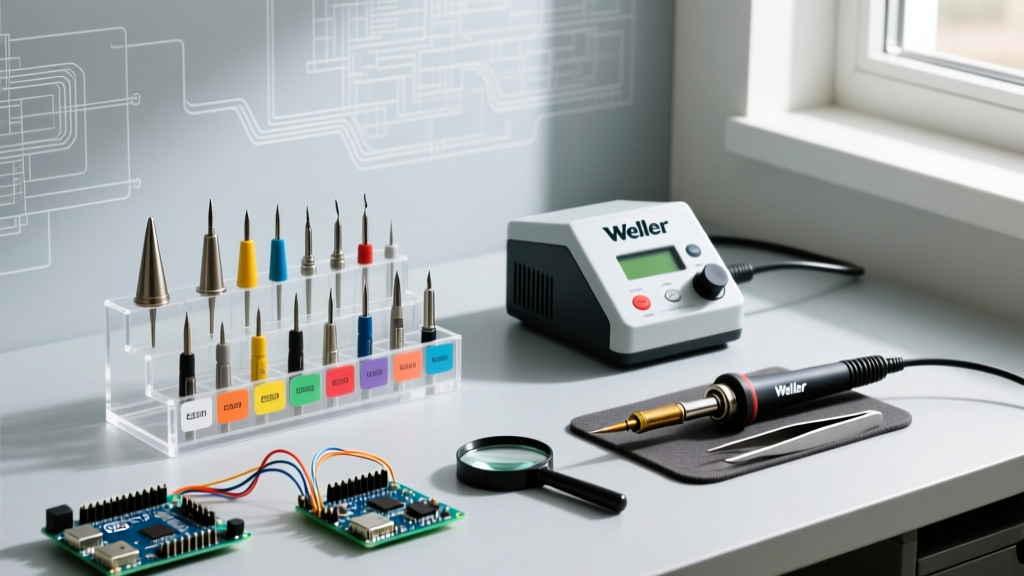
Professional environments rely on active-tip cartridge systems, most notably the JBC CD-2BQE ($450) or the Weller WXMP ($600+). In these systems, the heating element and thermocouple are integrated directly into the tip cartridge (e.g., JBC C245 series). This yields thermal recovery times of under two seconds.
The Professional Tinning Protocol
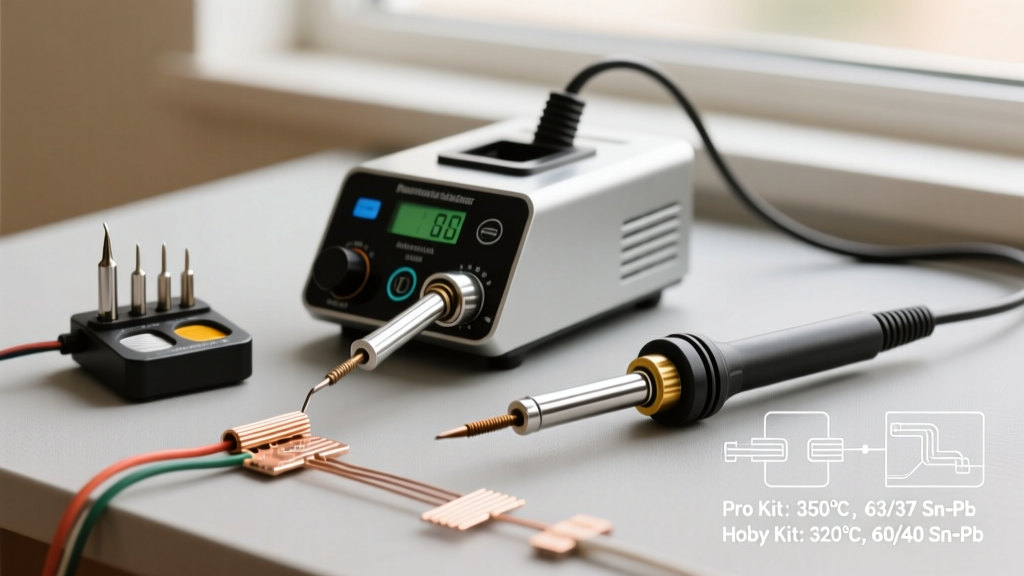
Because professional stations react instantly to thermal loads, technicians can run lead-free SAC305 (Sn96.5Ag3.0Cu0.5) alloys at much lower baseline temperatures—typically 320°C to 340°C—without experiencing cold joints on heavy ground planes.
- Micro-Tinning: Unlike hobbyists who use a large sacrificial blob, pros using JBC or Weller micro-tweezers apply a micro-thin layer of solder. The instant thermal recovery means the tip doesn't need a massive thermal battery of solder to protect it during the 3-second walk to the next pad.
- Nitrogen Integration: High-end professional kits often integrate nitrogen shrouds (like the JBC NSU). Tinning a soldering tip in a nitrogen-rich environment virtually eliminates oxidation, allowing for thinner tinning layers and drastically extending the life of ultra-fine micro-pencil tips.
- Automated Sleep Functions: Pro stations drop the tip temperature to 150°C (standby) within seconds of the handle being placed in the cradle. This means the tinning layer is preserved from thermal degradation during idle periods, a luxury hobbyist kits with basic 10-minute sleep timers cannot match.
Comparison Matrix: Tinning Variables by Kit Tier
| Variable | Hobbyist / Prosumer Kits | Professional Active-Tip Stations |
|---|---|---|
| Typical Station Cost | $25 - $120 | $350 - $700+ |
| Tip Technology | Passive Ceramic Heater (Sleeve) | Active Cartridge (Heater in Tip) |
| Recommended Tinning Temp | 330°C - 350°C (Sn63Pb37) | 310°C - 330°C (SAC305) |
| Sacrificial Tin Layer | Thick 'Blob' Required | Thin, Uniform Coating |
| Thermal Shock Risk | High (Slow recovery exacerbates shock) | Low (Instant recovery compensates) |
| Expected Tip Lifespan | 20 - 50 Hours | 100 - 300+ Hours |
The Cleaning Debate: Brass Wool vs. Damp Cellulose
The physical act of cleaning the tip before re-tinning is where many hobbyists unknowingly destroy their equipment. The standard kit-included damp cellulose sponge is a tip-killer.
Wiping a 350°C iron tip on a damp cellulose sponge causes an instantaneous surface temperature drop of up to 100°C. This severe thermal shock induces micro-fractures in the iron cladding, eventually leading to pitting and copper core exposure.
The Professional Standard: Both IPC Standards and NASA Workmanship Standards for high-reliability soldering strongly advocate for the use of dry brass wool (or brass shavings) for tip cleaning. Brass is softer than the iron plating but harder than the solder and carbonized flux. Wiping a tip in a brass sponge (like the Hakko 599B cleaner) removes oxidation and burnt flux without dropping the tip temperature drastically, preserving the structural integrity of the iron cladding before you apply your fresh tinning layer.
Resurrecting Dead Tips: Chemical Tip Tinner
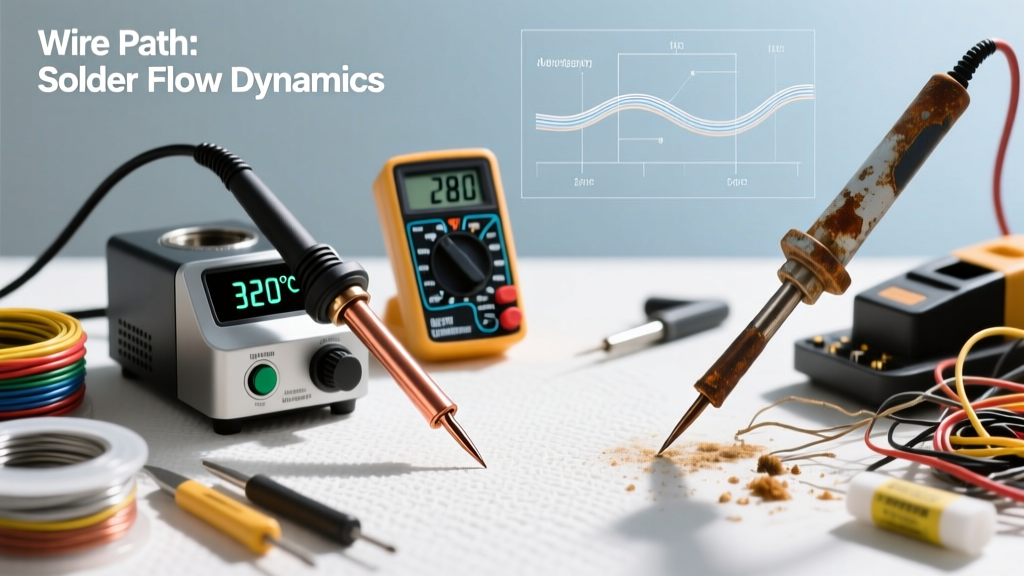
If a hobbyist leaves their iron on at 400°C for an hour, the tip will turn a dull, crusty black. Solder will ball up and roll off. At this point, mechanical abrasion (sanding or filing) will destroy the tip permanently by stripping the iron layer. Instead, chemical re-tinning is required.
Using Tip Tinner Compounds
Products like the MG Chemicals 4901 or Hakko 599B Tip Tinner contain a mixture of phosphoric acid and fine tin powder. The protocol for rescuing a heavily oxidized tip is precise:
- Set the station to a low temperature (around 250°C).
- Dip the oxidized tip directly into the tip tinner paste for 3 to 5 seconds. The phosphoric acid will chemically strip the iron oxide.
- Remove the tip and immediately wipe it vigorously on brass wool to remove the acidic residue and exposed carbon.
- Apply fresh, high-quality rosin-core solder to the working face to establish a new protective barrier.
While this can save a $10 Hakko T18 tip, it is rarely necessary for users of JBC or Weller active-tip systems, as the aggressive sleep modes and lower operating temperatures prevent the iron from reaching advanced stages of oxidation in the first place.
Summary: Matching Technique to Technology
Mastering the art of tinning a soldering tip requires an understanding of your specific hardware's limitations. Hobbyist kits demand strict temperature discipline, thick sacrificial solder blobs, and a transition to brass wool cleaning to mitigate their inherent thermal lag. Professional kits, leveraging active-tip technology and nitrogen integration, allow for lower temperatures, thinner tinning layers, and vastly superior longevity. By adapting your maintenance workflow to your kit's architecture, you ensure pristine solder joints and eliminate the frustration of premature tip death.
For further reading on high-reliability soldering requirements and tip maintenance, refer to the IPC J-STD-001 guidelines and consult manufacturer documentation from leading brands like Hakko USA.