
Beyond the Iron: Why Soldering Materials Dictate Your Success
When beginners purchase their first electronics workstation, 90% of their research focuses on the soldering iron itself. They debate ceramic heaters, wattage, and digital temperature control. However, the most expensive station in the world will produce cold, brittle, and unreliable joints if the soldering materials—the actual consumables touching the PCB—are substandard. In 2026, the market is flooded with "all-in-one" starter kits that pair excellent irons with corrosive, unbranded, or improperly sized consumables.
This guide provides a forensic breakdown of the soldering materials you actually need in your kit, evaluating alloys, flux chemistries, desoldering aids, and maintenance compounds based on professional NASA-STD-8739.3 workmanship standards and real-world bench testing.
The Core Consumables: Solder Wire Alloys & Diameters
The solder wire is the literal glue of your project. Choosing the wrong alloy or diameter is the leading cause of bridged pins on ICs and starved through-hole joints. Here is how the primary alloys compare in the current market.
| Alloy Designation | Composition | Melting Point | Best Application | 2026 Avg. Price (1lb Spool) |
|---|---|---|---|---|
| Sn60/Pb40 (Kester 44) | 60% Tin, 40% Lead | 183°C - 190°C | General THT, DIY, Prototyping | $30 - $38 |
| Sn63/Pb37 (Eutectic) | 63% Tin, 37% Lead | 183°C (Exact) | Precision THT, Hand Soldering | $35 - $42 |
| SAC305 (Lead-Free) | 96.5% Sn, 3% Ag, 0.5% Cu | 217°C - 220°C | Commercial PCBs, RoHS Compliance | $50 - $65 |
| Sn99.3/Cu0.7 | 99.3% Tin, 0.7% Copper | 227°C | Wave Soldering, Heavy Ground Planes | $25 - $32 |
The Diameter Matrix: Matching Wire to Component
Using a 1.0mm wire on an 0805 SMD resistor will result in massive solder blobs and thermal shock to the component. Conversely, using 0.3mm wire on a 14 AWG power connector will starve the joint, causing you to overheat the pad while feeding endless inches of wire.
- 0.8mm (0.031"): The universal standard for through-hole technology (THT), DIP ICs, and standard headers. If your kit only includes one size, it must be this.
- 0.5mm (0.020"): Ideal for larger SMD components (1206, 0805), SOIC chips, and tight-pitch through-hole boards.
- 0.3mm (0.015"): Mandatory for fine-pitch SMD work (0402, QFP, QFN) and jumper wire repairs.
Flux Chemistry: The Unsung Hero of the Kit
Solder does not bond to oxidized copper; flux does. The flux core inside your solder wire chemically strips oxidation the millisecond before the molten alloy flows. Cheap kits often include Acid-Core solder (intended for plumbing), which will aggressively corrode your PCB traces within weeks. Always verify your kit contains electronic-grade flux.
"Flux residues must be evaluated for their corrosive potential and electromigration risks, particularly in high-impedance or high-humidity operating environments." — IPC J-STD-001 Standard
Electronic Flux Types Breakdown
- Rosin (R): Pure rosin. Extremely safe, non-corrosive, and leaves a hard, protective residue. Requires no cleaning, but lacks the aggressive cleaning power needed for slightly oxidized vintage boards.
- Rosin Mildly Activated (RMA): The gold standard for DIY and prototyping (e.g., Kester 44). Contains mild activators that clean oxidation effectively while leaving a mostly benign residue. Highly recommended for 2026 starter kits.
- Water-Soluble (OA / Organic Acid): Extremely aggressive and excellent for automated manufacturing. Warning: If you use water-soluble flux in a DIY setting, you must clean the board with distilled water or specialized saponifiers immediately after soldering, or the board will corrode.
- No-Clean: Leaves a minimal, clear residue that is designed to be left on the board. Excellent for SMD rework, but can sometimes form hard, invisible barriers if you attempt to apply conformal coating later.
Desoldering & Rework Materials
A true soldering kit is incomplete without the means to reverse mistakes. Desoldering materials are frequently overlooked in budget bundles, often replaced by useless, stiff copper braids that fail to wick molten metal.
Desoldering Braid (Wick)
High-quality wick is made from pure, oxygen-free copper weave that is pre-fluxed. When pressed against a heated pad, capillary action draws the molten solder into the braid.
Top Tier Recommendations: Chemtronics 80-1-5 (1.5mm width for SMD) or Goot Wick CP-2060. Expect to pay $7 to $12 per 5-foot spool. If the wick in your kit is dull, gray, or stiff, throw it away; it is oxidized and will not work.
Solder Suckers (Desoldering Pumps)
For removing large through-hole components (like electrolytic capacitors or barrel jacks), a mechanical solder sucker is superior to wick. The Edsyn Soldapult DS017 remains the industry benchmark, featuring a PTFE-coated nozzle that prevents solder from sticking to the tool itself. Budget kits usually include unbranded plastic suckers with silicone tips that melt after three uses.
Workspace Protection & Tip Maintenance
The longevity of your soldering iron tips (which can cost $10-$15 each for genuine Hakko or Weller replacements) depends entirely on the maintenance materials in your kit.
The Great Sponge Debate: Cellulose vs. Brass
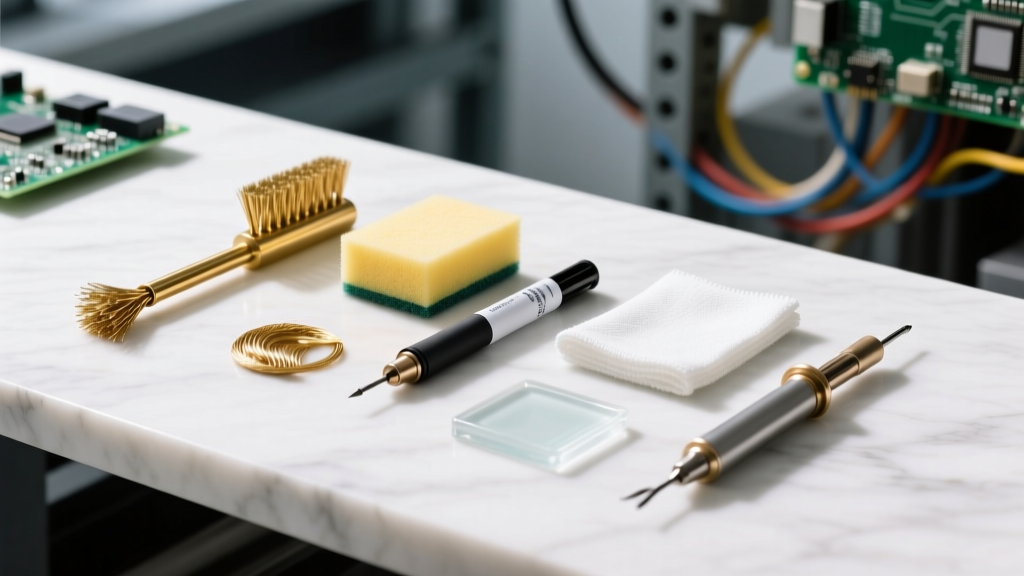
- Cellulose Sponges: The traditional yellow/brown sponges. They must be dampened with distilled water. Tap water contains minerals that cause micro-fractures in the hot iron plating due to thermal shock, leading to tip pitting and death.
- Brass Wire Sponges: (e.g., Hakko 599B). These require no water, eliminating thermal shock entirely. They are vastly superior for tip longevity and are a mandatory inclusion in any premium 2026 soldering kit.
Tip Tinner / Refresher
When a tip becomes oxidized (turning black and refusing to accept solder), do not scrape it with sandpaper or a file—this destroys the iron plating. Instead, use a Tip Tinner (a mixture of aggressive flux and solder powder). Dip the hot, oxidized tip into the tinner, wipe on a brass sponge, and immediately apply fresh solder. This chemical reduction restores the wetting surface in seconds.
The "Amazon Kit" Trap: Materials to Avoid
When auditing popular sub-$50 soldering kits on major marketplaces, we consistently find three hazardous materials that beginners should immediately discard:
- Acid-Core Plumbing Solder: Often mislabeled or unlabeled. It contains zinc chloride, which will eat through your PCB traces and cause short circuits.
- "Liquid Flux" in Unmarked Dropper Bottles: Usually highly corrosive acid flux meant for stained glass or plumbing. Always purchase branded, RMA no-clean flux pens or syringes (e.g., MG Chemicals 8341).
- Low-Grade Isopropyl Alcohol (70%): Kits often include small bottles of 70% IPA for cleaning. The 30% water content will cause oxidation on freshly cleaned pads and leave mineral streaks. You must source your own 99% (or 99.9%) electronic-grade IPA for proper flux removal and board preparation.
Frequently Asked Questions (FAQ)
Why does my solder ball up and refuse to stick to the pad?
This is almost always an oxidation or flux issue, not a temperature issue. If the pad is oxidized, the flux core in your wire may not be strong enough to clean it. Apply a small drop of external liquid or gel RMA flux to the pad before applying the iron and wire. Additionally, ensure you are heating the pad and the component lead simultaneously, not just melting the solder on the iron tip and dropping it onto a cold joint.
Is lead-free solder mandatory for hobbyists in 2026?
No. While commercial manufacturing must adhere to RoHS directives, hobbyists and DIYers are generally exempt. For beginners, Sn60/Pb40 or Sn63/Pb37 is highly recommended. It melts at a lower temperature, flows significantly better, and produces shiny, easily inspectable joints. Lead-free SAC305 requires higher temperatures (which degrades tips faster) and results in dull, grainy joints that can easily be mistaken for cold joints by untrained eyes. Always follow OSHA guidelines on lead exposure, wash your hands after soldering, and use a fume extractor.
How long should a spool of solder wire last?
A standard 4oz (113g) spool of 0.8mm solder wire contains roughly 15 to 20 meters of wire. For a beginner building standard DIY kits (like a 555 timer or an Arduino shield), this is enough for dozens of boards. However, if you are soldering heavy ground planes or large connectors, you will consume wire rapidly. Always keep a backup spool on your bench.