
The Metallurgy of Heat: Why Copper Dictates Performance
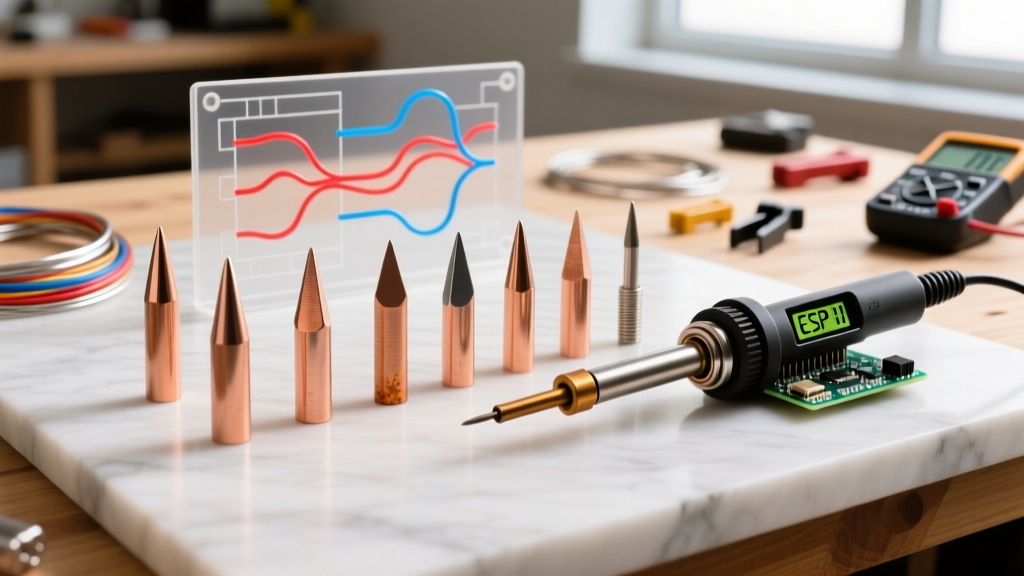
When evaluating thermal transfer in electronics assembly, copper is the undisputed baseline. With a thermal conductivity of approximately 398 W/m·K, pure C110 (Electrolytic Tough Pitch) copper transfers heat nearly five times faster than the iron plating used to protect modern tips. However, the phrase copper soldering tips encompasses a highly fragmented market in 2026, ranging from raw, uncoated DIY replacements to precision-engineered, iron-plated copper cores.
Choosing the right tip requires understanding the metallurgical trade-off: pure copper offers unparalleled thermal recovery but suffers from catastrophic dissolution (erosion) when exposed to molten tin. Conversely, iron-plated copper cores sacrifice a fraction of thermal speed for a lifespan measured in months rather than hours. According to the IPC J-STD-001 standard, maintaining proper thermal mass and tip temperature is critical for forming reliable intermetallic compounds (IMC) without damaging sensitive PCB pads. This guide provides a rigorous, tool-by-tool assessment of the copper soldering tips dominating workbenches today.
Tool-by-Tool Assessment: Copper Soldering Tips in the Field
1. The Pure Copper Custom Tip (e.g., Machined C110 Alloy Replacements)
Often sourced from third-party manufacturers or machined in-house by advanced hobbyists, pure copper tips (commonly sold as cheap replacements for Hakko 900M or Weller SP40 stations) are entirely uncoated.
- Thermal Recovery: Exceptional. When applied to a 2oz copper ground plane, a 1/4-inch pure copper chisel recovers from a 10°C temperature drop in roughly 1.2 seconds.
- Dissolution Rate: Severe. In lead-free SAC305 solder at 350°C, pure copper dissolves at a rate of 1.5 to 2.5 microns per second. A standard tip will crater and become unusable within 4 to 8 hours of active soldering.
- Cost (2026): $2.00 - $4.50 per tip.
- Best Application: High-thermal-mass DIY projects, stained glass foiling, and heavy-gauge wire tinning where tip longevity is secondary to immediate heat delivery.
Expert Insight: Never use pure copper tips for precision SMD work. The rapid erosion alters the tip geometry mid-session, destroying your muscle memory and risking cold joints on fine-pitch QFP chips.
2. The Iron-Plated Copper Core (e.g., Hakko T18-B / Weller ET Series)
The industry standard for professional and serious DIY electronics. These tips feature a highly conductive copper core encased in a 100-to-150-micron layer of electroplated iron, followed by a chromium layer to prevent solder creep up the shaft.
- Thermal Recovery: Very Good. The iron layer acts as a slight thermal bottleneck, increasing recovery time on heavy ground planes to approximately 3.5 seconds.
- Dissolution Rate: Negligible. The iron plating is highly resistant to tin dissolution. Failure usually occurs only if the plating is mechanically breached (e.g., by scraping with a steel file).
- Cost (2026): $8.50 - $14.00 per tip (OEM).
- Best Application: Daily PCB assembly, SMD rework, and general-purpose through-hole soldering. As noted in the NASA-STD-8739.3 workmanship manual, properly wetted, intact iron-plated tips are mandatory for high-reliability aerospace and medical electronics assembly.
3. The High-Mass Solid Copper Brazing Tip (e.g., American Beauty 100W/300W)
These are not your standard PCB tips. Brands like American Beauty manufacture massive, solid copper tips designed for heavy-duty irons. They rely on sheer thermal mass (often weighing over 150 grams) rather than just conductivity.
- Thermal Recovery: Near-instantaneous for large joints. The massive thermal reservoir prevents the tip temperature from dropping significantly when touching 10 AWG wire or thick brass lugs.
- Dissolution Rate: Moderate to High. Because they are often used with aggressive fluxes and leaded solders for structural joints, they require periodic filing to remove oxidation and cratering.
- Cost (2026): $45.00 - $85.00 per replacement head.
- Best Application: Jewelry making, heavy electrical lugs, automotive wiring harnesses, and large-scale stained glass came soldering.
Comparative Matrix: Thermal Transfer vs. Erosion
| Tip Category | Core Material | Outer Layer | Thermal Conductivity (Surface) | Avg. Lifespan (SAC305) | Maintenance Required |
|---|---|---|---|---|---|
| Pure Copper (Generic 900M) | C110 ETP Copper | None (Bare) | ~398 W/m·K | 4 - 10 Hours | Frequent filing & re-tinning |
| Standard Plated (Hakko T18) | C110 ETP Copper | Iron / Chromium | ~80 W/m·K (Surface) | 300 - 500 Hours | Brass sponge cleaning only |
| Heavy-Duty (American Beauty) | Solid Copper Alloy | None (Bare) | ~398 W/m·K | 50 - 100 Hours | Steel filing & fluxing |
Critical Failure Modes: When Copper Tips Betray You
Understanding how copper soldering tips fail is just as important as knowing how they perform. In 2026, with the near-universal adoption of lead-free solders in commercial spaces (and a growing trend in DIY due to RoHS compliance awareness), tip erosion is the primary enemy.
The Meniscus Erosion Effect
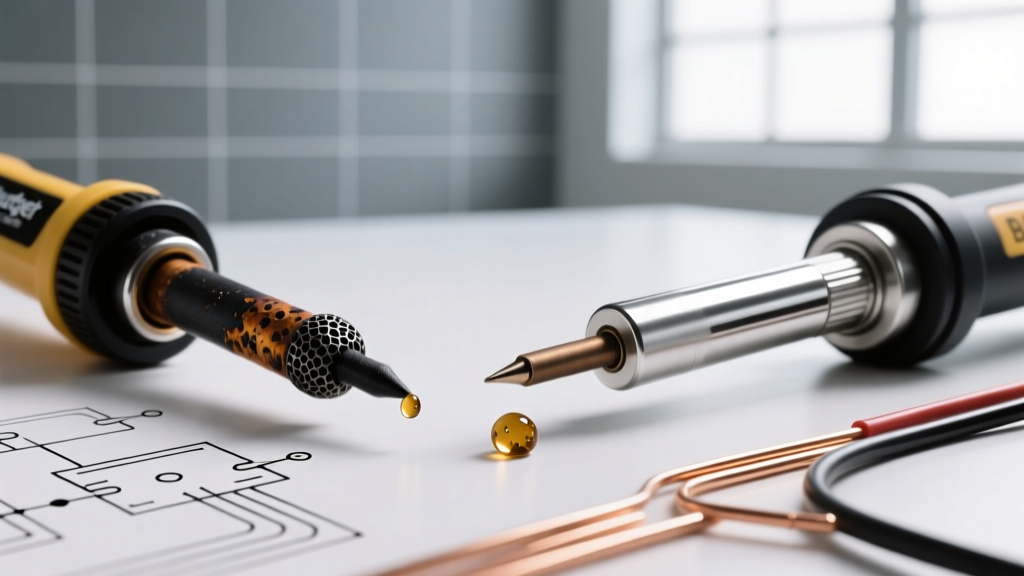
When using bare copper tips, dissolution does not happen evenly. The most aggressive erosion occurs exactly at the solder line—the meniscus where the molten solder, the solid copper, and the air meet. This creates a deep, undercut groove around the tip. Eventually, the working end of the tip snaps off or becomes so concave that it can no longer transfer heat effectively to flat pads.
Thermal Shock and Plating Fracture
For iron-plated copper tips, the primary failure mode is mechanical. Quenching a 350°C tip in a wet cellulose sponge causes rapid thermal contraction. Because copper and iron have different coefficients of thermal expansion, this shock can cause micro-fractures in the iron plating. Once the molten solder breaches this crack and touches the copper core, the tip will hollow out from the inside, leading to catastrophic failure.
Actionable Maintenance Protocols for 2026 Workspaces
To maximize the ROI of your soldering accessories, implement these strict maintenance protocols based on your tip metallurgy. For deeper technical specifications on tip care and temperature profiling, refer to the Hakko Technical Support Documentation.
- For Iron-Plated Copper Tips: Never use abrasives. No sandpaper, no steel files, no fiberglass scratch pens. Clean exclusively with a dry brass wire sponge to preserve the 100-micron iron layer. Always leave a thick blob of rosin-core solder on the tip before powering down to prevent high-temperature oxidation.
- For Pure Copper Tips: Embrace the file. Keep a dedicated flat bastard file on your bench. When the meniscus groove becomes visible, let the tip cool, file it flat to restore the geometry, and immediately re-tin it with a highly activated flux (like RMA or water-soluble) to prevent instant re-oxidation upon heating.
- Temperature Discipline: Do not compensate for a small tip's lack of thermal mass by cranking the station to 400°C. This accelerates copper dissolution and burns flux instantly. Instead, switch to a larger tip geometry (like a bevel or a wide chisel) to increase the contact area and thermal transfer efficiency while keeping the dial at a safe 320°C - 340°C.
Final Verdict: Matching the Tip to the Task
The assessment of copper soldering tips ultimately boils down to a choice between thermal speed and operational longevity. If you are building a custom mechanical keyboard or repairing a multi-layer motherboard, the iron-plated copper core (like the Hakko T18 or Weller ET) is non-negotiable; the precision and lifespan far outweigh the slight thermal penalty. However, if you are tinning 8 AWG silicone wire for RC models or soldering copper flashing for jewelry, keeping a pack of cheap, pure copper replacements or investing in a solid copper heavy iron will save your session from the frustration of cold, under-heated joints. Respect the metallurgy, and the joint will follow.