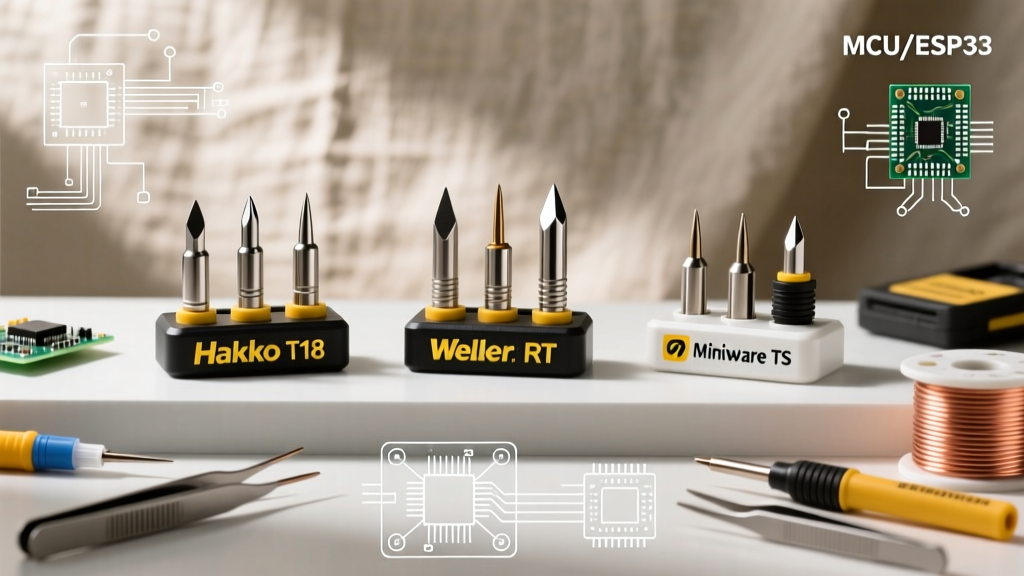

The Ubiquity and Limitations of the 900M Ecosystem
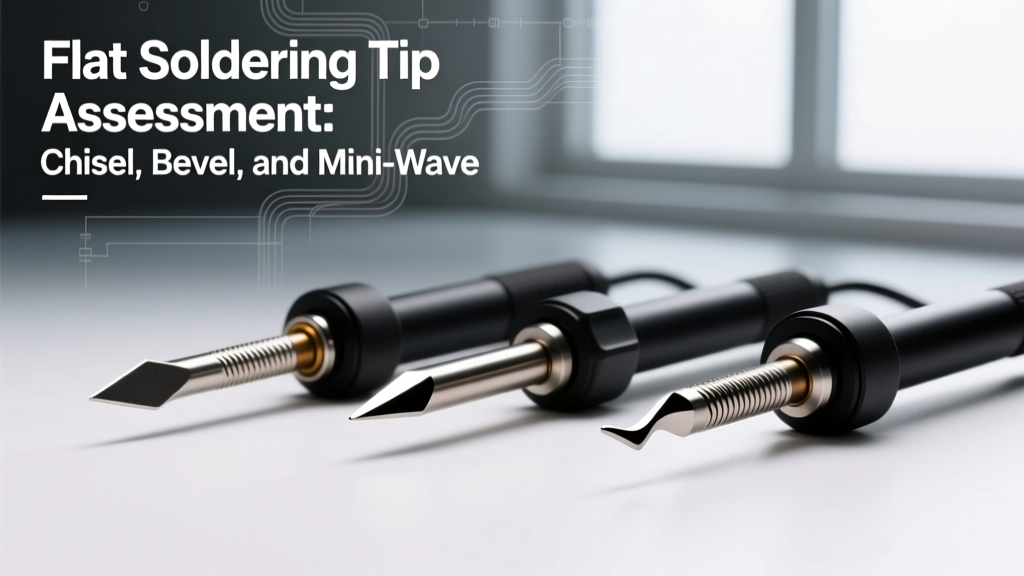
For millions of hobbyists, students, and repair technicians, the journey into electronics begins with a $15 to $25 adjustable soldering station. These ubiquitous stations—often clones of the legendary Hakko 936—rely on the 900M series tip ecosystem. If you have been searching for ways to improve your setup after buying cheap 900m soldering tips online, you have likely hit a thermal wall. While these sleeve-style tips are perfectly adequate for basic through-hole components and thick wires, they become a severe bottleneck when working with modern, thermally demanding PCBs.
As we move through 2026, the market for soldering equipment has shifted dramatically. High-performance cartridge tips and smart stations are now available at prices that rival mid-tier 900M setups. Understanding the physical limitations of the 900M design is the first step toward making an informed upgrade that will transform your soldering experience, reduce joint defects, and protect sensitive components from prolonged heat exposure.
Thermal Lag: The Hidden Cost of Sleeve Tips
To understand why upgrading is necessary, we must examine the physics of the 900M design. A standard 900M tip is essentially a hollow copper sleeve plated with iron. It slides over a separate ceramic heating element and thermocouple housed inside the soldering wand.
The Sensor Placement Problem
Because the thermocouple measures the temperature of the heater core rather than the working face of the tip, a thermal lag is introduced. When you touch a 900M tip to a large ground plane on a 4-layer PCB, the working face temperature can drop by 40°C to 60°C instantly. However, the heater core remains hot. The station's control circuit remains completely unaware of the temperature drop at the joint until the cold propagates back up the copper sleeve to the sensor.
This delay forces the operator to hold the iron on the pad longer to achieve reflow. According to the IPC J-STD-001 standard for soldered electrical assemblies, excessive dwell times can lead to pad delamination, thermal damage to SMD components, and excessive intermetallic compound (IMC) growth, which results in brittle solder joints.
Tier 1 Upgrade: Premium 900M Tips (The Budget Path)
If your budget restricts you to your current 936-style station, you can still achieve marginal improvements by abandoning no-name, bulk-packaged tips. Generic tips sold in packs of 10 for $2.00 typically feature an iron plating thickness of just 10 to 15 microns. This thin layer quickly dissolves into the molten solder, exposing the copper core to pitting and oxidation within 20 hours of use.
- The Fix: Purchase genuine Hakko 900M-B or 900M-D32 tips, or high-end third-party equivalents like the KSGER B-Series.
- The Science: Premium tips feature an iron plating thickness of 70+ microns, a nickel/chromium barrier layer to prevent solder wicking up the shaft, and a highly polished working face.
- Cost: $4.00 to $6.50 per tip.
- Lifespan: 500+ hours with proper maintenance.
While this improves tip longevity and wetting performance, it does not solve the fundamental thermal lag inherent to the sleeve-and-sensor design.
Tier 2 Upgrade: The T12 Cartridge Revolution
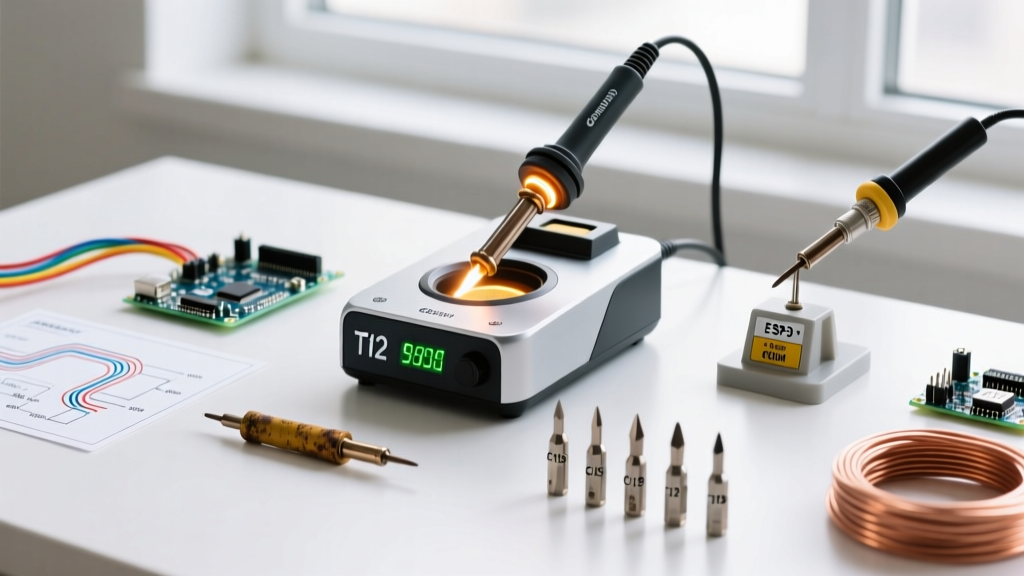
The most significant leap in price-to-performance for modern makers is the transition to T12 cartridge tips. Originally developed by Hakko for their FX-951 industrial line, the T12 ecosystem integrates the heating element, the thermocouple, and the tip itself into a single, unified cartridge.
Why T12 Changes Everything
In a T12 cartridge, the thermocouple is located just 3 millimeters from the working face. When the tip touches a cold joint, the sensor detects the temperature drop instantly. Modern STM32-based T12 stations utilize advanced PID (Proportional-Integral-Derivative) control loops to pulse the heater with high current, recovering the lost heat in a fraction of a second without overshooting your target temperature.
Expert Insight: A standard 60W 900M station takes roughly 45 seconds to reach 350°C from a cold start. A 72W T12 station reaches 350°C in 8 to 12 seconds. This rapid recovery allows you to solder heavy ground planes at lower baseline temperatures (e.g., 320°C), drastically extending tip life and reducing thermal stress on PCB laminates.
Recommended T12 Stations for 2026
- Quicko T12-STM32: The community standard. Features an OLED screen, customizable PID profiles, and a robust aluminum handle. ($35 - $45)
- Pine64 Pinecil V2 (with T12 adapter): A RISC-V powered, open-source smart iron. While natively designed for miniature tips, the official T12 adapter makes it a powerhouse for larger joints. ($28 + $12 adapter)
- KSGER T12 V3.0: A reliable, enclosed desktop unit with excellent grounding and sleep-mode auto-detection via a reed switch in the handle. ($40 - $55)
Tier 3 Upgrade: Active Tip Systems (JBC and Weller)
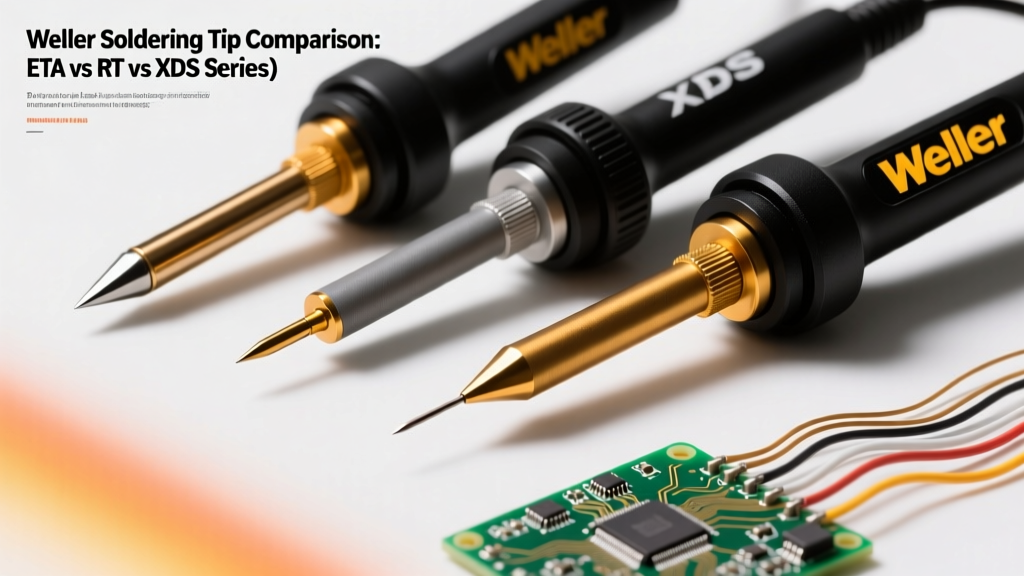
For professional repair technicians working on multi-layer server boards, automotive ECUs, or micro-soldering tasks, the ultimate upgrade is an active-tip system like the JBC C245 or Weller RT series. These systems operate on low voltage (24V) but deliver massive current (up to 130W dynamically) directly to the tip face.
The JBC C245 cartridge places the sensor less than 1 millimeter from the working face. Heat-up time is measured at under 2 seconds. The principles of tip care and thermal management dictate that minimizing the time a tip spends at high temperatures while idle is crucial; JBC's intelligent stands drop the tip to 180°C the second it is holstered, virtually eliminating oxidation and dry-burn failures.
The Catch: The ecosystem is expensive. A genuine JBC CD-2BQE station costs upwards of $300, and individual C245 tips range from $38 to $55 each. However, for daily professional use, the reduction in rework time and damaged pads justifies the ROI within months.
Comparison Matrix: 900M vs T12 vs Active
| Feature | Generic 900M Sleeve | T12 Cartridge | JBC C245 Active |
|---|---|---|---|
| Sensor Location | Wand (Heater Core) | Inside Tip (3mm from face) | Inside Tip (<1mm from face) |
| Heat-Up Time | 40 - 60 Seconds | 8 - 12 Seconds | < 2 Seconds |
| Thermal Recovery | Poor (2-4 sec lag) | Excellent (Instant PID response) | Flawless (High-current dump) |
| Avg Tip Cost | $0.15 (Clone) / $5.00 (Genuine) | $2.50 - $4.00 | $38.00 - $55.00 |
| Ideal Application | Basic through-hole, thick wires | SMD, QFP, general repair, drones | Micro-soldering, heavy ground planes |
Real-World Upgrade Scenarios
Scenario A: Drone Building and XT90 Connectors
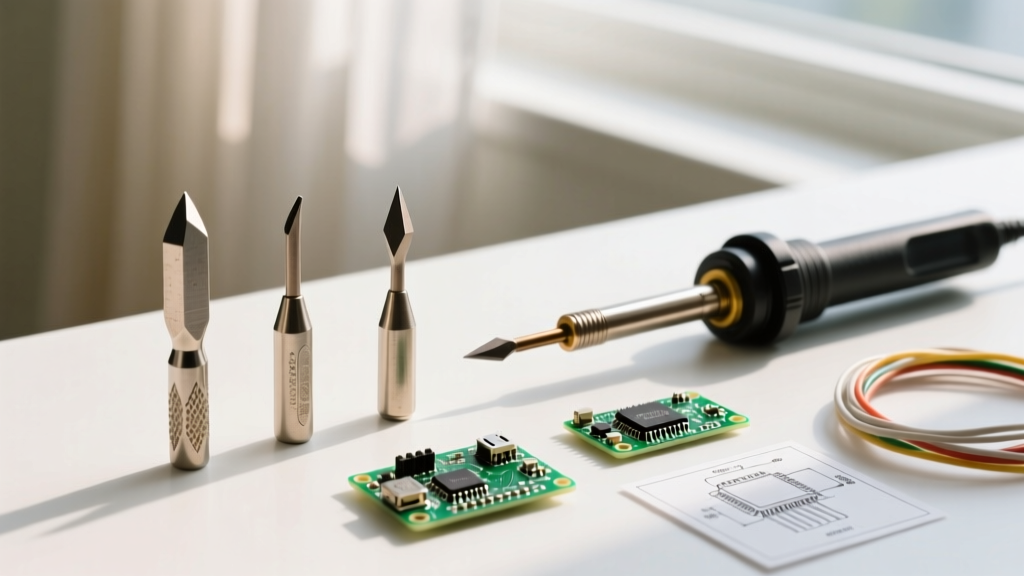
If you are soldering 10 AWG silicone wire to XT90 connectors, a 900M tip will struggle to maintain heat, leading to dull, grainy, cold solder joints. Upgrade Path: Move to a T12 station equipped with a T12-D52 or T12-K (knife) tip. The high thermal mass of the D52, combined with the T12's rapid sensor feedback, will reflow the joint cleanly in under 4 seconds without melting the connector housing.
Scenario B: Smartphone Repair and 0402 SMD Components
Working under a microscope on densely populated smartphone logic boards requires absolute precision and minimal thermal bleed. Upgrade Path: Bypass T12 and invest in a JBC C115 or Weller RTW micro-soldering station. The ultra-fine tips and instant thermal cutoff prevent accidental desoldering of adjacent, microscopic capacitors.
Essential Maintenance for Upgraded Tips
Upgrading your hardware is only half the battle. High-performance cartridge tips require strict adherence to maintenance protocols to protect your investment. As highlighted in comprehensive soldering tutorials by industry educators, improper cleaning is the leading cause of premature tip death.
- Ditch the Wet Sponge: Wiping a 350°C T12 or C245 tip on a wet cellulose sponge causes rapid thermal shock, leading to micro-fractures in the iron plating. Always use dry brass wire wool.
- Never Scrape with Flux: Do not use the edge of your PCB or a metal tool to scrape oxidized solder off the tip. This will gouge the iron plating and expose the copper core.
- Always Leave a Tin Shield: Before placing your iron in the stand, melt a generous blob of cheap, leaded 63/37 solder onto the working face. This sacrificial layer oxidizes instead of the tip's plating. Wipe it clean only when you are ready to make your next joint.
- Use High-Quality Flux: Upgraded tips perform best with premium no-clean or rosin fluxes like Amtech NC-559-V2-TF. Avoid highly acidic plumbing fluxes or low-grade liquid fluxes that can corrode the tip's chrome barrier layer.
Final Verdict: When to Make the Leap
The 900M ecosystem served the electronics community well for over two decades, but the thermal demands of modern PCBs have outpaced its design. If you are strictly building basic Arduino kits or repairing vintage audio equipment with large through-hole components, premium genuine 900M tips will serve you fine. However, if you are diving into modern SMD repair, drone building, or high-density digital electronics, upgrading to a T12 cartridge station is the single most impactful investment you can make for your workbench in 2026. It bridges the gap between hobbyist pricing and professional thermal performance, ensuring your solder joints are reliable, shiny, and built to last.