
Why the Power Probe Soldering Kit Dominates Mobile Diagnostics
When working on automotive harnesses, marine electronics, or off-grid solar arrays, being tethered to a 120V AC wall outlet is a luxury mobile technicians rarely have. Enter the Power Probe Soldering Kit—specifically the cordless butane-powered variant. As of 2026, this kit remains a staple in the toolboxes of automotive electricians and field engineers who require high-thermal output without relying on vehicle batteries or portable power stations.
Unlike standard electric stations that use resistive heating elements, the Power Probe butane iron utilizes a catalytic reaction. Butane gas passes through a platinum-coated mesh, creating a flameless, superheated oxidation reaction that drives the tip temperature up to 1050°F (565°C) in under 30 seconds. Below, we provide a comprehensive, component-by-component breakdown of what is actually inside the case, how each attachment functions, and the edge-case failure modes you need to watch out for.
The Core Unit: Butane Iron Specifications
Before diving into the accessories, it is critical to understand the baseline performance of the primary tool included in the kit. The Power Probe butane iron is engineered for heavy-duty wire splicing, not delicate surface-mount device (SMD) rework.
- Max Temperature: 1050°F (565°C)
- Wattage Equivalent: 105W (comparable to a Hakko FX-951 on high)
- Ignition: Piezoelectric push-button
- Run Time: 60 to 90 minutes on a full tank
- Fuel Requirement: 99.999% pure n-butane (highly refined)
What’s in the Box? A Component-by-Component Breakdown
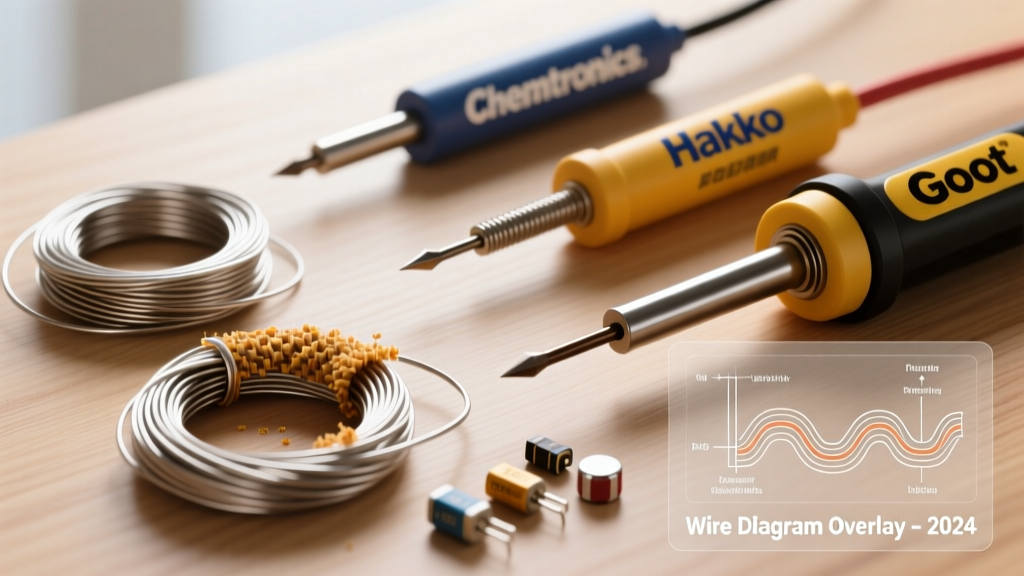
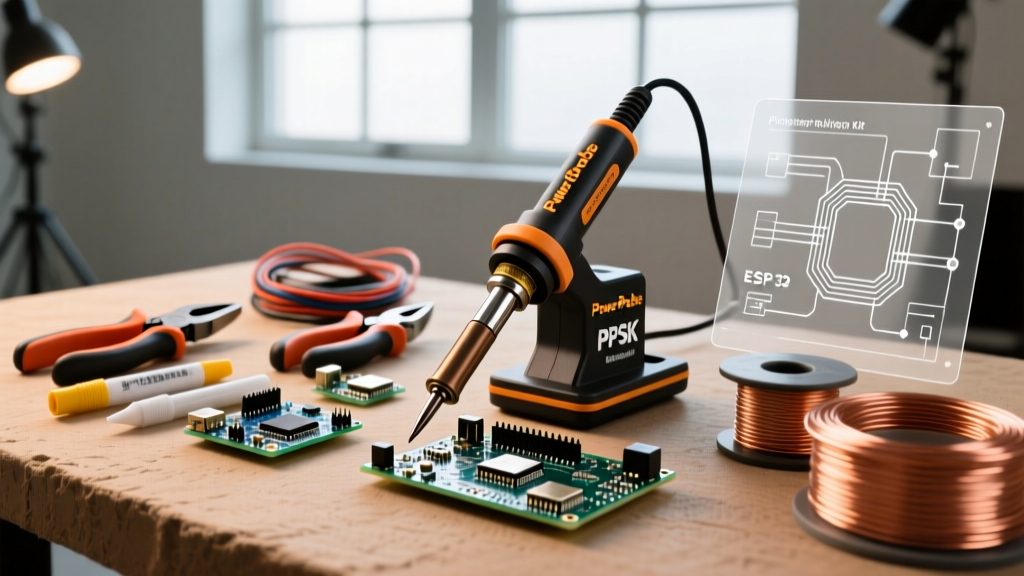
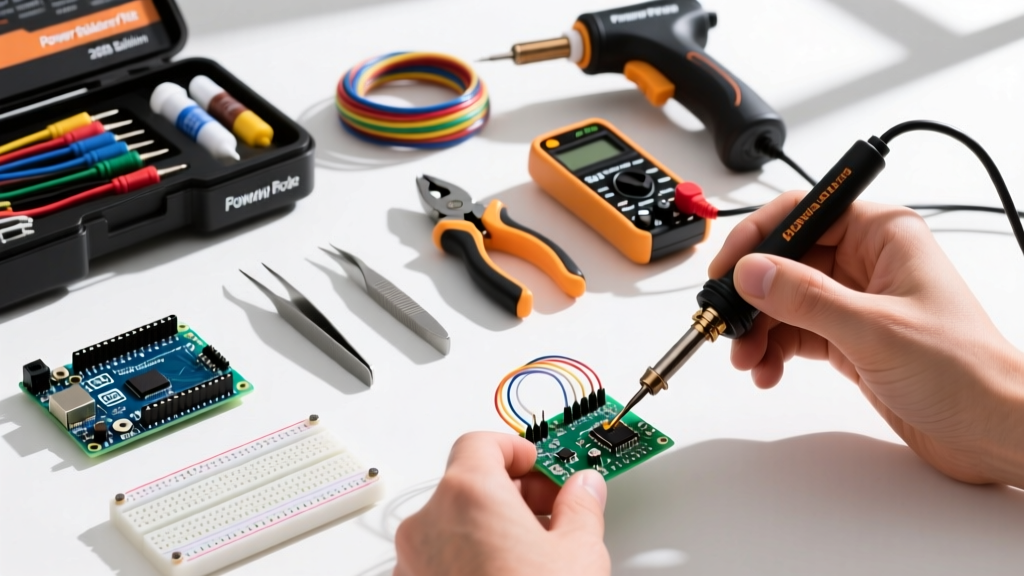
The retail packaging of the Power Probe Soldering Kit (often listed under part numbers like PPSK or similar Tek bundles) is deceptively compact. Here is the exact inventory of the hardshell case and the specific purpose of each inclusion.
| Component | Specification / Material | Primary Field Application |
|---|---|---|
| Cordless Butane Iron | Piezo ignition, adjustable gas flow | Core heat generation for all attachments |
| Conical Soldering Tip | Copper core, iron-plated | Precise through-hole soldering, 22-18 AWG wire |
| Chisel / Flat Blade Tip | Wide surface area copper | Heavy gauge battery cables (4-0 AWG), heat shrink |
| Hot Air Blower Nozzle | Stainless steel deflector shield | Shrinking adhesive-lined marine heat shrink tubing |
| Deflector / Solder Shield | Aluminum alloy | Protecting adjacent wires and plastic connectors |
| Rosin-Core Solder Tube | 63/37 Eutectic or Lead-Free (varies by region) | General electrical splicing and PCB tacking |
| Brass Wire Sponge | Curled brass shavings in metal tin | Oxidation removal without thermal shock |
| Hardshell Carrying Case | Impact-resistant ABS plastic | Mobile storage and fuel leak prevention |
Deep Dive: The Interchangeable Tips and Attachments
The true value of the Power Probe Soldering Kit lies in its modular tip system. The threaded connection allows for tool-free swaps in about 10 seconds once the unit is cool.
The Hot Air Blower Nozzle: This is arguably the most vital attachment for automotive technicians. When repairing a wiring harness in a confined engine bay, applying an open flame or a standard heat gun is dangerous and imprecise. The blower nozzle diffuses the catalytic heat into a focused stream of 400°F air. This is perfectly calibrated to shrink dual-wall adhesive heat shrink tubing (which typically requires 250°F to 350°F to activate the inner meltable sealant) without scorching the outer polyolefin layer.
The Chisel / Flat Blade: According to the NASA Workmanship Standards for soldered connections, proper thermal mass transfer is critical for large-gauge wires. The flat blade provides the necessary surface area to heat a 10 AWG or 8 AWG automotive wire strand to the solder's melting point within 3 to 5 seconds, preventing the flux from burning off before the joint wets.
Real-World Application: Automotive Harness Repair
To understand how these included components work in synergy, consider a standard repair of a damaged 14 AWG oxygen sensor harness. The IPC-A-620 standard for cable and wire harness assemblies mandates specific mechanical and electrical criteria for spliced wires subject to high vibration.
- Preparation: Strip 3/8 inch of insulation from both wire ends. Slide a piece of dual-wall adhesive heat shrink onto the wire before splicing.
- Mechanical Connection: Perform a Western Union (Lineman's) splice to ensure mechanical strength before the solder is even applied.
- Flux and Heat: Apply a drop of liquid rosin flux. Ignite the Power Probe iron and attach the chisel tip. Apply the tip to the copper strands (not the solder) for 2 seconds.
- Feed Solder: Touch the included 63/37 rosin-core solder to the wire, not the iron. Capillary action will draw the solder into the strands.
- Sealing: Slide the heat shrink over the joint. Swap to the hot air blower nozzle and apply sweeping heat until the tubing shrinks and a small bead of adhesive seals the edges.
Common Failure Modes and Maintenance Edge Cases
While the Power Probe Soldering Kit is robust, field technicians frequently encounter specific failure modes due to improper maintenance or environmental factors.
CRITICAL WARNING: The Butane Purity Rule
Never fill the Power Probe iron with standard convenience-store lighter fluid. Cheap butane contains impurities and oils that will instantly clog the platinum catalytic mesh inside the tip. Once clogged, the gas will flow, but the tip will not heat up. Always use 5x refined, 99.999% pure n-butane (such as Colibri or Power Probe's branded fuel).
Troubleshooting the Piezo Igniter
The push-button piezo igniter relies on a spark gap inside the combustion chamber. In high-altitude environments (above 6,000 feet) or in freezing ambient temperatures (below 32°F), the spark may fail to ignite the butane mixture due to changes in gas density and vapor pressure. Workaround: Keep the fuel tank warm in an interior pocket before use, or manually ignite the gas flow with a secondary flint striker if the piezo fails.
Tip Oxidation and Cleaning
Never use sandpaper, a file, or a wet cellulose sponge to clean the iron-plated tips included in the kit. Thermal shock from a wet sponge will micro-fracture the iron plating, leading to rapid copper core degradation. Always use the included brass wire sponge while the tip is at operating temperature to gently scour away carbonized flux residue.
Power Probe Butane vs. 12V DC vs. 120V AC Stations
How does the included Power Probe butane setup compare to other soldering power sources commonly used in electrical repair? Below is a 2026 comparison matrix.
| Feature | Power Probe Butane Kit | 12V DC Automotive Iron | 120V AC Station (e.g., Hakko) |
|---|---|---|---|
| Portability | Excellent (Cordless) | Moderate (Tethered to vehicle) | Poor (Requires wall/generator) |
| Heat-Up Time | 20 - 30 seconds | 45 - 90 seconds | 10 - 15 seconds |
| Thermal Recovery | Moderate (Gas flow dependent) | Slow (High amp draw limits) | Excellent (PID controlled) |
| Best Use Case | Field repair, harness splicing | Quick dashboard wire taps | Benchtop PCB rework, precision |
| Approx. Cost (2026) | $95 - $120 USD | $30 - $50 USD | $110 - $250+ USD |
Frequently Asked Questions
Can I use the Power Probe Soldering Kit for jewelry or plumbing?
No. The kit is strictly designed for electrical and electronic soldering (using soft solders melting below 450°F). It does not generate the localized, concentrated flame necessary for silver-brazing jewelry or sweating copper plumbing pipes, which require temperatures exceeding 1200°F and specialized fluxes.
How do I safely store the kit in my vehicle?
Always ensure the gas flow dial is turned to the absolute minimum (closed) position and that the safety lock (if equipped on your specific model year) is engaged. Store the hardshell case in a climate-controlled cabin area rather than a truck bed or trunk, where summer ambient temperatures can exceed 140°F and cause internal pressure valves to vent.
Final Verdict on the Kit's Value
The Power Probe Soldering Kit is not a replacement for a temperature-controlled benchtop station when working on microscopic SMD components. However, as a dedicated field kit for automotive, marine, and industrial wire harness repair, the inclusion of the hot air blower, heavy-duty chisel tip, and high-thermal-output catalytic iron makes it an unmatched, highly specialized tool for the mobile professional.