
Beyond Melting Metal: The True Purpose of a Soldering Iron
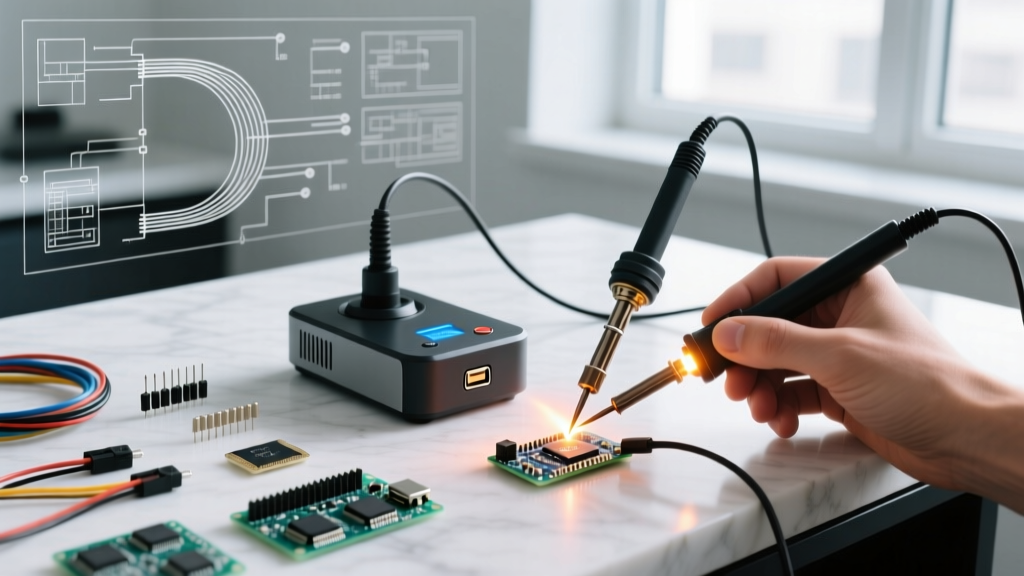
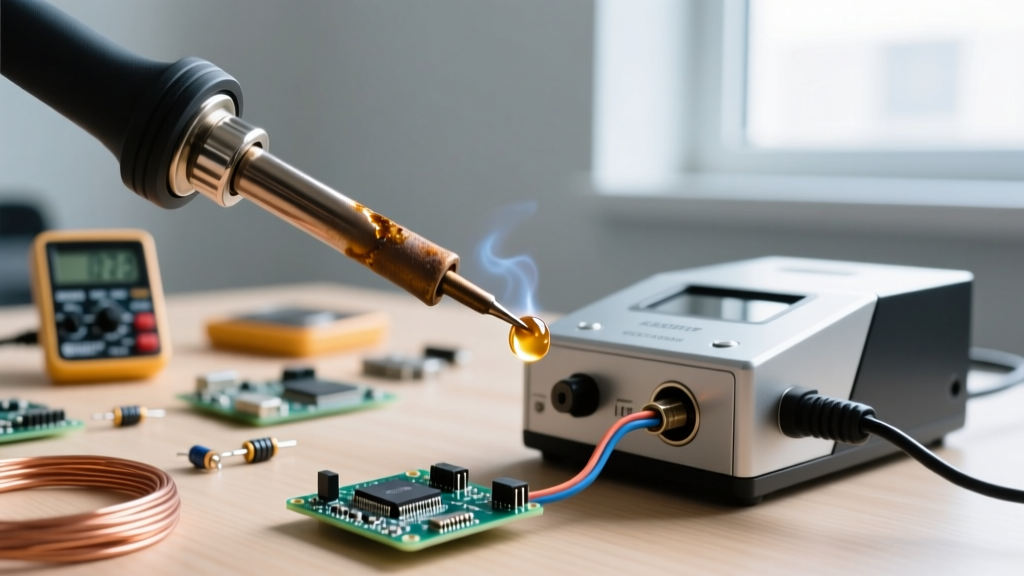
When beginners ask, "what is a soldering iron used for?", the most common answer is simply "melting solder to join wires." However, from a metallurgical and engineering perspective, this definition is dangerously incomplete. A soldering iron is a precision thermal transfer instrument designed to facilitate the creation of an Intermetallic Compound (IMC) layer between a copper substrate and a tin-based alloy. According to metallurgical data from Indium Corporation, a proper solder joint is not merely a mechanical glue; it is a localized alloy where tin atoms diffuse into the copper lattice, creating a continuous electrical and structural bridge.
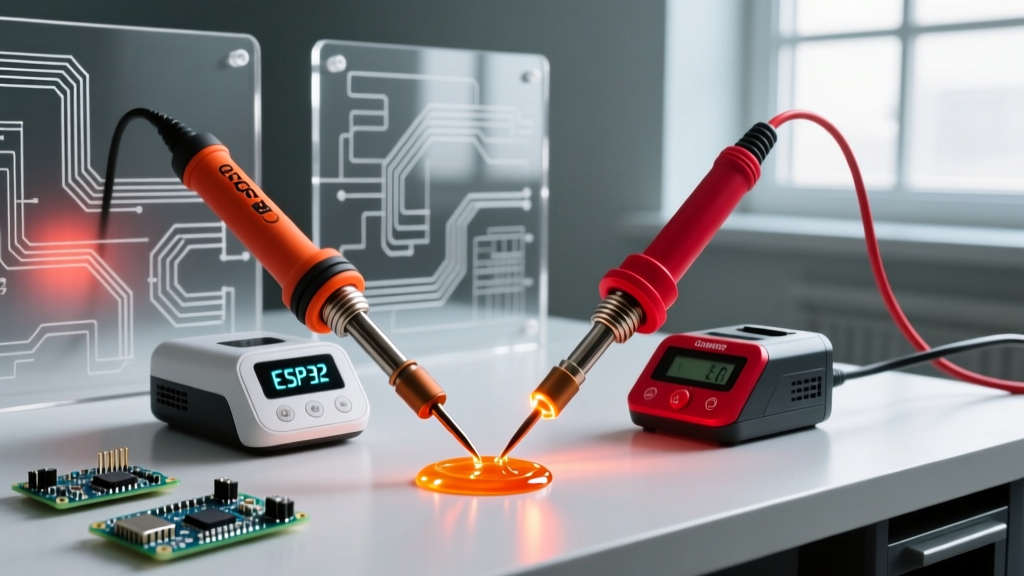
To achieve this IMC layer without damaging the substrate, the tool must deliver exact thermal energy within a specific time window. This is where the divide between budget soldering wands and premium soldering stations becomes critical. The use case dictates the thermal requirements, and the thermal requirements dictate the tier of tool you must deploy in 2026.
The Thermal Recovery Divide: Budget vs. Premium Architecture
The fundamental difference between a $30 budget iron and a $450 premium station lies in thermal recovery time and sensor proximity.
- Budget Irons (e.g., Weller SP40NK, Pine64 Pinecil V2): These typically use a resistive heating element separated from the tip by an air gap or ceramic sleeve. The temperature sensor is often located inside the heater core, not at the tip apex. When the tip touches a cold copper pad, the temperature at the joint drops, but the sensor doesn't register the loss immediately, leading to delayed power delivery.
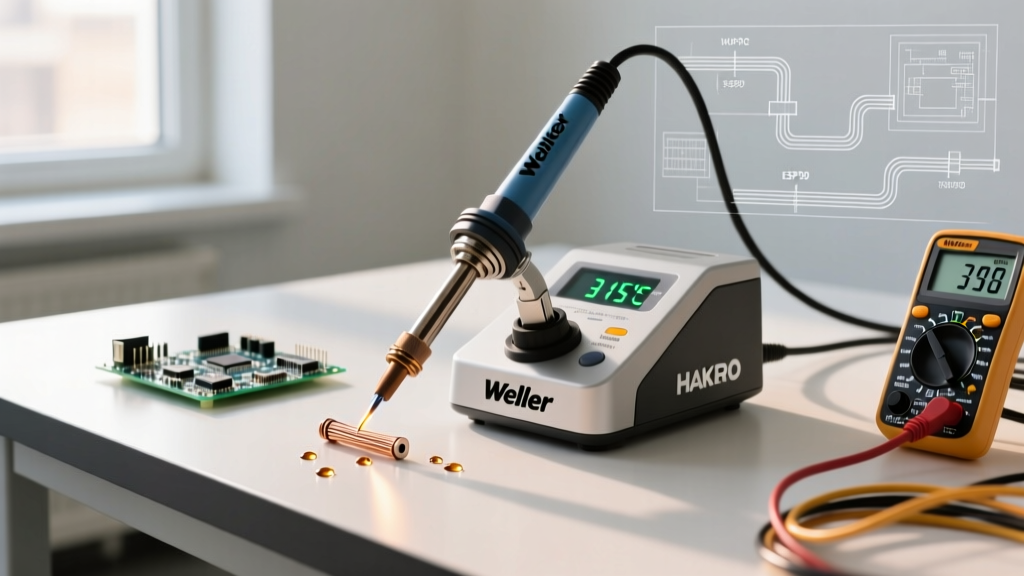
- Premium Stations (e.g., JBC CD-2BQF, Hakko FX-951): These utilize integrated cartridge systems where the heating element, temperature sensor (thermocouple), and tip are a single, unified unit. The sensor sits millimeters from the contact point, detecting thermal drops in milliseconds and injecting high-current bursts to maintain a stable wetting temperature.
Use Case 1: Wire Splicing and Basic Through-Hole (The Budget Sweet Spot)
If your primary answer to "what is a soldering iron used for" involves splicing 18 AWG silicone wires, assembling basic through-hole resistor networks, or repairing simple 2-layer hobbyist PCBs, a budget iron is entirely sufficient.
Why Budget Tools Excel Here
Wires and large through-hole leads possess high thermal mass but low thermal conductivity to the surrounding environment. When you apply a 65W Pinecil V2 (running around $26 in 2026) set to 350°C for Sn63/Pb37 (63/37 leaded) solder, the thermal mass of the wire absorbs the heat steadily. Because you are not fighting massive ground planes pulling heat away, the delayed thermal recovery of a budget iron is unnoticeable. You can hold the iron on the joint for 3 to 5 seconds, allowing the heat to soak and the flux to activate without risking pad delamination.
Use Case 2: SMD, Micro-BGA, and Heat-Sensitive Rework (The Premium Mandate)
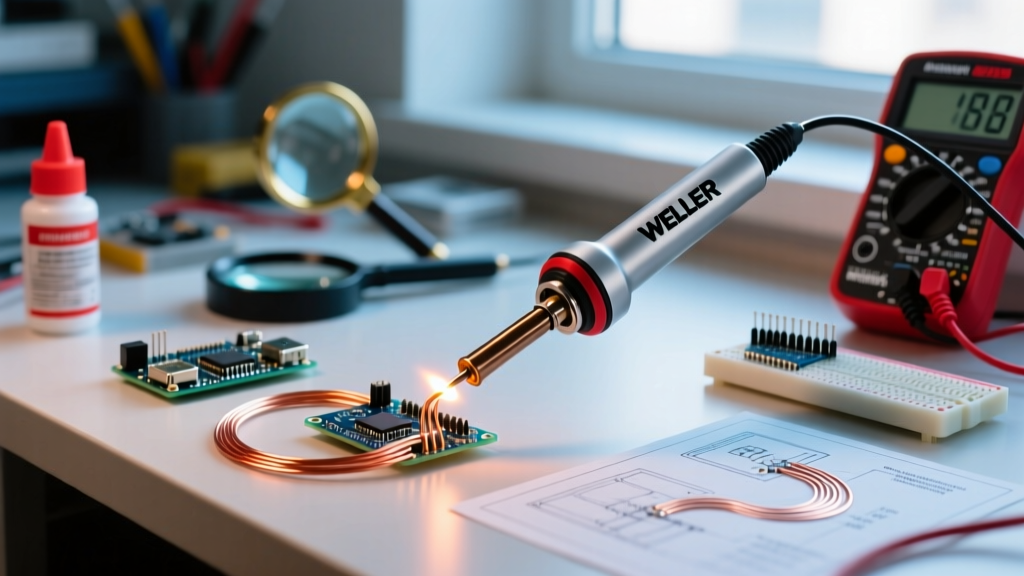
The moment your work shifts to Surface Mount Devices (SMD) like 0402 capacitors, QFP microcontrollers, or heat-sensitive RF modules, the budget iron becomes a liability. As detailed in Adafruit's Guide to Excellent Soldering, SMD components require rapid, localized heating to prevent thermal shock and tombstoning.
The Premium Advantage in Micro-Soldering
Premium stations like the JBC CD-2BQF (approximately $450) or the Hakko FX-951 (around $330) are mandatory here. When soldering a 0402 component using SAC305 lead-free solder (which requires a higher liquidus temperature of 217°C to 220°C), you have a maximum dwell time of 1.5 to 2 seconds per pad before the internal component structure risks degradation. A premium cartridge tip (such as the JBC C115-112 nano-tip) transfers heat instantly. The station detects the thermal sink of the PCB trace and injects 130W of instantaneous power, melting the solder in under a second and retracting before the heat can wick into the sensitive silicon die.
Use Case 3: High Thermal Mass and Ground Planes (The Heavy-Duty Tier)
What is a soldering iron used for when dealing with 6-layer motherboards, thick copper motor windings, or massive grounding lugs? These scenarios feature immense thermal sinks that will instantly freeze a standard 60W iron, resulting in a catastrophic cold joint.
Smart Heat and High-Wattage Solutions
For these extreme thermal loads, engineers turn to either ultra-high-wattage stations or inductive "Smart Heat" technology. The Metcal MX-5200 (priced upwards of $650) uses radio-frequency induction to heat the tip directly via the Curie effect. The tip is coated with a magnetic alloy that loses its magnetism at a precise temperature (e.g., 350°C). When the tip touches a massive ground plane and cools below the Curie point, it instantly becomes magnetic again, drawing maximum RF power until the exact temperature is restored. This prevents the dangerous overheating associated with manually cranking up a budget iron to 450°C just to force heat into a thick copper pour.
Comparison Matrix: Matching the Tool to the Task
| Use Case Scenario | Recommended Tier | Example Models (2026) | Avg. Cost | Critical Requirement |
|---|---|---|---|---|
| Wire splicing, basic THT | Budget / Entry-Level | Pine64 Pinecil V2, Weller SP40NK | $25 - $45 | Sustained heat, basic ergonomics |
| 0603/0402 SMD, QFP ICs | Premium Cartridge | Hakko FX-951, JBC CD-2BQF | $330 - $450 | <2s thermal recovery, tip precision |
| Multi-layer ground planes | Heavy-Duty / Inductive | Metcal MX-5200, Weller WXP200 | $400 - $700 | High thermal mass transfer, no overshoot |
| Plumbing, stained glass | High-Wattage Iron | Weller 100PG, Hakko FX-601 | $60 - $120 | Raw wattage, large chisel tips |
Failure Modes: The Hidden Cost of the Wrong Tool
Using a budget iron for premium tasks, or a premium iron improperly configured, leads to specific, measurable failure modes outlined by the IPC (Association Connecting Electronics Industries) standards:
- Cold Joints (IPC-A-610 Defect): Caused when a budget iron loses temperature upon contact with a pad. The solder cools before the IMC layer fully forms, resulting in a dull, grainy, and highly resistive joint that will eventually crack under thermal cycling.
- Pad Lifting and Delamination: Occurs when a user compensates for a budget iron's poor thermal recovery by applying the tip for 8+ seconds. The excessive dwell time melts the epoxy bonding the copper trace to the FR4 fiberglass substrate.
- Tombstoning: In SMD work, if a budget iron heats one pad significantly slower than the other, the surface tension of the molten solder on the hotter side will pull the component upright, breaking the connection on the opposite pad.
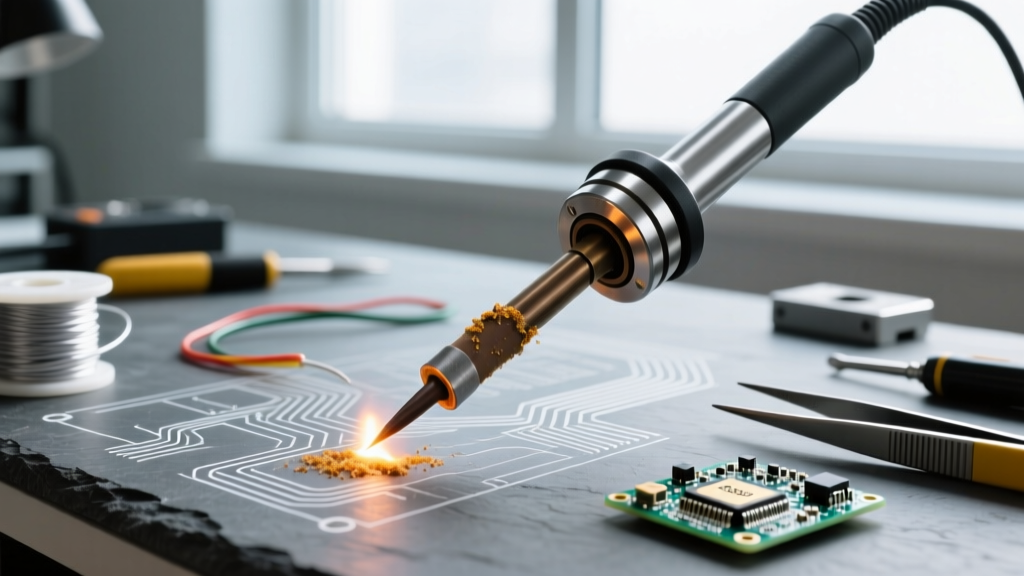
- Tip Oxidation and Burnout: Running a cheap iron at 420°C to compensate for low wattage causes the iron plating on the tip to oxidize and dissolve into the solder pool within hours, ruining the tip's wettability.
Expert Decision Framework
The 80/20 Rule of Soldering Investments: If 80% of your work involves wires, connectors, and large through-hole components, invest $35 in a reliable budget iron and spend the remaining budget on high-quality flux (e.g., Amtech NC-559-V2-TF) and premium solder wire (e.g., Kester 245). Flux chemistry bridges the gap left by budget thermal recovery. However, if your work involves modern, dense PCBs with SMD components, the premium station is not a luxury; it is a mandatory baseline for yield and reliability.
Ultimately, understanding what a soldering iron is used for requires looking past the melting of the alloy and focusing on the thermal management of the joint. By aligning your tool's thermal architecture with the specific mass and sensitivity of your components, you eliminate guesswork, reduce rework time, and ensure long-term electrical reliability.