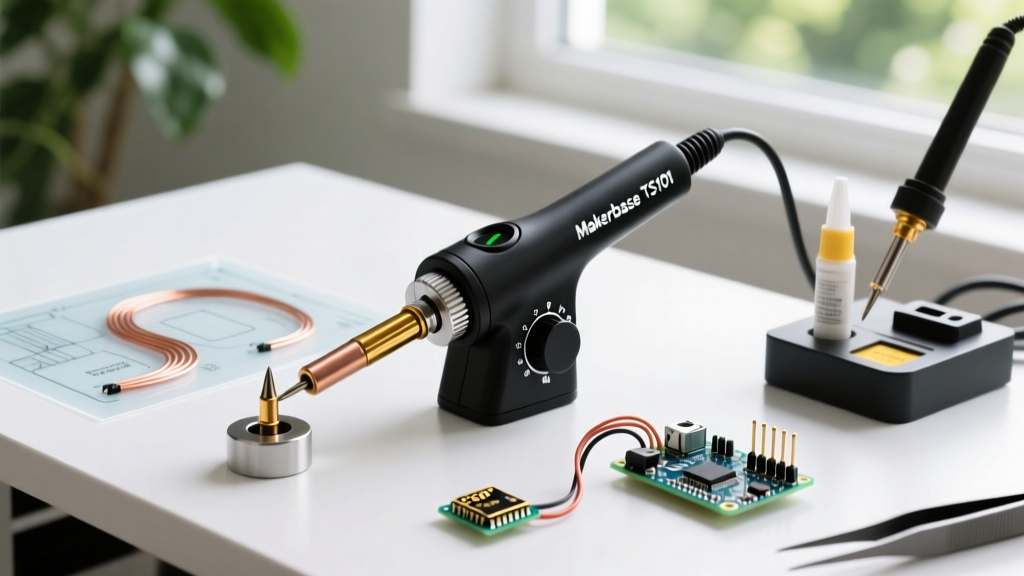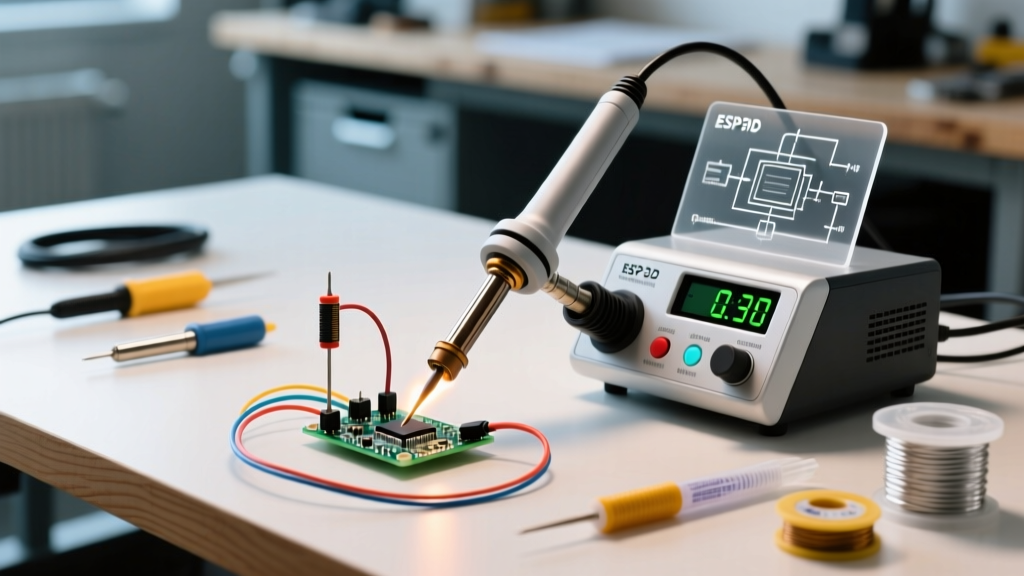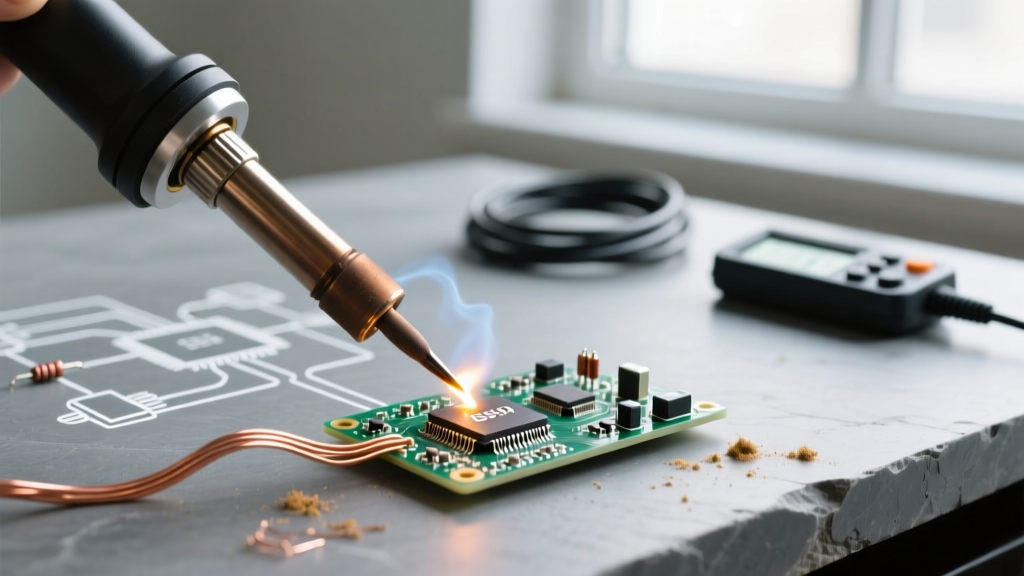

The Core Function: What Does a Soldering Iron Actually Do?
At the most fundamental level, a soldering iron is a localized thermal transfer tool. But if you ask a beginner what does a soldering iron do, they will often tell you it 'melts glue to stick wires together.' This is a dangerous misconception that leads to cold joints, damaged components, and electrical fires.
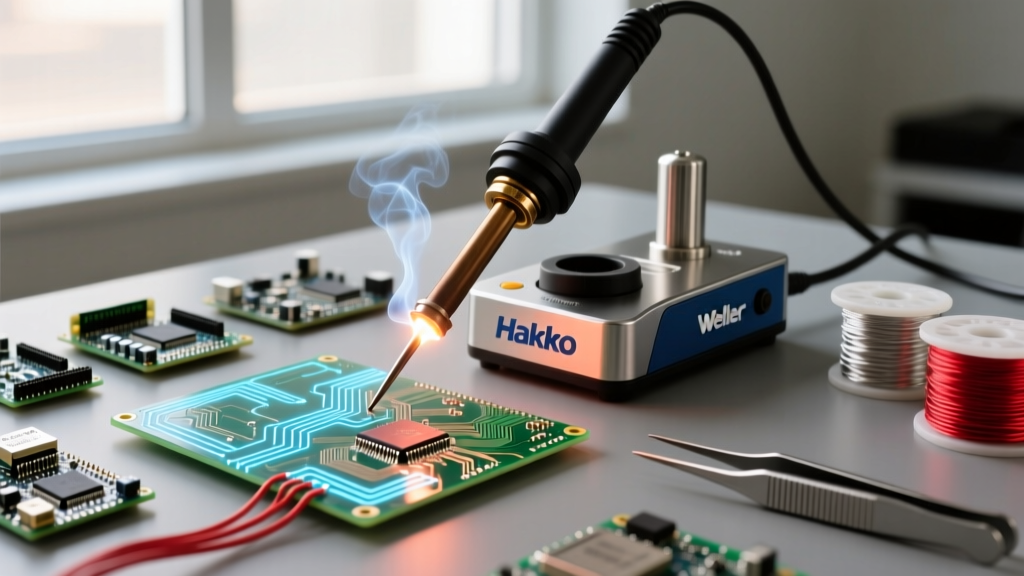
In reality, a soldering iron does not melt the metals being joined (that is welding). Instead, it transfers precise thermal energy to the base metals (like a copper PCB pad and a component lead) to raise their temperature above the melting point of a filler alloy (the solder). This triggers three simultaneous physical and chemical reactions:
- Flux Activation: The heat activates the chemical flux core inside the solder wire, which dissolves copper oxides and prevents new oxidation from forming.
- Wetting: The molten solder alloy metallurgically bonds with the clean base metal, forming an intermetallic compound (IMC) layer.
- Capillary Action: Surface tension draws the liquid solder into the microscopic gaps between the component lead and the plated through-hole.
According to the IPC J-STD-001 soldering requirements, a proper solder joint must exhibit a smooth, concave fillet with a defined wetting angle. A soldering iron's primary job is to deliver enough thermal mass to achieve this wetting in under 3 seconds, preventing thermal damage to sensitive silicon or FR4 fiberglass substrates.
The Metallurgy of Heat: Why Wattage Isn't Everything
When evaluating what a soldering iron does, you must understand thermal recovery. A 40W iron and a 70W iron might both reach 350°C (662°F) on their digital displays. However, when the 40W iron's tip touches a large copper ground plane, the plane acts as a massive heat sink. The 40W tip's temperature will plummet, resulting in a 'cold joint' where the solder cools before fully wetting the pad.
A high-quality 70W+ station detects this temperature drop via a thermocouple and surges power to the heating element to recover the heat instantly. This is why professional bench stations dominate heavy-duty electronics work.
2026 Buyer’s Matrix: Top Soldering Irons by Application
Because the physical demands of stained glass, plumbing, and micro-SMD PCB work are vastly different, there is no single 'best' iron. Below is our expert comparison matrix for the current market.
| Model | Best Application | Wattage / Power | Temp Range | Tip Ecosystem | Approx. Price |
|---|---|---|---|---|---|
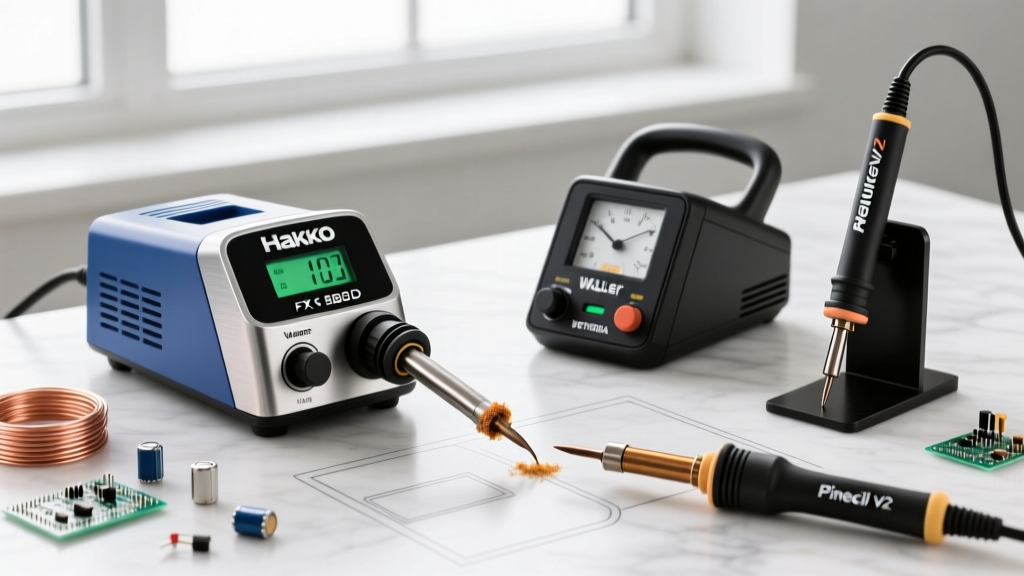
| Pinecil V2 | Portable / SMD / Hobbyist | 65W (via PD3.1) | 100°C - 450°C | TS100 / Pine64 | $26 |
| Hakko FX-888D | Pro Bench / Through-Hole | 70W | 200°C - 480°C | Hakko T18 | $115 |
| Weller WE1010NA | Heavy Electronics / Lab | 70W | 100°C - 450°C | Weller ET / LT | $110 |
| Milwaukee M18 (2688-20) | Plumbing / Field Wire | 450W Equivalent | Up to 400°C | Milwaukee Proprietary | $149 |
Category Reviews: Matching the Tool to the Task
1. The PCB & SMD Specialist: Pinecil V2
The Pinecil V2 has completely disrupted the market by answering the question of what a soldering iron can do in a pocket-sized form factor. Powered by a RISC-V processor, it supports USB-C Power Delivery (PD3.1) up to 65W.
- Pros: Unbeatable price-to-performance ratio; rapid 6-second heat-up time; open-source firmware (IronOS) allows custom PID tuning and boot logos; highly portable.
- Cons: Lacks a heavy physical base, meaning the hot wand can roll if not placed in a separate silicone holder; requires a high-quality 65W GaN charger to reach full potential.
- Expert Verdict: If you are repairing drones, soldering 0805 SMD resistors, or building keyboards on the go, the Pinecil V2 is the definitive tool. For large ground planes, its thermal mass falls slightly short of benchtop units.
2. The Professional Bench Standard: Hakko FX-888D
The Hakko FX-888D remains the undisputed workhorse of university labs and repair shops worldwide. It utilizes the T18 tip series, which offers massive thermal mass for dragging solder across SOIC chips or flooding large through-hole connectors.
- Pros: Exceptional thermal recovery; ESD-safe grounding protects sensitive MOSFETs and microcontrollers; incredibly durable ceramic heating elements.
- Cons: The digital interface requires navigating a clunky two-button menu to change temperatures or lock the screen; proprietary Hakko tip pricing is higher than generic clones.
- Expert Verdict: For daily bench work involving mixed through-hole and SMD assemblies, the FX-888D's reliability justifies the $115 price tag. As noted in Adafruit's comprehensive soldering guide, maintaining a clean, tinned tip on stations like the Hakko is critical for optimal heat transfer.
3. Heavy-Duty & Field Plumbing: Milwaukee M18 (2688-20)
What does a soldering iron do when faced with a 1-inch copper water pipe? A standard electronics iron will fail instantly. The Milwaukee M18 Soldering Iron is designed for plumbing and heavy-gauge automotive wiring. It uses a massive copper tip and an 18V lithium-ion battery to deliver the equivalent of 450W of heat.
- Pros: Cordless freedom for crawling under sinks or into engine bays; easily melts 50/50 tin-lead plumbing solder and silver-bearing alloys; reaches working temperature in under 3 minutes.
- Cons: Far too massive and hot for delicate PCB work; battery drains quickly under heavy thermal loads; tip oxidation requires aggressive wire-brushing.
- Expert Verdict: Strictly for plumbers, HVAC technicians, and automotive mechanics. Do not use this on electronics.
Critical Buying Specifications (Beyond Wattage)
When shopping, ignore marketing buzzwords and focus on these three engineering metrics:
Tip Geometry and Thermal Mass
Beginners often buy conical (pointed) tips, assuming they offer precision. In reality, a conical tip has very little thermal mass at the apex. When it touches a copper pad, the heat is instantly drained, resulting in a cold joint. Chisel and bevel (hoof) tips maximize surface area contact, ensuring rapid thermal transfer. Always match the tip width to the pad size.
ESD (Electrostatic Discharge) Safety
Modern CMOS chips and MOSFETs can be destroyed by static discharges as low as 20 volts. A proper soldering station must feature a grounded tip connected to the earth ground of your AC outlet via the third prong. If you are soldering raw silicon or bare PCBs, ESD safety is non-negotiable.
Fume Extraction and Health
The rosin and synthetic resins in solder flux release volatile organic compounds (VOCs) and aliphatic aldehydes when heated. According to NIOSH guidelines on soldering safety, prolonged exposure to colophony (rosin) fumes can cause occupational asthma and contact dermatitis. Always invest in a desktop HEPA/Carbon fume extractor (like the Hakko FA-400) or work in a heavily ventilated environment.
Frequently Asked Questions
Does a soldering iron melt the metal it is joining?
No. Soldering is distinct from welding. In welding, the base metals (like two steel pipes) are melted and fused together. In soldering, the base metals (copper, brass, gold) remain solid. Only the filler alloy (solder) melts, bonding to the surface via an intermetallic layer.
Why does my solder ball up and refuse to stick?
This happens when the base metal is oxidized or dirty, preventing 'wetting.' The flux inside your solder wire needs sufficient heat and time to clean the surface. If your iron is too cool, the flux burns off before the metal is clean. Increase your temperature by 15°C, clean the pad with isopropyl alcohol, and apply fresh flux.
Can I use plumbing solder for electronics?
Absolutely not. Plumbing solder often contains acid-core flux designed to eat through heavy pipe oxidation. If used on a PCB, this acid flux will rapidly corrode the delicate copper traces, causing short circuits and board failure. Always use rosin-core (RMA or No-Clean) flux for electronics.
The ElectricalFlux Bottom Line: Understanding what a soldering iron do at a metallurgical level transforms you from a hobbyist who 'glues wires' into a technician who engineers reliable, IPC-compliant electrical connections. Match your thermal mass to your application, respect the flux, and invest in proper ventilation.