
Beyond the Basics: What Are Soldering Irons Used For?
When beginners ask, 'what are soldering irons used for,' the most common answer is simply 'melting solder.' However, from an engineering and metallurgical perspective, a soldering iron is a localized thermal transfer device. Its true purpose is to elevate the temperature of two metal workpieces above the liquidus point of a filler alloy without exceeding the thermal degradation threshold of the surrounding materials. Whether you are joining copper pipes in residential plumbing, terminating 24AWG signal wires on a drone flight controller, or assembling stained glass, the fundamental physics remain the same. Yet, the tools required for these tasks vary wildly.
In this comprehensive tool comparison, we break down exactly what different types of soldering irons are used for, analyzing wattage requirements, thermal recovery rates, and specific 2026 market models to help you select the right thermal delivery system for your specific application.
The Core Matrix: Matching Iron Types to Specific Applications
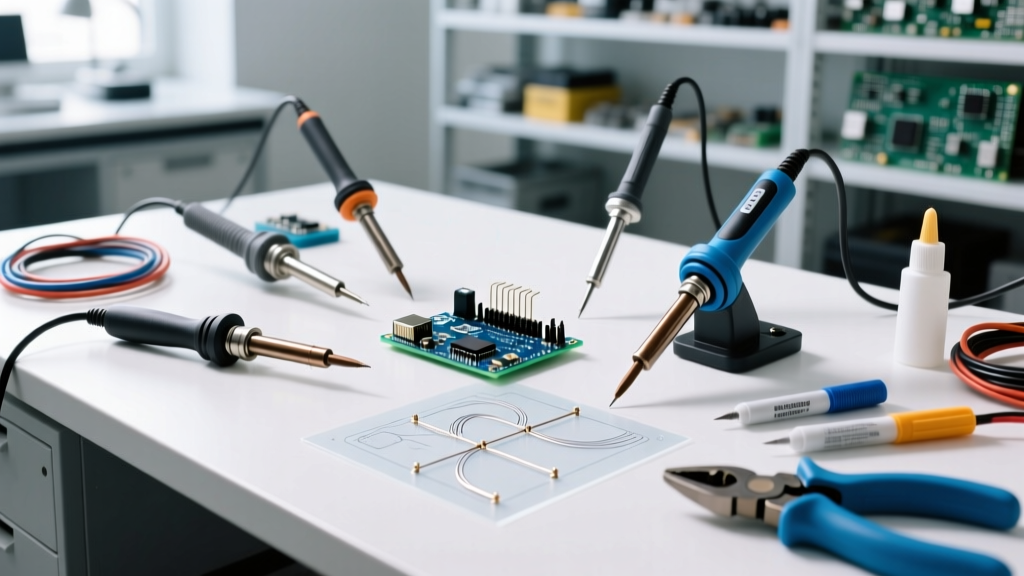
Not all soldering tools are created equal. Using a high-wattage plumbing gun on a delicate printed circuit board (PCB) will destroy the component, while using a 15W precision pencil on a 10AWG wire will result in a cold, brittle joint. Below is a comparison matrix of the primary soldering tool categories.
| Tool Category | Wattage Range | Primary Use Case | Typical Tip Geometry | 2026 Avg Cost |
|---|---|---|---|---|
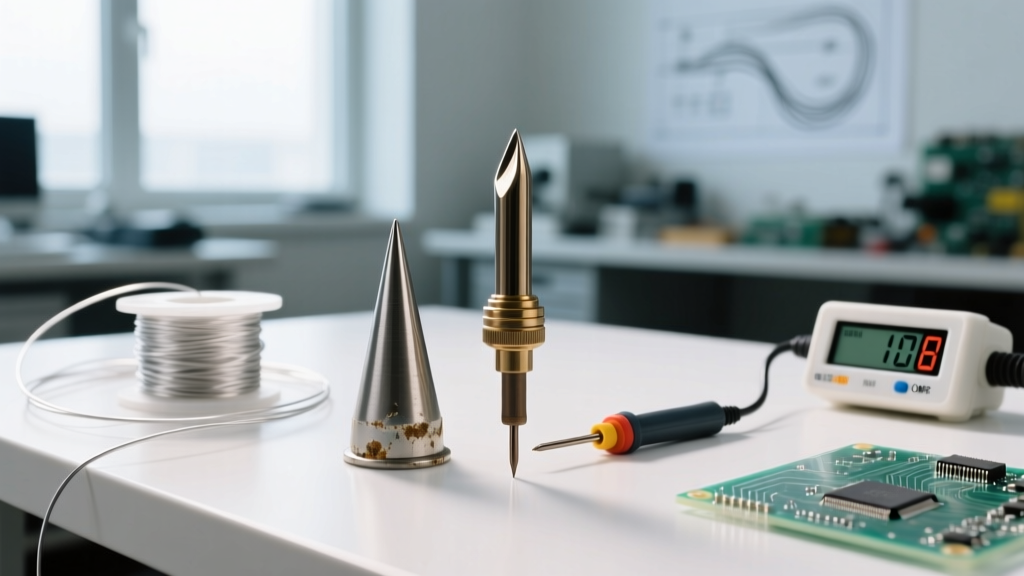
| Precision Pencil (Smart) | 65W - 120W (Peak) | SMD rework, micro-soldering, PCB assembly | Micro-conical, J-hook, Knife | $25 - $60 |
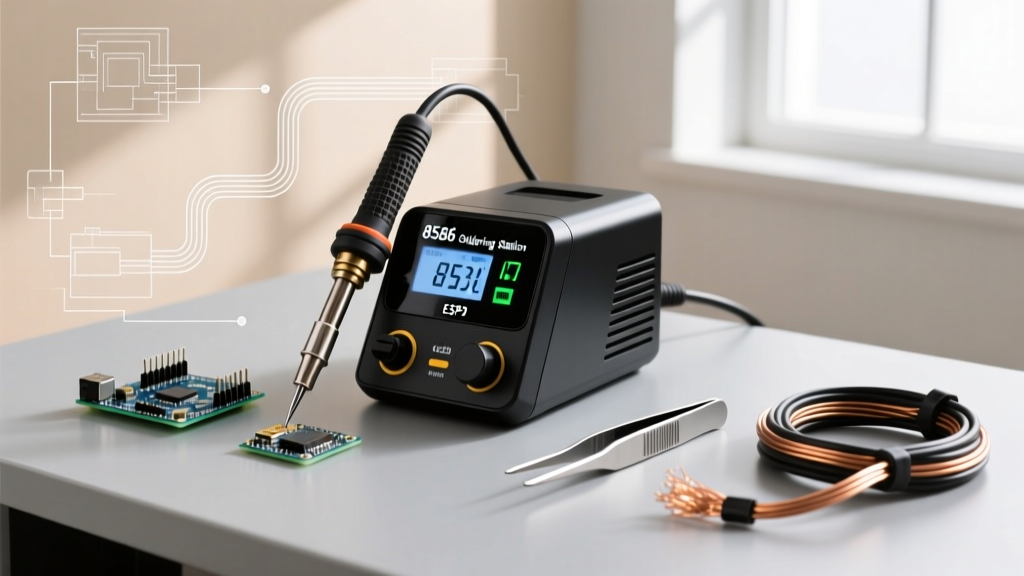
| Standard ESD-Safe Station | 60W - 75W | General electronics, through-hole, wiring | Chisel, Bevel, Standard Cone | $90 - $150 |
| High-Power Soldering Gun | 100W - 250W | Automotive wiring, heavy gauge wire, plumbing | Broad flat blade, Heavy loop | $45 - $90 |
| Rheostat/Craft Iron | 100W - 200W | Stained glass foil, jewelry, large metal art | Massive 3/8' or 1/2' Chisel | $30 - $70 |
Precision Electronics & PCB Rework
What They Are Used For
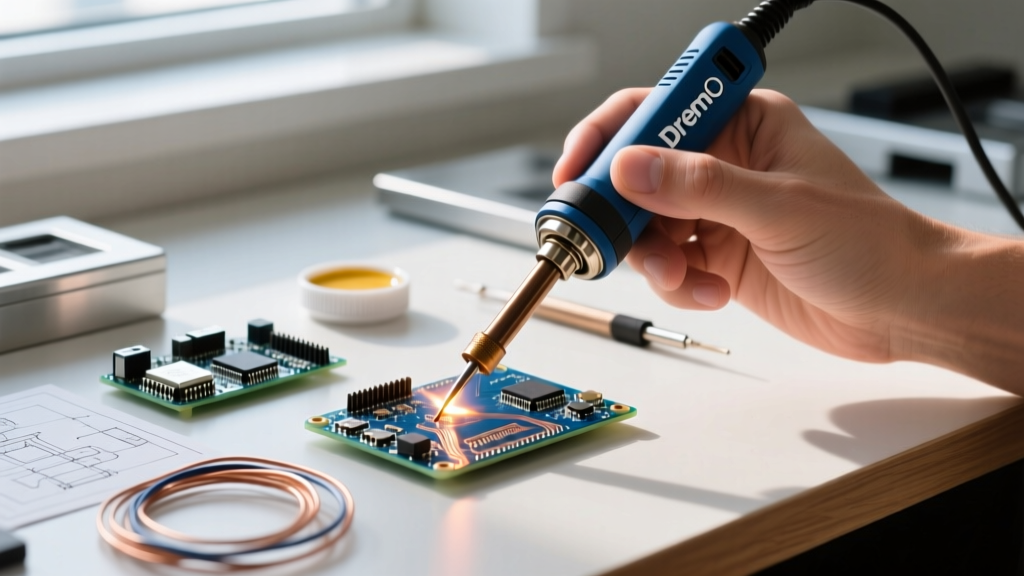
In the electronics domain, soldering irons are used for joining component leads to copper pads using low-temperature alloys like Tin-Lead (Sn60/Pb40, melting at 183°C) or Lead-Free SAC305 (melting around 217°C-220°C). The goal is to achieve a reliable intermetallic compound (IMC) layer without exceeding the Glass Transition Temperature (Tg) of the FR-4 fiberglass substrate, which typically sits between 130°C and 170°C for standard boards.
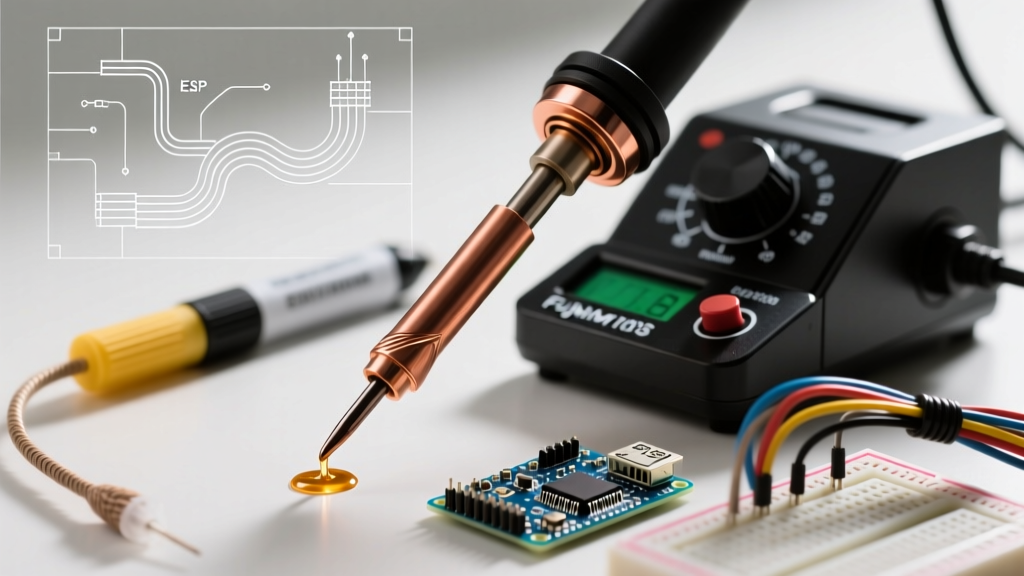
Tool Comparison: Pinecil V2 vs. Hakko FX-888D
For modern PCB work, thermal recovery is more critical than raw continuous wattage. When a cold copper ground plane touches a hot tip, it acts as a heat sink. A good station must detect this temperature drop and inject current instantly to recover.
- Pinecil V2 (Smart Iron): Powered by a RISC-V chip and capable of USB-C Power Delivery (up to 65W) or DC barrel input (up to 120W). Priced around $26 in 2026, it features rapid thermal recovery and customizable PID curves. It is ideal for hobbyists, drone builders, and field technicians who need portability.
- Hakko FX-888D (Standard Station): The industry workhorse for benchtop environments. Delivering 70W via a traditional transformer, it costs approximately $115. While it lacks the instant-heat smart features of the Pinecil, its heavy ceramic heating element and ESD-safe grounding make it the standard for continuous production-line through-hole soldering.
Expert Insight: According to the IPC J-STD-001 standards for soldered electrical assemblies, proper wetting requires the iron tip to be roughly 50°C to 100°C hotter than the solder's liquidus point. For lead-free SAC305, set your Hakko or Pinecil to 350°C-380°C to ensure proper flow without oxidizing the flux prematurely.
Heavy-Duty Plumbing & Automotive Wiring
What They Are Used For
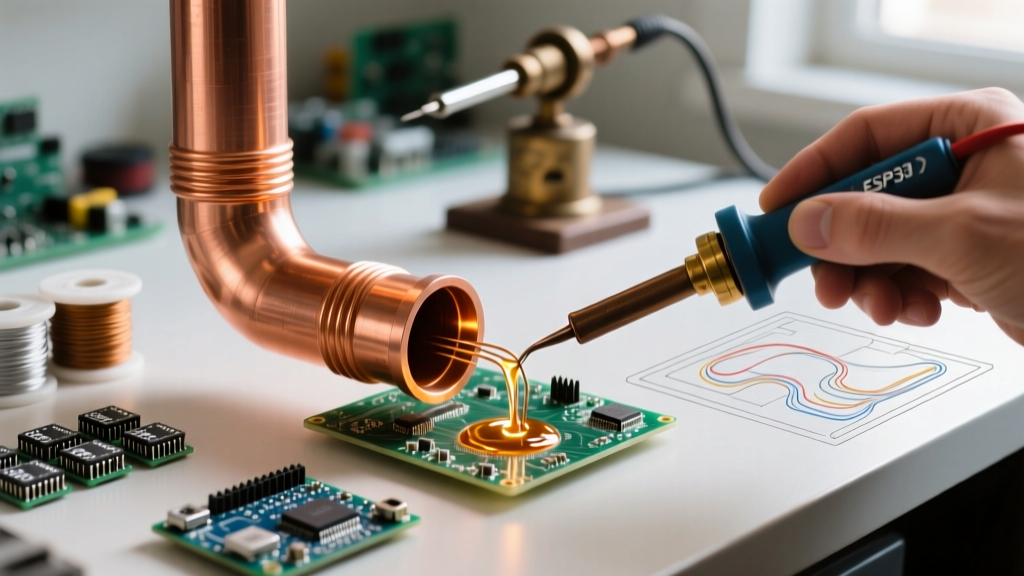
When asking what soldering irons are used for in construction and automotive contexts, the answer shifts to high-thermal-mass joints. Sweating a 1/2-inch copper pipe or soldering 10AWG battery cables requires transferring massive amounts of joules into thick metal quickly. Standard pencil irons will fail here; the metal will act as an infinite heat sink, resulting in a 'cold joint' where the solder pastes onto the surface rather than alloying with it.
Tool Comparison: Weller 8200PK vs. Bernzomatic Torch
- Weller 8200PK Soldering Gun: This dual-trigger gun outputs 120W on low and 168W on high. Priced at $55, it uses a transformer to push massive current through a thick copper loop tip. The loop can be wrapped around a thick wire to heat it from all sides simultaneously. It is the definitive tool for automotive stereo installations and heavy-gauge RC battery connectors (like XT90 or AS150).
- Bernzomatic TS8000 Torch: While technically a gas torch and not an electrical iron, it is frequently used in plumbing where even a 250W soldering gun falls short. For 3/4-inch or 1-inch copper water lines, a propane/MAPP gas torch is required to bring the entire fitting above the 400°F melting point of silver-bearing plumbing solder.
Hobbyist Crafting & Stained Glass
What They Are Used For
In the crafting world, soldering irons are used for the 'copper foil' method of stained glass assembly and jewelry making. Unlike electronics, where joints are measured in millimeters, stained glass requires running continuous, smooth beads of 60/40 solder along feet of copper tape.
This requires a tool with a massive tip and a rheostat (variable voltage dial) to maintain a steady, rolling melt pool. The Weller W100PG (100W) paired with a massive 3/8-inch chisel tip is a favorite among artisans. The broad, flat surface area of the tip allows the solder to flow smoothly over the copper foil without snagging, a technique that is impossible with the sharp conical tips used in micro-electronics.
Thermal Theft and Failure Modes: The Cost of the Wrong Tool
Understanding what soldering irons are used for also means understanding how they fail when misapplied. The most common failure mode in DIY electronics is Thermal Theft. This occurs when an underpowered iron (e.g., a cheap 30W craft iron) is applied to a joint connected to a large ground plane.
- The Delamination Cascade: The user holds the underpowered iron on the pad for 15+ seconds, waiting for the solder to melt. The prolonged heat transfers through the copper via and into the inner layers of the PCB. The epoxy resin exceeds its Tg limit, turns soft, and the copper pad physically lifts off the board, destroying the trace.
- Flux Burn-Off: Prolonged heating burns the rosin core out of the solder wire. Without active flux to remove oxidation, the solder forms a dull, grainy, and mechanically weak sphere that will eventually crack under vibration.
To prevent this, always match the thermal mass of the tip to the joint. Use a wide chisel tip for ground planes to maximize surface contact area, and rely on a high-wattage station (like the Hakko FX-951 or Pace ADS200) that can dump 100+ watts instantly to complete the joint in under 3 seconds.
Frequently Asked Questions
Can I use a standard 60W craft iron for Arduino and PCB work?
While you technically can, it is highly discouraged. Cheap craft irons lack closed-loop temperature control. Their tips often exceed 450°C at idle, which will rapidly oxidize the iron plating, leading to 'non-wetting' tips that refuse to pick up solder. Furthermore, they lack ESD (Electrostatic Discharge) grounding, which can fry sensitive MOSFETs and microcontrollers.
What is the difference between a soldering iron and a soldering station?
A soldering iron is typically a standalone wand that plugs directly into mains voltage, often running at a fixed, unregulated temperature. A soldering station includes a separate base unit with a transformer, a digital thermostat, and a closed-loop thermocouple sensor in the tip. Stations offer precise temperature control, faster thermal recovery, and safer operation, making them mandatory for professional electronics repair.
Are cordless butane soldering irons any good?
Butane irons (like the Weller Portasol) are excellent for field work, automotive repairs, and outdoor plumbing where AC power is unavailable. They operate via catalytic heating and can reach equivalent wattages of 75W-100W. However, they lack the precise digital temperature control required for delicate surface-mount device (SMD) rework.
Final Thoughts
Ultimately, what soldering irons are used for depends entirely on the thermal mass of your workpiece and the metallurgical requirements of your alloy. By moving past the generic 'one-size-fits-all' mindset and selecting a tool based on wattage, tip geometry, and thermal recovery metrics, you will dramatically improve your joint reliability and reduce component damage. For further reading on safe soldering practices and fume extraction, consult the guidelines provided by NASA's Electronic Parts and Packaging (NEPP) Program, which maintains some of the most rigorous workmanship standards in the industry.