
The 2026 Standard: Maintaining the Hakko FX-888D
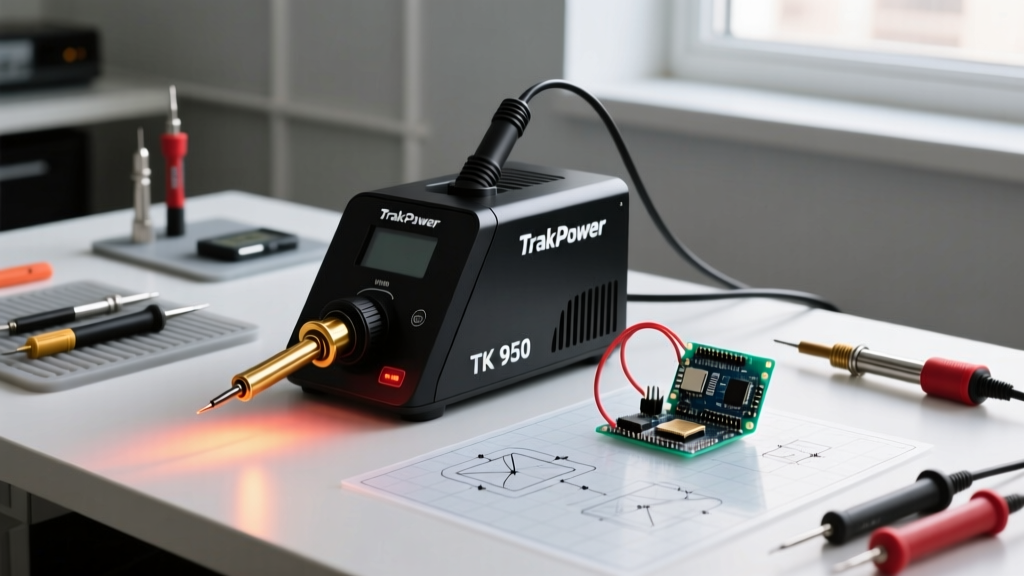
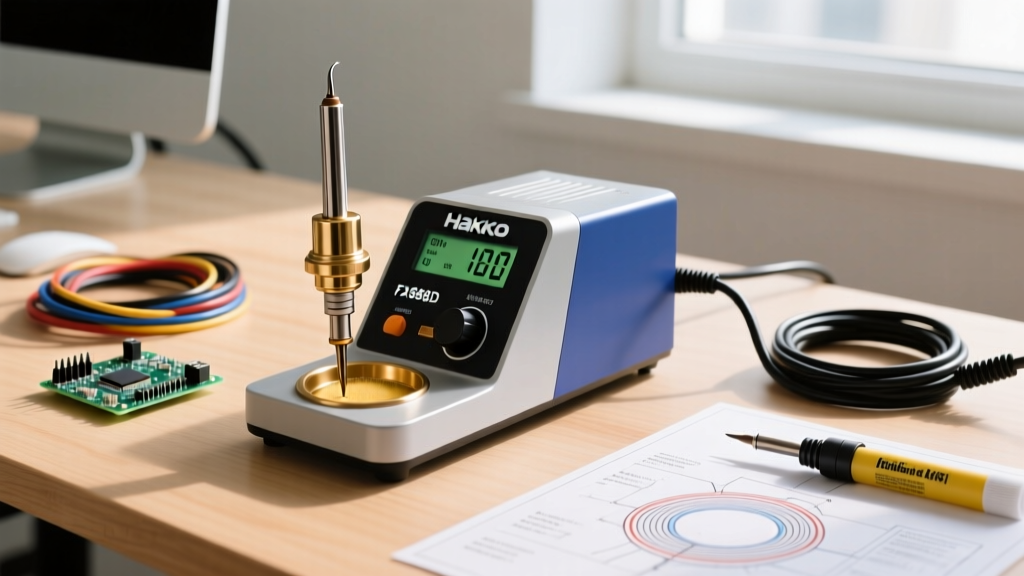
Even in 2026, the Hakko FX888D soldering station remains the undisputed benchmark for 70W digital benchtop soldering. Transitioning from its analog predecessor, the FX-888D introduced a digital PID (Proportional-Integral-Derivative) controller, a two-button interface, and robust thermal recovery. However, daily use in demanding DIY and professional environments inevitably leads to predictable failure modes. From degraded T18 tip plating to internal cord continuity loss, understanding the exact diagnostics of this station is critical for minimizing downtime and avoiding unnecessary replacement costs.
A genuine Hakko FX888D soldering station currently retails between $125 and $140. Replacing it due to a $20 heating element failure or an oxidized tip is a waste of capital. This guide provides deep-level troubleshooting, multimeter diagnostics, and preventative maintenance protocols aligned with industry standards.
Diagnostic Triage: Decoding FX-888D Error Codes
The FX-888D features a built-in self-diagnostic system. When the microcontroller detects an anomaly in the thermal loop, it halts power to the wand and flashes a specific error code on the LED display. Understanding these codes is your first step in troubleshooting.
- H-1 (Sensor Error): The station cannot read the thermocouple. This usually indicates a broken sensor wire inside the wand cord, a bent pin on the 5-pin DIN connector, or a completely failed Hakko A1321 heating element.
- H-2 (Heater Error): The microcontroller is sending power, but the heater coil is open or shorted. This points to a blown internal thermal fuse within the A1321 ceramic core or a severed heater wire.
- Blinking Temperature Display: The station is actively heating but failing to reach the target setpoint within the allotted time. This is often caused by severe tip oxidation, a loosely seated tip, or a failing triac on the main PCB.
Multimeter Testing: The Hakko A1321 Heating Element
When confronted with an H-1 or H-2 error, do not immediately order a replacement wand. The issue often lies in the consumable A1321 heating element. To test it, you will need a True-RMS multimeter (such as a Fluke 115) set to the 200Ω resistance range.
Unplug the station from the mains. Unscrew the wand handle and carefully pull the 5-pin connector out of the housing. Place your multimeter probes on the corresponding pins to verify continuity and resistance.
| Connector Pins | Function | Expected Resistance (at 20°C) | Failure Symptom if Out of Spec |
|---|---|---|---|
| Pins 1 & 2 | Heater Coil | 10Ω - 15Ω | H-2 Error / No Heat |
| Pins 4 & 5 | Thermocouple Sensor | 1Ω - 3Ω | H-1 Error / Erratic Readings |
| Pin 3 | Earth Ground / Shield | Continuity to tip collar | Static discharge risk to sensitive ICs |
Expert Note: If Pins 4 and 5 read 'OL' (Open Loop), the microscopic thermocouple junction inside the ceramic heater has fractured. The A1321 element must be replaced. A genuine Hakko A1321 replacement costs approximately $18 to $25 in 2026. Avoid $5 aftermarket clones, as their PID tuning curves are wildly inaccurate, often leading to temperature overshoots exceeding 420°C, which will instantly destroy your T18 tips.
T18 Tip Chemistry and Combating Oxidation
The most frequent complaint among FX-888D users is 'tip non-wetting,' where molten solder balls up and rolls off the iron. This is rarely a station fault; it is a chemical failure of the tip's iron plating.
According to the IPC J-STD-001 soldering requirements, proper thermal management and flux residue removal are mandatory to maintain tip integrity. The T18 series tips feature a copper core plated with iron to resist solder erosion, and a final layer of chrome to prevent solder from climbing up the shaft.
'Soldering iron tips shall be kept tinned at all times when heated. Exposed iron plating will oxidize rapidly at temperatures above 300°C, creating a thermal barrier that prevents heat transfer to the joint.' — NASA-STD-8739.3 Workmanship Standard
The 599B Tip Tinner vs. Brass Sponge Debate
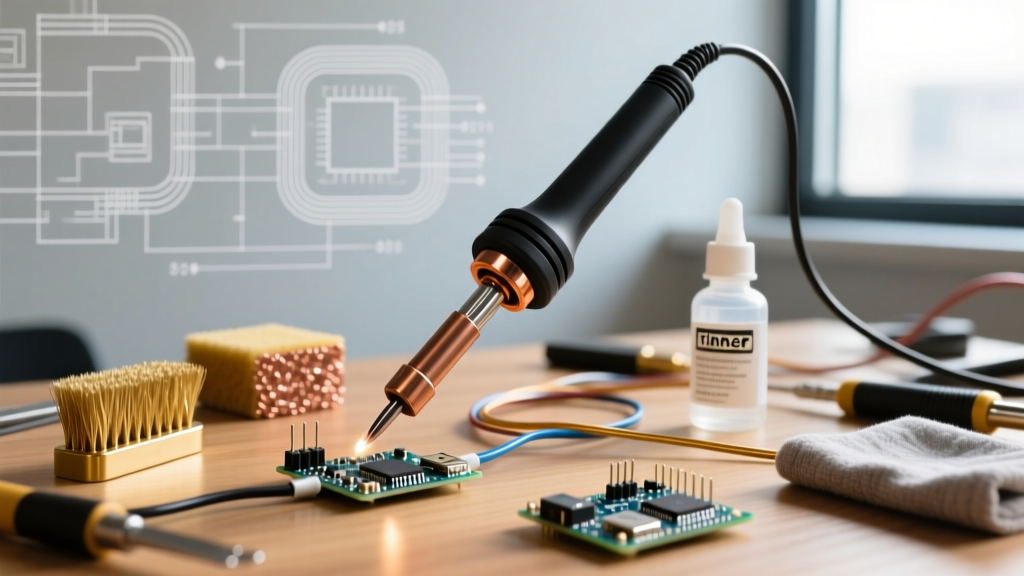
Never use sandpaper or a file on a T18 tip. Doing so will expose the copper core, which will rapidly dissolve into molten solder, ruining the tip in minutes. Instead, utilize the Hakko 599B Tip Tinner. This compound is a mixture of phosphoric acid salts and solder powder. When you plunge an oxidized tip into the 599B, the mild acid strips the black iron oxide layer, and the powder instantly re-tins the surface. For daily wiping, use a dry brass wire sponge rather than a damp cellulose sponge; the thermal shock of a wet sponge micro-fractures the iron plating over time.
Cord Assembly (B5039) Continuity Failures
If the A1321 element tests perfectly at the wand connection, but the station still throws an H-1 error, the fault lies in the B5039 cord assembly. The FX-888D cord is made of high-silicone rubber, which is heat resistant but prone to internal copper fatigue near the strain relief grommets.
- Disconnect the station from AC power.
- Open the station chassis by removing the four bottom Phillips screws.
- Locate the white 5-pin JST connector on the main PCB.
- Use your multimeter to test continuity from the PCB-side connector to the wand-side 5-pin DIN.
- Flex the cord near the strain relief while probing. If continuity intermittently drops, the internal wires are fatigued.
While you can attempt to splice the cord, the high current (up to 3A) passing through the heater pins makes soldered splices a fire hazard if not executed perfectly. Replacing the entire B5039 cord assembly ($25-$30) is the safest and most reliable repair.
Temperature Offset Calibration Protocol
Over time, the thermocouple in the A1321 element drifts. To maintain compliance with precise reflow profiles, you must calibrate the station's offset. You will need a dedicated soldering tip thermometer, such as the Hakko FG-100B. Do not use cheap K-type bead probes; their thermal mass is too high to accurately read the surface temperature of a T18 tip.
- Install a fresh, genuine T18-B (conical) or T18-D24 (chisel) tip.
- Turn the FX-888D on and set the temperature to 350°C. Allow it to stabilize for 3 minutes.
- Place the FG-100B thermocouple sensor on the tip, using a small dab of thermal compound or fresh solder to ensure thermal coupling.
- Note the actual temperature (e.g., 342°C).
- Turn the station OFF.
- Press and hold both the UP and DOWN buttons simultaneously, then turn the station ON.
- The display will show the current offset value. Use the UP/DOWN buttons to add or subtract the difference (in this case, +8).
- Press and hold the ENTER button (the star icon) for 2 seconds to save the new calibration to the EEPROM.
2026 Preventative Maintenance Schedule
Implementing a strict maintenance matrix extends the lifespan of your Hakko FX888D soldering station by years and ensures consistent thermal transfer to your PCB pads.
| Frequency | Maintenance Task | Tools / Materials Required |
|---|---|---|
| Daily | Wipe tip on brass sponge; apply thick layer of 63/37 solder before powering off. | Hakko 599B Brass Sponge, Sn63/Pb37 Solder |
| Weekly | Inspect wand cord strain reliefs for micro-tears; clean station ventilation slots. | Isopropyl Alcohol (99%), Soft brush |
| Monthly | Verify tip-to-ground resistance to ensure ESD safety for sensitive CMOS logic. | Multimeter (Target: < 2Ω to ground pin) |
| Annually | Perform full PID offset calibration; inspect internal glass-tube fuse (2A 250V). | Hakko FG-100B Thermometer, Multimeter |
A Warning on Counterfeit Units in the 2026 Market
As the Hakko FX888D soldering station continues to dominate the market, counterfeit units remain rampant on third-party marketplaces, often priced suspiciously between $40 and $60. These clones use cheap, uncalibrated microcontrollers and substandard transformers. A counterfeit station may display 350°C on the screen while the actual tip temperature soars past 450°C, instantly burning flux cores and lifting PCB pads. Always verify the Hakko official FX-888D specifications regarding unit weight (a genuine station weighs exactly 1.3 kg due to the heavy laminated iron-core transformer) and check for crisp, laser-etched silkscreen on the internal PCB. If your station exhibits wild temperature swings that PID calibration cannot fix, you are likely operating a clone.