
The Legacy of the Weller WESD51 in 2026
For over a decade, the Weller WESD51 was the undisputed king of the mid-tier electronics workbench. As the digital-display sibling to the legendary analog WES51, it offered ESD-safe operation, reliable thermal recovery, and a straightforward interface that didn't require a computer science degree to operate. But as we navigate the electronics landscape in 2026, the market has shifted dramatically. With the rise of USB-C PD smart irons and fully digital PID stations, where does the classic Weller soldering station WESD51 stand today?
This deep-dive comparison evaluates the WESD51's real-world performance against its official successor (the Weller WE1010NA), its historical rival (the Hakko FX-888D), and the modern open-source disruptor (the Pinecil V2). Whether you are hunting for a used bargain on eBay or deciding whether to pull the trigger on new-old stock, this guide provides the exact specifications, market pricing, and thermal data you need to make an informed decision.
Under the Hood: Analog Soul, Digital Face
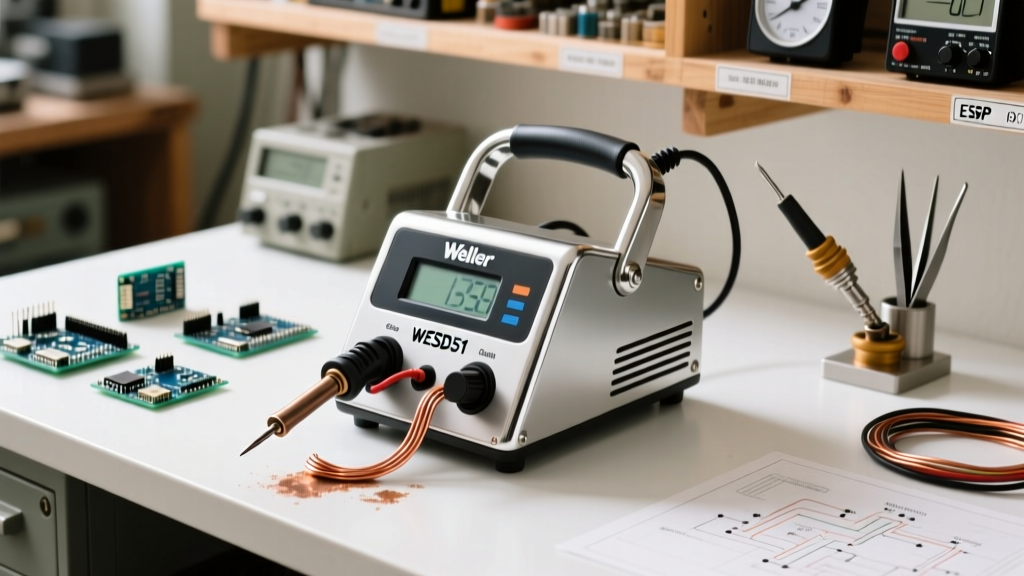
A common misconception among newer hobbyists is that the 'D' in WESD51 implies a fully digital control loop. In reality, the WESD51 utilizes a digital display and push-button temperature selection, but the underlying heating element control remains rooted in Weller's classic analog feedback architecture.
The station delivers 60 watts of power to the iron and utilizes the proprietary ETA series tips (such as the ETA-0.031 screwdriver or SMT-063 for surface-mount work). In the ETA ecosystem, the heating element and the tip are a single, integrated unit. This design eliminates the thermal interface resistance found in sleeve-style tips, resulting in exceptional heat transfer. However, it also means that replacing a worn tip requires replacing the heater, driving the long-term consumable cost higher than modern alternatives.
Expert Insight: The WESD51's analog control loop is incredibly robust. While it lacks the millisecond-response PID tuning of modern JBC stations, its heavy thermal mass and continuous feedback loop make it remarkably forgiving when dragging through large ground planes on multi-layer PCBs.
Head-to-Head Comparison Matrix
To understand the WESD51's position in the current market, we must compare its core specifications against the stations that have largely replaced it on modern workbenches.
| Feature | Weller WESD51 | Weller WE1010NA | Hakko FX-888D | Pinecil V2 |
|---|---|---|---|---|
| Power Output | 60W | 70W | 70W | 65W (via PD 3.0) |
| Temp Range | 350°F - 850°F | 200°F - 850°F | 120°F - 899°F | Room - 450°C |
| Tip Ecosystem | Weller ETA (Integrated Heater) | Weller ET (Sleeve) | Hakko T18 (Sleeve) | TS100 / Pine64 (Sleeve) |
| Control Logic | Analog Loop / Digital Display | Digital PID | Digital PID | RISC-V / FOC PID |
| ESD Safe | Yes (Hardwired Ground) | Yes | Yes | No (Requires mod/ground wire) |
| 2026 Market Price | $65 - $95 (Used/Refurb) | $110 - $125 (New) | $105 - $120 (New) | $26 (Iron only) |
Weller WESD51 vs. Weller WE1010NA (The Successor)
Weller officially retired the WES51/WESD51 line in favor of the WE1010NA. The WE1010 bumps the wattage to 70W and introduces a true digital PID controller, resulting in a faster initial heat-up time (roughly 18 seconds to 650°F compared to the WESD51's 28 seconds).
However, the most critical difference lies in the tip ecosystem. The WE1010 uses the Weller ET series tips, which separate the heating element from the soldering tip. While this makes replacement tips significantly cheaper (around $8-$12 each versus $35-$45 for an ETA assembly), it introduces a slight thermal lag. For heavy-duty through-hole work and thick wire tinning, the integrated heater of the WESD51's ETA tips still holds a marginal advantage in sustained thermal recovery. If you already own a dozen ETA tips, the WESD51 remains a highly relevant workstation.
Weller WESD51 vs. Hakko FX-888D (The Rival)
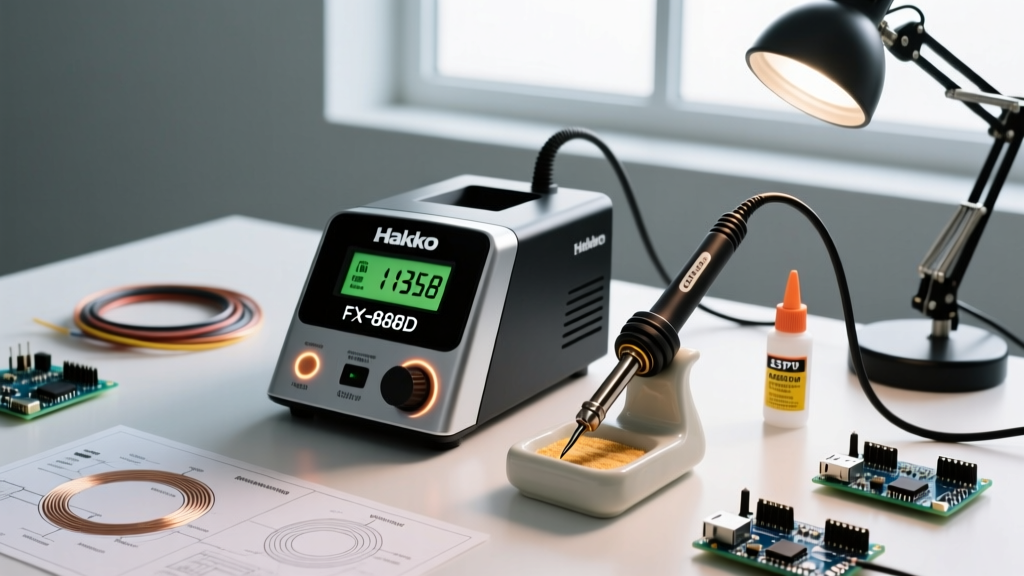
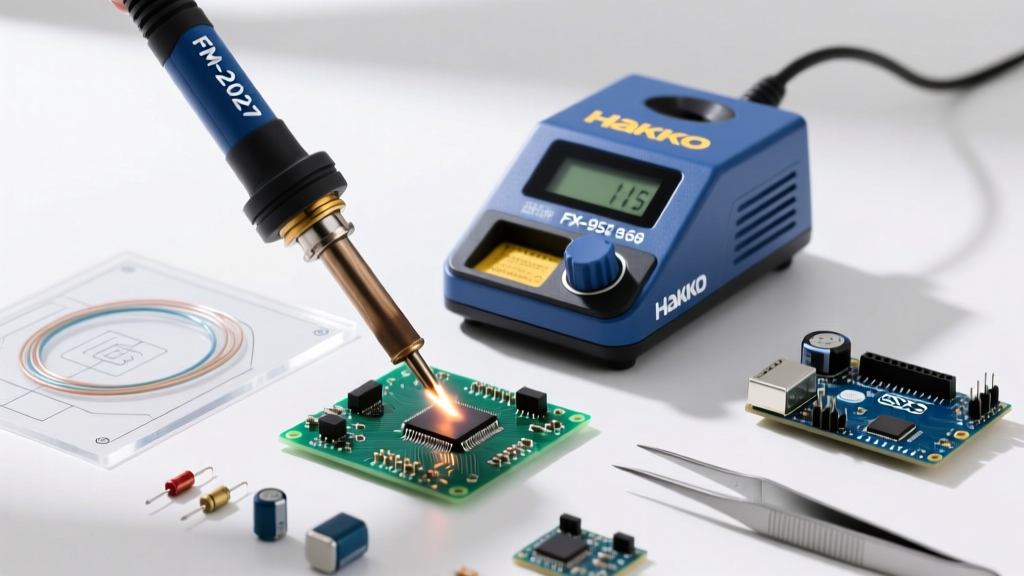
The Hakko FX-888D has been the default recommendation for entry-level professionals for years. Like the WE1010, it utilizes a sleeve-style tip (T18 series) and a 70W digital heater. Where the WESD51 wins is in user interface and ESD safety. The WESD51 features dedicated push buttons for temperature adjustment and a hardwired ESD ground straight to the iron's shaft. The FX-888D requires navigating a clunky two-button menu system to change temperatures, and early production runs of the FX-888D had documented issues with ESD grounding continuity that required user verification.
Furthermore, according to the IPC J-STD-001 standards for soldered electrical assemblies, maintaining precise thermal profiles is critical to avoid cold joints or thermal pad lift-off. The WESD51's analog feedback loop is notoriously stable, rarely overshooting the target temperature, whereas the FX-888D can exhibit minor oscillation during idle states.
Weller WESD51 vs. Pinecil V2 (The Modern Disruptor)
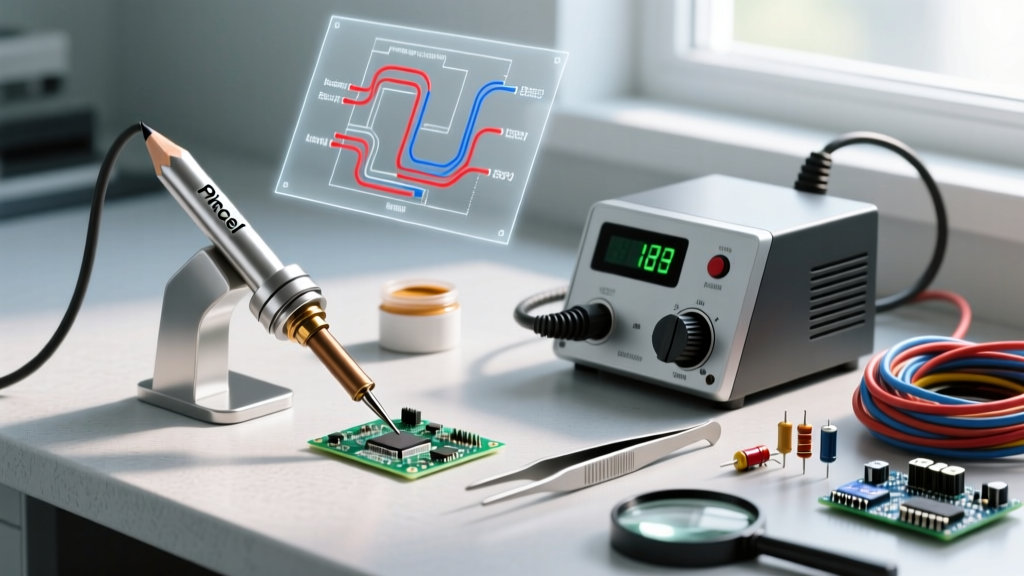
It is impossible to discuss soldering stations in 2026 without addressing the Pinecil V2. Priced at a mere $26 (plus the cost of a 65W USB-C PD power supply), the Pinecil V2 uses a RISC-V chip and Field Oriented Control (FOC) to drive its heater with terrifying efficiency. It heats up in under 10 seconds and supports custom firmware like IronOS.
Why would anyone buy a bulky WESD51 when the Pinecil exists? Galvanic isolation and grounding. The Pinecil is not inherently ESD-safe and relies on the grounding of your USB-C power brick, which can be unreliable or carry high-frequency switching noise. When working on sensitive MOSFETs, bare CMOS ICs, or RF modules, the WESD51's heavy, isolated transformer and hardwired ground strap provide a layer of safety that cheap switch-mode USB-C adapters simply cannot guarantee. For heavy plumbing or large wire splices, the WESD51's physical mass also acts as a better heat sink for the user's hand.
Sourcing, Pricing, and the Counterfeit Epidemic
If you are looking to purchase a Weller WESD51 today, you are almost certainly looking at the secondary market. New-old stock on Amazon is frequently priced above $160, which is a poor investment given that a brand-new WE1010NA costs around $115. The sweet spot for a used, fully functional WESD51 on eBay or local surplus auctions is between $65 and $95.
The Tip Counterfeit Problem
When maintaining an older WESD51, sourcing genuine ETA tips is paramount. The market is flooded with counterfeit Weller tips that use substandard copper cores and poor iron plating. According to industry analyses referenced by Weller Tools, counterfeit tips can exhibit thermal resistance up to 40% higher than genuine parts, forcing the user to increase the station's temperature dial, which accelerates oxidation and destroys PCB pads. Always purchase tips from authorized distributors like Mouser, Digi-Key, or directly from Weller's verified partners.
Frequently Asked Questions (FAQ)
Can I use Weller ET tips on the WESD51?
No. The WESD51 is strictly designed for the ETA series (integrated heater). The ET series (sleeve-style) is meant for older WSP80 irons and the newer WE1010 station. Attempting to mix these ecosystems will result in poor thermal contact and potential damage to the station's sensor.
Is the WESD51 safe for SMD (Surface Mount Device) work?
Yes, provided you use the correct tip and lower the temperature. Using an SMT-063 or ETA-0.015 tip at 600°F (315°C) with a high-quality no-clean flux will yield excellent results on 0603 and 0805 components. For fine-pitch QFP chips, a hot air rework station is still recommended over any contact iron.
Why does my WESD51 display flash 'ERR'?
An 'ERR' code on the digital display typically indicates a broken thermocouple or a failed heating element inside the ETA tip assembly. Because the sensor and heater are one unit, replacing the tip will almost always resolve this error. If a new tip does not fix it, the internal ribbon cable connecting the iron handle to the base station may be fractured.
Final Verdict: Should You Buy the WESD51 Today?
The Weller soldering station WESD51 is a masterpiece of early-2000s engineering that still holds its own for specific use cases. If you can source a used unit in good condition for under $90, it remains an incredibly robust, ESD-safe workhorse for through-hole soldering, wire harnessing, and general bench work. However, if you are buying brand new, or if your primary focus is micro-SMD rework and rapid tip swapping, your money is better spent on the Weller WE1010NA or a high-end USB-C PD setup with a dedicated grounding mat. For the budget-conscious technician who values raw thermal stability over smart features, the WESD51 remains a legendary tool worth keeping on the bench.