
The Metallurgy of Failure: Why Hakko Tips Degrade
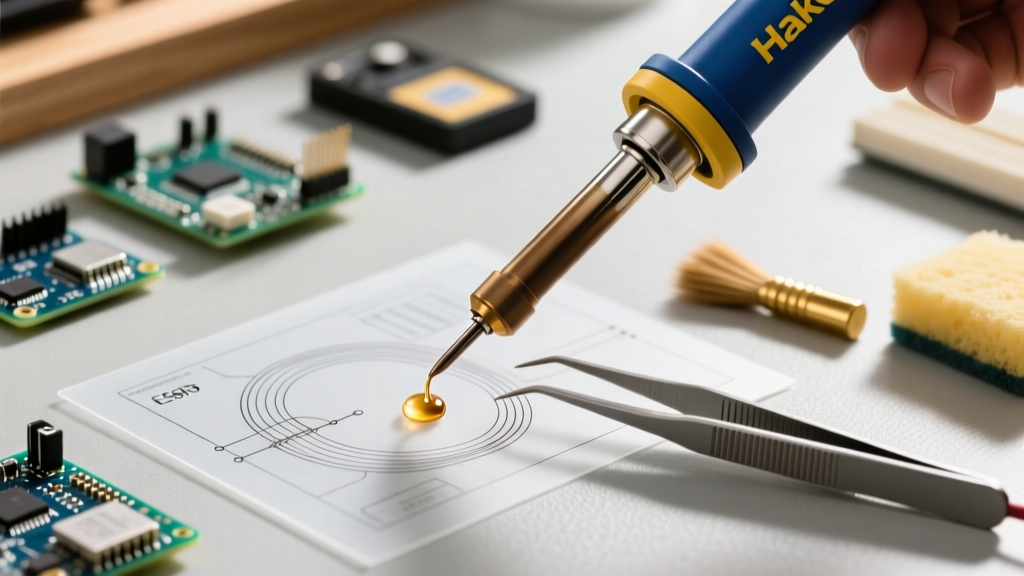
When working with precision electronics, your Hakko soldering iron tips are the critical bridge between thermal energy and your PCB pads. However, even premium Japanese-engineered tips from the T18 series (for the FX-888D) or the T12 cartridge series (for the FX-951) are not immune to degradation. To effectively troubleshoot hakko soldering iron tips, you must first understand their physical anatomy.
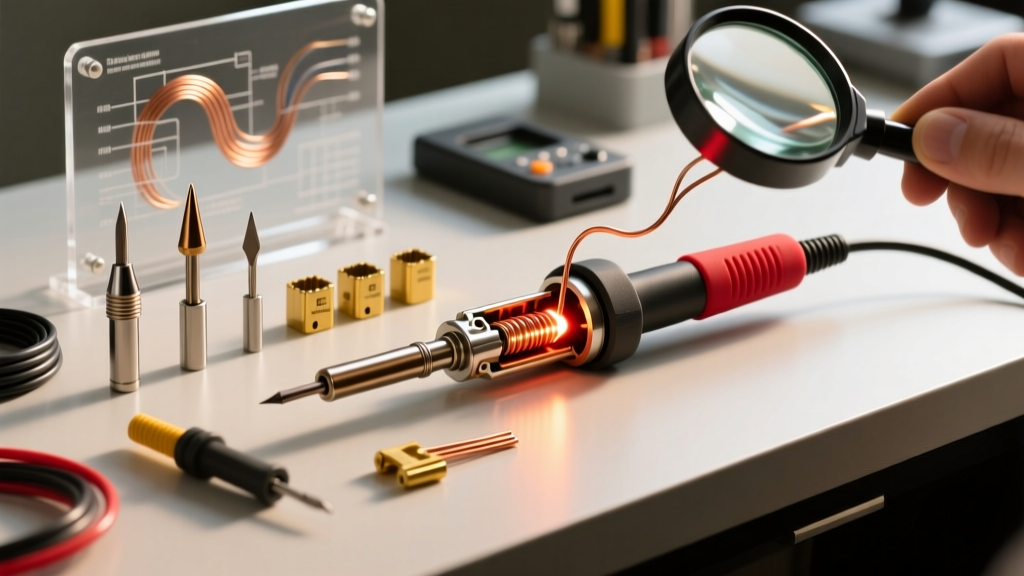
A standard Hakko tip is not a solid piece of metal. It features a high-purity copper core for rapid thermal transfer, coated with an iron plating layer roughly 0.1mm to 0.2mm thick to prevent the molten solder from dissolving the copper. The sides are often coated with a chromium layer to prevent solder from creeping up the barrel, while the very working end is exposed, pure iron. When troubleshooting oxidation, pitting, or non-wetting issues, you are almost always dealing with the failure of that microscopic iron plating layer.
Diagnostic Matrix: Identifying Your Tip's Condition
Before attempting any restoration, visually inspect the working end of your tip under a magnifying lamp. Use the following diagnostic matrix to determine the root cause and the appropriate intervention strategy.
| Visual Symptom | Root Cause | Immediate Action Required | Prognosis |
|---|---|---|---|
| Black or blue crusty buildup | Severe oxidation from excessive heat or leaving the iron idle without tinning. | Chemical reduction using Hakko FS-100 Tip Tinner. | Excellent (Fully recoverable) |
| Dull, matte grey appearance | Micro-oxidation and flux carbon buildup. | Wipe on a dry brass sponge and apply fresh Sn63/Pb37 solder. | Excellent (Fully recoverable) |
| Pitting, craters, or rough texture | Iron plating dissolution caused by highly active fluxes or mechanical scraping. | Replace the tip immediately. Do not use. | Fatal (Tip is permanently ruined) |
| Solder balls up and rolls off | Silicone residue, conformal coating contamination, or localized chromium bleed. | Clean with 99% Isopropyl Alcohol (IPA) and re-tin with rosin flux. | Good (Usually recoverable) |
The Step-by-Step Resurrection Protocol
If your hakko soldering iron tips have developed a black, non-wetting oxide layer, do not throw them away. A genuine Hakko T18-B or T12-B tip costs between $9 and $18. Follow this tiered restoration protocol to save your investment.
Level 1: The Dry Brass Sponge Technique
Never use a wet cellulose sponge for daily maintenance. Dropping a 350°C tip into a wet sponge causes an instantaneous temperature drop of up to 100°C. This thermal shock induces micro-cracks in the iron plating, allowing molten solder to penetrate and dissolve the copper core. Instead, use a Hakko 599B Brass Sponge. The brass shavings scrape off oxidized solder and carbonized flux without dropping the tip temperature drastically, preserving the thermal equilibrium of your heating element.
Level 2: Chemical Reduction (Tip Tinner)
For heavy black oxidation that a brass sponge cannot remove, you need a chemical reduction agent. The Hakko FS-100 Tip Tinner contains a mixture of mild reducing acids and powdered solder.
- Set your station to a moderate 300°C (572°F).
- Plunge the oxidized tip directly into the FS-100 paste for 2 to 3 seconds.
- You will see a violent boiling reaction as the acids strip the iron oxide layer.
- Withdraw the tip and immediately wipe it on your brass sponge.
- Apply fresh, high-quality rosin-core solder to re-establish the protective wetting layer.
Level 3: The 'Last Resort' Mechanical Polish
Expert Warning: Never use a steel file, sandpaper, or a Dremel tool on a Hakko tip. If you sand through the 0.1mm iron plating, the underlying copper will be exposed to molten solder. Copper dissolves into tin at an alarming rate, and your tip will physically disintegrate into craters within hours of use. Only attempt mechanical polishing if the tip is already destined for the trash.
If chemical tinning fails, some technicians use a fiberglass scratch pen or 1000-grit wet/dry sandpaper to gently polish the very tip until bare metal shines, immediately followed by aggressive tinning with Kester 186 mild rosin flux. This is a temporary fix that buys you a few more hours of life on a dying tip.
Temperature Calibration and Thermal Runaway
A primary cause of premature tip death is running the station too hot. According to the IPC J-STD-001 soldering standard, excessive heat degrades flux activity and accelerates tip oxidation. Many hobbyists mistakenly set their Hakko FX-888D to 400°C (752°F) thinking it will melt solder faster. In reality, this causes the flux to vaporize instantly before it can clean the pad, leaving behind carbonized residue that bakes onto the tip.
- For Leaded Solder (Sn63/Pb37): Set your station to 300°C - 320°C. The solder melts at 183°C, giving you ample thermal headroom without destroying the iron plating.
- For Lead-Free Solder (SAC305): Set your station to 340°C - 360°C. SAC305 melts around 217°C-220°C and requires more thermal mass, but exceeding 380°C will rapidly degrade your hakko soldering iron tips.
Preventative Maintenance for Maximum Lifespan
The NASA-STD-8739.3 workmanship manual emphasizes that proper tool maintenance is a prerequisite for reliable solder joints. To ensure your Hakko tips last for years rather than weeks, adopt these non-negotiable habits:
- The 'Tin Before Bin' Rule: Always melt a generous blob of fresh, leaded solder onto the tip right before powering off the station. This sacrificial layer of solder will oxidize instead of the iron plating while the tool cools down. When you power on the next day, simply wipe off the oxidized sacrificial layer.
- Match the Tip to the Joint: Using a micro-pencil tip (like the T18-I) to solder large ground planes will force you to max out the temperature and dwell on the pad for too long, destroying the tip. Switch to a chisel (T18-D24) or bevel (T18-C2) tip to increase thermal mass transfer efficiently.
- Avoid Acidic Fluxes: Never use plumbing flux or highly activated (RA) fluxes on PCBs without thorough post-solder cleaning with IPA. The halide activators in these fluxes will eat through the iron plating via galvanic corrosion, even when the iron is turned off.
Final Thoughts on Authenticity
As you troubleshoot and maintain your equipment, be highly vigilant about counterfeit tips. The secondary market is flooded with fake Hakko T18 and T12 tips that cost $2 to $3. These counterfeits use low-grade steel instead of pure copper cores and lack the precise iron plating thickness. They will fail to transfer heat properly and will pit within days. Always purchase from authorized Hakko distributors to ensure you are getting the metallurgical quality required for professional electronics work.