
The Physics of Heavy-Duty Soldering: Why Electronics Irons Fail
When transitioning from printed circuit boards (PCBs) to sheet metal, stained glass, or thick-gauge grounding wires, standard 40W to 60W electronics stations suffer from immediate thermal collapse. Soldering high-mass metal substrates requires a specialized metal soldering iron capable of delivering high continuous wattage and rapid thermal recovery. If your iron cannot replenish the heat absorbed by a copper strap or brass terminal faster than it is lost, the solder alloy will fail to reach its liquidus temperature, resulting in cold, high-resistance joints.
According to wetting standards outlined by NASA Workmanship Standards and IPC guidelines, a proper solder joint requires the substrate to reach the solder's flow temperature within 2 to 5 seconds. For 60/40 tin-lead solder (liquidus at 183°C) or SAC305 lead-free (liquidus at 217°C), a heavy-duty metal soldering iron must maintain a tip temperature between 350°C and 400°C under continuous thermal load. Below, we review the top-performing irons for 2026 that meet these rigorous thermal demands.
Top Metal Soldering Iron Models Reviewed for 2026
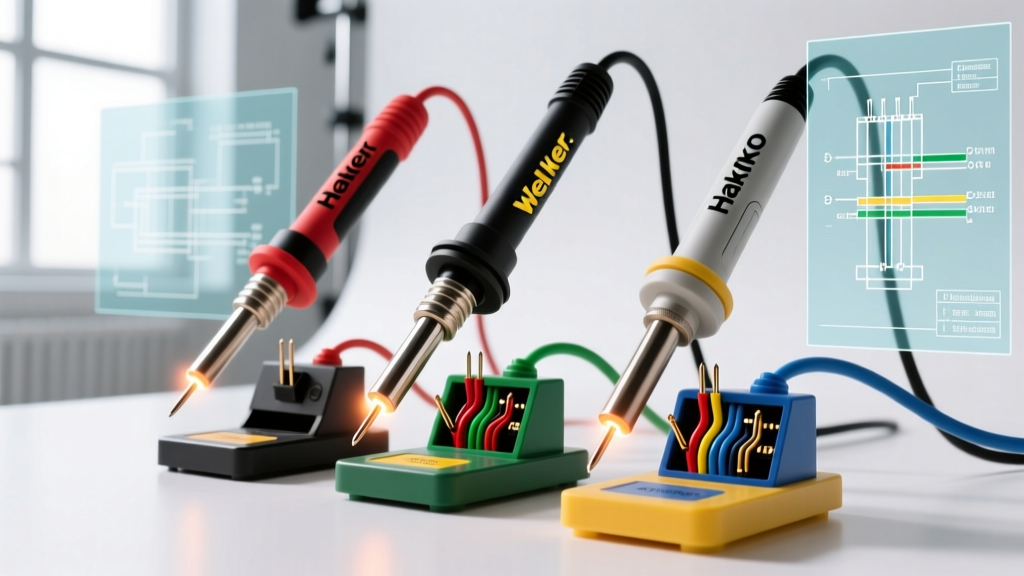
1. Hakko FX-600-12 (130W Adjustable) — The Heavy-Duty King
The Hakko FX-600 is widely considered the gold standard for high-mass metalwork, automotive wiring, and thick sheet metal fabrication. Unlike transformer-based irons, it utilizes a 130W ceramic heating element integrated directly into the handpiece, offering near-instantaneous thermal recovery.
- Wattage: 130W (Peak thermal delivery)
- Temperature Range: 240°C - 480°C (464°F - 896°F)
- Compatible Tips: Hakko T19 Series (Massive thermal block tips)
- 2026 Street Price: $115 - $135
Expert Insight: The FX-600's T19-D24 chisel tip features a 24mm blade width, providing maximum surface area contact for 10 AWG wires or 1/8-inch copper plates. The integrated dial allows you to drop the temperature to 240°C when working with heat-sensitive stained glass, or push it to 400°C for heavy brass terminals.
2. Weller SP80NUS (80W Fixed) — The Budget Workhorse
For hobbyists and plumbers who do not need adjustable temperature profiles, the Weller SP80NUS offers brute-force thermal mass at a fraction of the cost of digital stations. It is a fixed-temperature, line-powered iron built for continuous, rugged use.
- Wattage: 80W
- Temperature Range: Fixed at ~425°C (800°F)
- Compatible Tips: Weller SP Series (Iron-clad copper)
- 2026 Street Price: $45 - $55
Expert Insight: The fixed high temperature is excellent for quick plumbing repairs and heavy grounding lugs, but it demands strict tip maintenance. Leaving the SP80 in its holster without a fresh coat of solder will carbonize rosin flux and pit the tip within minutes. Always pair this with the SP-40 screw-on chisel tip for heavy wire tinning.
3. Hakko FX-601-02 (67W Adjustable) — The Precision Metalworker
While not as powerful as the FX-600, the FX-601 bridges the gap between standard PCB work and light metalwork. It is the premier choice for jewelry making, delicate stained glass foiling, and RC battery lead dressing.
- Wattage: 67W (at 120V)
- Temperature Range: 240°C - 480°C (464°F - 896°F)
- Compatible Tips: Hakko T19 Series
- 2026 Street Price: $75 - $85
Expert Insight: The FX-601 is lighter and more ergonomic than the FX-600. According to Hakko USA specifications, its ceramic heater maintains a stable thermal curve, making it ideal for users who need to switch between 18 AWG stranded wire and thin copper sheet metal without changing tools.
Heavy-Duty Iron Comparison Matrix
| Model | Wattage | Temp Control | Best Application | Est. Price |
|---|---|---|---|---|
| Hakko FX-600 | 130W | Adjustable | Thick sheet metal, auto wiring | $125 |
| Weller SP80NUS | 80W | Fixed | Plumbing, heavy grounding | $50 |
| Hakko FX-601 | 67W | Adjustable | Stained glass, jewelry, RC | $80 |
Tip Metallurgy: Iron-Clad vs. Solid Copper
When selecting a metal soldering iron, understanding tip metallurgy is critical to preventing premature failure. Modern electronics tips are constructed from a solid copper core electroplated with a layer of iron, followed by chromium and tin. This iron cladding prevents leaching—the process where molten solder dissolves the copper core.
However, when working with aggressive metal fluxes (like Zinc Chloride) or high-temperature lead-free alloys on thick substrates, standard iron cladding can degrade if the tip is left un-tinned. For extreme heavy-duty applications, some professionals revert to solid copper chisel tips. While solid copper offers superior thermal conductivity (approx. 400 W/m·K compared to iron's 80 W/m·K), it requires constant re-tinning and will eventually dissolve into the solder pool, requiring frequent replacement. For 95% of users in 2026, a high-quality iron-clad T19 or SP series tip, kept heavily tinned, provides the best balance of thermal transfer and longevity.
Flux and Alloy Selection for Metal Substrates
The rosin-core flux found in standard electronics solder is insufficient for breaking down the heavy oxidation layers present on raw sheet metal, brass, or galvanized steel.
Warning: Never use plumbing acid paste on electrical connections. The corrosive salts will migrate under the insulation and cause catastrophic galvanic corrosion over time.
- For Copper & Brass (Electrical/Structural): Use a mild organic acid (OA) liquid flux or a specialized metalworking flux like Rubyfluid or Stay-Clean. Apply with an acid brush, solder with solid 60/40 wire, and neutralize with isopropyl alcohol post-solder.
- For Stained Glass (Copper Foil): Use a gel or liquid oleic acid-based flux (e.g., Novacan) paired with 60/40 solid solder to build smooth, convex beads.
- For Galvanized Steel: Requires aggressive Zinc Chloride flux and a high-antimony solder alloy to prevent the zinc coating from vaporizing and causing porosity in the joint.
Step-by-Step: Soldering 10 AWG Wire to a Brass Lug
- Mechanical Preparation: Strip the 10 AWG wire and clean the brass lug with 220-grit sandpaper or a Scotch-Brite pad until bright metal is visible. Oxidation is the enemy of thermal transfer.
- Flux Application: Apply a small amount of Kester 186 Rosin or a mild OA flux to both the wire strands and the inside of the brass lug.
- Pre-Tinning: Set your Hakko FX-600 to 380°C. Melt a small amount of 60/40 rosin-core solder onto the bare wire strands (tinning). Do not fill the lug yet.
- Thermal Coupling: Insert the tinned wire into the brass lug. Apply the flat face of the T19-D24 chisel tip directly to the outside of the brass lug, bridging the gap between the iron and the wire.
- Feed and Flow: Wait 3-4 seconds for the brass to reach thermal equilibrium. Touch your solid solder wire to the joint (not directly to the iron tip). Capillary action will draw the molten solder into the lug.
- Cooling: Remove the iron and hold the wire perfectly still for 10 seconds. Disturbing a cooling joint will fracture the crystalline structure, creating a brittle 'cold joint'.
Common Failure Modes & Troubleshooting
Symptom: Solder Balls Up and Refuses to Wet (De-wetting)
Cause: The substrate temperature is below the liquidus point, or heavy oxidation is present. Standard 40W irons often cause this on thick metal because they act as a heat sink, pulling heat away from the joint.
Solution: Upgrade to a 130W iron like the FX-600. Increase mechanical abrasion before soldering and switch to a more active liquid flux.
Symptom: Tip Turns Black and Solder Rolls Off
Cause: 'Dry burning.' Leaving a high-wattage iron in its holster at 400°C without a protective blob of solder causes the iron plating to oxidize into a black, non-wettable scale.
Solution: Never wipe the tip completely clean before holstering. Always leave a large blob of sacrificial solder on the tip. If oxidized, use a brass tip tinner (a mixture of brass shavings and phosphoric acid powder) to chemically reduce the oxidation while gently scrubbing.
Final Verdict
Investing in a dedicated metal soldering iron is non-negotiable for anyone working outside the confines of delicate PCB assemblies. For professional fabricators and automotive electricians, the Hakko FX-600 remains the undisputed champion in 2026, offering the thermal mass required to conquer heavy-gauge copper and thick brass without breaking a sweat. For budget-conscious DIYers tackling occasional plumbing or grounding tasks, the Weller SP80 provides reliable, brute-force heat at an accessible price point. Always match your tip geometry to the substrate, respect the chemistry of your flux, and maintain a heavy tin coat to ensure your equipment lasts for decades.
For further reading on advanced thermal profiles and wetting angles, consult the soldering guidelines published by Weller Tools and the IPC standard documentation available via IPC.org.