
The Thermal Bottleneck: Why Tip Health Dictates Joint Quality
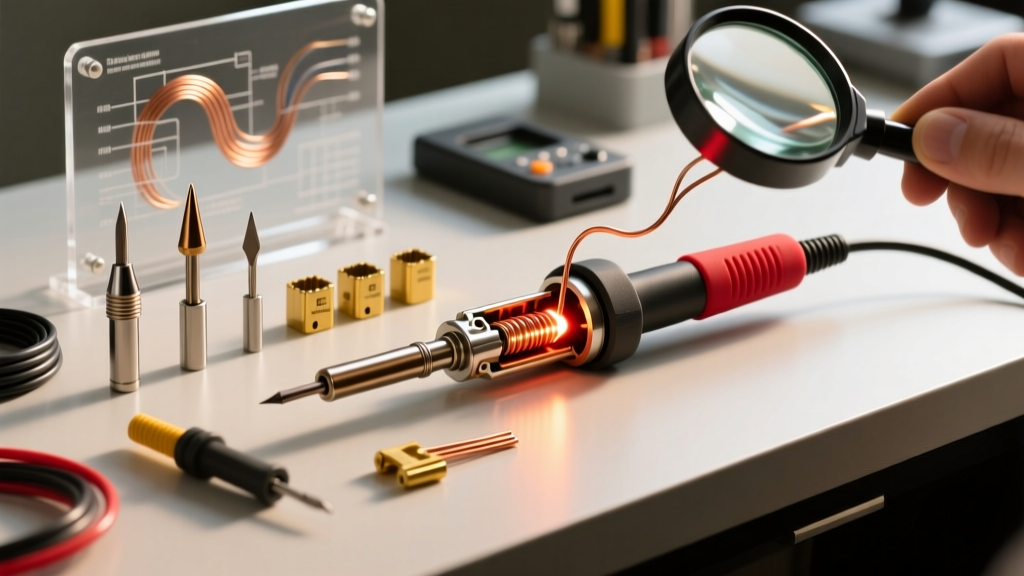
In high-reliability electronics manufacturing and advanced DIY prototyping, the soldering tip is the ultimate point of thermal transfer. As of 2026, the industry's widespread adoption of lead-free SAC305 (SnAgCu) alloys and aggressive flux chemistries has drastically altered tip lifecycle dynamics. When you experience thermal lag, poor wetting, or skewed temperature readings, sourcing Weller soldering iron replacement tips is often the necessary resolution. However, blindly swapping tips without diagnosing the root cause leads to rapid degradation of new inventory and masks underlying station-level anomalies. This guide provides a deep-dive diagnostic framework for Weller RT, XDS, and legacy ET series tips, separating true tip failure from heater core or sensor faults.
Diagnostic Matrix: Tip Wear vs. Station Failure
Before ordering Weller soldering iron replacement tips, verify that the tip is actually the culprit. Use this diagnostic matrix to isolate the failure point in your Weller WT1, WX1, or legacy WES51 station.
| Symptom | Probable Root Cause | Action Required |
|---|---|---|
| Station reads accurate temp, but solder melts sluggishly on large pads. | Tip geometry lacks thermal mass for the ground plane; tip is not 'failed'. | Upgrade to a higher mass tip (e.g., swap RT1 for RT4 or RT5). |
| Station displays 'Sensor Open' or 'Error 04'. | Internal thermocouple wire in the RT tip is severed or oxidized. | Replace tip immediately. Do not attempt repair. |
| Solder balls up and rolls off the tip surface. | Severe oxidation or iron plating dissolution (black crust/pitting). | Attempt salvage protocol; replace if pitting is deep. |
| Heating element glows or takes >45 seconds to reach 350°C. | Heater core degradation or poor electrical contact in the handle. | Clean handle contacts with isopropyl alcohol; replace heater core. |
The 4 Fatal Failure Modes of Weller Tips
1. Iron Plating Dissolution (Pitting)
Modern Weller RT and XDS tips feature a high-purity copper core coated with a protective iron plating, followed by a chromium barrier layer. When exposed to molten SAC305 solder at temperatures exceeding 380°C (716°F), the tin in the solder aggressively leaches the iron plating. This results in microscopic craters or 'pits' on the working surface. Once the copper core is exposed, the tip will rapidly dissolve and form a concave divot, rendering it useless for precision SMD work.
2. Severe Oxidation (The Black Crust)
Leaving a Weller WT1012N station powered on at 400°C without a standby function activated will cause the tinned surface to oxidize within minutes. This creates a hard, black, glassy crust of tin oxide and burnt rosin flux. This layer acts as a severe thermal insulator, dropping the effective transfer temperature by up to 150°C, even if the station display reads correctly.
3. Thermal Sensor Decoupling
In the Weller RT (Active) series, the thermocouple is embedded directly inside the tip's shaft. Mechanical shock—such as dropping the WSP80 handpiece or tapping the tip forcefully against a brass wool sponge to clean it—can decouple the sensor from the heating element. This causes the station to overcompensate, leading to massive temperature overshoots that can instantly destroy sensitive ICs.
4. Mechanical Core Damage
Using the soldering tip as a prying tool to lift QFN components or scraping it against abrasive fiberglass pens destroys the micro-geometry of the tip. While this is user error, it remains one of the most common reasons technicians seek out Weller soldering iron replacement tips prematurely.
Salvage Protocol: Retinning Before Replacing
If your tip is blackened but not physically pitted, do not discard it. Follow this strict IPC-compliant salvage protocol to restore the working surface:
- Cool Down: Drop the station temperature to 250°C (482°F). High heat accelerates oxidation during the cleaning process.
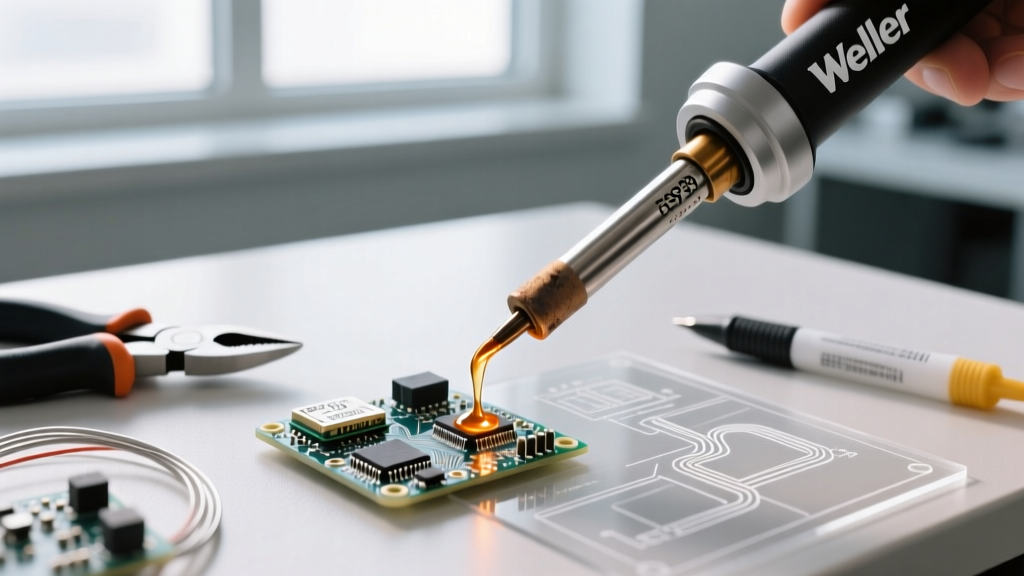
- Chemical Reduction: Apply a generous amount of high-quality tip tinner (e.g., Weller TH10 or Edsyn TTM). The acidic flux in the tinner will chemically reduce the tin oxide layer back to bare metal.
- Mechanical Wiping: While the tinner is bubbling, gently wipe the tip on a damp (not soaking wet) cellulose sponge. The thermal shock of the damp sponge helps flake off carbonized flux residue.
- Immediate Tinning: The microsecond the tip is shiny, apply thick 63/37 leaded solder to coat the entire working surface. This sacrificial layer prevents immediate re-oxidation.
- Brass Wool Warning: Avoid aggressive stabbing into dry brass wool shavings. The abrasive nature of cheap brass wool can score the iron plating, exposing the copper core to future dissolution.
Navigating Weller Soldering Iron Replacement Tips: RT, XDS, and ET Series
Weller's ecosystem spans multiple generations. Selecting the correct replacement tip requires matching the tip series to your specific handpiece model.
| Tip Series | Compatible Handpieces | Key Characteristics & 2026 Pricing |
|---|---|---|
| RT Series (Active) | WSP80, WP65, RT Pico | Embedded thermocouple, ultra-fast 40W heat-up. Ideal for 0201 SMD to heavy ground planes. Price: $12 - $16 per tip. |
| XDS Series | WXP65, WXP80, WXMP | Optimized for WX stations. Features a specialized sensor layout for extreme thermal stability in RoHS environments. Price: $14 - $18 per tip. |
| ET / LT Series | PES51 (WES51), PES61 | Legacy screw-on collar design. Thermocouple is in the handle, not the tip. Slower thermal recovery. Price: $7 - $10 per tip. |
The Counterfeit Trap: Why $3 Tip Packs Ruin $400 Stations
Expert Warning: The secondary market is flooded with counterfeit Weller RT tips sold in bulk for under $15 for a pack of five. These tips lack the precision-embedded thermocouple and use low-grade copper cores. Using them in a Weller WT1 station will cause the PID controller to oscillate wildly, potentially sending 500°C+ spikes to your PCB pads, resulting in catastrophic pad lift and pad delamination.
Always procure Weller soldering iron replacement tips from authorized industrial distributors (e.g., Mouser, Digi-Key, or Farnell). Genuine Weller tips feature laser-etched batch codes on the collar and precise tolerance on the mating shaft that prevents arcing at the connection pins.
Industry Standards and Tip Maintenance
Proper tip maintenance is not just a matter of tool longevity; it is a requirement for manufacturing compliance. According to the NASA Workmanship Standard NASA-STD-8739.3 for soldered electrical connections, soldering iron tips must be inspected for pitting and oxidation prior to use, and any tip exhibiting visible degradation of the plating must be removed from service to prevent copper contamination in the solder joint.
Furthermore, the IPC J-STD-001 standard emphasizes that soldering iron temperatures must be strictly controlled and verified. A pitted Weller tip creates an air gap between the heater and the solder, causing the station's closed-loop system to push the heating element to maximum duty cycle just to maintain the setpoint at the thermocouple. This not only destroys the tip faster but cooks the internal wiring of the handpiece over time.
Final Troubleshooting Checklist
- Check the Standby Mode: Ensure your Weller station is configured to drop to 150°C (300°F) after 5 minutes of inactivity. This single setting will triple the lifespan of your RT tips.
- Match Geometry to Thermal Mass: If you are constantly maxing out the temperature dial to solder large through-hole connectors, you are using the wrong tip geometry. Buy a Weller RT4 or RT5 chisel tip instead of turning up the heat on an RT1.
- Inspect the Handpiece Pins: If a brand-new genuine Weller tip throws a sensor error, inspect the 4-pin connector inside the WSP80 handle. Flux vapors often condense here, creating a high-resistance short that mimics a dead thermocouple. Clean with a fiberglass scratch pen and 99% isopropyl alcohol.
By understanding the metallurgical realities of iron plating dissolution and adhering to strict thermal management protocols, you can drastically reduce your annual expenditure on Weller soldering iron replacement tips while ensuring every joint meets IPC Class 3 reliability standards.