
The Hidden Cost of Poor Tip Maintenance
Every electronics workbench shares a common, expensive secret: the premature destruction of soldering iron tips. A genuine Hakko T18 or Weller ET series tip typically costs between $8 and $14. For high-frequency production environments or advanced micro-soldering stations like the JBC CD-2BQE, specialized tips can exceed $45 each. When operators ask how to clean the tip of a soldering iron properly, they are usually reacting to a blackened, non-wetting surface. However, expert maintenance is not just about reactive cleaning; it is about proactive thermal and chemical management.
In this guide, we bypass the generic advice of 'wipe it on a sponge' and dive into the metallurgical realities of tip degradation, the mechanics of oxidation, and the exact protocols used in IPC-certified assembly environments to extend tip life by up to 400%.
The Anatomy of a Tip: Why Iron Plating Matters
To understand how to clean a tip without destroying it, you must understand its construction. Modern soldering tips are not solid copper. They consist of a high-conductivity copper core coated with an electroplated iron layer, which is then coated with a thin layer of tin or silver to prevent oxidation during storage.
- Copper Core: Provides rapid thermal transfer from the heating element (e.g., the ceramic heater in a Hakko FX-888D).
- Iron Plating: Ranging from 0.15mm to 0.8mm thick, this layer protects the copper from molten solder dissolution.
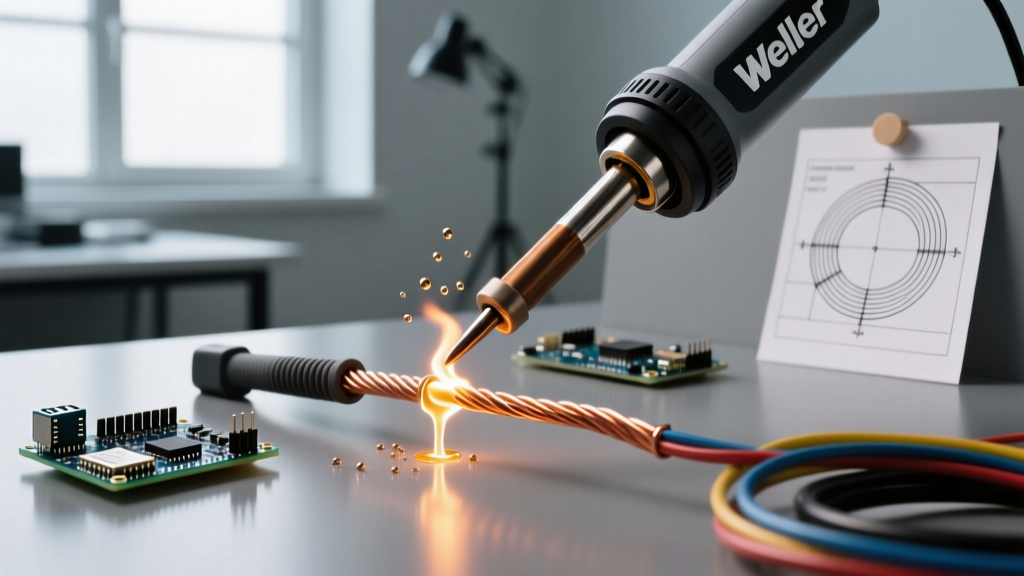
- The Failure Mode: If the iron plating is breached by abrasion or thermal cracking, the molten solder (especially lead-free SAC305 alloys) will rapidly leach the copper core. This creates a hollow, pitted crater on the working surface, rendering the tip useless.
According to the IPC soldering standards, maintaining the integrity of the wetting surface is critical for forming reliable intermetallic bonds. A pitted tip creates cold joints and uneven heat distribution.
The 'Wet Sponge' Controversy: Thermal Shock Explained
For decades, the standard advice for cleaning a soldering tip was to wipe it on a damp cellulose sponge. In 2026, this practice is widely considered detrimental by thermal engineering experts.
The Physics of Thermal Shock
When a soldering tip operating at 350°C (662°F) makes contact with a room-temperature wet sponge, the surface temperature drops violently—often by over 150°C in a fraction of a second. This rapid contraction induces micro-fractures in the iron plating. Over hundreds of thermal cycles, these microscopic cracks propagate, allowing flux residues and molten solder to penetrate the iron layer and attack the copper core.
Expert Insight: The NASA Electronic Parts and Packaging (NEPP) program's workmanship guidelines emphasize controlled thermal profiles. While NASA standards focus heavily on joint reliability, the underlying physics dictate that severe thermal gradients degrade the metallurgical structure of the tools used to create those joints.
The Expert Daily Cleaning Routine
Instead of cellulose sponges, professional labs utilize low-thermal-mass cleaning methods. Here is the step-by-step daily protocol for maintaining optimal heat transfer and wetting.
Step 1: The Brass Wool Method
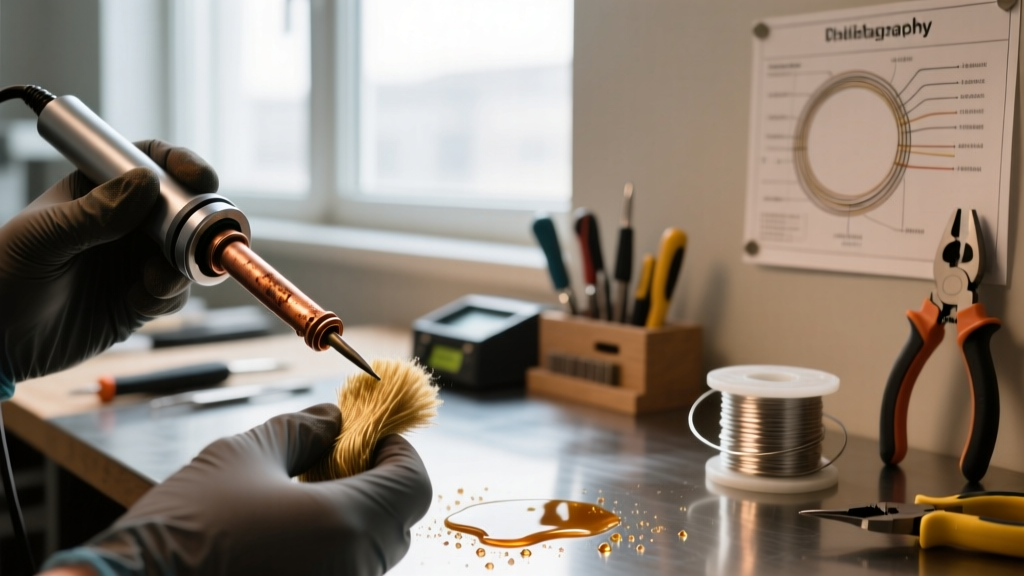
Replace your wet sponge with a brass wire sponge (such as the Hakko 599B). Brass is softer than the iron plating, meaning it will not scratch the surface. Furthermore, brass wool removes oxidized solder and burnt flux without dropping the tip's temperature drastically, preserving the station's thermal recovery profile.
- Insert the tip into the brass wool at a 45-degree angle.
- Rotate the iron gently two to three times.
- Withdraw and immediately apply a small amount of fresh rosin-core solder (e.g., Kester 245 or 186) to re-tin the surface.
Step 2: The Pre-Shutdown Tinning Protocol
The most critical moment for tip longevity occurs when you turn the station off. As the tip cools from 350°C down to 180°C, it passes through the optimal oxidation zone. If the tip is left 'dry' (covered only in burnt flux), it will oxidize heavily in minutes.
The Fix: Before powering down your station, melt a generous blob of 63/37 Sn/Pb or SAC305 solder onto the working face. This sacrificial blob acts as an oxygen barrier, protecting the iron plating as the tip cools to room temperature.
Resurrection: How to Clean the Tip of a Soldering Iron When Oxidation Takes Over
If you inherit a neglected soldering station, or if a tip has turned completely black and refuses to accept new solder, standard brass wool will not suffice. You must perform a chemical reduction using a Tip Tinner (such as the Edsyn TS100 or Hakko B500).
How Tip Tinner Works
Tip tinner is a solidified paste composed of aggressive ammonium chloride flux, mild abrasives (like pumice), and tin-silver powder. When you press a hot, oxidized tip into the compound, the flux chemically strips the copper oxide and iron oxide layers, while the tin powder instantly alloys with the freshly exposed metal.
Step-by-Step Resurrection
- Set the station to a moderate 300°C (572°F). Do not use maximum heat, as this will vaporize the flux too quickly.
- Press the blackened tip firmly into the tip tinner compound for 3 to 5 seconds. You will see smoke and hear a sizzle.
- Withdraw the tip and immediately wipe it on your brass wool.
- Apply fresh, high-quality rosin-core solder.
- Repeat up to three times if heavy carbon buildup remains.
Warning: Tip tinner is highly corrosive. It should only be used for resurrection, never for daily maintenance, as the chlorides will eventually degrade the iron plating if used excessively.
Comparison Matrix: Tip Cleaning Mediums
| Cleaning Medium | Thermal Shock Risk | Abrasiveness | Best Use Case | Estimated Cost (2026) |
|---|---|---|---|---|
| Brass Wool (e.g., Hakko 599B) | Very Low | Low (Non-destructive) | Daily in-session cleaning; standard maintenance. | $6 - $12 |
| Cellulose Sponge (Wet) | High (Severe) | None | Not recommended for modern micro-tips; acceptable only for heavy plumbing irons. | $2 - $5 |
| Tip Tinner / Activator Paste | Moderate | Medium (Chemical + Mild Abrasive) | Resurrecting blackened, non-wetting tips. | $8 - $15 |
| Fiberglass Scratch Pen | None | Extreme (Destructive) | Never use on iron-plated tips. Strictly for removing conformal coating on PCBs. | $4 - $7 |
| Copper Wire Sponge | Low | High | Avoid. Copper particles can embed in the tip and alter the solder alloy. | $3 - $6 |
Advanced Longevity Protocols for Digital Stations
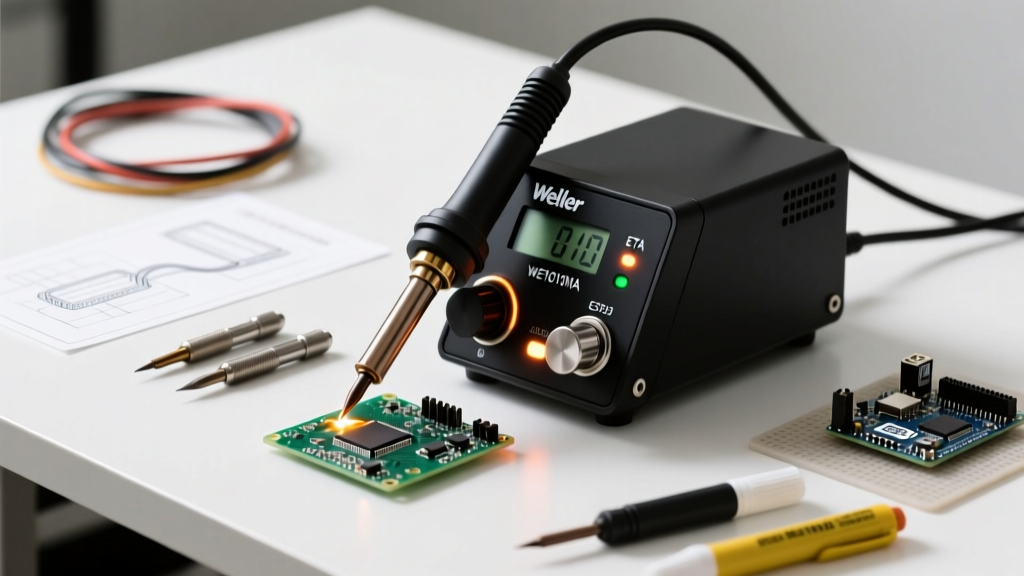
Modern digital stations offer features that drastically reduce tip wear, provided they are configured correctly. If you are using a station like the Hakko FX-951 or the Weller WE1010NA, leverage the following settings:
1. Utilize Auto-Sleep and Auto-Off
Leaving a tip idling at 400°C (752°F) accelerates oxidation exponentially. According to data published in the Hakko Technical Library, tip life is reduced by more than 50% when the idle temperature is increased from 350°C to 400°C. Configure your station's auto-sleep to drop the temperature to 200°C (392°F) after 5 minutes of inactivity, and auto-off after 30 minutes.
2. Match the Tip Mass to the Joint
Using a micro-pencil tip (like a 0.4mm T18-I) to solder a large ground plane forces the station to dwell at maximum wattage, stressing the heater and the tip. Always use the largest tip geometry (e.g., a chisel or bevel) that the PCB pad density allows. The increased thermal mass transfers heat faster, allowing you to lower the station's set temperature by 20°C to 30°C while achieving the same reflow time.
3. Beware of Water-Soluble Fluxes
If you are soldering with water-soluble (OA - Organic Acid) fluxes, the tip is under constant chemical attack. These fluxes are highly active at room temperature and will corrode the iron plating if left on the tip. If your process requires OA flux, you must clean the tip with brass wool and re-tin it immediately after every single joint.
Frequently Asked Questions
Can I use sandpaper or a file to clean a severely pitted tip?
No. Sandpaper, files, and Dremel tools will instantly strip the 0.15mm iron plating, exposing the copper core. Once the copper is exposed, the tip will dissolve into the solder pool within minutes of use. A pitted tip cannot be repaired; it must be recycled and replaced.
Why does my new tip turn black the moment I turn on the station?
This happens when a tip is heated 'dry' without a protective layer of solder. The heat accelerates the reaction between the iron plating and oxygen in the air, forming iron oxide. Always ensure a new tip has a coating of flux and solder on it before the heater engages. If buying OEM tips, they should arrive pre-tinned from the factory.
Does lead-free solder (SAC305) destroy tips faster than leaded solder?
Yes. Lead-free alloys require higher melting temperatures (typically 217°C for SAC305 vs. 183°C for Sn63/Pb37) and are more aggressive solvents of copper and iron. When using lead-free solder, expect to replace tips 2 to 3 times more frequently unless you strictly adhere to auto-sleep protocols and aggressive re-tinning habits.