
The Hidden Metallurgy of Your Weller Soldering Iron Holder
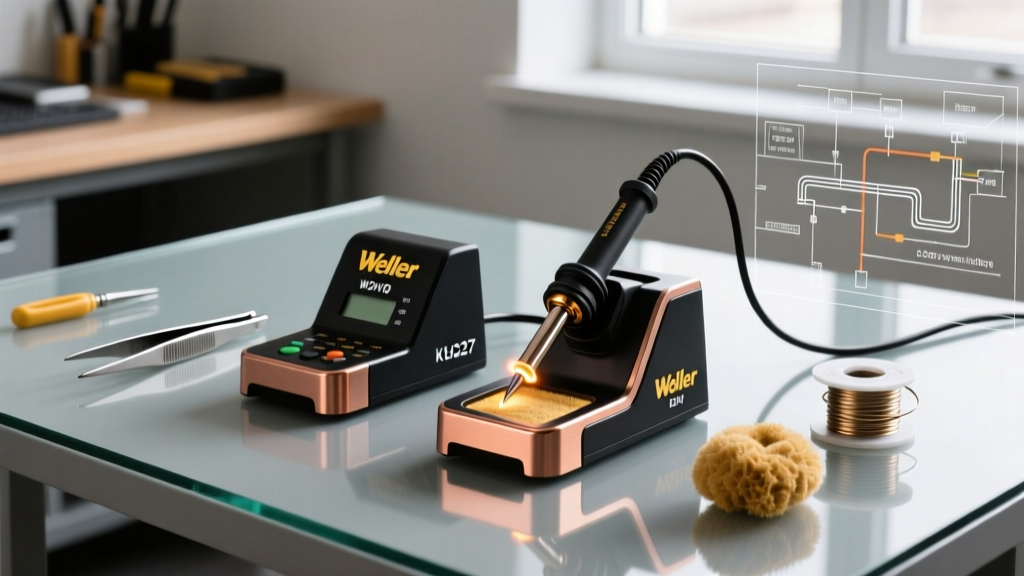
When electronics professionals and serious DIYers invest in a high-end Weller soldering station, the focus is almost entirely on the heating element, the microcontroller, and the tip geometry. Yet, the Weller soldering iron holder—the component that physically supports the tool at 380°C—is frequently treated as an afterthought. In 2026, with the widespread adoption of aggressive lead-free alloys and miniaturized SMD components, your choice of holder and its maintenance protocol directly dictate the lifespan of your soldering tips and the safety of your workbench.
A premium Weller tip features an electrolytic iron plating over a copper core, typically measuring between 70 and 100 microns thick. How you rest, clean, and ground your iron in its holder determines whether that plating lasts for 5,000 joints or fails in 50. This guide dives deep into the expert setup, selection, and maintenance of Weller holders to maximize your station's performance.
Decoding Weller Holder Models: Which One Do You Actually Need?
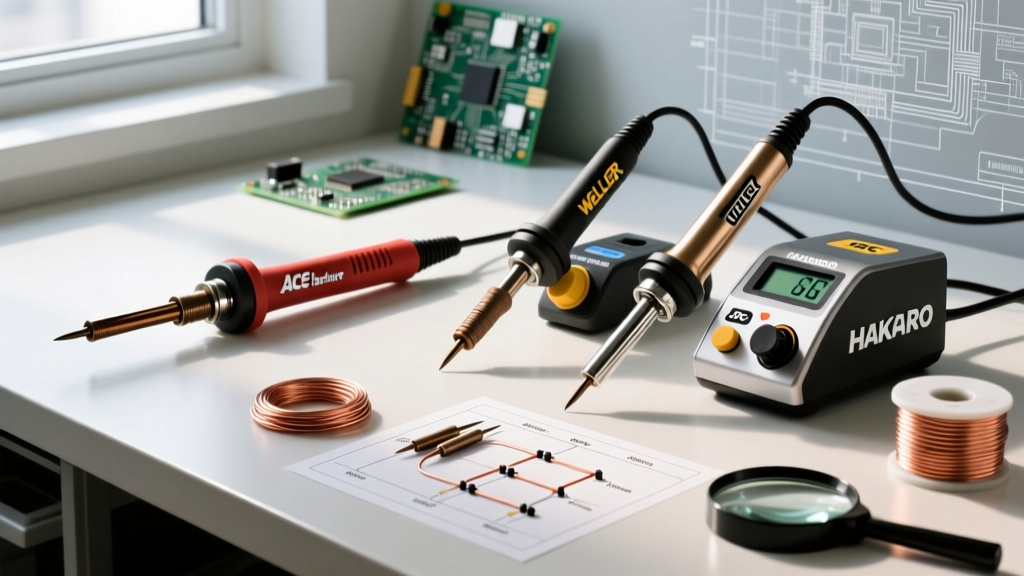
Weller manufactures several distinct holder tiers, ranging from basic stamped steel to heavy-duty, ESD-safe safety rests. Upgrading from a stock holder to a safety rest is one of the highest-ROI modifications you can make to your bench.
| Model | Compatibility | Base Type | Est. Price (2026) | Best Use Case |
|---|---|---|---|---|
| KH27 | PES51, WES51 | Stamped Steel / Folded | $18 - $22 | Hobbyists, basic through-hole |
| WDH10 | WSP80, WSP150 | Heavy Zinc Die-Cast | $52 - $58 | Professional bench, high-thermal mass |
| WDH20 | WXP120, WXMP | Heavy Zinc Die-Cast | $65 - $72 | Precision SMD, lead-free production |
| WDH30 | WXMP, RT Micro | Compact Zinc Die-Cast | $55 - $60 | Micro-soldering, 0201 components |
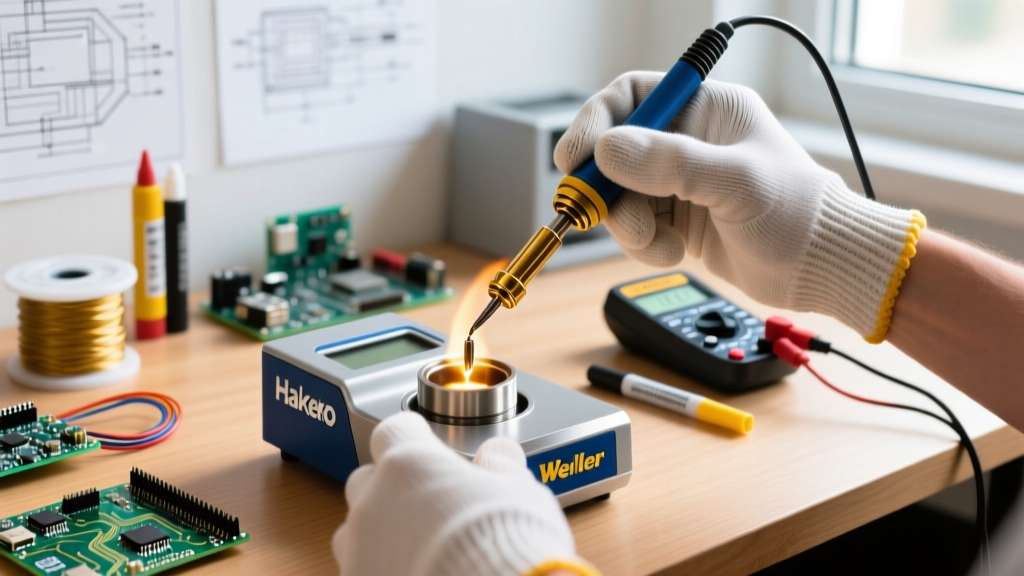
The primary advantage of the WDH series safety rests over the KH27 is the enclosed barrel design. The WDH holders fully enclose the heating element and the rear of the tip, preventing accidental contact with the 400°C shaft. Furthermore, the WDH series features a built-in grounding lug and a much larger footprint, preventing the station from tipping when using heavy silicone cords.
The Great Debate: Cellulose Sponges vs. Brass Wool
The most critical decision regarding your Weller soldering iron holder is the cleaning media you place inside it. For decades, the yellow cellulose sponge (like the Weller PH50) was the industry standard. However, modern metallurgical analysis and adherence to IPC J-STD-001 guidelines for lead-free soldering have shifted expert consensus heavily toward brass wool.
The Thermal Shock Factor
When you wipe a 360°C tip on a damp cellulose sponge, the tip temperature plummets by 100°C to 150°C in a fraction of a second. This extreme thermal delta causes the iron plating to contract rapidly. Over hundreds of cycles, this induces micro-cracks in the iron layer. Once the copper core is exposed to molten SAC305 (Tin-Silver-Copper) solder, the copper dissolves into the alloy, creating deep pits and destroying the tip.
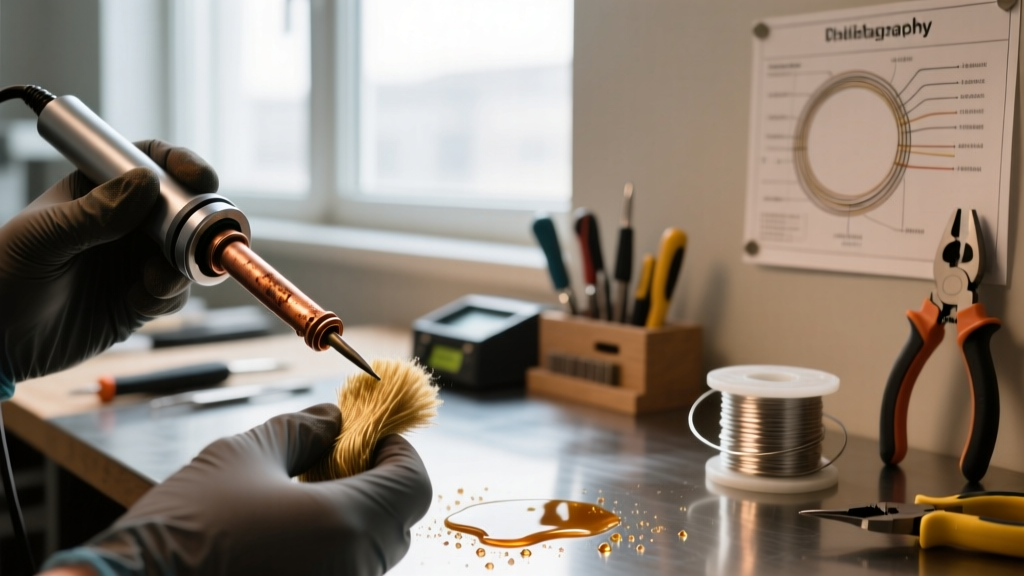
Conversely, a high-quality brass wool pad (such as the Weller 0058711999) cleans the tip through mechanical friction without extracting massive amounts of thermal energy. The tip temperature drops by less than 15°C, preserving the structural integrity of the iron plating.
Expert Tip: If you must use a cellulose sponge for specific flux residues, use distilled water only. Tap water contains minerals that bake onto the tip at high temperatures, creating an insulating layer of oxidation that ruins thermal transfer. Furthermore, only dampen the sponge; squeezing it should yield zero dripping water.
ESD Grounding: The Overlooked Safety Rest Function
A genuine Weller WDH safety rest is not just a physical cradle; it is an active component in your Electrostatic Discharge (ESD) protection chain. According to the ANSI/ESD S20.20 standard, all conductive elements on an ESD-protected workbench must be bonded to a common ground point.
The WDH10 and WDH20 holders feature a dedicated grounding lug on the rear of the zinc base. If you are working on sensitive MOSFETs, RF modules, or bare CMOS logic, you must run a 1mm² grounding wire from this lug to your bench's ESD ground bus bar. The resistance from the tip of the iron, through the ceramic heater, down the tool cord, and through the holder to ground should measure less than 1.0 x 10^9 ohms.
Many technicians assume the ground wire inside the 3-pin or 5-pin DIN connector of the Weller iron cord is sufficient. However, the internal ground wire primarily shields the thermocouple and heating element signals from RF interference. The physical barrel of the iron, which rests in the metal cradle of the holder, requires a separate path to ground to safely dissipate surface static charges acquired from the ambient environment or the user's gloves. By bonding the WDH holder's external lug directly to the ESD mat's ground snap, you create a redundant, low-impedance path that safeguards highly sensitive gate oxides on modern sub-10nm microcontrollers.
Resting Habits: Preventing Iron Plating Degradation
How you place the iron into the Weller holder dictates oxidation rates. The most common failure mode seen in repair shops is the 'dry rest'—placing the iron back into the holder with bare, oxidized metal exposed on the tip.
- Clean: Plunge the tip into the brass wool 2-3 times, rotating slightly to clear flux carbonization.
- Tin: Immediately apply a thick layer of fresh, rosin-core solder (preferably a high-tin alloy like 63/37 or a dedicated tinning compound) to the working surface of the tip.
- Rest: Place the iron into the Weller holder. The molten solder acts as a sacrificial oxidation barrier. When you next pick up the iron, the sacrificial layer will be oxidized, but a quick wipe in the brass wool will reveal perfectly shiny, active iron plating beneath.
Leaving a tip 'dry' in the holder, even for five minutes at 350°C, allows oxygen to react with the iron plating, forming iron oxide (Fe2O3). This black crust is non-wettable and acts as a severe thermal insulator, forcing the user to turn up the station temperature, which only accelerates the degradation cycle.
Summary Checklist for 2026 Workbenches
- Upgrade the Rest: Ditch the stamped KH27 for a WDH10 or WDH20 to gain thermal mass, tip enclosure, and ESD grounding capabilities.
- Ditch the Sponge: Transition to brass wool to eliminate thermal shock micro-cracking on your expensive Weller RT or LT series tips.
- Bond to Ground: Verify the holder's grounding lug is tied to your bench's common point ground with a multimeter.
- Always Tin Before Resting: Never leave bare iron exposed to ambient air while sitting in the holder.
- Clear the Debris: Tap out the brass wool insert over a trash bin weekly; accumulated solder dross and flux residue can eventually bridge the tip to the metal housing, causing short circuits or ground loops.
- Watch Your Chemicals: Avoid placing the WDH safety rest near liquid flux dispensers. Spilling highly activated liquid flux into the brass wool insert can cause rapid galvanic corrosion of the brass strands, turning your cleaning media into a brittle, ineffective mess within days.
By treating your Weller soldering iron holder as a precision instrument rather than a simple metal bracket, you will drastically reduce your consumable costs, improve joint reliability, and maintain a safer, more compliant workbench environment.